

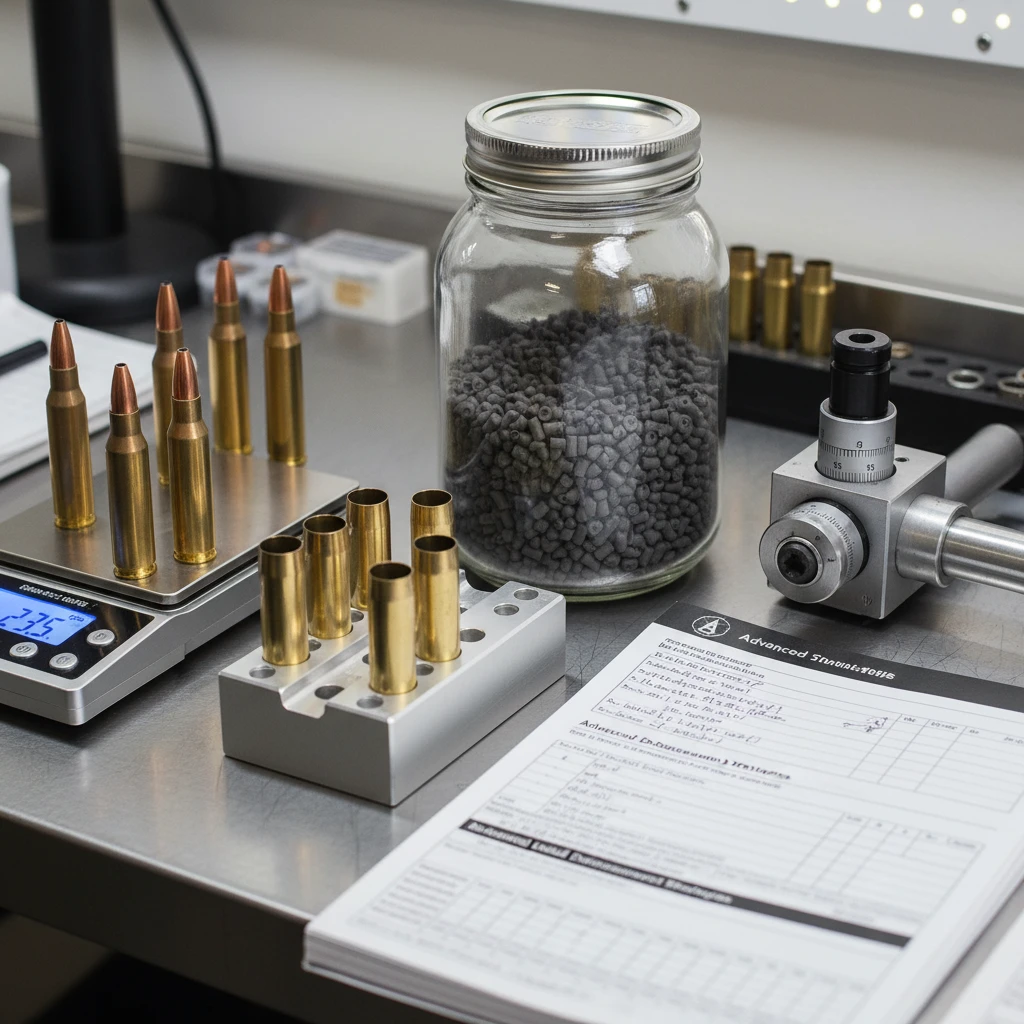
Smokeless Gun Powder: Advanced Load Development Strategies
In the world of competitive shooting and hunting, achieving unparalleled accuracy is the ultimate goal. While skill and practice are crucial, the significance of meticulously developed ammunition cannot be overstated. This article will delve into the advanced strategies for working with smokeless gun powder to achieve peak performance from your firearms in 2026.
We’ll move beyond basic reloading, and explore techniques to maximize consistency, optimize burn rates, and fine-tune your loads for specific applications. Whether you’re seeking tighter groups on the range or ethical, one-shot kills in the field, understanding the nuances of smokeless powder load development is paramount.
Unlocking Precision: Why Advanced Load Development Matters in 2026
Consistency and Accuracy: The Foundation of Successful Shooting
In shooting sports, a tiny edge can mean the difference between victory and defeat. Similarly, in hunting, consistent performance directly translates to ethical and effective shots. Advanced load development focuses on minimizing variations in velocity and pressure, leading to superior accuracy and predictable results. By carefully selecting and matching components, as well as meticulously controlling the reloading process, we can drastically reduce shot-to-shot deviation. This enhanced consistency not only improves group sizes but also builds confidence in your ammunition, especially in critical situations. Consider the impact of reducing your rifle’s standard deviation in velocity from 20 fps to 10 fps; this could shrink your group size at 300 yards from 3 inches to under 2 inches, offering a significant advantage.
Adapting to Modern Smokeless Gun Powder Formulations
Smokeless gun powder technology is constantly evolving. Manufacturers are continually refining formulations to improve performance, reduce fouling, and enhance temperature stability. Therefore, load data developed even a few years ago may not be optimal for the latest powder offerings. Understanding the specific characteristics of the powder you are using, including its composition, granulation, and additives, is crucial. This understanding enables you to tailor your load development process accordingly, selecting appropriate primers and adjusting powder charges to achieve the desired velocity and pressure. For example, newer powders often incorporate deterrent coatings that slow initial burn rates, necessitating adjustments to achieve optimal performance in specific cartridges. Always start with the powder manufacturer’s recommended data and work up carefully, observing for pressure signs.
Maximizing Performance for Your Specific Firearm and Application
Every firearm is unique. Barrel length, chamber dimensions, and even the condition of the rifling can significantly impact how a particular load performs. Furthermore, the intended application—whether it’s long-range target shooting, close-quarters defensive use, or hunting specific game—dictates the ideal bullet weight, velocity, and trajectory. Advanced load development takes these factors into account, tailoring the ammunition to the specific firearm and its intended purpose. This involves carefully selecting bullets with appropriate ballistic coefficients for the desired range, optimizing powder charges for the specific barrel length, and fine-tuning the load to achieve the best possible accuracy and terminal performance. For instance, a load optimized for a 20-inch AR-15 barrel will likely perform differently in a 16-inch barrel, requiring adjustments to ensure consistent performance and avoid excessive pressure.
Understanding Smokeless Gun Powder: A Quick Refresher
Types of Smokeless Powder: Single-Base, Double-Base, and Triple-Base
Smokeless gun powder is classified primarily by its chemical composition. Single-base powders consist mainly of nitrocellulose. Double-base powders contain both nitrocellulose and nitroglycerin, resulting in higher energy content and potentially higher velocities. Triple-base powders add nitroguanidine to the mix, which can reduce muzzle flash and temperature sensitivity. The choice of powder base depends on the desired performance characteristics. Double-base powders are often favored for their higher energy potential, while single-base powders are known for their stability and consistent performance. Triple-base powders are typically used in specialized applications where minimizing flash and temperature sensitivity are paramount. Understanding the base composition of your chosen powder is the first step in understanding its behavior and how it will react to different load parameters.
Burn Rate Characteristics and Their Impact on Pressure
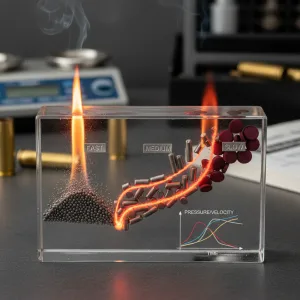
The burn rate of smokeless gun powder is a critical factor in load development. A faster-burning powder generates pressure more quickly, making it suitable for shorter barrels and lighter bullets. A slower-burning powder produces pressure more gradually, making it ideal for longer barrels and heavier bullets. Matching the burn rate to the cartridge and bullet weight is essential for achieving optimal velocity and minimizing pressure spikes. Using a powder that is too fast can lead to dangerously high pressures, while using a powder that is too slow can result in incomplete combustion and poor performance. Powder manufacturers provide burn rate charts that can be used as a guideline, but experimentation is often necessary to find the ideal powder for a specific firearm and application. Consider also that ambient temperatures affect burn rate, an important factor covered in more detail in this reloading safety guide.
Importance of Lot-to-Lot Variation and Proper Storage
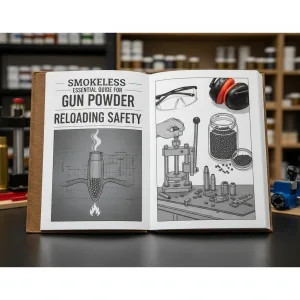
Smokeless gun powder can exhibit lot-to-lot variation, meaning that even powders of the same type and brand can have slightly different burn rates and performance characteristics. This is an unavoidable consequence of the manufacturing process. Therefore, it’s crucial to re-evaluate your loads whenever you switch to a new lot of powder, even if it’s the same powder you’ve used before. Start with a reduced charge and work up gradually, carefully observing for pressure signs. Proper storage is also essential for maintaining the stability and performance of smokeless gun powder. Store powder in a cool, dry place away from direct sunlight and heat sources. The shelf life of properly stored powder can be quite long, but it’s always best to inspect powder for signs of degradation before use. Clumping, discoloration, or a sour odor are indicators that the powder may have deteriorated and should not be used. Further insight on the essential aspects of reloading safety can be found in this guide: Smokeless Gun Powder: Essential Guide for Reloading Safety.
Component Selection: Primers, Brass, and Bullets for Optimal Results
Primer Selection: Matching Primers to Powder Type and Case Capacity
Primers play a crucial role in igniting the powder charge, and selecting the appropriate primer is essential for consistent and reliable ignition. Different primers have different brisance, or the strength of their ignition. Small rifle primers, for example, are not interchangeable with small pistol primers due to cup thickness differences, affecting pressure containment. Magnum primers are designed to ignite slow-burning powders in large-capacity cases, while standard primers are typically sufficient for smaller cases and faster-burning powders. Using a primer that is too hot can lead to pressure spikes and inconsistent ignition, while using a primer that is too weak can result in hangfires or misfires. Primer selection is also crucial in extreme weather conditions. For more information on primer selection, this resource offers great insight: Reloading: Guide to Selecting Primers for Optimal Performance.
Brass Preparation: Case Inspection, Cleaning, and Trimming
The brass case is the foundation of the cartridge, and its condition directly impacts accuracy and consistency. Start with a thorough inspection of each case, looking for signs of damage, such as cracks, dents, or bulges. Discard any cases that are damaged. Next, clean the cases to remove any fouling or oxidation that can interfere with powder ignition. Tumbling or ultrasonic cleaning are common methods. Finally, trim the cases to the correct length to ensure consistent chamber pressure and proper bullet seating. Case trimming is especially important for bottleneck cartridges, where variations in case length can significantly affect accuracy. Consistent case preparation is key to consistent results.
Bullet Selection: Considerations for Accuracy, Ballistic Coefficient, and Terminal Performance
The bullet is the projectile that delivers the energy to the target, and its design and construction play a crucial role in accuracy and terminal performance. Factors to consider when selecting a bullet include its weight, shape, ballistic coefficient (BC), and construction. Heavier bullets typically have higher BCs, making them less susceptible to wind drift and drop at long ranges. Bullet construction affects how the bullet expands or fragments upon impact, influencing its terminal performance. For target shooting, accuracy is paramount, and bullets with consistent weight and dimensions are preferred. For hunting, terminal performance is crucial, and bullets designed to expand or fragment reliably are essential for ethical kills. Consider the intended use and select bullets accordingly. For example, match-grade bullets are designed for extreme accuracy, while hunting bullets are designed for optimal terminal ballistics on game animals. Always consult reputable sources for bullet performance data.
The Ladder Test: Finding Your Firearm’s Accuracy Node
Setting Up a Safe and Controlled Testing Environment
The ladder test is a crucial method for determining the optimal powder charge for your firearm and chosen bullet. Safety is paramount during this process. Conduct testing at a dedicated shooting range with a solid bench rest, spotting scope, and adequate backstop. Ensure a safe distance from other shooters. Use proper eye and ear protection. Most importantly, meticulously follow reloading safety protocols. Maintain a detailed log of each load tested, including powder charge, bullet type, primer, and any observations regarding pressure signs. A controlled testing environment is essential for obtaining accurate and reliable results. Also, make sure your target is placed at an appropriate distance. For rifle ladder tests, 100 yards is a standard starting point, but longer distances may be necessary for cartridges designed for long-range shooting.
Incrementally Adjusting Powder Charges for Ladder Testing
The ladder test involves loading a series of cartridges with incrementally increasing powder charges. Start with the minimum powder charge recommended by the powder manufacturer and increase the charge in small increments (typically 0.1 to 0.3 grains) up to the maximum recommended charge. Load one round of each charge. Clearly label each round with the powder charge used. It’s vitally important to use safe reloading practices, explained in more detail in this guide for beginners. Shoot each round at the target, carefully observing for any signs of excessive pressure, such as flattened primers, hard bolt lift, or case head expansion. If any pressure signs are observed, stop increasing the powder charge immediately. Accurate and precise powder dispensing is crucial for the ladder test to be effective.
Analyzing Target Groups to Identify Optimal Powder Charge Range
After shooting the ladder test, carefully analyze the target to identify the optimal powder charge range. Look for a group of consecutive shots that are clustered closely together. This indicates that the firearm is performing consistently within that powder charge range. This is known as the “accuracy node.” The center of this cluster represents the optimal powder charge for your firearm and chosen bullet. It’s important to note that there may be multiple accuracy nodes along the ladder test. Once you’ve identified the optimal powder charge range, you can further refine your load by testing smaller charge increments within that range to fine-tune accuracy. For example, if the accuracy node is between 42.0 and 42.5 grains, test loads at 42.1, 42.2, 42.3, and 42.4 grains to find the absolute best performing load.
Fine-Tuning Your Load: Seating Depth and Its Effects on Accuracy
Seating depth, the distance the bullet is seated into the cartridge case, is a critical factor influencing accuracy. Small changes in seating depth can significantly alter internal ballistics, affecting pressure, velocity, and ultimately, group size. The optimal seating depth is often found by experimenting in small increments, as it’s influenced by the specific firearm, bullet, and powder combination. A common starting point is to seat bullets to the SAAMI (Sporting Arms and Ammunition Manufacturers’ Institute) maximum overall length (COL), but this should only be a reference and not a limitation. Always ensure the cartridge fits and feeds reliably in your firearm’s magazine.
Experimenting with Different Seating Depths
When experimenting with seating depths, it’s crucial to make incremental adjustments. A typical increment would be 0.003″ to 0.005″. Load five rounds at each seating depth, and carefully label them. Start with a seating depth that is slightly longer than the suggested length and incrementally decrease it. When shooting, use a stable rest and aim at the same target for each group. Document the results meticulously, noting the group size, shape, and point of impact shift. Look for trends, such as a seating depth that consistently produces tighter groups than others. Remember to allow the barrel to cool between groups to avoid heat-related inconsistencies.
Observing Pressure Signs and Making Adjustments Accordingly
Changes in seating depth can affect chamber pressure. Deeper seating depths generally increase pressure, while shallower seating depths may decrease it. Always watch for pressure signs such as flattened primers, difficult extraction, or excessive recoil. If pressure signs are observed, immediately cease firing that load and reduce the powder charge. When adjusting seating depth, it’s wise to start with a reduced powder charge and work up gradually, monitoring for pressure signs at each step. Seating depth adjustments should be made in conjunction with powder charge adjustments to optimize both accuracy and safety.
Using a Chronograph to Monitor Velocity Changes
A chronograph is a valuable tool for observing the effects of seating depth on velocity. Changes in seating depth can influence how efficiently the powder burns, which directly affects the bullet’s velocity. As a general rule, deeper seating may increase velocity slightly, while shallower seating may decrease it. By using a chronograph, you can quantify these changes and correlate them with accuracy results. For example, if a particular seating depth produces a tight group but has a high velocity spread, you might consider adjusting the powder charge or seating depth slightly to improve consistency. A more in-depth understanding of chronographs can be gained from external sources as well.
Utilizing a Chronograph: Measuring Velocity and Calculating Standard Deviation
A chronograph is an essential tool for advanced reloaders. It allows you to measure the velocity of your rounds, providing critical data for evaluating load performance. This data helps you understand the consistency of your loads and identify potential issues. By measuring the velocity of several rounds, you can calculate the standard deviation (SD), a statistical measure of the velocity spread. A lower SD indicates more consistent velocities, which generally translates to better accuracy. Always use a high-quality chronograph from a reputable manufacturer to ensure accurate readings. Understanding the data provided is vital to producing reliable and consistent reloads.
Setting Up and Calibrating Your Chronograph
Proper setup and calibration are essential for accurate chronograph readings. Place the chronograph at the recommended distance from the muzzle, ensuring it is level and aligned with the bullet’s path. Follow the manufacturer’s instructions carefully, as different models may have different setup requirements. Calibrate the chronograph before each shooting session, using the manufacturer’s recommended procedure. Ensure adequate lighting conditions, as poor lighting can affect the sensors’ ability to detect the bullet. Avoid shooting in direct sunlight, as this can also interfere with the readings. For best results, use a stable tripod to minimize movement and vibration.
Understanding Velocity Spread and Standard Deviation
Velocity spread refers to the difference between the highest and lowest velocities recorded in a series of shots. Standard deviation (SD) is a more precise measure of velocity consistency, representing the average deviation of each shot from the mean velocity. A smaller velocity spread and lower SD indicate more consistent performance. For rifle loads, a SD of 15 fps or less is generally considered excellent, while for handgun loads, a SD of 25 fps or less is often acceptable. High SDs can indicate inconsistencies in powder charge, bullet seating, or neck tension. Consistently high standard deviations can be an indicator of inconsistent smokeless gun powder.
Interpreting Chronograph Data to Refine Your Load
Chronograph data provides valuable insights for refining your load. If you observe a high velocity spread or SD, investigate potential sources of inconsistency. Check your powder measuring technique, ensuring you are using a consistent method and accurate scale. Verify that your bullet seating depth is consistent and that you are using the correct amount of crimp. If you are using a progressive press, ensure that all stations are functioning correctly. By addressing these potential issues, you can improve the consistency of your loads and enhance accuracy. If all reloading steps are performed correctly and a large SD still occurs, it may be time to reevaluate primer selection. For example, changing to a more consistent primer may help reduce velocity variation.
Advanced Techniques: Pressure Testing and Piezo Sensors (Proceed with Caution)
Pressure testing is an advanced technique used to measure the pressure generated within a firearm chamber during firing. This technique provides valuable data for optimizing loads and ensuring safety. Piezo sensors are commonly used in pressure testing systems to convert the mechanical pressure into an electrical signal that can be measured and recorded. However, pressure testing requires specialized equipment and expertise and should only be performed by experienced reloaders with a thorough understanding of ballistics and firearm safety. Improper pressure testing can lead to dangerous overpressure situations and potentially damage the firearm or cause serious injury. Always consult with a qualified gunsmith or ballistics expert before attempting pressure testing.
Understanding the Risks and Benefits of Pressure Testing
The primary risk of pressure testing is the potential for generating excessive pressure, which can damage the firearm or cause injury. It’s essential to start with known safe loads and gradually increase the powder charge, carefully monitoring the pressure readings. The benefits of pressure testing include the ability to optimize loads for maximum performance while staying within safe pressure limits. Pressure testing can also help identify potential issues with a load, such as excessive pressure spikes or inconsistent performance. It is critical to understand that published load data is only a guideline and that variations in components, firearms, and environmental conditions can affect pressure levels. A firm grasp of internal ballistics is crucial to ensure safe practices.
Using Piezo Sensors to Monitor Chamber Pressure
Piezo sensors are small, robust devices that generate an electrical charge proportional to the pressure applied to them. In pressure testing, the sensor is typically mounted in a modified cartridge case or directly into the firearm’s chamber. When the cartridge is fired, the pressure wave compresses the sensor, generating an electrical signal that is amplified and recorded by a data acquisition system. The data is then analyzed to determine the peak pressure, pressure curve, and other relevant parameters. Proper sensor calibration is essential for accurate pressure readings. Different sensor types and mounting methods may require different calibration procedures.
Interpreting Pressure Data and Avoiding Overpressure Situations
Interpreting pressure data requires a thorough understanding of pressure curves and SAAMI pressure limits. The pressure curve shows how the pressure changes over time during the firing sequence. The peak pressure is the highest pressure reached during the cycle and is a critical parameter for evaluating load safety. If the peak pressure exceeds the SAAMI limit for the cartridge, the load is considered unsafe and should be reduced. Always compare your pressure data to published load data and consult with a qualified ballistics expert if you have any questions or concerns. Pay close attention to the shape of the pressure curve, as abnormal spikes or fluctuations can indicate potential problems. Maintaining a detailed log of all testing, including component brands/lots, chamber pressure, environmental conditions, and firearm used is crucial for safe and consistent reloading.
Troubleshooting Common Load Development Issues
Even with careful planning and execution, reloaders can encounter issues during load development. Recognizing and addressing these issues promptly is crucial for ensuring safety and achieving optimal performance. Common problems include excessive pressure signs, poor accuracy, and misfires or hangfires. Effective troubleshooting involves systematically identifying potential causes and implementing corrective actions. Keep detailed records of all your reloading data, including components, powder charges, seating depths, and chronograph results. This information can be invaluable for diagnosing problems and developing effective solutions. Consider starting with troubleshooting basics before attempting to use more advanced solutions.
Addressing Excessive Pressure Signs
Excessive pressure signs, such as flattened primers, cratered primers, swollen cartridge cases, and difficult extraction, indicate that the load is generating excessive pressure. These signs are a warning that the load is unsafe and could potentially damage the firearm or cause injury. The most common cause of excessive pressure is an overcharge of powder. Double-check your powder scale and measuring technique to ensure you are using the correct charge weight. Other potential causes include incorrect bullet seating depth, insufficient case neck tension, or the use of incorrect components. Immediately cease firing any load that exhibits excessive pressure signs and reduce the powder charge by a significant amount (e.g., 10%) before resuming testing. When reducing loads, it’s critical to verify that the new charge weight is still within the safe parameters specified by the powder manufacturer.
Improving Group Size and Reducing Vertical Stringing
Poor group size and vertical stringing are common accuracy problems. Several factors can contribute to these issues, including inconsistent powder charges, bullet seating depth variations, poor neck tension, and inconsistencies in the firearm itself. Start by verifying that your powder charges are consistent and that your bullet seating depth is accurate. Experiment with different seating depths in small increments to see if you can improve the group size. Check your case neck tension to ensure that it is sufficient to hold the bullet securely. If you are using a progressive press, ensure that all stations are functioning correctly and that there is no excessive runout in the loaded cartridges. Firearm-related issues, such as a loose scope mount or a damaged barrel, can also contribute to poor accuracy. Evaluate your shooting technique and ensure that you are using a stable rest and consistent trigger pull. Additionally, a study published by Over Horizon Media highlights the importance of analyzing external factors such as wind and mirage when diagnosing accuracy issues at longer ranges.
Dealing with Misfires or Hangfires
Misfires (failure of the cartridge to fire) and hangfires (delayed ignition of the cartridge) are serious problems that require immediate attention. These issues can be caused by a variety of factors, including faulty primers, insufficient firing pin energy, or contaminated powder. If you experience a misfire, wait at least 30 seconds before opening the action and carefully remove the cartridge. Inspect the primer to see if it has been struck by the firing pin. If the primer has not been struck, the problem may be with the firearm. If the primer has been struck but the cartridge did not fire, the primer may be faulty or the powder may be contaminated. Discard any cartridges that have experienced a misfire or hangfire. To prevent these issues, use high-quality primers from reputable manufacturers and store your powder in a cool, dry place to prevent contamination. Also, explore primer selection for optimized performance, as this is a very common cause of the described issues.
Safety First: Essential Precautions When Working with Smokeless Gun Powder and Primers
Handling Smokeless Gun Powder and Primers Responsibly
Working with smokeless gun powder and primers demands unwavering attention to safety. Always store smokeless powder in a cool, dry, and well-ventilated area, away from heat sources, open flames, and potential sparks. Primers should be handled with equal care; avoid dropping them or subjecting them to impact, as this could lead to accidental detonation. Never smoke or use electronic cigarettes while handling these components, and always ensure your workspace is free from static electricity. A static discharge can easily ignite smokeless gun powder.
Wearing Proper Safety Gear
Personal Protective Equipment (PPE) is non-negotiable when reloading. At a minimum, wear safety glasses or goggles to protect your eyes from stray powder granules or primer fragments. Consider wearing a dust mask to avoid inhaling powder fumes, particularly if you’re working in a confined space. A lab coat or apron can provide additional protection for your clothing and skin. Always ensure your hands are clean and dry before handling powder and primers. It is important to never handle your reloading supplies with bare hands after touching something else, as static cling can be dangerous.
Following Established Reloading Procedures and Guidelines
Adhering to established reloading procedures and guidelines is crucial for safe and consistent results. Always consult a reputable reloading manual, such as those published by powder manufacturers or bullet makers, for load data specific to your cartridge, bullet weight, and powder type. Never exceed the maximum recommended powder charge, and start with the minimum charge and work your way up gradually, watching for pressure signs. Double-check each step of the reloading process to minimize the risk of errors. If in doubt, consult with an experienced reloader or a certified firearms instructor.
Recording and Tracking Your Load Data for Future Reference
Creating a Comprehensive Load Development Log
A detailed load development log is your most valuable tool for replicating accurate and safe loads. This log should include not only the basic components (bullet, powder, primer, case) but also detailed information such as the powder lot number, primer brand and type, bullet manufacturer and weight, and the case length and condition. Document the overall cartridge length (OAL), the seating depth, and any crimp applied. Include environmental conditions such as temperature, humidity, and altitude, as these can affect powder burn rates. These small details can have a huge impact on your shot.
Documenting All Components, Powder Charges, and Results
For each load you test, meticulously record the powder charge weight, measured using a calibrated scale. Note the chronograph readings for each shot, including the velocity and standard deviation. Document any signs of pressure, such as flattened primers, case head expansion, or difficulty extracting the fired case. Include a target diagram showing the group size and point of impact for each load. Be very descriptive, such as, “easy to extract case” or “slight flattening of primer”. Don’t just say “pressure was normal”. A comprehensive record is key to understanding the performance of your loads.
Using Load Data to Replicate Accurate Loads Consistently
The ultimate goal of load development is to create a recipe that consistently produces accurate and reliable results. By carefully analyzing your load data, you can identify the powder charge and component combination that delivers the best accuracy and velocity for your firearm. Once you’ve established a successful load, meticulously record the details in your logbook and use it as a reference for future reloading sessions. Regularly review and update your logbook as needed, especially if you change components or shooting conditions. Consistency in your reloading process, guided by your documented data, is paramount for achieving repeatable accuracy; consistency is achievable when you reload in a precise and consistent manner.
Adapting Load Development for Specific Applications: Hunting, Competition, and Self-Defense
Optimizing Loads for Hunting: Considerations for Terminal Ballistics
When developing loads for hunting, terminal ballistics are paramount. Focus on achieving a balance between accuracy and sufficient energy transfer to ensure a quick and ethical kill. Consider the game you’re hunting, the typical shot distances, and the bullet’s construction. Expanding bullets are generally preferred for hunting, as they create a larger wound channel and deliver more energy to the target. Consult with bullet manufacturers for recommendations on appropriate bullet selection and impact velocity ranges. Test your hunting loads at various distances to confirm their accuracy and effectiveness. Don’t forget to make sure that your rifle ammo and loads are suited for the game you intend to hunt; always hunt ethically and responsibly.
Developing Match-Grade Loads for Competitive Shooting
For competitive shooting, accuracy is the name of the game. The goal is to minimize group size and achieve consistent point of impact at various distances. Experiment with different bullet weights, powder types, and seating depths to find the combination that delivers the best accuracy in your rifle. Pay close attention to the ballistic coefficient (BC) of the bullet, as this will affect its trajectory and wind drift. Chronograph your loads to ensure consistent velocity and minimal standard deviation. For tips on improving accuracy when shooting, you may find this article on rimfire ammo helpful, even if you are shooting a larger caliber.
Creating Reliable and Accurate Loads for Self-Defense
Reliability and accuracy are equally critical for self-defense loads. Your handgun ammo must function flawlessly in your firearm under stressful conditions. Use high-quality components and follow established load data guidelines. Prioritize bullet designs that offer reliable expansion and penetration in ballistic gel testing. Function test your self-defense loads extensively in your handgun to ensure they feed, chamber, and eject reliably. Consider using factory ammunition or consulting with an experienced reloader for guidance. This is important, as malfunctions in a self-defense situation can have dire consequences.
Rifle ammo considerations
When developing rifle ammo for self-defense, consider the potential for over-penetration. Choose bullets that are designed to expand rapidly and transfer energy quickly, minimizing the risk of the bullet exiting the target and potentially harming innocent bystanders. Optimize for shorter-range engagements, as self-defense situations typically occur at close distances. Ensure reliable feeding and extraction in your rifle platform. Some consider over-penetration of rifle rounds a risk, but proper projectile selection can help mitigate that risk.
Handgun ammo considerations
Handgun ammo for self-defense must prioritize reliable expansion, penetration, and consistent function. Hollow-point bullets are generally preferred for their expansion capabilities, but it’s crucial to ensure they penetrate sufficiently to reach vital organs. Test different bullet designs in ballistic gel to assess their performance and penetration depth. A popular choice for self-defense situations, hollow points must cycle flawlessly in your chosen handgun.
Shotgun ammo considerations
While reloading shotgun shells for self-defense is less common, it’s essential to prioritize reliability and pattern density. Buckshot is the most common choice for self-defense, as it delivers multiple projectiles with each shot. Experiment with different buckshot sizes and wad combinations to achieve the tightest and most consistent pattern at typical self-defense distances. Ensure reliable cycling in your shotgun platform; often, cycling issues can be addressed with properly sized shells.
Where to Buy Quality Smokeless Gun Powder and Primers from Northern Reloading
Exploring Northern Reloading’s Selection of Smokeless Gun Powder
Northern Reloading offers a diverse selection of smokeless gun powder from leading manufacturers, catering to a wide range of cartridges and shooting applications. Whether you’re reloading for pistol, rifle, or shotgun, you’ll find a powder that suits your needs. Our inventory includes various burn rates, from fast-burning powders for smaller cartridges to slow-burning powders for magnum calibers. We provide detailed product descriptions and specifications to help you make an informed decision. We only offer products from suppliers we trust. To learn more about burn rates, read this article on understanding burn rate.
Choosing the Right Primers for Your Reloading Needs
Selecting the right primers is essential for consistent ignition and reliable performance. Northern Reloading carries a comprehensive range of primers, including small pistol, large pistol, small rifle, and large rifle options. We offer primers from top brands known for their quality and consistency. Consider the type of cartridge you’re reloading, the powder type, and the environmental conditions when choosing primers. For example, magnum primers are often recommended for use with slow-burning powders or in cold weather conditions. For selecting the right primers, you may want to review this guide on selecting primers for optimal performance.
Taking Advantage of Northern Reloading’s Expert Support and Resources
At Northern Reloading, we’re committed to providing our customers with the support and resources they need to succeed in their reloading endeavors. Our knowledgeable staff can answer your questions and provide guidance on selecting the right smokeless gun powder and primers for your specific needs. We also offer a wealth of educational content, including articles, videos, and reloading guides, to help you improve your skills and knowledge. Trust us to help you get the results you’re looking for with the proper supplies. For a deeper dive, you can also see our essential safety guide for working with smokeless powder.
Developing safe and effective loads requires a methodical approach, careful documentation, and a commitment to safety. By following the guidelines outlined in this article, you can optimize your reloading process for hunting, competition, or self-defense, ensuring consistent performance and peace of mind.

About author

Add comment