
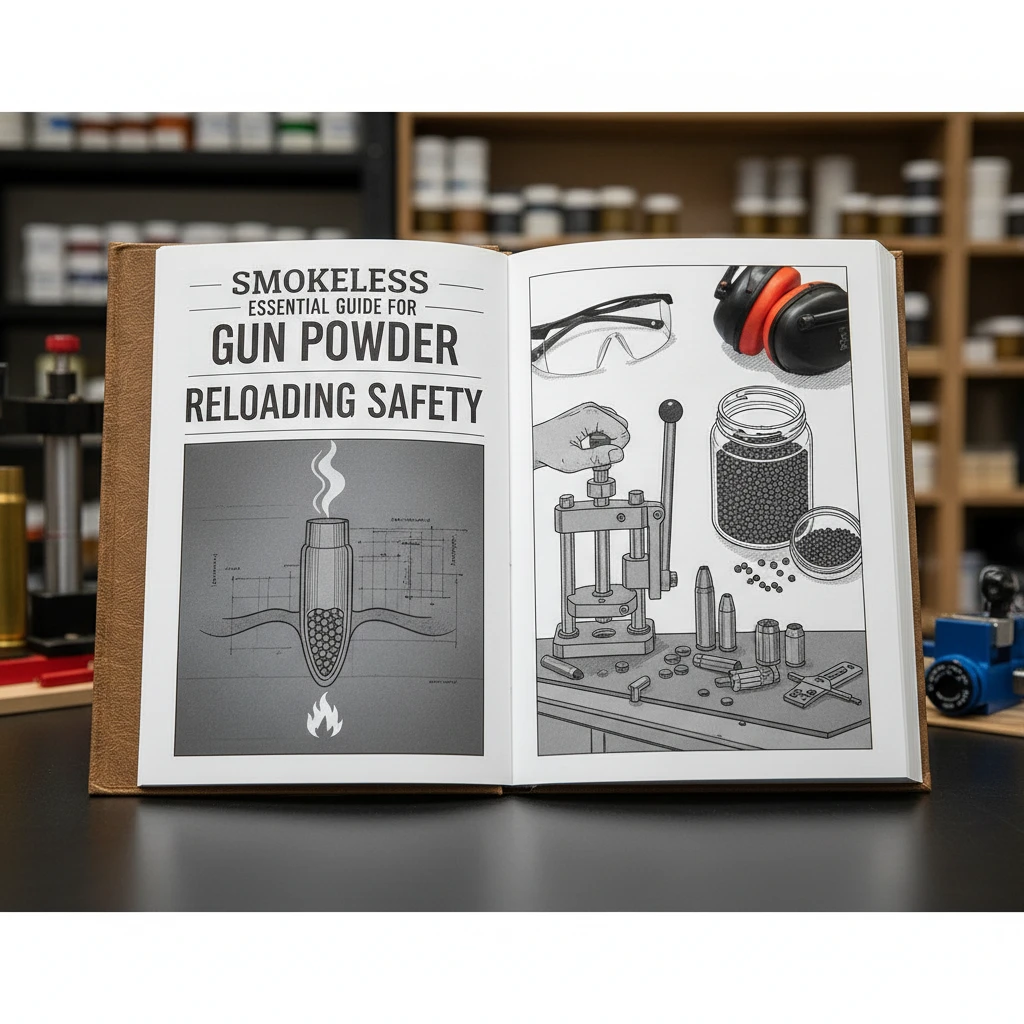
Smokeless Gun Powder: Essential Guide for Reloading Safety
Reloading your own ammunition offers a gateway to unparalleled precision and customization, allowing you to tailor each round to your specific firearm and shooting needs. A critical component in this process is selecting and handling smokeless gun powder. This article serves as your comprehensive guide, from understanding the different types of smokeless powder to establishing a safe reloading environment. We’ll explore the nuances of smokeless powder, ensuring you make informed decisions for optimal performance and, above all, safety.
Whether you are a seasoned reloader or just starting out, mastering the art of reloading with smokeless powder can significantly enhance your shooting experience. Keep in mind that proper understanding, rigorous adherence to safety protocols, and meticulous execution are the cornerstones of successful and safe reloading. Let’s dive into the world of smokeless gunpowder and unlock its potential.
Unlocking Precision: Why Smokeless Gun Powder Matters for Accurate Reloading (2026)
The evolution of propellants: From black powder to smokeless.
The history of firearms is inextricably linked to the evolution of propellants. Initially, black powder was the only option, a mixture of sulfur, charcoal, and potassium nitrate. While functional, it produced significant smoke and fouling, impacting visibility and requiring frequent cleaning. The late 19th century marked a turning point with the invention of smokeless powder, primarily composed of nitrocellulose. This new propellant burned far cleaner, produced less smoke, and delivered higher velocities. Over time, variations like double-base (nitrocellulose and nitroglycerin) and triple-base powders were developed to further refine performance characteristics, such as energy output and burn rate. This shift from black powder to smokeless alternatives revolutionized firearm technology, enabling greater accuracy, higher muzzle velocities, and enhanced overall shooting experiences. As technology continues to advance, expect to see even more optimized propellant formulations in the future. For a deeper dive into the history and science, explore resources like the Castpics article on Propellants.
Benefits of smokeless gun powder: Consistency, power, and cleanliness.
Smokeless gun powder offers a multitude of advantages over its black powder predecessor. Foremost is its consistency. Smokeless powders are manufactured with strict quality control, resulting in uniform burn rates and predictable performance from batch to batch. This translates to tighter groupings and more reliable accuracy. Secondly, smokeless powder boasts significantly higher energy content per unit volume. This allows for increased muzzle velocities and flatter trajectories, expanding the effective range of firearms. Finally, the “smokeless” nature of the powder results in substantially reduced smoke and fouling. This not only improves visibility during shooting but also reduces the frequency of cleaning, extending the lifespan of your firearm. For reloaders, this translates to more efficient sessions and greater control over the final product.
Why reloading with smokeless powder enhances shooting performance.
Reloading with smokeless powder allows shooters to fine-tune their ammunition for optimal performance in their specific firearms. By carefully selecting the appropriate powder type and charge weight, reloaders can tailor the velocity, pressure, and overall performance of each round. This level of customization is simply not achievable with commercially available ammunition. For instance, a competitive shooter might experiment with different powders to achieve the most consistent velocity and minimal recoil for faster follow-up shots. Hunters can develop loads optimized for specific game and hunting conditions, ensuring ethical and effective shots at various ranges. Furthermore, reloading offers significant cost savings over purchasing factory ammunition, especially for high-volume shooters. The process of reloading allows for experimentation and fine-tuning that maximizes both the accuracy and the overall shooting experience. Understanding smokeless gun powder burn rates is a critical aspect of the reloading process.
Understanding Smokeless Gun Powder Types: A Comprehensive Guide
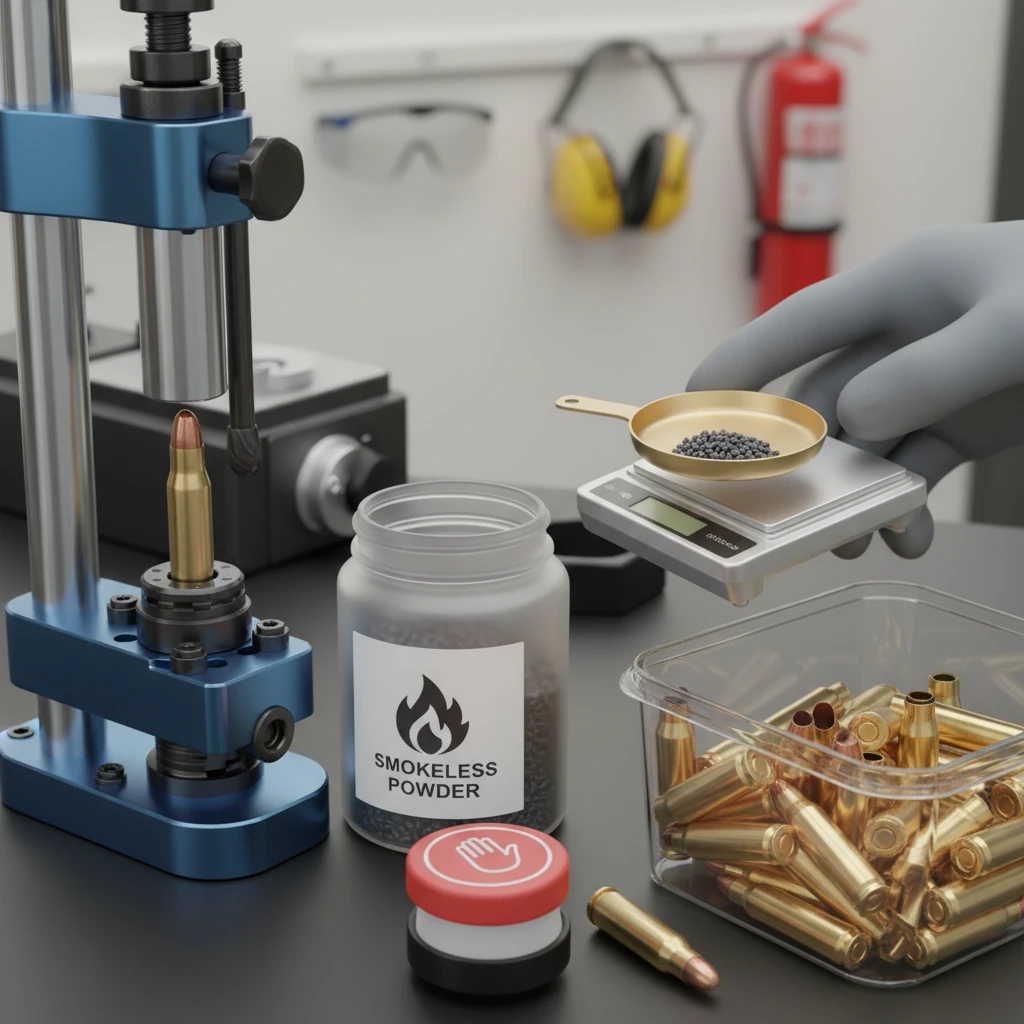
Single-base, double-base, and triple-base powders: Chemical composition differences.
Smokeless powders are categorized primarily by their chemical composition: single-base, double-base, and triple-base. Single-base powders consist mainly of nitrocellulose. They are generally considered the most stable and temperature-insensitive of the three types. Double-base powders incorporate both nitrocellulose and nitroglycerin, resulting in higher energy content and increased velocity potential. However, they can be more sensitive to temperature variations. Triple-base powders, less common in small arms ammunition, add nitroguanidine to the mix. This reduces flame temperature and muzzle flash, making them suitable for specialized applications like artillery rounds. The choice between these powder types depends on the desired performance characteristics, with double-base powders being a popular choice for those seeking maximum velocity, while single-base powders are favored for their stability and consistent performance. Further details on the chemical properties can be found on Wikipedia’s article on Smokeless Powder.
Powder shapes: Flake, ball, and extruded – effects on metering and burning rate.
The physical shape of smokeless powder granules significantly influences its metering characteristics and burning rate. Flake powders, as the name suggests, are flat and thin. They meter consistently in powder measures but tend to have a faster burning rate. Ball powders, or spherical powders, offer excellent flow characteristics, making them ideal for automated loading processes. Their burning rate can be controlled by surface treatment. Extruded powders, also known as stick powders, are cylindrical in shape. They generally offer a slower, more progressive burn, making them well-suited for larger rifle cartridges. The choice of powder shape depends on the desired burning characteristics and the type of reloading equipment being used. For example, progressive reloading presses often work best with ball powders due to their superior flow properties, while extruded powders are commonly used in magnum rifle loads for controlled pressure and velocity.
Choosing the right powder type for handgun ammo, rifle ammo, and shotgun ammo.
Selecting the appropriate smokeless powder is crucial for achieving optimal performance and safety in different types of ammunition. For handgun ammo, fast-burning powders like Accurate No. 2 or Hodgdon HP38 are often preferred. These powders generate sufficient pressure to cycle the action of semi-automatic pistols and provide consistent velocities in shorter barrels. Rifle ammo typically requires slower-burning powders like IMR 4350 or Hodgdon Varget. These powders allow for a more gradual pressure curve, maximizing velocity in longer rifle barrels without exceeding safe pressure limits. Shotgun ammo demands specialized powders designed for consistent ignition and smooth pressure curves. Alliant Red Dot and Green Dot are popular choices for target loads, while slower-burning powders like Hodgdon Longshot are suitable for magnum shotshells. Always consult reputable reloading manuals and follow published load data to ensure safe and effective reloading practices. For example, using a fast-burning handgun powder in a rifle cartridge could lead to dangerously high pressures.
Safety First: Essential Precautions for Handling Smokeless Gun Powder
Storage guidelines: Temperature, humidity, and container requirements.
Proper storage of smokeless gun powder is paramount to ensure its stability and prevent accidental ignition. Store powder in a cool, dry place, away from direct sunlight and heat sources. Ideal storage temperatures range from 60°F to 70°F (15°C to 21°C). Avoid storing powder in areas with high humidity, as moisture can degrade the powder and affect its performance. Always keep powder in its original container or in a specially designed powder magazine that meets safety standards. These containers are designed to vent pressure in the event of a fire, preventing a catastrophic explosion. Never store powder near flammable materials or in areas accessible to children or unauthorized individuals. Regularly inspect your powder storage area to ensure compliance with these guidelines.
Preventing accidental ignition: Static electricity, sparks, and open flames.
Smokeless gun powder is a flammable material, and precautions must be taken to prevent accidental ignition. Avoid creating static electricity near powder. Ground yourself before handling powder, especially in dry environments. Do not wear synthetic clothing that can generate static charges. Keep sparks and open flames away from powder at all times. This includes cigarettes, lighters, and any equipment that could produce a spark. Work in a well-lit area to avoid accidents. Never smoke while reloading or handling powder. Ensure your reloading bench is clean and free of debris that could create friction or sparks. A little bit of awareness and caution can go a long way in preventing serious accidents.
Handling spills and disposal: Best practices for safe cleanup.
Even with careful handling, powder spills can occur. If a spill happens, immediately stop what you are doing and assess the situation. Do not use a vacuum cleaner to clean up spilled powder, as the static electricity could cause ignition. Instead, use a damp cloth or sponge to carefully wipe up the powder. Place the contaminated cloth or sponge in a sealed container and dispose of it properly. Small amounts of spilled powder can be carefully burned in a controlled outdoor environment, away from flammable materials. For larger spills, contact your local fire department or hazardous waste disposal service for guidance. Never pour spilled powder down the drain or flush it down the toilet, as this can create a fire or explosion hazard in the plumbing system.
Reloading Room Setup: Creating a Safe and Efficient Workspace
Ventilation: Ensuring proper airflow for fumes and gases.
Adequate ventilation is essential for maintaining a safe and healthy reloading environment. Reloading can release small amounts of fumes and gases, especially during the priming and powder charging stages. Ensure your reloading room has sufficient airflow to dissipate these contaminants. Ideally, the room should have a window or door that can be opened to provide natural ventilation. If natural ventilation is insufficient, consider installing an exhaust fan to draw air out of the room. Position the fan near the reloading bench to effectively remove fumes and gases. Regularly check the ventilation system to ensure it is functioning properly. Poor ventilation can lead to headaches, nausea, and other health problems over time. For more advanced reloading techniques that can affect the release of gasses and fumes, check advanced reloading techniques.
Workspace organization: Minimizing clutter and potential hazards.
A well-organized reloading workspace is crucial for safety and efficiency. Keep your reloading bench clean and uncluttered. Store components such as bullets, cases, and primers in designated containers. Avoid stacking items on the bench, as this can create a tripping hazard or cause items to fall and potentially ignite powder. Use storage cabinets or shelves to keep your supplies organized and easily accessible. Clearly label all containers to prevent confusion. Regularly clean the bench to remove spilled powder and other debris. A tidy workspace not only reduces the risk of accidents but also improves your concentration and workflow. Keep different types of reloading primers stored separately to prevent any confusion.
Essential safety equipment: Fire extinguishers, eye protection, and grounding straps.
Equipping your reloading room with the right safety equipment is non-negotiable. A fire extinguisher rated for Class B fires (flammable liquids) is a must-have. Ensure the extinguisher is easily accessible and that you know how to use it properly. Eye protection, such as safety glasses or goggles, is essential to protect your eyes from flying debris or powder. Wear eye protection at all times when reloading. Grounding straps can help prevent static electricity buildup, reducing the risk of accidental ignition. Connect the grounding strap to your reloading bench and to yourself to dissipate static charges. Other useful safety items include a dust mask to protect against airborne particles and a first-aid kit for treating minor injuries. Regularly inspect your safety equipment to ensure it is in good working condition. Having the right safety gear can make the difference between a minor incident and a serious accident.
Startup growth marketing can help any business succeed. Read more about startup growth marketing.
Step-by-Step Reloading with Smokeless Gun Powder: A Practical Guide
Selecting the correct load data: Consulting reloading manuals and online resources.
The cornerstone of safe and effective reloading lies in accurate load data. Always consult reputable reloading manuals from powder manufacturers like Hodgdon, IMR, or Alliant. These manuals provide tested and verified load data for various cartridges, bullet weights, and powder types. They outline the minimum and maximum powder charges, crucial for preventing dangerous overpressure situations. In addition to manuals, reputable online resources, such as the manufacturer’s websites, can provide updated load data and information. Be extremely cautious when using online data from forums or unverified sources; always cross-reference with a trusted manual. Before starting, verify that the data is specifically for the smokeless gun powder and components you intend to use. Using data for a similar, but not identical, component can lead to unsafe pressures. For example, substituting a lead bullet load for a jacketed bullet load requires a different powder charge.
The selection process involves several key decision points. First, determine your desired bullet weight and type. Next, identify several suitable powders from the manual. Compare the load data for these powders, paying close attention to the velocity and pressure figures. Choose a powder that provides the desired velocity within safe pressure limits. Never start with the maximum listed load; always begin with the minimum and work up gradually, observing for signs of overpressure as you go. Failing to consult reliable data is a major pitfall that can result in serious injury or damage to your firearm.
Measuring powder charges accurately: Using scales and powder measures.
Accurate powder measurement is non-negotiable in reloading. Even slight variations can significantly impact velocity and pressure. Use a high-quality powder scale, preferably a digital scale, to weigh each powder charge. Mechanical beam scales are also reliable but require careful calibration. After verifying the scale’s accuracy with calibration weights, dispense the powder charge using a powder measure. Powder measures come in various designs, including rotary measures and adjustable bar measures. These measures can be used to dispense consistent charges, but it’s crucial to verify the dispensed weight with the scale regularly. Consistency is key; develop a consistent technique for operating the powder measure to minimize variations.
One common pitfall is relying solely on the volume setting of the powder measure without verifying the actual weight. Different powders have different densities, meaning the same volume will result in different weights. Static electricity can also affect powder dispensing, particularly with fine-grained powders. Using an anti-static brush or dryer sheet near the powder measure can help to reduce static cling. A good practice is to measure every tenth charge or so to ensure consistency. Remember that even small deviations can lead to inconsistent results. Strive for consistency in your process, and use the scale to double-check the measure.
Crimping and seating bullets: Ensuring proper bullet seating depth.
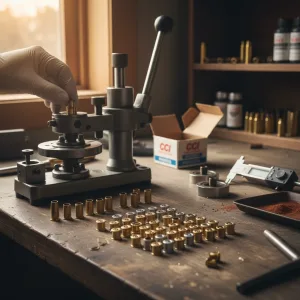
Crimping and bullet seating are vital steps that influence the consistency and safety of your reloaded ammunition. Crimping secures the bullet in the case and helps to improve powder ignition, especially with slow-burning powders. Seating depth, or the distance the bullet is seated into the case, affects pressure and accuracy. Consult your reloading manual for the recommended seating depth for your chosen bullet and cartridge. Using a bullet comparator allows you to accurately measure the bullet seating depth. Adjust the seating die until the bullet is seated to the correct depth. After seating, crimp the bullet using a crimping die. The amount of crimp required depends on the cartridge and bullet type; heavy crimps are generally used for cartridges in revolvers and lever-action rifles to prevent bullet pull under recoil. Insufficient crimp can lead to bullets moving during the feeding cycle in semi-automatic firearms, causing malfunctions.
One common pitfall is over-crimping, which can damage the bullet or case, potentially increasing pressure. Another is inconsistent seating depth, which can affect accuracy and velocity. Always check a few finished rounds with a caliper to ensure that they meet the specified overall length (OAL) and that the crimp is uniform. Ensure the case mouth is properly chamfered and deburred to facilitate smooth bullet seating. The combination of proper seating depth and correct crimping contributes significantly to the reliability and accuracy of your reloaded ammunition.
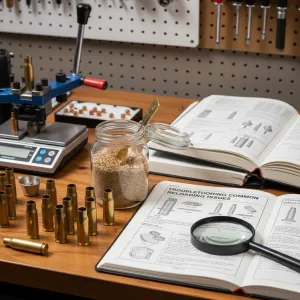
Troubleshooting Common Reloading Issues with Smokeless Powder
Inconsistent velocities: Identifying and correcting powder charge variations.
Inconsistent velocities in reloaded ammunition can stem from several factors, but the most common culprit is powder charge variations. As discussed earlier, precise powder measurement is crucial. Double-check your scale calibration and the operation of your powder measure. Even small variations in powder charge can lead to significant velocity differences. Other factors that can contribute to inconsistent velocities include variations in bullet weight, case volume, and primer seating depth. Use bullets from the same lot number to minimize weight variations. Ensure that all cases are trimmed to the same length to maintain consistent case volume. Seating primers consistently to the bottom of the primer pocket is also important for uniform ignition.
To identify and correct powder charge variations, carefully monitor your reloading process. Weigh every tenth charge to verify the consistency of your powder measure. If you notice significant variations, adjust the measure or consider using a different dispensing method. Inspect your cases for uniform length and primer seating depth. Using a chronograph to measure the velocity of your reloaded ammunition is an excellent way to detect inconsistencies. If you observe significant velocity variations, revisit your reloading process and identify the source of the problem. As https://northernreloading.si/reloading-mastering-consistency-with-smokeless-gun-powder/ explains, careful attention to detail yields the best results. For example: If your target velocity is 1000 fps, but you see a spread from 900 fps to 1100 fps, this clearly indicates a problem needing immediate attention.
Pressure signs: Recognizing and addressing overpressure indicators.
Recognizing and addressing pressure signs is essential for safe reloading. Overpressure can damage your firearm and cause serious injury. Common signs of overpressure include flattened primers, cratered primers, difficult case extraction, and bulged cases. Flattened primers occur when the primer flattens out against the bolt face due to excessive pressure. Cratered primers show a raised ring around the firing pin indentation. Difficult case extraction indicates that the case is stuck in the chamber due to excessive pressure. Bulged cases show an outward expansion of the case near the base.
If you observe any of these pressure signs, immediately stop reloading and reduce your powder charge. Begin again at the minimum recommended load in your reloading manual and work up gradually, carefully watching for pressure signs. It’s also crucial to inspect your firearm for any signs of damage. If you suspect your firearm has been damaged due to overpressure, consult a qualified gunsmith. Do not continue shooting with ammunition that exhibits pressure signs. For instance, if you notice flattened primers after firing a few rounds with a particular load, reduce the powder charge by 0.2 to 0.3 grains and try again. If pressure signs persist at the minimum load, discontinue use of that load and consult your reloading manual for alternative powder and bullet combinations. The safety of yourself and others depends on it.
Powder bridging: Preventing powder clumping and metering problems.
Powder bridging occurs when smokeless gun powder granules clump together, obstructing the flow of powder through the powder measure. This can lead to inconsistent powder charges and potentially dangerous variations in pressure. Certain powders, particularly fine-grained powders, are more prone to bridging. Static electricity can also contribute to powder clumping. To prevent powder bridging, use a powder measure with a vibrating mechanism to help the powder flow freely. You can also use an anti-static brush or dryer sheet to reduce static electricity. Ensure that your powder measure is clean and free of any residue that could contribute to clumping.
Another preventative measure is to avoid pouring the entire powder container into the measure’s hopper. Start with a smaller amount and refill as needed to minimize the powder’s exposure to static. If you experience powder bridging, try tapping the powder measure lightly to dislodge the clumped powder. Alternatively, you can use a small, non-metallic tool to gently break up the clumps. Never use excessive force, as this could damage the powder measure. Regular cleaning and maintenance of your powder measure will also help to prevent powder bridging. Proper powder storage, away from heat and humidity, also helps. As a general guideline, if a specific powder consistently bridges in your measure, consider switching to a different powder with a larger grain size or better flow characteristics.
Choosing the Right Primers for Optimal Ignition with Smokeless Gun Powder
Understanding primer types: Small pistol, large pistol, small rifle, and large rifle.
Primers are a critical component of ammunition, responsible for igniting the powder charge. There are four main types of primers: small pistol, large pistol, small rifle, and large rifle. Each type has different dimensions and is designed for specific cartridges. Small pistol primers are typically used in handgun cartridges like 9mm and .38 Special. Large pistol primers are used in larger handgun cartridges like .45 ACP and .44 Magnum. Small rifle primers are used in rifle cartridges like .223 Remington and 7.62x39mm. Large rifle primers are used in larger rifle cartridges like .308 Winchester and .30-06 Springfield. The size difference is crucial; attempting to use the wrong size primer can result in a failure to ignite the powder or, worse, damage to the firearm.
Within each size category, there are also variations in primer strength or sensitivity. Standard primers provide consistent ignition for most applications. Magnum primers are designed for use with slow-burning powders or in cold weather conditions, providing a hotter spark to ensure reliable ignition. Benchrest primers are manufactured to very tight tolerances for maximum consistency, often used in precision shooting. Use the primer type recommended in your reloading manual for your chosen cartridge and powder. Selecting the correct primer is vital for achieving consistent ignition and optimal performance. Reloading Secrets: Maximizing Performance with Primers at https://northernreloading.si/reloading-secrets-maximizing-performance-with-primers/ provides additional insights on this topic. For example, using a small rifle primer in a 9mm may fit but is not designed to function correctly, posing a safety risk.
Primer compatibility: Selecting primers that match powder burn rate and cartridge requirements.
The compatibility between primers and smokeless powder is crucial for consistent and reliable ignition. Different powders have different burn rates, and the primer must be strong enough to ignite the powder effectively. Fast-burning powders, typically used in handgun cartridges, generally require standard primers. Slow-burning powders, often used in rifle cartridges, may require magnum primers for reliable ignition, particularly in cold weather or with large powder charges. Consulting your reloading manual is essential for determining the appropriate primer for your chosen powder. Some manuals provide specific primer recommendations, while others offer general guidelines.
Consider the cartridge requirements as well. Cartridges with large case capacities or those used in semi-automatic firearms may benefit from magnum primers to ensure consistent ignition and prevent hangfires (delayed ignition). When switching primers, it’s essential to reduce your powder charge and work up gradually, as different primers can affect pressure and velocity. Choosing the Right Primer for Consistent Reloading also has valuable information regarding this. For example, a 300 Win Mag will likely require a different primer than a .38 special. Always prioritize safety and consult reliable reloading data to ensure primer compatibility. The combination of primer and powder must work synergistically to achieve optimal performance and minimize the risk of malfunctions.
The impact of primer selection on accuracy and reliability.
Primer selection significantly impacts the accuracy and reliability of reloaded ammunition. Consistent ignition is essential for achieving uniform velocities and tight groups. Primers with inconsistent output can lead to variations in velocity, affecting accuracy. Magnum primers, while beneficial for igniting slow-burning powders, can also increase pressure and potentially decrease accuracy if not properly matched to the powder and cartridge. Benchrest primers, designed for maximum consistency, can improve accuracy in precision shooting applications.
Reliability is also influenced by primer selection. Using the wrong primer can lead to misfires or hangfires, compromising the reliability of your ammunition. Ensure that the primer is seated properly in the primer pocket. A loose primer can cause misfires, while an over-seated primer can damage the anvil and reduce its sensitivity. Experimenting with different primers can help you to optimize accuracy and reliability for your specific firearm and load. However, always follow safe reloading practices and consult reliable data. For example, switching to a primer with a slightly different heat output can significantly affect group sizes at 100 yards. Fine-tuning your primer selection can be a powerful tool for enhancing the performance of your reloaded ammunition. Prioritize using Reloading Primers: Optimize Performance and Consistency, located at https://northernreloading.si/reloading-primers-optimize-performance-and-consistency/, as a reference point.
Matching Smokeless Gun Powder to Your Firearm: Caliber-Specific Recommendations
Handgun ammo: Selecting powders for popular calibers like 9mm, .45 ACP, and .38 Special.
Selecting the right smokeless gun powder for handgun ammo depends heavily on the caliber and intended use. For 9mm, popular choices include fast-burning powders like Hodgdon Titegroup, Accurate No. 5, and Alliant Power Pistol. These powders produce good velocities with moderate recoil. For .45 ACP, powders like Accurate No. 2, Winchester 231, and Hodgdon Clays are commonly used, providing consistent performance and manageable recoil. For .38 Special, powders such as Alliant Bullseye, IMR Target, and Hodgdon HP-38 are excellent choices, offering good accuracy and mild recoil, especially important for target shooting.
When selecting a powder, consider the bullet weight you’ll be using. Heavier bullets generally require slower-burning powders to achieve optimal velocities without excessive pressure. Also, consider the type of shooting you’ll be doing. For self-defense loads, you may want a powder that produces higher velocities, while for target shooting, accuracy and low recoil are more important. Always consult a reputable reloading manual for load data specific to your chosen bullet and powder. Starting with the minimum recommended load and working up gradually is essential. Remember that handgun ammo requires a higher degree of precision than other ammo types. Also, remember to consider your environment, as well. For instance, if you frequently reload 9mm for use in competition, then something like Titegroup would make sense, as it is known for its consistent burns and accuracy.
Rifle ammo: Choosing powders for .223 Remington, .308 Winchester, and other common rifle calibers.
Selecting the appropriate powder for rifle ammo is crucial for achieving optimal accuracy and velocity. For .223 Remington, popular choices include Hodgdon Varget, IMR 4895, and Accurate 2230. These powders provide excellent accuracy and consistent performance with a wide range of bullet weights. For .308 Winchester, powders like IMR 4064, Hodgdon Varget, and Alliant Reloder 15 are frequently used, offering good velocities and accuracy with both light and heavy bullets. Other common rifle calibers, such as .30-06 Springfield, often benefit from powders like IMR 4350, Hodgdon H4350, and Alliant Reloder 19, which provide excellent velocity and consistent performance with heavier bullets.
When selecting a powder, consider the bullet weight and intended use. Lighter bullets generally require faster-burning powders, while heavier bullets benefit from slower-burning powders. For hunting loads, you may want a powder that provides maximum velocity and flat trajectory. For target shooting, accuracy and consistent performance are more important. Also, keep in mind that some powders are temperature-sensitive, meaning their performance can vary depending on the ambient temperature. Choosing a temperature-insensitive powder is often desirable for consistent performance in different conditions. Rifle Ammo Guide: Caliber Selection for Hunters, available at https://northernreloading.si/rifle-ammo-guide-caliber-selection-for-hunters/, offers more information regarding bullet weight and trajectory. For example, a .223 load being used for varmint hunting will require drastically different load data than one being used for target practice.
Shotgun ammo: Selecting powders for 12 gauge, 20 gauge, and other shotgun loads.
Shotgun reloading requires careful attention to detail, and powder selection is a critical aspect. For 12 gauge, popular powders include Alliant Unique, Hodgdon Universal, and IMR 700-X. These powders provide consistent performance for a wide range of loads, from light target loads to heavier hunting loads. For 20 gauge, powders like Alliant 20/28, Hodgdon Longshot, and IMR SR 7625 are commonly used, offering good velocities and consistent patterns. Other shotgun gauges, such as 16 gauge and .410 bore, require specific powders designed for those gauges.
When selecting a powder, consider the type of shooting you’ll be doing. For target loads, you’ll want a powder that produces consistent patterns with low recoil. For hunting loads, you’ll need a powder that provides sufficient velocity and energy to effectively take down game. Also, consider the wad and shot type you’ll be using, as these factors can affect pressure and performance. Always consult a reputable reloading manual for load data specific to your chosen components. Shotgun reloading is particularly sensitive to component variations, so it’s essential to follow the manual’s recommendations precisely. Any deviation can lead to unsafe pressures or poor performance. It’s also important to ensure you are using components rated for the pressures produced by the powder. For example, many older shotguns cannot safely handle modern high-pressure loads.
Smokeless Gun Powder Burn Rate Charts: Deciphering the Data
Understanding burn rate relationships: Faster vs. slower burning powders.
Understanding the relationship between powder burn rate and its impact on your reloading process is essential. Faster burning powders, like those used in handgun ammo, generate pressure more rapidly. This makes them suitable for shorter barrels and smaller case capacities. Conversely, slower burning powders, typically used in rifle ammo, produce pressure over a longer duration, maximizing velocity in longer barrels. Using the wrong burn rate can lead to dangerous pressure spikes or, at the other extreme, incomplete combustion and poor performance. It’s vital to consult reputable reloading manuals and https://northernreloading.si/smokeless-gun-powder-choosing-the-right-one-for-reloading/ guidance when selecting a powder. For example, using a powder designed for .223 Remington in a .44 Magnum cartridge would be highly inappropriate and potentially hazardous.
Interpreting burn rate charts: Using the data to predict performance.
Burn rate charts provide a relative comparison of different powders. These charts typically list powders from fastest to slowest burning, allowing reloaders to select appropriate powders for their specific cartridges and firearms. It is important to note that these charts are relative and not absolute; they offer a general guideline, but actual performance can vary depending on numerous factors, including bullet weight, case volume, and primer type. Consider the Hodgdon Powder Burn Rate Chart as an example; while helpful, it only gives a ranking. Always start with the manufacturer’s recommended load data and work up gradually, carefully monitoring for pressure signs. Reloading requires precision, and relying solely on burn rate charts without cross-referencing with load data is a recipe for disaster. Accurate scales and measuring tools are critical for consistent results.
How burn rate affects pressure and velocity.
The burn rate of smokeless gun powder directly influences both pressure and velocity. Faster burning powders create a rapid pressure increase, potentially leading to higher peak pressures but also a shorter duration of pressure. This can be beneficial in shorter-barreled firearms where quick pressure generation is needed to achieve adequate velocity. Slower burning powders, on the other hand, generate pressure more gradually and sustain it for a longer duration. This is ideal for longer barrels as it allows the bullet to accelerate for a longer distance, resulting in higher velocities. Selecting the correct burn rate is a balancing act. Too fast, and you risk overpressure; too slow, and you may not achieve sufficient velocity for reliable cycling or terminal performance. Reloading data provides specific charge weights for each powder, designed to achieve optimal pressure and velocity within safe limits. Always adhere to these guidelines and never exceed the maximum recommended charge.
Advanced Reloading Techniques: Optimizing Performance with Smokeless Powder
Powder compression: Enhancing ignition and consistency.
Powder compression, where the powder charge is slightly compressed when the bullet is seated, can improve ignition consistency and reduce velocity variations, especially with slower burning powders in larger cases. This technique ensures that the powder is uniformly packed, minimizing air gaps and promoting more consistent combustion. However, it’s crucial to avoid excessive compression, which can significantly increase pressure and potentially damage the firearm. Always consult reliable reloading manuals for recommended compression ratios and never exceed the specified maximum. A common pitfall is attempting to compress powders that are not designed for compression; this can lead to unpredictable results and dangerous pressure spikes. As an example, a reloader might use a powder that requires 1/8″ compression in a .30-06 case to achieve optimal performance, carefully measuring and monitoring pressure signs during load development.
Progressive reloading presses: Improving efficiency and throughput.
Progressive reloading presses significantly increase efficiency and throughput by performing multiple reloading operations simultaneously at different stations. These presses automate tasks such as resizing, priming, powder charging, bullet seating, and crimping, allowing reloaders to produce ammunition much faster than with single-stage presses. However, progressive presses also require more attention to detail and careful setup to ensure consistent and safe ammunition. Common pitfalls include improper die adjustment, inconsistent powder drops, and failure to catch errors in the priming or bullet seating stages. Regular maintenance and calibration of the press are essential for maintaining accuracy and reliability. For instance, a skilled reloader using a progressive press can produce several hundred rounds of consistent handgun ammo per hour with proper setup and monitoring.
Developing custom loads: Tailoring ammunition to specific firearms.
Developing custom loads allows reloaders to tailor ammunition to the specific characteristics of their firearms, optimizing accuracy, velocity, and overall performance. This involves carefully selecting components such as bullets, primers, and smokeless gun powder, and adjusting charge weights to achieve the desired results. However, it’s crucial to approach custom load development with caution and adhere to established safety protocols. Always start with published load data from reputable sources and work up gradually, carefully monitoring for pressure signs. A critical pitfall is deviating too far from established data without a thorough understanding of internal ballistics. For example, a competitive shooter might develop a custom load for their rifle, fine-tuning the powder charge and bullet seating depth to achieve optimal accuracy at a specific range, after extensive testing and data analysis. Remember to carefully document each load and its performance.
Legal Considerations: Shipping and Handling Regulations for Smokeless Gun Powder (Canada and US)
Permits and licenses: Understanding federal and state/provincial requirements.
The legal landscape surrounding smokeless gun powder is complex, with varying requirements at the federal, state, and provincial levels in both Canada and the US. In the United States, federal regulations are primarily governed by the Bureau of Alcohol, Tobacco, Firearms and Explosives (ATF). Individual states may have additional requirements for purchasing, possessing, and storing smokeless powder. Similarly, in Canada, permits and licenses may be required under the Explosives Act and related provincial legislation. It’s the reloader’s responsibility to be aware of and comply with all applicable laws. A common misconception is that if one state or province doesn’t require a permit, then none do. This is false; always verify the specific requirements in your jurisdiction before purchasing or handling smokeless powder.
Shipping restrictions: Packaging, labeling, and transportation guidelines.
Shipping smokeless gun powder is subject to strict regulations

About author



Add comment