Smokeless Gun Powder: Reloading for Beginners & Pros
Smokeless gunpowder is the heart of modern ammunition, and understanding its nuances is crucial for both beginner and experienced reloaders. This isn’t just about making bullets go bang; it’s about achieving consistent accuracy, optimizing performance for your specific firearm, and ensuring safety every step of the way. With advancements in powder technology constantly emerging, staying informed is paramount to unlocking the full potential of your reloading endeavors.
From selecting the right type of powder to mastering precise measuring techniques, this guide will equip you with the knowledge you need to safely and effectively reload ammunition using smokeless gunpowder. We’ll explore the different types of powders, the essential equipment needed, and the step-by-step process for reloading rifle ammo. Let’s dive in!
Unlock Peak Performance: Why Smokeless Gun Powder Matters in 2026
Consistency and Accuracy: The Foundation of Successful Reloading
In the pursuit of precision, consistent ammunition performance is paramount. Smokeless gunpowder plays a vital role in achieving this consistency. Variations in powder charge weight or burn rate can lead to significant deviations in bullet velocity and trajectory, ultimately impacting accuracy. By carefully selecting and managing smokeless gunpowder, reloaders can significantly tighten their groups and improve their overall shooting performance. For example, a reloader using inconsistent powder charges might see a variation of 50-100 feet per second in bullet velocity, leading to noticeable differences in impact points at longer ranges. Conversely, precise powder charging can reduce velocity variations to within 10-20 feet per second, resulting in much tighter groupings. A key aspect to consider is the consistency of the primer used in conjunction with the powder as well.
Understanding Burn Rates: Matching Powder to Your Cartridge
Burn rate is a critical characteristic of smokeless gunpowder. It refers to how quickly the powder combusts, influencing the pressure curve within the cartridge. Different cartridges require different burn rates to achieve optimal performance and safety. Fast-burning powders are typically used in handgun cartridges, while slower-burning powders are better suited for rifle cartridges. Using the wrong burn rate can lead to under- or over-pressure situations, potentially damaging the firearm or causing injury. A reloader working with a .223 Remington cartridge, for example, would typically use a medium-burning powder. Trying to substitute a very fast-burning pistol powder could result in dangerously high pressures, while using an extremely slow-burning magnum rifle powder might lead to incomplete combustion and poor performance.
Modern Innovations: Advancements in Smokeless Powder Technology
Smokeless gunpowder technology is continuously evolving. Manufacturers are constantly working to improve powder formulations, resulting in cleaner burning, more temperature-stable, and more energy-efficient powders. These advancements translate to enhanced accuracy, reduced fouling, and more consistent performance across a wider range of environmental conditions. For instance, some modern powders incorporate additives that minimize copper fouling in the barrel, extending shooting sessions and improving accuracy. Temperature-stable powders maintain consistent performance even in extreme hot or cold weather, a critical factor for hunters and competitive shooters. Consider Alliant Powder’s Reloder series, which is known for its temperature stability and consistent performance. Keep an eye on new product releases and reviews to stay up-to-date with the latest advancements in smokeless powder technology. Check reputable reloading forums and manufacturer websites for the most current information. Hodgdon Powder also provides data sheets on the characteristics of their powder. Staying current in any market is the best way to retain a competitive edge.
Decoding Smokeless Gun Powder: A Beginner’s Guide to Types and Characteristics

Single-Base vs. Double-Base vs. Triple-Base Powders: Composition and Implications
Smokeless powders are broadly categorized into single-base, double-base, and triple-base types, based on their chemical composition. Single-base powders primarily consist of nitrocellulose. They are known for their good temperature stability and consistent burn characteristics. Double-base powders contain both nitrocellulose and nitroglycerin, resulting in higher energy content and potentially higher velocities. However, they may be more sensitive to temperature changes than single-base powders. Triple-base powders, containing nitrocellulose, nitroglycerin, and nitroguanidine, are less common in small arms ammunition and are primarily used in larger caliber applications due to their reduced flame temperature and potential for higher energy. For example, a reloader primarily concerned with temperature stability might opt for a single-base powder, while someone seeking maximum velocity might choose a double-base powder. Always consult reloading manuals and manufacturer data for specific recommendations.
Granule Size and Shape: Ball, Flake, and Extruded – Choosing the Right One
The physical form of smokeless powder, including its granule size and shape, significantly impacts its metering characteristics and burn rate. Ball powders, also known as spherical powders, are small and round, allowing them to flow easily through powder measures. Flake powders are flat and thin, offering a larger surface area for rapid ignition. Extruded powders, also called stick powders, are cylindrical and come in various lengths. Extruded powders tend to meter less consistently than ball powders, requiring careful attention to powder charge weights. When selecting a powder, consider the type of powder measure you will be using and the desired level of precision. Ball powders are generally preferred for progressive reloading presses due to their smooth metering. The selection of a powder type must always be balanced with what the loading data recommends for your particular cartridge.
Understanding Powder Codes: Deciphering the Manufacturer’s Information
Smokeless powder manufacturers use specific codes and names to identify their products. These codes provide valuable information about the powder’s burn rate, composition, and intended applications. Learning to decipher these codes is crucial for selecting the appropriate powder for your reloading needs. For example, Hodgdon’s H4350 is a popular extruded powder known for its consistent performance in a wide range of rifle cartridges. The “H” indicates that it’s a Hodgdon powder, and “4350” refers to its relative burn rate. Similarly, IMR 4064 is another well-known extruded powder with a different burn rate than H4350. Always consult reloading manuals and manufacturer websites to understand the specific characteristics and applications of each powder. These resources will provide detailed information about the powder’s intended use, recommended load data, and safety precautions.
Essential Equipment for Reloading Smokeless Gun Powder: A Checklist for Safety and Precision
Reloading Press: Single Stage vs. Progressive – Which is Right for You?
The reloading press is the central piece of equipment in any reloading setup. There are two main types: single-stage and progressive presses. Single-stage presses perform one operation at a time, requiring the reloader to manually cycle through each step. They are ideal for beginners and for reloaders who prioritize precision over speed. Progressive presses, on the other hand, perform multiple operations simultaneously with each pull of the handle. They are much faster than single-stage presses but require more experience and attention to detail. For example, a beginner might start with a single-stage press to learn the fundamentals of reloading and gradually transition to a progressive press as their skills and experience grow. A reloader focused on producing large quantities of ammunition for practice or competition would likely benefit from a progressive press. However, for reloading specialized or high-precision ammunition, a single-stage press might be the better choice. Consider the volume of ammunition you intend to reload and your level of experience when selecting a reloading press.
Powder Scale and Dispenser: Achieving Accurate Measurements
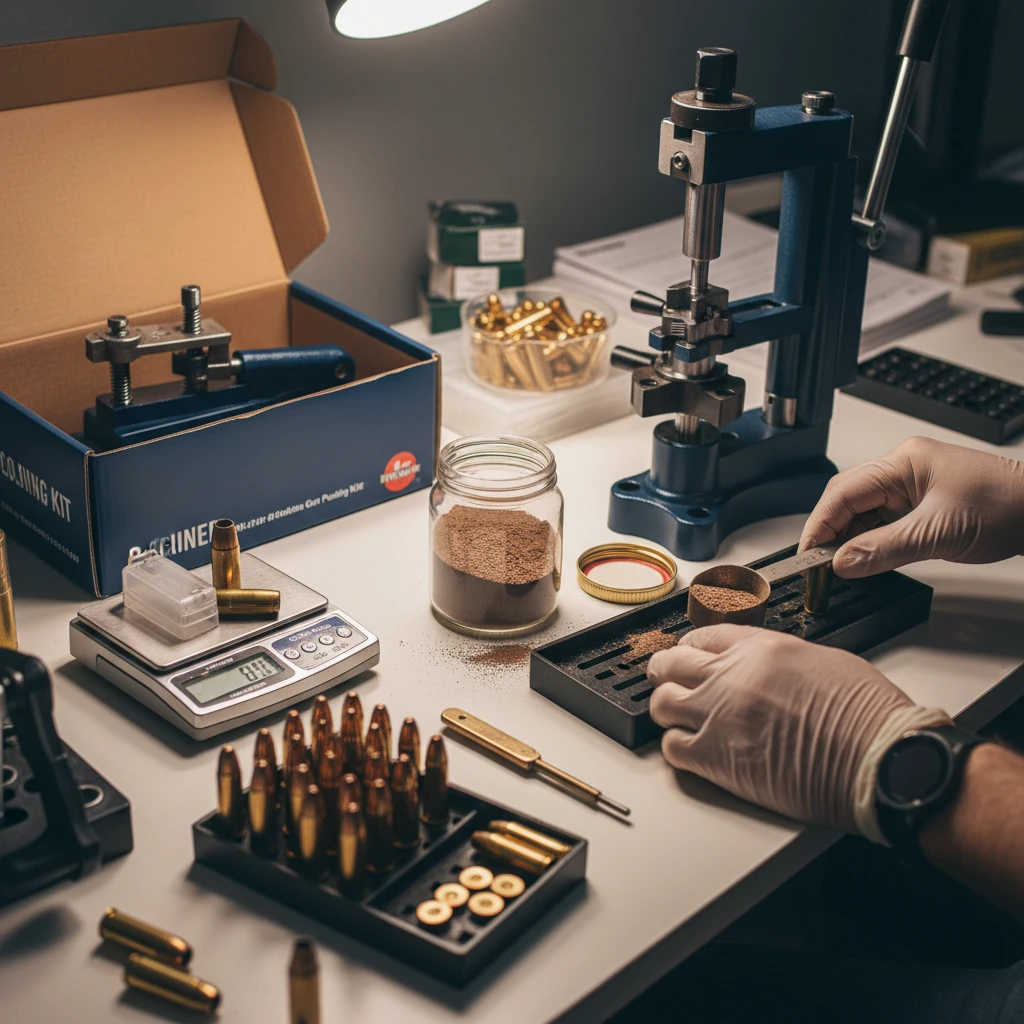
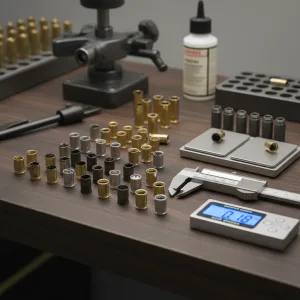
Accurate powder measurement is critical for safe and consistent reloading. A reliable powder scale is essential for verifying powder charges and ensuring they fall within the recommended range specified in reloading manuals. Powder dispensers are used to dispense powder charges quickly and efficiently. There are two main types of powder dispensers: manual and automatic. Manual dispensers require the reloader to manually adjust the powder charge, while automatic dispensers use electronic sensors and motors to dispense precise powder charges. A good quality powder scale should be accurate to within 0.1 grain. For example, a reloader might use a manual powder dispenser to throw a charge close to the desired weight and then use a powder scale to trickle the remaining powder until the exact weight is achieved. Automatic powder dispensers can significantly speed up the reloading process, but it’s still important to periodically verify their accuracy with a powder scale. Invest in a quality powder scale and dispenser to ensure accurate and consistent powder charges.
Safety Gear: Eye Protection, Ventilation, and Static Control
Safety should always be the top priority when reloading ammunition. Eye protection is essential to protect against stray powder particles or primer fragments. A well-ventilated workspace is crucial to minimize exposure to harmful fumes from smokeless gunpowder. Static electricity can ignite smokeless powder, so it’s important to take steps to control static buildup. This can be achieved by using grounding mats, anti-static wrist straps, and avoiding synthetic clothing. A reloader should always wear safety glasses when handling smokeless powder and primers. Reloading benches should be located in well-ventilated areas, away from sources of ignition. Always consult safety guidelines and follow best practices when handling smokeless gunpowder. For example, spilled powder should be cleaned up immediately with a damp cloth to prevent accidental ignition. Proper storage of smokeless powder is equally important; it should be stored in a cool, dry place, away from direct sunlight and heat sources. Also be sure that you follow storage safety tips and best practices as laid out by the powder manufacturers.
Step-by-Step: The Smokeless Powder Reloading Process for Rifle Ammo
Case Preparation: Cleaning, Priming, and Resizing
Before reloading, used cartridge cases must be properly prepared. This involves cleaning the cases to remove dirt and residue, resizing them to ensure they fit properly in the firearm’s chamber, and priming them with new primers to ignite the powder. Cases can be cleaned using a tumbler or ultrasonic cleaner. Resizing is typically done with a resizing die in the reloading press. Priming can be done manually with a hand priming tool or with a priming system integrated into the reloading press. For example, a reloader might tumble their cases in a media tumbler to remove dirt and tarnish. They would then resize the cases using a full-length resizing die. Finally, they would seat new primers using a hand priming tool. Proper case preparation is essential for ensuring reliable ignition and consistent accuracy. Note that the type of primer used must be appropriate for the powder and cartridge.
Powder Charging: Precise Measurement and Dispensing Techniques
Powder charging is the process of dispensing the correct amount of smokeless powder into the prepared cartridge case. This is a critical step that requires precise measurement and careful attention to detail. Powder can be dispensed using a manual powder dispenser, an automatic powder dispenser, or by weighing each charge individually on a powder scale. The amount of powder dispensed should always be within the range specified in reloading manuals. For example, a reloader might use a manual powder dispenser to throw a charge close to the desired weight and then use a powder scale to trickle the remaining powder until the exact weight is achieved. It’s important to double-check each powder charge to ensure consistency. Variations in powder charge weight can lead to significant variations in bullet velocity and pressure. Maintaining detailed reloading data, as discussed in this article, is invaluable for achieving precision.
Bullet Seating: Achieving Correct Overall Length (COL)
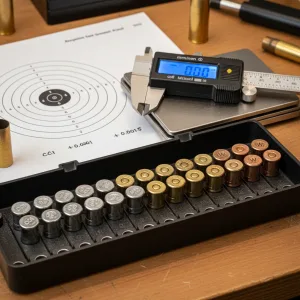
Bullet seating is the process of inserting the bullet into the cartridge case to the correct depth. The overall length (COL) of the loaded cartridge is a critical dimension that affects pressure, accuracy, and feeding reliability. The COL should always be within the range specified in reloading manuals. Bullet seating is typically done with a seating die in the reloading press. The seating die allows the reloader to adjust the seating depth and crimp the case mouth around the bullet. For example, a reloader might use a caliper to measure the COL of their loaded cartridges and adjust the seating die until the COL is within the specified range. Too long of a COL can cause the bullet to engage the rifling prematurely, leading to increased pressure. Too short of a COL can affect accuracy and feeding reliability. Precise bullet seating is essential for consistent performance and safety. Ensure your reloading space has ample lighting.
Handgun Ammo Reloading with Smokeless Powder: Specific Considerations and Techniques
Reloading handgun ammo presents unique challenges compared to rifle ammo due to the generally lower pressures and shorter barrels involved. This requires careful attention to detail to ensure reliable cycling and consistent accuracy. Unlike rifle reloading, where precise neck sizing and bullet seating depth adjustments can significantly impact long-range accuracy, handgun reloading often focuses more on achieving reliable feeding and proper crimp. Furthermore, because handguns operate at lower pressures, a slight variation in powder charge can have a more noticeable effect on velocity and point of impact. Therefore, selecting the correct smokeless powder and developing a load tailored to your specific handgun is crucial for achieving optimal performance.
Case Mouth Belling and Crimp: Ensuring Proper Bullet Retention
Belling the case mouth is essential for handgun reloading. This slight flaring of the case mouth allows the bullet to be seated without shaving lead or copper, which can negatively impact accuracy and lead to fouling of the barrel. After seating the bullet to the correct depth, a crimp is applied to ensure proper bullet retention during the firing cycle and to assist with consistent powder ignition. There are different types of crimps, including roll crimps (typically used for revolver ammo) and taper crimps (commonly used for semi-automatic pistol ammo). Using the correct crimp die and adjusting it properly is essential for reliable feeding and consistent performance. Insufficient crimp can lead to bullets moving forward in the magazine during recoil, while excessive crimp can deform the bullet and increase pressure.
Choosing the Right Projectile for Handgun Reloading
The selection of the right projectile is paramount. Factors to consider include bullet weight, shape, and composition. Heavier bullets generally produce more recoil but also deliver more energy, while lighter bullets offer higher velocities. Bullet shape affects feeding reliability, with round-nose or truncated-cone bullets typically feeding more smoothly in semi-automatic pistols. The composition of the bullet, such as lead, copper-plated lead, or jacketed hollow points, influences its expansion characteristics and suitability for different applications. For example, jacketed hollow points are often preferred for self-defense due to their controlled expansion and increased stopping power. Always consult reputable reloading manuals for recommended bullet weights and powder charges for your specific caliber and firearm.
Load Development: Starting Low and Working Up
Developing a safe and accurate load requires a systematic approach. Always start with the minimum powder charge listed in a reputable reloading manual for your chosen bullet and powder combination. Gradually increase the powder charge in small increments (typically 0.1 to 0.2 grains) while monitoring for signs of excessive pressure, such as flattened primers, difficult extraction, or bulging cases. Testing should be done at a proper shooting range. Accuracy testing should be performed at each charge level to determine the optimal load for your firearm. It’s important to understand that even small changes in components or loading techniques can affect pressure and performance. Never exceed the maximum powder charge listed in the reloading manual. As discussed in “Reloading Data: Mastering Smokeless Gun Powder for Precision“, consistency in technique is key throughout the load development process.
Primers: The Igniters of Smokeless Powder – Choosing the Right One for Your Load
Primers play a crucial role in the reloading process by initiating the combustion of smokeless powder. Choosing the correct primer is essential for reliable ignition, consistent velocities, and optimal accuracy. Understanding the different primer sizes and types is paramount to safe and effective reloading. Using the wrong primer can result in misfires, squib loads, or even dangerous overpressure situations. The proper primer ensures the powder ignites correctly and provides the necessary energy to propel the bullet down the barrel.
Primer Sizes: Small Pistol, Large Pistol, Small Rifle, Large Rifle – Compatibility Matters
Primers are manufactured in various sizes, each designed for specific cartridge types. The most common sizes are small pistol, large pistol, small rifle, and large rifle. It is absolutely essential to use the correct primer size for your cartridge. Using a primer that is too small will result in a loose fit and potential misfires, while using a primer that is too large can damage the primer pocket and create a dangerous situation. Reloading manuals specify the correct primer size for each cartridge. For example, 9mm Luger and .45 ACP typically use small pistol primers, while .357 Magnum and .44 Magnum use small or large pistol primers depending on the specific load data. Rifles like the .223 Remington use small rifle primers, and larger rifle calibers such as .30-06 Springfield use large rifle primers. Double-check your reloading data and confirm that you have the correct primer size before proceeding.
Primer Types: Standard vs. Magnum – When to Use Each
In addition to size, primers are also available in standard and magnum versions. Magnum primers produce a hotter and longer-duration flame, which is necessary for igniting certain types of smokeless powders, particularly ball powders and heavily compressed loads. Standard primers are generally suitable for most common handgun and rifle loads using faster-burning powders. Using a magnum primer when a standard primer is called for can increase pressure significantly, potentially leading to dangerous overpressure conditions. Conversely, using a standard primer with a powder that requires a magnum primer may result in inconsistent ignition and reduced velocities. Reloading manuals will specify whether a standard or magnum primer is recommended for a particular load. Typically, magnum primers are recommended for larger capacity cartridges, cold weather conditions, or when using slow-burning powders. The choice between standard and magnum primers can affect the performance and safety of your reloads, as covered more deeply in “Reloading Primers: Optimize Performance and Consistency.”
Primer Seating Depth: Ensuring Reliable Ignition
Proper primer seating depth is critical for reliable ignition. The primer should be seated fully and uniformly, slightly below the surface of the case head. If the primer is not seated deeply enough, it may not ignite reliably, resulting in a misfire. If the primer is seated too deeply, it can be crushed or damaged, also leading to a misfire. A properly seated primer should be flush with or slightly below the case head surface, typically by 0.003 to 0.005 inches. Use a primer seating tool that allows for consistent and controlled seating depth. After seating the primer, visually inspect each case to ensure that the primer is seated correctly. Inconsistent primer seating can lead to variations in ignition timing and velocity, negatively impacting accuracy. As discussed in “Choosing the Right Primer for Consistent Reloading“, optimal seating contributes significantly to consistent performance.
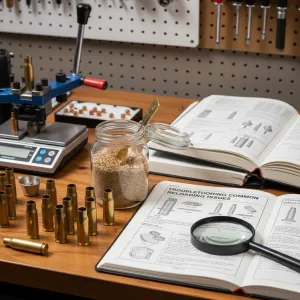
Troubleshooting Common Reloading Problems: Addressing Issues with Smokeless Gun Powder
Reloading, while rewarding, can sometimes present challenges. Issues related to smokeless powder are common, and understanding how to diagnose and resolve them is essential for safe and consistent reloading. Common problems include inconsistent velocities, signs of excessive pressure, and misfires. Addressing these issues requires a systematic approach, careful observation, and a thorough understanding of the reloading process. Correctly interpreting these signs can prevent dangerous situations and ensure reliable performance.
Inconsistent Velocity: Identifying and Resolving Powder Charge Variations
Inconsistent velocities are often a sign of powder charge variations. This can be caused by several factors, including inconsistent powder measuring, improperly calibrated scales, or variations in powder density. Ensure that your powder measure is dispensing consistent charges by weighing each charge periodically. Verify the accuracy of your scale using calibrated weights. Check for bridging or clumping of the powder in the powder measure, which can lead to inconsistent charges. Consider using a powder trickler to fine-tune powder charges for maximum consistency. Another factor could be temperature sensitivity of the smokeless powder; some powders exhibit greater velocity changes with temperature variations. Keep detailed records of your reloading data, including powder charges and velocities, to identify trends and potential problems. If the powder is old, it may degrade and lead to inconsistency; replace it with a fresh batch.
Pressure Signs: Reading Primers and Cases for Overpressure
Recognizing the signs of excessive pressure is crucial for safe reloading. Common indicators include flattened or cratered primers, excessive case head expansion, difficult extraction, and bulging cases near the base. Flattened primers occur when the pressure is high enough to flatten the primer against the bolt face. Case head expansion can be measured using a micrometer, and excessive expansion indicates that the case is being subjected to pressures beyond its design limits. Difficult extraction is a sign that the case is tightly wedged in the chamber due to high pressure. Bulging cases near the base are a serious sign of overpressure and indicate that the case is near its breaking point. If you observe any of these signs, immediately stop reloading and reduce your powder charge. Consult your reloading manual and verify that your load data is within safe limits. It’s also wise to have your firearm checked by a gunsmith if you suspect any damage from overpressure. Understanding the nuances of these pressure signs is a key skill for any reloader.
Misfires: Diagnosing and Preventing Ignition Failures
Misfires, or failures to ignite the powder charge, can be caused by several factors. Common causes include improperly seated primers, contaminated primers, or insufficient firing pin strike. Ensure that primers are seated fully and uniformly, slightly below the surface of the case head. Check the primer pockets for debris or obstructions that could prevent proper seating. Store primers in a dry, cool place to prevent contamination. Inspect the firing pin for damage or wear, and ensure that it is delivering a strong, consistent strike. If you experience frequent misfires with a particular lot of primers, consider switching to a different brand or lot number. Sometimes, using a magnum primer can resolve ignition issues with certain powders or in cold weather conditions. A thorough examination of your components and equipment can help identify and prevent future misfires.
Safety First: Best Practices for Handling and Storing Smokeless Gun Powder
Smokeless gun powder is a flammable substance that requires careful handling and storage to prevent accidents. Adhering to best practices is essential for the safety of yourself, your family, and your property. This includes minimizing the risk of static electricity, maintaining proper storage conditions, and following safe disposal procedures. A proactive approach to safety ensures a secure and enjoyable reloading experience. Proper storage is essential.
Static Electricity Hazards: Minimizing Risk During Reloading
Static electricity can ignite smokeless powder, creating a serious fire hazard. Minimize the risk of static discharge by grounding yourself before handling powder. Avoid wearing synthetic clothing, which can generate static electricity. Use a static-dissipative mat on your reloading bench to provide a grounding surface. Keep humidity levels in your reloading area within a moderate range, as dry air promotes static buildup. When pouring powder, do so slowly and deliberately to minimize friction. Avoid using vacuum cleaners to clean up spilled powder, as they can generate static electricity. Instead, use a soft brush and a dustpan, and dispose of the spilled powder properly. Taking these precautions can significantly reduce the risk of static-induced ignition.
Proper Storage: Temperature, Humidity, and Container Requirements
Smokeless powder should be stored in a cool, dry, and well-ventilated area, away from heat sources, open flames, and electrical equipment. Ideal storage temperatures are below 70°F (21°C), and humidity levels should be kept low to prevent degradation of the powder. Store powder in its original container or in a specifically designed powder magazine or storage cabinet that is constructed of non-sparking materials. Ensure that the container is tightly sealed to prevent moisture from entering. Do not store powder near primers, ammunition, or other flammable materials. Limit the quantity of powder stored in your reloading area to the minimum amount needed for your current reloading project. A well-organized and properly maintained storage area is crucial for ensuring the safety and longevity of your smokeless powder.
Disposal Procedures: Handling Spoiled or Unwanted Powder
Spoiled or unwanted smokeless powder should be disposed of safely and responsibly. Do not pour powder down the drain or throw it in the trash, as this can create a fire or explosion hazard. The preferred method of disposal is to contact your local fire department or hazardous waste disposal facility for guidance. They may have specific procedures for disposing of smokeless powder in your area. Another option is to spread the powder thinly on the ground in a remote, open area and ignite it from a safe distance. However, be sure to check local regulations and obtain any necessary permits before doing so. Never dispose of smokeless powder in a confined space or near flammable materials. Always prioritize safety and environmental responsibility when disposing of spoiled or unwanted powder. Always consult the Sporting Arms and Ammunition Manufacturers’ Institute (SAAMI) for best practices.
Optimizing Your Loads: Fine-Tuning Performance with Smokeless Powder Selection
Selecting the right smokeless powder is only the first step. Optimizing your loads involves fine-tuning to achieve the desired performance characteristics. This includes factors such as velocity, accuracy, recoil, and muzzle flash. Careful experimentation and meticulous record-keeping are critical. Factors to consider when optimizing include the firearm being used, bullet weight and design, and the intended application (e.g., target shooting versus hunting).
Pay close attention to reloading manuals and adhere strictly to recommended starting loads. Work up gradually, monitoring for signs of overpressure, such as flattened primers or difficulty extracting the cartridge. Small changes in powder charge can have a significant impact on performance, so precision is key. Many reloaders find that a chronograph is an indispensable tool for load development.
For instance, you might find that a particular powder produces excellent accuracy with a specific bullet weight, but the velocity is lower than desired. In this case, you could experiment with slightly increasing the powder charge (within safe limits) or trying a different powder with a faster burn rate. Alternatively, adjusting bullet seating depth may also affect pressure and velocity.
Chronograph Testing: Measuring Velocity and Consistency
A chronograph measures the velocity of your bullets, providing critical data for load development. Consistent velocity is essential for accuracy, especially at longer ranges. A chronograph allows you to identify loads that produce consistent velocities with low standard deviations (SD) and extreme spreads (ES). SD measures the variation in velocity from shot to shot, while ES is the difference between the highest and lowest velocities in a string. Lower SD and ES values generally indicate more consistent loads.
To properly use a chronograph, ensure correct setup according to the manufacturer’s instructions. Consistent lighting is crucial for accurate readings. Record the velocity of each shot, along with the powder charge, primer type, bullet weight, and other relevant information. After firing a series of shots (typically 5-10), calculate the average velocity, SD, and ES. Analyze the data to identify loads that exhibit both high velocity and low variation.
For example, you might test a load that produces an average velocity of 2700 fps with an SD of 15 fps. Another load might produce a slightly higher average velocity of 2750 fps, but with an SD of 30 fps. While the second load is faster, the first load is likely to be more accurate due to its greater consistency. Note that environmental conditions like temperature can influence velocities, so consider these factors when comparing data gathered on different days.
Load Development Ladders: Finding the Sweet Spot for Accuracy
A load development ladder involves systematically testing a series of loads with incrementally increasing powder charges. Start with the recommended minimum load from a reliable reloading manual and increase the charge in small increments (e.g., 0.1 or 0.2 grains) up to the maximum load. Fire a group of shots (typically 3-5) with each load, carefully observing for signs of overpressure. Analyze the targets to identify the load that produces the smallest group size. This “sweet spot” represents the optimal powder charge for accuracy in your firearm.
When conducting a load development ladder, it’s essential to maintain consistent shooting technique and use a stable rest. Use a target with a grid or aiming point to facilitate precise aiming. Record the group size and any other relevant observations (e.g., felt recoil, muzzle flash). Once you’ve identified a promising load, you can further refine it by adjusting the bullet seating depth or trying different primers. Consider using a premium primer to enhance consistency and accuracy.
Example: A reloader testing .308 Winchester loads might start with 40.0 grains of a specific powder and increase the charge in 0.2-grain increments up to 42.0 grains. After analyzing the targets, they might find that the 41.2-grain load produces the smallest group size (e.g., 0.75 inches at 100 yards). They would then focus on fine-tuning this load to further improve accuracy.
Adjusting Powder Charge for Optimal Recoil and Muzzle Flash
Beyond accuracy and velocity, recoil and muzzle flash are important considerations for many shooters. Higher powder charges generally produce greater recoil and muzzle flash. Adjusting the powder charge can help to reduce these factors, making the firearm more comfortable to shoot and improving visibility in low-light conditions. Selecting a powder specifically designed to minimize muzzle flash is another important consideration.
Reducing the powder charge will typically decrease recoil, but it may also reduce velocity and accuracy. Finding the optimal balance between these factors requires careful experimentation. Consider using a recoil pad or muzzle brake to further reduce recoil. For low-light shooting, select a powder with a low flash signature. Some powders are specifically formulated to reduce muzzle flash, making them ideal for tactical applications or hunting in dim light. Consult reloading data to identify powders with low flash characteristics.
Example: A shooter reloading for a .44 Magnum revolver might find that a maximum load produces excessive recoil and muzzle flash. They could reduce the powder charge slightly to improve comfort and visibility, while still maintaining acceptable accuracy and velocity. Another option would be to switch to a faster-burning powder that produces less muzzle flash.
Navigating Regulations: Canadian and US Laws Concerning Smokeless Gun Powder in 2026
Reloading enthusiasts must stay informed about the regulations governing smokeless gun powder in both Canada and the United States. These laws cover storage limits, transportation guidelines, licensing requirements, and other important aspects. Regulations can vary at the federal, state/provincial, and local levels, so it’s essential to be aware of all applicable laws.
Failure to comply with these regulations can result in fines, legal penalties, and confiscation of reloading supplies. Staying informed and adhering to all applicable laws is not only a legal requirement but also a matter of safety and responsibility. Consult official government sources and legal professionals for the most up-to-date information.
Storage Limits: Understanding Quantity Restrictions
Both Canada and the United States have regulations regarding the maximum amount of smokeless gun powder that can be stored in a private residence. These limits are designed to minimize the risk of fire or explosion. Exceeding these limits can result in fines or other penalties. The specific limits vary depending on the jurisdiction, so it’s essential to check the local regulations in your area.
In general, the US federal limit is typically 50 pounds of smokeless powder for personal use, however local jurisdictions may have more restrictive rules. Canada’s regulations specify a maximum of [TBD, insert equivalent kg amount] of smokeless powder. When storing smokeless powder, it’s crucial to keep it in its original packaging or in approved containers specifically designed for this purpose. Store powder in a cool, dry place away from heat, sparks, and open flames. The proper storage of smokeless powder is paramount to safety.
Consider investing in a fire-resistant storage cabinet to further enhance safety. Regularly inspect your powder storage area to ensure that it is clean, organized, and free of potential hazards. If you need to store larger quantities of powder, consider using a commercial storage facility that is specifically designed for this purpose.
Transportation Guidelines: Transporting Smokeless Powder Safely and Legally
When transporting smokeless gun powder, it’s essential to follow all applicable regulations to ensure safety and avoid legal issues. These regulations cover the type of vehicle that can be used, the quantity of powder that can be transported, and the packaging requirements. Failure to comply with these guidelines can result in fines, confiscation of the powder, or even criminal charges. Check the regulations of each jurisdiction you will be traveling through, as they can vary significantly.
In the United States, the Department of Transportation (DOT) regulates the transportation of hazardous materials, including smokeless powder. Canada has similar regulations under the Transportation of Dangerous Goods Act. Generally, smokeless powder must be transported in its original packaging or in UN-approved containers. It should be kept away from sources of heat or ignition and secured to prevent shifting during transport. Do not transport smokeless powder in the passenger compartment of a vehicle; instead, store it in the trunk or cargo area. Consider carrying a copy of the relevant regulations in your vehicle for reference.
Example: A reloader transporting smokeless powder across state lines in the US might need to comply with both federal DOT regulations and the specific regulations of the states they are traveling through. They would need to ensure that the powder is properly packaged, secured, and kept away from heat or ignition sources. Additionally, they may need to obtain a permit or license to transport larger quantities of powder.
Licensing and Permits: Staying Compliant with Local Requirements
Depending on your location, you may need to obtain a license or permit to purchase, possess, or store smokeless gun powder. These requirements vary significantly depending on the jurisdiction. It’s essential to research and comply with all applicable licensing and permit requirements in your area. Contact your local law enforcement agency or firearms regulatory agency for more information.
In some states or provinces, a firearms license or permit may be required to purchase smokeless powder. Other jurisdictions may require a separate permit specifically for storing hazardous materials. The application process for these permits typically involves a background check and may require completion of a safety course. Renew your licenses and permits before they expire to avoid any legal issues. Keep copies of your licenses and permits in a safe place and be prepared to present them to law enforcement officials upon request.
Smokeless Gun Powder for Shotgun Ammo Reloading: A Specialized Approach
Reloading shotgun ammo involves different considerations than reloading rifle or handgun ammo. The primary differences lie in the components used (wads, shot, etc.) and the importance of achieving a proper crimp. Smokeless powder selection is also crucial, as shotgun powders are designed to produce consistent patterns and velocities with specific shot weights and wad combinations.
Shotgun reloading requires meticulous attention to detail, as improper assembly can lead to squib loads, overpressure, or poor patterns. Always consult reliable reloading manuals and follow the recommended data precisely. Never substitute components or deviate from the published recipes without understanding the potential consequences. Maintaining consistency in your reloading process is paramount to achieving reliable and accurate shotgun ammo.
Selecting the Right Wad and Shot Combination
The wad and shot combination plays a critical role in the performance of shotgun ammo. The wad serves multiple functions: it seals the bore to prevent gas leakage, cushions the shot column to reduce deformation, and protects the barrel from shot abrasion. Different wads are designed for different shot sizes, powder charges, and hull types. Selecting the correct wad is essential for achieving consistent patterns and velocities.
Shot size affects the range and pattern density of the shotgun load. Smaller shot sizes (e.g., #7.5, #8) are typically used for target

About author



Add comment