Rifle Ammo Guide: Caliber Selection for Hunters
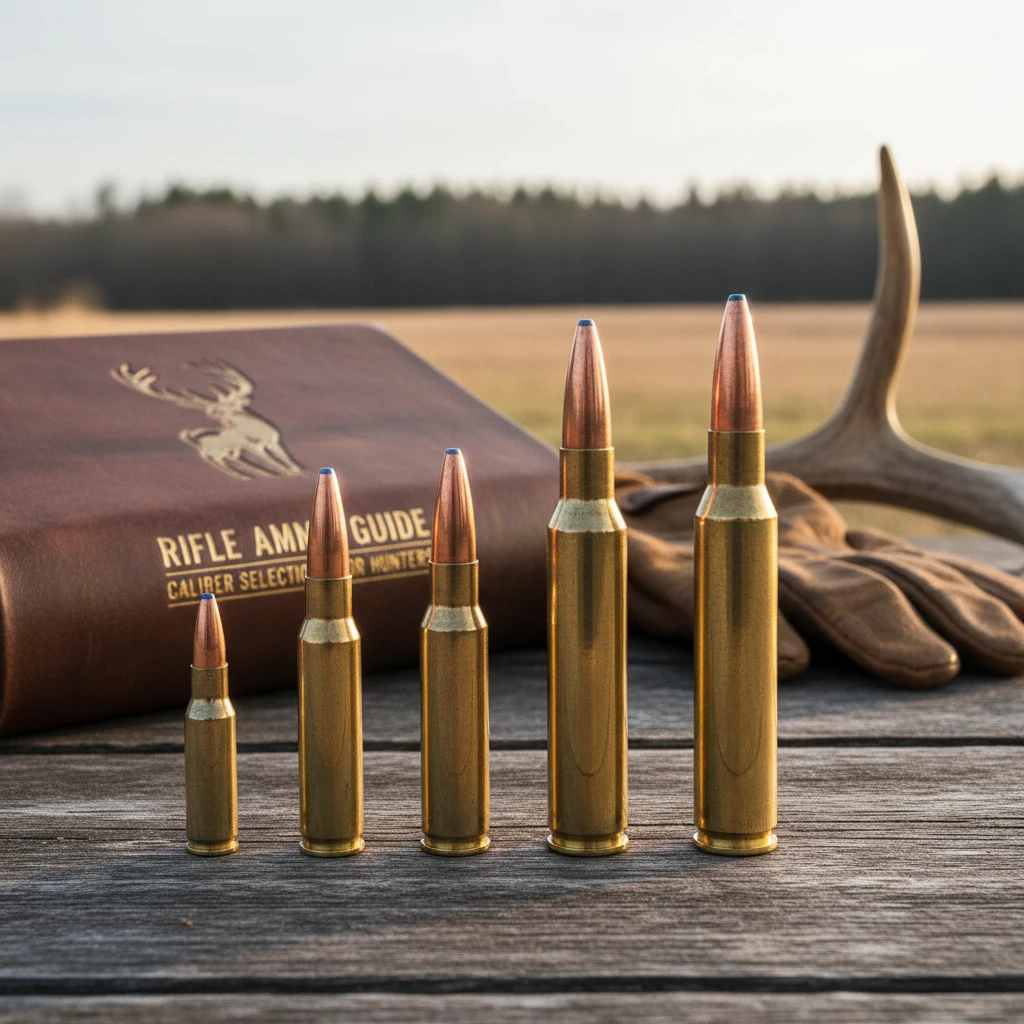
Choosing the right rifle caliber for hunting can feel overwhelming. There’s a vast selection of ammunition, each with its own strengths and weaknesses. This guide breaks down some popular choices, offering insights into their suitability for different game and hunting scenarios. By understanding the fundamentals of ballistics and carefully considering your needs, you can select a caliber that ensures ethical and successful hunts.
This comprehensive guide will explore some commonly used rifle calibers, highlighting their advantages, disadvantages, and best applications. We’ll delve into the .223 Remington/5.56 NATO for small game and varmints, the versatile .243 Winchester for deer and antelope, and the classic .30-06 Springfield for a wide range of game, including larger species like elk and moose. Understanding the nuances of each caliber empowers you to make an informed decision.
Matching Your Rifle’s Purpose to the Perfect Caliber: A Hunter’s Dilemma
The Importance of Caliber Selection: Why It Matters for Ethical Hunting
Selecting the correct caliber isn’t just about putting meat on the table; it’s about ethical hunting. An underpowered caliber can result in a wounded animal, leading to unnecessary suffering. Conversely, an overpowered caliber can cause excessive damage to the meat, wasting valuable resources. The goal is to achieve a quick, humane kill with minimal suffering. Choosing the appropriate caliber ensures sufficient energy transfer to the target, vital organ damage, and a swift end. Failing to consider this aspect can also lead to dangerous tracking situations of wounded animals, increasing the hunter’s risk. Consider your ethical responsibility to the animal and the environment. A poorly chosen caliber also increases the likelihood of ricochet and pass-through shots, posing a safety risk to other hunters or bystanders.
Understanding Ballistics: A Primer for Hunters (Velocity, Energy, Trajectory)
Ballistics is the study of projectiles in motion, and understanding its principles is crucial for hunters. Velocity refers to the speed of the bullet, typically measured in feet per second (fps). Higher velocity generally translates to flatter trajectories and greater energy. Energy, measured in foot-pounds (ft-lbs), indicates the bullet’s ability to inflict damage upon impact. Trajectory is the bullet’s path through the air. A flatter trajectory allows for easier aiming at longer distances, as the bullet drops less. However, these three variables aren’t independent. A heavier bullet might have lower velocity but higher energy, while a lighter bullet might have higher velocity but less energy. Use ballistic calculators and charts to compare different loads and understand their performance at various distances. Furthermore, consider external factors like wind and altitude, which can significantly affect a bullet’s trajectory. Weather conditions and target distance have a compounding effect on ballistic values. For precision reloading data, mastering smokeless gun powder will also boost your accuracy.
Considering Game Size and Hunting Environment: Tailoring Your Choice
The size of the game you’re hunting and the environment in which you’re hunting are critical factors in caliber selection. A small varmint requires a significantly different caliber than a large elk. Consider the animal’s bone structure, muscle mass, and vital organ size. For smaller game like squirrels or prairie dogs, a small, high-velocity round like a .223 Remington is often sufficient. For larger game like deer or elk, a more powerful caliber such as a .270 Winchester, .30-06 Springfield, or .300 Winchester Magnum is necessary. The hunting environment also plays a crucial role. In dense forests with short-range shots, a faster-handling rifle with a moderate-recoiling caliber might be preferable. In open plains with longer-range opportunities, a flatter-shooting, higher-powered caliber might be more advantageous. Always check local hunting regulations to ensure the caliber you choose is legal for the specific game you’re pursuing. Legal caliber requirements are often tied to minimum energy requirements at a specified distance.
.223 Remington/5.56 NATO: Small Game and Varmint Hunting
Pros and Cons: Accuracy, Recoil, and Effective Range
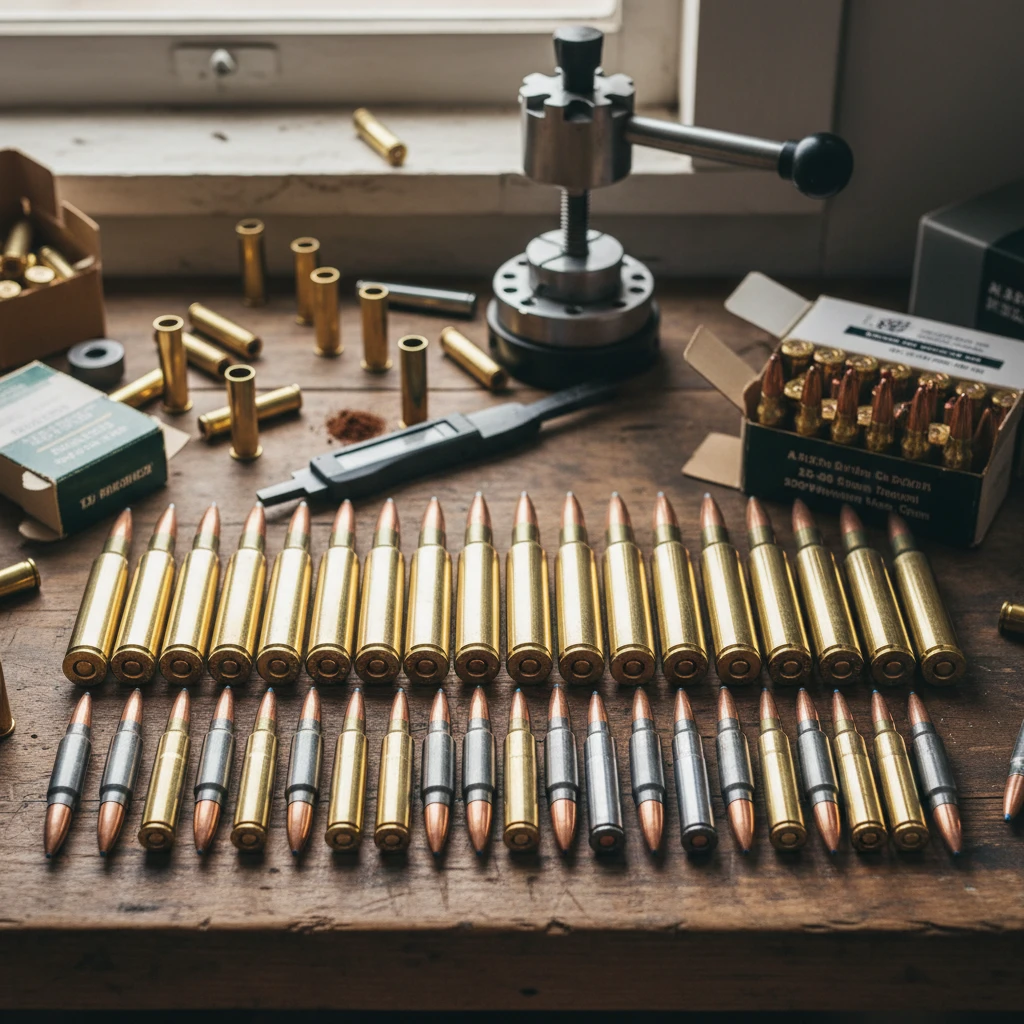
The .223 Remington, also known as 5.56 NATO, is a popular cartridge known for its accuracy, low recoil, and relatively flat trajectory. Its primary advantage is its ease of shooting, making it ideal for introducing new shooters to the sport. The low recoil also allows for quick follow-up shots, especially important when dealing with fast-moving varmints. However, the .223/5.56 has limitations. Its relatively light bullet weight means it lacks the energy needed for larger game. Its effective range is also somewhat limited compared to larger calibers. While accurate out to several hundred yards, its energy drops off significantly beyond 200-300 yards, reducing its effectiveness on larger pests like coyotes at longer distances. Furthermore, its light bullet weight makes it susceptible to wind drift, requiring careful consideration of wind conditions when shooting at longer ranges.
Best Uses: Prairie Dogs, Coyotes, and Other Small Pests
The .223 Remington/5.56 NATO excels at varmint hunting. It is highly effective on prairie dogs, ground squirrels, and other small rodents. It can also be used for coyotes, foxes, and bobcats, but shot placement is crucial. Aim for vital organs such as the heart and lungs to ensure a quick, ethical kill. Avoid shots at longer ranges or when the wind is strong, as the bullet’s trajectory can be easily affected. Consider using heavier bullets (60-77 grain) for better performance in windy conditions and increased energy on larger varmints. Some hunters successfully use the .223/5.56 for small game like rabbits and squirrels, but be mindful of the potential for excessive meat damage. Frangible ammunition can minimize this damage, but shot placement remains important. Check your state and local regulations to ensure the .223/5.56 is legal for your specific species and hunting location. Ensure you’re using ammunition suitable for hunting, as full metal jacket (FMJ) rounds are not typically ethical for hunting purposes.
Ammunition Selection: Finding the Right Load for Your .223/5.56 Rifle
Selecting the right ammunition for your .223/5.56 rifle is crucial for optimizing its performance. Bullet weight, bullet construction, and powder charge all affect accuracy, velocity, and energy. Lighter bullets (40-55 grain) are generally faster and flatter-shooting, making them suitable for prairie dogs and other small varmints at shorter ranges. Heavier bullets (60-77 grain) offer better ballistic coefficients, meaning they retain velocity and resist wind drift better, making them more effective on larger varmints like coyotes at longer ranges. Bullet construction also matters. Varmint bullets are typically designed to expand rapidly upon impact, causing maximum damage to the target. Match-grade ammunition is available for shooters prioritizing extreme accuracy. Experiment with different loads to determine which performs best in your rifle. Each rifle has unique preferences, and finding the right combination can significantly improve your shooting results. Reloading your own ammunition allows for even greater customization and control over bullet weight, powder charge, and overall performance. Learn more about the basics of reloading for smokeless gun powder to create custom loads tailored to your specific needs.
Availability of .223/5.56 rifle ammo from Northern Reloading
[TBD]
.243 Winchester: A Versatile Caliber for Deer and Antelope
Performance on Medium-Sized Game: Deer, Antelope, and Similar Species
The .243 Winchester is a popular choice for hunting medium-sized game like deer and antelope due to its manageable recoil and effective ballistics. It offers a good balance of velocity, energy, and accuracy, making it a versatile option for a variety of hunting situations. When used with appropriate bullet weights and construction, the .243 Winchester can reliably and ethically take deer-sized game at moderate ranges (out to 300 yards). Proper shot placement is critical, as the .243 Winchester is not as forgiving as larger calibers. Aim for vital organs like the heart and lungs to ensure a quick, humane kill. The .243 can also be used for varmint hunting, providing a flatter trajectory and more energy than the .223 Remington, making it a good choice for coyotes and other predators at longer ranges. However, its relatively light bullet weight can be a disadvantage in windy conditions, so consider using heavier bullets or limiting your shots to shorter distances in strong winds.
Recoil and Shootability: A Good Option for Youth and Smaller-Framed Hunters
One of the .243 Winchester’s greatest advantages is its low recoil. This makes it an excellent choice for youth hunters, women, and smaller-framed individuals who may be sensitive to recoil. The reduced recoil allows for better control of the rifle and more accurate follow-up shots. This increased shootability builds confidence and allows hunters to focus on proper shooting technique without being intimidated by the gun’s kick. However, low recoil doesn’t mean the .243 Winchester is a “weak” caliber. With proper bullet selection and shot placement, it is more than capable of ethically harvesting deer and antelope. It’s a good option to consider when training beginner hunters since there’s a lower likelihood of developing recoil anticipation issues. Be sure that even more experienced hunters practice regularly to maintain proficiency and ensure they’re comfortable handling the rifle in various hunting scenarios.
Selecting the Right Bullet Weight and Construction: Optimizing Performance
Choosing the right bullet weight and construction is key to maximizing the .243 Winchester’s performance. For deer and antelope, bullet weights between 90 and 100 grains are generally recommended. These heavier bullets provide adequate penetration and energy transfer for ethical kills. Bullet construction is also important. Look for bullets designed for controlled expansion, which means they expand reliably upon impact but still maintain enough weight to penetrate deeply. Examples include bonded bullets and partition bullets. For varmint hunting, lighter bullets (55-70 grains) can be used. These bullets offer flatter trajectories and higher velocities, making them effective on smaller targets at longer ranges. However, be aware that lighter bullets may not penetrate as deeply, so avoid using them on larger game. Always consult reloading manuals for safe powder charge recommendations. Choosing the correct smokeless gun powder is paramount for achieving optimal ballistic performance.
.30-06 Springfield: The Classic All-Around Hunting Caliber
A Legacy of Performance: Why the .30-06 Remains Popular
The .30-06 Springfield is a truly iconic cartridge with a legacy spanning over a century. Its enduring popularity stems from its versatility and effectiveness on a wide range of game. It offers a potent combination of power, accuracy, and manageable recoil (relative to other large-game calibers), making it a favorite among hunters worldwide. The .30-06 has been used to successfully harvest everything from whitetail deer to moose and even bears. Its widespread availability and vast selection of factory ammunition options further contribute to its popularity. It remains a benchmark against which other cartridges are often compared. The .30-06 has also seen extensive military use, contributing to its widespread recognition and familiarity. Its proven track record and consistent performance ensure its continued relevance in the hunting world.
Effective Game: Deer, Elk, Moose, and Black Bear
The .30-06 Springfield is capable of taking virtually any game animal in North America, making it a true all-around hunting caliber. It is highly effective on deer, providing ample power and penetration for ethical kills at a variety of ranges. It is also well-suited for larger game such as elk and moose, delivering sufficient energy to penetrate thick hides and heavy bone. While the .30-06 can be used for black bear hunting, it’s essential to use heavier bullets with controlled expansion to ensure adequate penetration and stopping power. It’s worth noting that for dangerous game, some hunters might prefer even larger calibers. However, for most hunting scenarios in North America, the .30-06 offers a good balance of power, versatility, and shootability. Shot placement remains critical, regardless of the game being pursued. Ethical hunting practices demand a well-placed shot to ensure a swift and humane kill. Familiarize yourself with the vital anatomy of your target animal and practice regularly to maintain proficiency.
Bullet Selection: Finding the Ideal .30-06 Load for Your Hunt
The .30-06 Springfield offers an incredibly wide range of bullet weights and designs, allowing hunters to tailor their ammunition to specific game and hunting conditions. For deer, bullet weights between 150 and 165 grains are generally recommended. These bullets provide a good balance of velocity, energy, and penetration. For elk and moose, heavier bullets (180-220 grains) are preferred, as they offer increased penetration and stopping power. Bullet construction is equally important. Controlled-expansion bullets are ideal for larger game, as they expand reliably upon impact but retain enough weight to penetrate deeply. Partition bullets, bonded bullets, and monolithic copper bullets are all good choices. For black bear, consider using heavy, controlled-expansion bullets with a reputation for deep penetration. Experiment with different loads to determine which performs best in your rifle and provides the accuracy and terminal performance you desire. Always consult reloading manuals for safe powder charge recommendations when reloading your own ammunition. Pay attention to muzzle velocity and ballistic coefficient when comparing different loads. Consider consulting external ballistics tables like you would find on Content Systems for best practices in content creation.
Find .30-06 rifle ammo at Northern Reloading
[TBD]
.308 Winchester: A Short-Action Alternative to the .30-06
Similar Performance, Shorter Action: Advantages of the .308
The .308 Winchester is often viewed as a ballistic twin to the venerable .30-06 Springfield, but within a shorter action. This allows for lighter and more compact rifles. The .308 achieves comparable muzzle velocities with similar bullet weights, offering excellent performance in a package that is easier to carry and maneuver, particularly in dense hunting environments. However, the .30-06, with its larger case capacity, generally permits heavier bullets and slightly higher velocities with heavier projectiles. The .308 is renowned for its inherent accuracy, a trait that has made it a favorite among target shooters and hunters alike. When selecting a rifle caliber, consider the rifle’s overall weight and size, especially if you plan to be hiking long distances or hunting in confined spaces. For example, if you hunt primarily from treestands or blinds, the length of the action may be less of a concern. A shorter action also typically cycles faster, potentially allowing for quicker follow-up shots, though this advantage is minimal for most hunting scenarios.
Game Suitability: Deer, Elk, and Other Medium to Large Game
The .308 Winchester is a highly versatile cartridge suitable for a wide range of game, from deer and antelope to elk and even black bear. For deer-sized game, bullets in the 150-165 grain range are typically ideal, providing a good balance of velocity, energy, and penetration. When targeting larger game like elk, heavier bullets in the 165-180 grain range are recommended to ensure adequate penetration to reach vital organs. It is crucial to choose a bullet construction that is appropriate for the game you are pursuing. For instance, a soft-point bullet designed for rapid expansion may be effective on deer, but it might not provide sufficient penetration on a large bull elk. Always consult reputable reloading manuals or ammunition manufacturers’ data to determine the optimal bullet weight and construction for your intended quarry. The .308’s effective range can extend out to 400-500 yards under ideal conditions, but ethical hunters should always limit their shots to distances within their skill level and the cartridge’s capabilities. Understanding bullet drop and wind drift is essential for making accurate shots at longer ranges.
Ammunition Availability and Variety: A Wide Range of Options
One of the significant advantages of the .308 Winchester is the widespread availability and vast selection of ammunition. Major ammunition manufacturers such as Remington, Federal, Winchester, and Hornady offer numerous .308 loads tailored for various hunting applications. From economical soft-point bullets for deer hunting to premium controlled-expansion bullets for larger game, you can find ammunition to suit your specific needs and budget. Reloading components for the .308 are also readily available, allowing handloaders to create custom loads optimized for their rifles and hunting conditions. Reloading offers the opportunity to fine-tune accuracy and performance beyond what is commercially available. Careful selection of smokeless gun powder and primers can significantly impact the bullet velocity and overall accuracy of your reloads. Be sure to consult reputable reloading manuals and follow safe reloading practices to ensure consistent and reliable ammunition. Ammunition can vary considerably in price, so consider your budget when selecting a particular load. Cheaper ammo can be fine for practice, but investing in higher-quality ammunition for hunting is generally advisable.
7mm Remington Magnum: Extended Range and Power for Big Game
Flat Shooting Trajectory: Ideal for Long-Range Hunting
The 7mm Remington Magnum is known for its flat trajectory and high velocity, making it an excellent choice for long-range hunting scenarios. Due to its design, the 7mm Rem Mag produces less bullet drop compared to slower, heavier calibers at extended distances. This flatter trajectory reduces the need for significant holdover or scope adjustments, allowing for quicker and more accurate shots, especially in situations where precise range estimation may be challenging. The high velocity also helps to minimize wind drift, further enhancing accuracy at longer ranges. When hunting in open terrain where longer shots are common, such as the plains of Wyoming or the mountains of Montana, the 7mm Rem Mag can provide a distinct advantage. However, it’s crucial to practice extensively at various distances to become proficient with the cartridge’s ballistics and understand its performance in different environmental conditions. Using a ballistics calculator can help predict bullet drop and wind drift at different ranges, allowing you to make informed decisions in the field.
Suitable Game: Elk, Moose, Caribou, and Other Large Animals
The 7mm Remington Magnum is well-suited for hunting large game animals such as elk, moose, caribou, and even some of the larger species of deer. Its high velocity and good sectional density allow for deep penetration, ensuring that bullets reach vital organs even on heavily muscled animals. Bullet weights typically range from 140 to 175 grains, with heavier bullets providing better penetration on larger game. For elk and moose, 160-175 grain bullets are generally preferred to maximize energy transfer and penetration. Selecting a bullet designed for controlled expansion is crucial to ensure that the bullet retains its weight and penetrates deeply without fragmenting prematurely. Some excellent bullet options include Nosler AccuBond, Barnes TTSX, and Hornady InterBond. Ethical shot placement is always paramount, and the 7mm Rem Mag’s inherent accuracy makes it easier to deliver precise shots. However, it’s important to recognize the limitations of any cartridge and avoid taking shots beyond your effective range or when conditions are unfavorable. The 7mm Rem Mag offers a good balance of manageable recoil and sufficient power for most North American big game hunting.
Recoil Management: Tips for Taming the 7mm Rem Mag
While the 7mm Remington Magnum offers significant advantages in terms of range and power, it also produces substantial recoil. Proper recoil management is essential for maintaining accuracy and avoiding flinching. Several techniques can help mitigate the effects of recoil. First, using a rifle with a good recoil pad can significantly reduce felt recoil. Limbsaver and Pachmayr offer excellent aftermarket recoil pads that can be easily installed on most rifles. Second, proper shooting technique is crucial. Maintain a firm grip on the rifle and pull it tightly into your shoulder. Avoid tensing up, as this can exacerbate the effects of recoil. Instead, try to relax and let your body absorb the recoil. Third, consider using a muzzle brake or compensator. These devices redirect gases to reduce recoil, but they also increase noise. Therefore, hearing protection is essential when using a muzzle brake. Finally, practice regularly with your rifle to become accustomed to the recoil and develop good shooting habits. Start with lighter loads if necessary and gradually work your way up to full-power hunting loads. A lead sled or other recoil-reducing device can be helpful during practice sessions.
.300 Winchester Magnum: Maximum Power and Range for North American Game
Long-Range Performance: Reaching Out for Distant Targets
The .300 Winchester Magnum (Win Mag) is renowned for its exceptional long-range performance, delivering high velocities and flat trajectories that make it ideal for hunting in open country. It offers a significant step up in power and range compared to cartridges like the .308 Winchester and 7mm Rem Mag. The .300 Win Mag maintains its velocity and energy downrange, allowing hunters to effectively engage targets at distances exceeding 500 yards. Achieving consistent accuracy at these extended ranges requires a thorough understanding of ballistics, wind drift, and bullet drop. High-quality optics with adjustable turrets are essential for dialing in precise corrections for elevation and windage. Furthermore, consistent shooting form and a stable shooting platform are crucial for minimizing errors. Taking ethical shots at long range requires extensive practice and a commitment to knowing your limitations and your rifle’s capabilities. [Example: A hunter in Montana used a .300 Win Mag to harvest an elk at 600 yards. He spent months practicing at long range, using a ballistics calculator to account for wind and elevation. His meticulous preparation ensured a clean, ethical kill.]
Appropriate Game: Elk, Moose, Bear, and Other Big Game Species
The .300 Winchester Magnum is particularly well-suited for hunting large and tough game species such as elk, moose, brown bear, and even African plains game. Its high energy and excellent penetration capabilities ensure that bullets reach vital organs even on heavily muscled animals. Bullet weights typically range from 180 to 220 grains, with heavier bullets providing superior penetration on the largest and most dangerous game. For elk and moose, 180-200 grain bullets are commonly used, while for brown bear, heavier 200-220 grain bullets are recommended. Selecting a bullet with a strong, controlled-expansion design is crucial for ensuring adequate penetration and weight retention. Popular bullet choices include Barnes TSX/TTSX, Nosler Partition, and Swift A-Frame. Always consult reputable sources and ballistic data to choose the optimal bullet weight and construction for the specific game you are pursuing. The .300 Win Mag provides ample power for taking down even the toughest game animals, provided that shots are placed accurately. Ethical hunting practices should always be followed, and hunters should avoid taking shots beyond their effective range or when conditions are unfavorable.
Managing Recoil: Essential for Accurate Shooting
The .300 Winchester Magnum produces significant recoil, which can be challenging to manage, especially for smaller-framed individuals or inexperienced shooters. Proper recoil management is paramount for maintaining accuracy and avoiding the development of a flinch. One of the most effective ways to mitigate recoil is to use a rifle with a well-designed recoil pad. High-quality recoil pads can absorb a significant amount of energy, reducing the impact on the shooter’s shoulder. Another effective method is to use a muzzle brake or compensator. These devices redirect gases to reduce recoil, but they also increase noise. Therefore, it’s essential to wear appropriate hearing protection when using a muzzle brake. Proper shooting technique is also critical. Maintain a firm grip on the rifle and pull it tightly into your shoulder. Avoid tensing up, as this can exacerbate the effects of recoil. Instead, try to relax and let your body absorb the recoil. Practicing with lighter loads can help you become accustomed to the recoil and develop good shooting habits before moving on to full-power hunting loads. Consider a quality aftermarket recoil pad from companies like Limbsaver. A proper grip and stance are vital components to reduce recoil. Always use appropriate ear protection when shooting a rifle.
Understanding Bullet Types: Choosing the Right Projectile for the Job
Soft Point Bullets: Rapid Expansion and High Energy Transfer
Soft point bullets are a traditional choice for hunting, known for their rapid expansion and high energy transfer. These bullets feature a lead core exposed at the tip, which initiates expansion upon impact. The rapid expansion creates a large wound channel, delivering significant energy to the target and resulting in quick incapacitation. Soft point bullets are particularly effective on thin-skinned game such as deer and antelope, where rapid expansion is desirable. However, they may not be the best choice for larger or tougher game, as they can sometimes lack the penetration needed to reach vital organs. The amount of exposed lead and the jacket thickness influence the expansion rate. Softer lead and thinner jackets promote faster expansion, while harder lead and thicker jackets provide more controlled expansion. It’s important to match the bullet construction to the game you are hunting. Careful bullet selection and proper shot placement are critical for ethical and effective hunting with soft point bullets.
Polymer-Tipped Bullets: Improved Ballistic Coefficient and Accuracy
Polymer-tipped bullets combine the benefits of rapid expansion with enhanced aerodynamic performance. These bullets feature a polymer tip that improves the ballistic coefficient (BC), resulting in a flatter trajectory and reduced wind drift. The polymer tip also initiates rapid expansion upon impact, similar to soft point bullets. The higher BC allows polymer-tipped bullets to retain velocity and energy downrange, making them a good choice for longer-range hunting. The consistent expansion provides reliable terminal performance on a variety of game animals. These bullets are often preferred by hunters who prioritize accuracy and long-range capabilities. [Example: A hunter using 165-grain Hornady SST bullets (a type of polymer-tipped bullet) in his .308 Winchester rifle experienced improved accuracy and flatter trajectory compared to traditional soft-point bullets. He was able to consistently hit targets at distances up to 400 yards with greater confidence.] Many manufacturers offer polymer-tipped bullets with varying degrees of expansion and penetration characteristics, allowing hunters to choose the best option for their specific needs.
Controlled Expansion Bullets: Deep Penetration and Consistent Performance
Controlled expansion bullets are designed to provide both deep penetration and consistent expansion, making them an excellent choice for larger and tougher game animals. These bullets typically feature a bonded core and a thick jacket, which helps to prevent fragmentation and ensure that the bullet retains a high percentage of its weight upon impact. This weight retention contributes to deeper penetration and a more reliable wound channel. Controlled expansion bullets are particularly effective on elk, moose, bear, and other large game species where deep penetration is essential to reach vital organs. Popular examples include Barnes TSX/TTSX, Nosler Partition, and Swift A-Frame bullets. The Barnes TSX/TTSX are monolithic copper bullets that offer exceptional weight retention and deep penetration. Nosler Partition bullets feature a dual-core design with a lead core in the front and a copper alloy core in the rear, providing both expansion and penetration. Swift A-Frame bullets have a bonded core and a thick copper jacket for maximum weight retention and deep penetration. When hunting potentially dangerous game, reliability is important. It’s critical to choose a controlled-expansion bullet that is known for its consistent performance and ability to penetrate deeply under a variety of conditions.
Legal Considerations and Regulations: Ensuring Compliance
Hunting Regulations: Understanding Caliber Restrictions and Requirements in Your Area (Canada)
Before selecting a rifle caliber for hunting in Canada, it’s crucial to understand and comply with all applicable federal, provincial, and territorial regulations. Hunting regulations vary widely depending on the species being hunted, the location, and the time of year. Some jurisdictions may have minimum caliber requirements for certain game animals, while others may restrict the use of specific types of ammunition. Consult the official hunting regulations for the specific area where you plan to hunt to ensure compliance. Resources for provincial and territorial regulations are available on government websites.
Ethical Hunting Practices: Responsible Caliber Selection for a Clean Kill
Ethical hunting practices emphasize the importance of selecting a rifle caliber that is appropriate for the game being hunted, ensuring a clean and humane kill. A caliber that is too small may not deliver sufficient energy to quickly dispatch the animal, leading to unnecessary suffering. Conversely, a caliber that is too large can cause excessive damage to the carcass, rendering it unsuitable for consumption. Hunters should strive to select a caliber that balances ethical considerations with practical factors such as recoil and accuracy. Remember, ethical hunting is about respect for the animal and ensuring a quick, humane kill.
Safe Handling and Storage of Ammunition: Best Practices for Hunters
Safe handling and storage of ammunition are essential for preventing accidents and ensuring the longevity of your ammunition supply. Always handle ammunition with care, avoiding dropping or exposing it to extreme temperatures or moisture. Store ammunition in a cool, dry place away from direct sunlight and heat sources. Keep ammunition in its original packaging or in dedicated ammunition boxes or containers. Never store ammunition in the same location as firearms, and always keep it out of reach of children and unauthorized individuals.
Reloading for Caliber Customization: Tailoring Ammo to Your Rifle’s Needs
Benefits of Reloading: Accuracy, Consistency, and Cost Savings
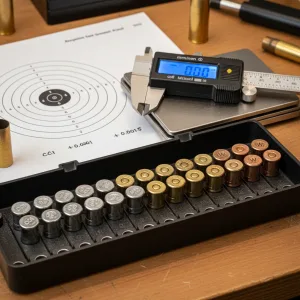
Reloading your own ammunition offers several benefits, including improved accuracy, increased consistency, and significant cost savings. By carefully selecting components such as bullets, powder, and primers, reloaders can tailor their ammunition to the specific characteristics of their rifle, optimizing accuracy and performance. Reloading also allows for greater control over the consistency of ammunition, reducing variations in velocity and point of impact. Over time, the cost savings from reloading can be substantial, especially for high-volume shooters.
Essential Reloading Equipment: A Beginner’s Guide
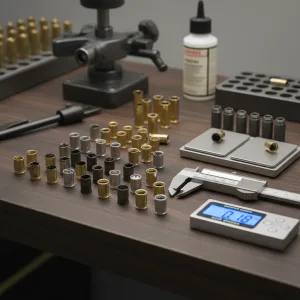
Getting started with reloading requires some initial investment in essential equipment. A basic reloading setup typically includes a reloading press, dies for the specific caliber you intend to reload, a powder scale, a powder measure, a case trimmer, and a priming tool. It’s also important to have a reloading manual that provides detailed instructions and load data for various calibers and bullet weights. While the initial investment may seem significant, the long-term benefits of reloading, including improved accuracy, consistency, and cost savings, make it a worthwhile endeavor for many shooters.
Selecting the Right Smokeless Gun Powder and Primers: Key Considerations
Choosing the right smokeless gun powder and primers is crucial for achieving optimal performance and safety when reloading. Different powders are designed for specific calibers and bullet weights, and selecting the appropriate powder is essential for achieving consistent velocities and accuracy. Primers also vary in size and type, and it’s important to use the correct primer for the specific cartridge being reloaded. Consult a reloading manual for recommended powder and primer combinations, and always follow the manufacturer’s instructions carefully.
Find smokeless gun powder and primers at Northern Reloading
Northern Reloading offers a wide selection of smokeless gun powder and primers to meet your reloading needs. Their knowledgeable staff can help you select the right components for your specific caliber and reloading goals.
Caliber Selection Checklist: A Step-by-Step Guide for Hunters
Define Your Primary Hunting Purpose
Start by clearly defining your primary hunting purpose. Are you primarily hunting big game such as deer or elk, or are you focused on smaller game such as varmints or upland birds? The type of game you intend to hunt will significantly influence the optimal caliber choice.
Consider Game Size and Distance
Consider the typical size of the game you’ll be hunting and the distances at which you’ll be taking shots. Larger game animals require more powerful calibers to ensure a clean kill, while smaller game animals can be effectively hunted with smaller, lighter calibers. Longer distances may require calibers with flatter trajectories and greater ballistic coefficients.
Evaluate Your Recoil Tolerance
Evaluate your recoil tolerance. Larger calibers typically produce more recoil, which can affect your accuracy and shooting comfort. Choose a caliber that you can comfortably shoot and control, allowing for accurate shot placement. Consider trying different rifles and calibers at a shooting range to assess your recoil tolerance before making a final decision.
Research Local Regulations and Ethical Guidelines
Thoroughly research local hunting regulations and ethical guidelines regarding caliber restrictions and requirements. Ensure that your chosen caliber meets all legal requirements and is appropriate for the game you intend to hunt. Adhere to ethical hunting practices by selecting a caliber that is capable of delivering a quick, humane kill.
Beyond the Caliber: Rifle Maintenance for Optimal Performance
Cleaning and Lubrication: Keeping Your Rifle in Top Condition
Regular cleaning and lubrication are essential for maintaining the accuracy and reliability of your rifle. After each hunting trip, thoroughly clean the bore and action of your rifle using appropriate cleaning solvents and brushes. Remove any copper or lead fouling that may accumulate over time. Lubricate moving parts with a high-quality gun oil to prevent friction and wear. Pay particular attention to the bolt, trigger mechanism, and magazine. A clean and well-lubricated rifle will function more reliably and maintain its accuracy for years to come.
Scope Mounting and Zeroing: Ensuring Accuracy
A properly mounted and zeroed scope is essential for accurate shot placement. Ensure that your scope is securely mounted to the rifle using appropriate rings and bases. Follow the manufacturer’s instructions for tightening screws to prevent damage to the scope or rifle. Zero your scope at a known distance (e.g., 100 yards) using appropriate ammunition. Practice shooting at various distances to determine the bullet drop compensation needed for longer shots. Regular scope checks and adjustments are necessary to maintain accuracy, especially after handling the rifle roughly or changing ammunition types.
Proper Storage: Protecting Your Rifle and Ammunition
Proper storage is crucial for protecting your rifle and ammunition from damage and unauthorized access. Store your rifle in a locked gun safe or cabinet to prevent theft and accidents. Keep ammunition in a separate locked container in a cool, dry place. Avoid storing your rifle in a humid or corrosive environment, as this can lead to rust and damage. Regularly inspect your rifle and ammunition for signs of corrosion or damage, and take appropriate measures to prevent further deterioration. Responsible gun ownership includes proper storage to ensure the safety and security of your firearms and ammunition.


About author



Add comment