

Smokeless Gun Powder: Guide to Reloading Success
Reloading your own ammunition offers unparalleled control over accuracy, power, and cost-effectiveness. The heart of this process lies in selecting the right smokeless gun powder. But with so many options available, understanding the nuances of smokeless powder is crucial for achieving consistent and safe results.
This guide dives deep into the world of smokeless gun powder, covering everything from its advantages over black powder to the specifics of different powder types and how to choose the perfect one for your reloading needs in 2026. We’ll also cover essential equipment and best practices to ensure your reloading efforts are both accurate and safe.
Unlocking Precision: Mastering Smokeless Gun Powder for Consistent Reloads
Why Smokeless Powder Reigns Supreme: Advantages over Black Powder
Smokeless powder offers significant advantages over traditional black powder. First and foremost is its efficiency. Smokeless powder produces substantially more energy per unit of weight, resulting in higher velocities and flatter trajectories. This increased energy translates to better ballistic performance and improved accuracy, especially at longer ranges. Secondly, smokeless powder burns much cleaner than black powder. The residue left behind is significantly less, reducing the need for frequent cleaning and minimizing fouling, which can negatively impact accuracy. Black powder’s corrosive nature also necessitates more diligent cleaning practices. Furthermore, smokeless powder is significantly more stable and less susceptible to detonation from static electricity or impact, although it should still be handled with respect and care. Finally, smokeless powder is more easily measured and dispensed, leading to more consistent loads. Black powder reloading often involves volumetric measuring, which can introduce more variability. Choosing smokeless powder is a pivotal step towards achieving superior performance and reliability in your reloads.
Understanding Pressure Curves: The Key to Safe and Accurate Loads
A powder’s pressure curve describes how pressure builds and dissipates during the combustion process. Different powders generate vastly different pressure curves, even when producing similar velocities. Fast-burning powders generate a rapid pressure spike, making them suitable for handgun cartridges with shorter barrels. Slow-burning powders, on the other hand, produce a more gradual pressure increase, making them ideal for rifle cartridges, especially those with larger case capacities. Using a powder with an inappropriate burn rate can lead to dangerous overpressure situations or, conversely, underpowered loads. Reloading manuals provide detailed pressure data for various powder and cartridge combinations. Adhering to these guidelines is paramount for safety. Furthermore, understanding pressure curves helps fine-tune loads for optimal accuracy. For example, adjusting the powder charge slightly can influence the bullet’s flight characteristics and reduce recoil. Always consult reliable reloading data and start with the minimum recommended charge, gradually working up while monitoring for pressure signs such as flattened primers or difficult extraction.
Decoding Smokeless Powder Types: A Granularity Guide
Extruded Powder (Stick): Characteristics and Ideal Applications
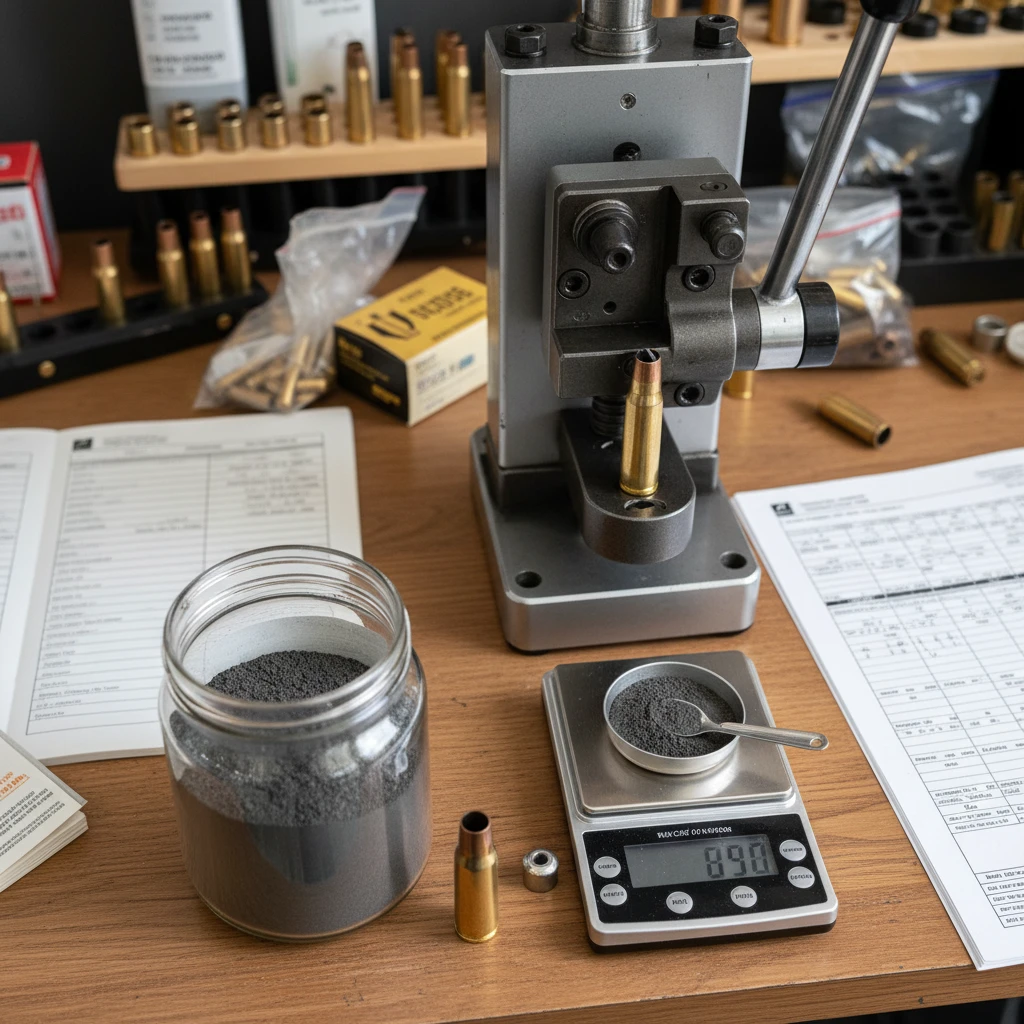
Extruded powder, often referred to as stick powder, consists of small, cylindrical granules. This type of powder generally burns more slowly than ball or flake powders, making it well-suited for larger rifle cartridges. Extruded powders offer consistent burn rates and are less prone to pressure spikes. Their slow-burning characteristics allow for efficient propellant combustion, maximizing velocity without exceeding safe pressure limits. However, extruded powders may not meter as smoothly through powder dispensers as ball powders. This can lead to slight variations in charge weights, potentially impacting accuracy. Reloaders often use tricklers to precisely adjust extruded powder charges. Examples of popular extruded powders include IMR 4350 and Hodgdon H4831, frequently used in cartridges like the .30-06 Springfield and .300 Winchester Magnum.
Ball Powder (Spherical): Flow Rate and Metering Advantages
Ball powder, also known as spherical powder, is composed of small, round granules. This shape provides excellent flow characteristics, making it easy to meter consistently through powder dispensers. The uniform size and shape minimize variations in charge weights, contributing to improved accuracy. Ball powders typically burn faster than extruded powders, making them suitable for a wide range of handgun and rifle cartridges. However, some ball powders can be more sensitive to temperature variations, potentially affecting velocity and pressure. Reloaders should be aware of this and adjust their loads accordingly, especially when shooting in extreme temperatures. Examples of popular ball powders include Winchester 231 and Hodgdon CFE 223, commonly used in cartridges like the 9mm Luger and .223 Remington.
Flake Powder: Burn Rate Consistency and Sensitivity
Flake powder consists of thin, flat flakes. This geometry results in a relatively fast burn rate, making it ideal for handgun cartridges and shotgun loads. Flake powders offer excellent ignition characteristics and contribute to consistent velocities. However, their shape can make them somewhat prone to bridging in powder measures, leading to inconsistent charge weights. Careful selection of a powder dispenser and proper technique can mitigate this issue. Flake powders are also generally more sensitive to changes in loading density, meaning that small variations in charge weight or bullet seating depth can have a more significant impact on pressure and velocity. Reloaders should pay close attention to detail when working with flake powders. Examples of popular flake powders include Alliant Bullseye and Accurate No. 2, often used in cartridges like the .45 ACP and .38 Special.
Choosing the Right Smokeless Powder: Matching Powder to Your Cartridge
Handgun Ammo: Powder Recommendations for Popular Calibers
For handgun ammunition, selecting a fast to medium-fast burning powder is generally recommended. In 9mm Luger, powders like Accurate No. 5, Hodgdon CFE Pistol, and Winchester AutoComp are popular choices, known for their clean burning and consistent velocities. For .45 ACP, powders like Alliant Bullseye and Accurate No. 2 provide reliable performance and mild recoil. In .38 Special, powders such as Alliant Unique and Hodgdon HP-38 offer versatility and accuracy. When selecting a powder, consult reloading manuals for specific charge weights and bullet combinations. Pay close attention to the minimum and maximum loads, and always start with the minimum load and work up gradually, monitoring for signs of overpressure. Example: Reloading 9mm with a 124-grain bullet might start with 4.0 grains of Hodgdon CFE Pistol and gradually increase to a maximum of 4.8 grains, according to Hodgdon’s reloading data. Each firearm will behave differently.
Rifle Ammo: Finding the Optimal Burn Rate for Long-Range Accuracy
Achieving long-range accuracy with rifle ammunition requires careful powder selection. For smaller cartridges like the .223 Remington/5.56 NATO, medium-burning powders such as Hodgdon Varget, IMR 4895, and Accurate 2230 are often preferred. These powders provide consistent velocities and manageable recoil. For larger cartridges like the .308 Winchester, medium to slow-burning powders like IMR 4064, Hodgdon H4895, and Accurate 4064 are commonly used. For magnum cartridges like the .300 Winchester Magnum, slow-burning powders such as Hodgdon H1000 and IMR 7828 provide maximum velocity and flat trajectories. A crucial step is performing a ladder test. This involves loading a series of cartridges with incrementally increasing powder charges and then firing them to observe velocity and accuracy. The load that produces the tightest group with the highest consistent velocity is generally the optimal choice. This process ensures the powder’s burn rate is matched to the particular rifle and load components.
Shotgun Ammo: Matching Powder to Payload and Gauge
Shotgun reloading requires precise powder selection to ensure proper functioning and consistent patterns. Different gauges and payload weights necessitate different powders. For 12-gauge loads with 1 1/8 oz payloads, powders like Alliant Red Dot and Hodgdon Clays are popular choices, offering clean burning and consistent performance. For lighter payloads, such as 7/8 oz or 1 oz, faster-burning powders may be more suitable. For 20-gauge loads, powders like Alliant 20/28 and Hodgdon Universal offer versatility and consistent patterns. Powder manufacturers provide detailed reloading data for various gauge and payload combinations. Adhering to these guidelines is essential for safety and performance. Furthermore, the type of wad used can also influence powder selection. Some wads require specific powder burn rates to ensure proper sealing and consistent velocities. Always consult reloading manuals and follow the recommended powder and wad combinations.
Essential Equipment for Smokeless Powder Reloading
Powder Scales and Measures: Ensuring Precise Doses
Accurate powder measurement is paramount for safe and consistent reloading. A high-quality powder scale is an indispensable tool. Digital scales offer precise measurements, often down to 0.1 grain, and are easy to read. However, they require batteries and can be susceptible to electrical interference. Beam scales are more traditional but equally accurate. They require manual balancing but are not affected by electricity. For powder measures, there are two primary types: adjustable cavity measures and powder dispensers. Adjustable cavity measures use a rotating drum with a cavity that can be adjusted to dispense a specific volume of powder. These measures are relatively inexpensive but may not be as precise as powder dispensers. Example: Using a digital scale like the Hornady GS-1500 provides precise measurements of powder charges, essential for developing accurate loads for long-range shooting.
Powder Dispensers: From Manual to Automatic
Powder dispensers offer a convenient and efficient way to dispense powder charges. Manual powder dispensers use a rotating drum or a sliding bar to meter powder. They are relatively inexpensive and simple to operate. However, they require manual operation and may not be as precise as automatic dispensers. Automatic powder dispensers use electronic scales and precision metering systems to dispense powder charges automatically. They offer excellent accuracy and consistency, making them ideal for high-volume reloading. However, they are more expensive than manual dispensers. Some automatic dispensers also offer features like trickle mode, which slowly adds powder to achieve the desired weight. Example: An automatic powder dispenser can save significant time when reloading large quantities of ammunition, such as preparing hundreds of rounds for a competitive shooting match.
Reloading Presses: Single-Stage vs. Progressive
The reloading press is the central piece of equipment in any reloading setup. Single-stage presses perform one operation at a time, requiring the reloader to manually move the case through each stage (depriming, resizing, priming, powder charging, bullet seating). Single-stage presses are ideal for beginners and for reloaders who prioritize precision over speed. They offer excellent control and are less prone to errors. Progressive presses, on the other hand, perform multiple operations simultaneously. Each pull of the handle completes all stages of the reloading process, producing a complete cartridge. Progressive presses are significantly faster than single-stage presses but require more setup and adjustment. They are best suited for experienced reloaders who need to produce large quantities of ammunition. Example: A single-stage press is a good starting point for a new reloader, allowing them to learn the fundamentals of reloading without being overwhelmed by the complexity of a progressive press.
Safety First: Handling and Storing Smokeless Gun Powder Responsibly
Preventing Static Electricity: Grounding and Humidity Control
Smokeless gunpowder is sensitive to static electricity, which can cause accidental ignition. Before handling any gunpowder, ground yourself by touching a grounded metal object. This dissipates any static charge you may have accumulated. Maintaining a relative humidity level of around 50-60% in your reloading area is also crucial. Dry air increases the risk of static buildup. A humidifier can help regulate the humidity. Avoid wearing synthetic clothing while reloading, as it tends to generate more static than natural fibers like cotton. Regularly wipe down your reloading bench and equipment with an anti-static cloth.
Storage Guidelines: Temperature, Humidity, and Containers
Proper storage is paramount for maintaining the stability and performance of smokeless gunpowder. Store gunpowder in a cool, dry, and dark place, away from direct sunlight and heat sources. The ideal temperature range is between 60-70°F (15-21°C). Avoid storing it in areas subject to extreme temperature fluctuations, such as attics or garages. Always store gunpowder in its original container, which is designed to safely vent pressure in case of accidental ignition. Ensure the container is tightly sealed to prevent moisture absorption. Do not store gunpowder near flammable materials or sources of ignition. Keep a detailed inventory of your gunpowder, noting the type, lot number, and date of purchase. Regularly inspect containers for any signs of damage or deterioration.
Disposal Procedures: Safely Discarding Unwanted Powder
Improper disposal of smokeless gunpowder can be extremely dangerous. If you have unwanted or deteriorated powder, do not simply throw it away or pour it down the drain. The preferred method is to contact your local law enforcement agency or fire department for guidance on proper disposal procedures. They may have designated collection points or be able to provide specific instructions for your area. As an alternative, some reloading supply stores may offer disposal services. You can also safely burn the gunpowder in a controlled environment, away from any flammable materials and in accordance with local regulations. Spread the powder thinly on a non-flammable surface and ignite it from a safe distance with a long-handled torch. Ensure the area is clear of vegetation and other combustible materials. Never dispose of gunpowder in a landfill or sewer system. Follow all local, state, and federal regulations regarding the disposal of hazardous materials. Contact your local environmental protection agency for further clarification if needed.
The Reloading Process: A Step-by-Step Guide with Smokeless Powder
Case Preparation: Cleaning, Priming, and Resizing
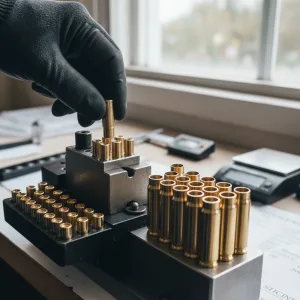
Case preparation is the foundation of consistent and accurate reloads. Start by thoroughly cleaning your brass cases to remove any residue or contaminants. This can be done using a vibratory tumbler or an ultrasonic cleaner. After cleaning, inspect each case for signs of damage, such as cracks or excessive wear. Discard any damaged cases. Next, resize the cases to ensure they fit properly in your firearm’s chamber. Use a resizing die specific to the caliber you are reloading. Lubricate the cases before resizing to prevent sticking in the die. After resizing, trim the cases to the correct length using a case trimmer. Chamfer and deburr the case mouth to facilitate bullet seating. Finally, prime the cases with new primers. Ensure the primers are seated fully and flush with the case head. Use a priming tool that provides consistent primer seating depth.
Powder Charging: Ensuring Consistent and Accurate Measurements
Accurate powder charging is crucial for safety and performance. Use a high-quality powder scale to measure each powder charge precisely. Verify the scale’s accuracy regularly using check weights. Consult a reputable reloading manual for recommended powder charges for your chosen bullet and cartridge. Start with the minimum recommended charge and gradually increase the charge weight, while carefully monitoring for pressure signs. Use a powder measure to dispense the powder into the cases. Check the powder charges periodically with the scale to ensure consistency. For optimal accuracy, consider using a trickler to add powder to the cases one kernel at a time until the desired weight is achieved. Never exceed the maximum recommended powder charge. Ensure there are no double charges. Double check each case before seating the bullet.
Bullet Seating: Achieving Proper Cartridge Overall Length (COL)
Bullet seating depth significantly affects pressure and accuracy. Refer to a reloading manual for the recommended cartridge overall length (COL) for your chosen bullet and cartridge. Use a caliper to measure the COL of each loaded cartridge. Adjust the seating die to achieve the correct COL. Ensure the bullet is seated straight in the case neck. Excessive crimping can damage the bullet and affect accuracy. Apply only enough crimp to secure the bullet in the case neck and prevent setback during feeding. For some cartridges, a roll crimp is necessary to prevent bullets from moving under recoil in a revolver cylinder or a lever-action rifle magazine. For others, a taper crimp is sufficient, particularly for semi-automatic pistols. Consider using a bullet seating micrometer for precise adjustments. A surveillance system can help monitor your reloading process for enhanced safety.
Troubleshooting Common Reloading Issues with Smokeless Gun Powder
Inconsistent Velocities: Diagnosing and Addressing Powder Variations
Inconsistent velocities are a common sign of reloading problems. Several factors can contribute to this issue. One possibility is variations in powder charge weights. Ensure your powder measure is dispensing consistent charges, and your scale is accurate. Another factor is inconsistent bullet seating depth. Make sure your seating die is properly adjusted and the bullet is seated straight in the case neck. Primer variations can also affect velocities. Use primers from the same lot number for consistent performance. Temperature sensitivity of the powder can also cause velocity changes. Some powders are more stable than others in varying temperatures. Choose a powder that is less sensitive to temperature fluctuations if you are shooting in a wide range of conditions. Finally, check for excessive case neck tension, which can also affect velocities.
Pressure Signs: Recognizing Overpressure and Safe Reloading Practices
Recognizing pressure signs is crucial for safe reloading. Overpressure can damage your firearm and cause serious injury. Common signs of overpressure include flattened primers, cratered primers, excessive recoil, stiff bolt lift, and bulging cases. If you observe any of these signs, immediately stop shooting and reduce your powder charge. Start with the minimum recommended powder charge and gradually increase it, while carefully monitoring for pressure signs. Consult a reloading manual for safe load data. Never exceed the maximum recommended powder charge. Ensure your firearm is in good working condition and the chamber is clean and free of obstructions. Use a chronograph to monitor your velocities. If your velocities are significantly higher than expected, it could be a sign of overpressure. Adhere strictly to published load data from reputable sources and always err on the side of caution.
Primer Issues: Identifying Causes and Solutions
Primer issues can indicate problems with your reloading process or firearm. Light primer strikes can be caused by insufficient firing pin energy, weak springs, or improperly seated primers. Ensure the primers are fully seated and flush with the case head. Clean the firing pin channel to remove any debris that may be hindering its movement. Pierced primers can be a sign of overpressure or a worn firing pin. Reduce your powder charge and inspect your firing pin for damage. Cracked primers can be caused by excessive headspace or a weak firing pin spring. Consult a gunsmith to address any headspace issues. Blown primers can be a sign of extreme overpressure, which can damage your firearm. Immediately stop shooting and reduce your powder charge significantly. Always wear safety glasses when shooting to protect your eyes from primer fragments. Use the correct primer size for your cartridge. Using the wrong size primer can lead to misfires or even dangerous pressure spikes.
Optimizing Your Reloads: Fine-Tuning for Accuracy and Performance
Powder Charge Increments: Finding the Sweet Spot for Your Firearm
Finding the optimal powder charge for your firearm is essential for achieving maximum accuracy and performance. Start with the minimum recommended powder charge and gradually increase it in small increments (e.g., 0.1 to 0.3 grains). Shoot groups of five shots at each powder charge level and measure the group sizes. Look for a “sweet spot” where the groups are the tightest. This is typically the powder charge that produces the best accuracy in your firearm. However, always monitor for pressure signs and never exceed the maximum recommended powder charge. Be aware that different firearms may have different “sweet spots” for the same cartridge and bullet combination. Keep detailed records of your load development process, including the powder charge, bullet weight, COL, and group sizes. This will help you reproduce your best loads consistently.
Bullet Selection: Matching Bullet Weight and Design to Powder Type
Bullet selection plays a critical role in optimizing your reloads. Match the bullet weight and design to the powder type and intended use. Heavier bullets generally require slower-burning powders, while lighter bullets can be used with faster-burning powders. Use a reloading manual to determine the appropriate powder type for your chosen bullet weight. Consider the bullet’s design for your specific application. For hunting, choose bullets designed for controlled expansion and deep penetration. For target shooting, choose bullets designed for accuracy and consistent performance. For self-defense, choose bullets designed for rapid expansion and stopping power. Experiment with different bullet types and weights to find the combination that works best in your firearm. Pay attention to the bullet’s ballistic coefficient (BC), which affects its trajectory and resistance to wind drift. Higher BC bullets generally perform better at longer ranges. Ensure the bullet’s diameter is compatible with your firearm’s bore diameter. Using the wrong diameter bullet can lead to poor accuracy or even damage to your firearm.
Understanding Reloading Data: Load Manuals and Online Resources
Reloading ammunition safely and effectively hinges on understanding and properly using reloading data. This data, typically found in load manuals and online resources, provides the precise measurements and components needed to create safe and accurate ammunition. Ignoring or misinterpreting this data can lead to dangerous overpressure situations, damaging your firearm and potentially causing serious injury.
When starting, it’s best to invest in at least two reputable load manuals from different manufacturers. These manuals are developed by experienced reloaders and ballistics experts, providing tested and validated data. They typically include information on various bullet weights, powder types, case types, and primer brands, along with corresponding powder charges and expected velocities. Online resources can supplement these manuals, but it’s crucial to exercise caution, verifying data from multiple sources before use.
Interpreting Load Data: Pressure, Velocity, and Safety Margins
Load data usually presents a range of powder charges, starting with a minimum load and progressing to a maximum load. It’s imperative to begin with the minimum load and gradually work up, observing for signs of excessive pressure. These signs can include flattened primers, difficult extraction, or bulged cases. Never exceed the maximum listed load. The pressure is typically measured in PSI (pounds per square inch) or CUP (copper units of pressure), and staying within safe pressure limits is paramount. Velocity, often listed alongside pressure data, provides an indication of the bullet’s speed, influencing trajectory and energy. Reloading data also includes the COL (Cartridge Overall Length). Deviation can cause dangerous pressure spikes. Always measure after seating the projectile.
Safety margins are built into published load data, but they are not an excuse for carelessness. These margins account for variations in components and firearms, but pushing beyond the maximum load in the hope of achieving higher velocities is extremely dangerous. Always adhere to the recommended charge weights and meticulously record your reloading process.
Cross-Referencing Data: Validating Information from Multiple Sources
Never rely on a single source of reloading data. Cross-referencing information from multiple load manuals and reputable online resources is crucial for validating its accuracy and identifying potential discrepancies. If there are significant differences between sources, investigate further or avoid using that particular load combination. Look for patterns and consistency across multiple sources. For example, if two manuals suggest a powder charge range of 40-42 grains for a specific bullet and powder, and a third source lists 38-40 grains, the third source should be approached with caution. Consider the reputation and experience of the data source. Established manufacturers like Hodgdon, Alliant, and Sierra are generally considered reliable, but even their data should be cross-checked when possible.
Smokeless Powder for Specific Applications: Competition Shooting and Hunting
The choice of smokeless powder significantly impacts the performance of ammunition in different applications, such as competition shooting and hunting. Selecting the right powder is critical for achieving the desired accuracy, velocity, and overall performance needed for each specific discipline. The characteristics of the chosen powder must match the intended use of the ammunition.
Precision Loads for Competitive Accuracy
Competitive shooting demands consistent and accurate ammunition. For precision loads, powders known for their consistent burn rates and low sensitivity to temperature variations are preferred. Examples include Hodgdon Varget, IMR 4895, and Alliant Reloder 15. These powders typically produce tight groupings and minimal velocity deviations, crucial for long-range accuracy. Furthermore, charge weight consistency is extremely important. Progressive presses will provide the best results when using ball or spherical powders because of their flow qualities. Stick powders can require additional trickling to ensure consistent powder charges.
Consider the type of competition when selecting a powder. Benchrest shooting often requires extreme precision, favoring single-based powders known for their clean burning characteristics. Practical shooting, on the other hand, may prioritize higher velocities and flatter trajectories, where double-based powders might be more suitable. Example: a competitive shooter using a .223 Remington rifle for NRA High Power Rifle competitions might choose Varget, aiming for a velocity of 2750 fps with a 77-grain Sierra MatchKing bullet, achieving sub-MOA accuracy at 600 yards.
High-Performance Hunting Loads for Ethical Harvests
Ethical hunting requires ammunition that delivers sufficient energy and penetration to ensure a quick and humane kill. For high-performance hunting loads, powders that provide high velocities and consistent performance across a wide range of temperatures are essential. Popular choices include Hodgdon Superformance, IMR 4350, and Alliant Reloder 17. These powders are designed to maximize velocity without generating excessive pressure, resulting in flatter trajectories and increased effective range. Consider the game being hunted when selecting a powder. Larger game, such as elk or moose, require powders that can drive heavier bullets to deeper penetration depths, whereas powders with faster burn rates may be sufficient for smaller game like deer or antelope. Example: a hunter using a .30-06 Springfield rifle for deer hunting might select IMR 4350, aiming for a velocity of 2900 fps with a 165-grain Nosler Partition bullet, ensuring sufficient energy transfer for a clean kill at ranges up to 300 yards.
Primers: The Unsung Heroes of Smokeless Powder Reloading
Primers are a critical, yet often overlooked, component of smokeless powder reloading. They initiate the combustion of the powder charge and directly influence the consistency and performance of the ammunition. Selecting the correct primer and ensuring proper seating depth are crucial for reliable ignition and optimal accuracy.
Selecting the Right Primer: Small Rifle, Large Pistol, and More
Primers are categorized by size and type, each designed for specific cartridges and applications. The most common types include small rifle, large rifle, small pistol, and large pistol. Selecting the wrong primer can lead to misfires, squib loads, or even dangerous overpressure situations. Magnum primers, denoted with ‘Magnum’ on the packaging, have a hotter ignition flame and are used in cartridges with larger powder charges or in cold weather conditions. Match primers, designed for competition shooting, are manufactured to tighter tolerances, yielding more consistent ignition and improved accuracy. Always consult load manuals or reputable online resources to determine the appropriate primer for the cartridge and powder being used.
Example: Using small pistol primers in a .223 rifle cartridge will result in misfires, as the primer cup is not designed to withstand the higher pressures generated by rifle cartridges. Conversely, using large rifle primers in a 9mm pistol cartridge is physically impossible as they will not fit the primer pocket and would be a dangerous situation if forced.
Primer Seating Depth: Crucial for Reliable Ignition
Proper primer seating depth is crucial for reliable ignition. Primers should be seated flush with or slightly below the case head. Insufficient seating depth can cause misfires or squib loads, while excessive seating depth can damage the primer and potentially cause a slamfire. Use a quality priming tool to ensure consistent and uniform primer seating. After seating, visually inspect each primer to ensure it is properly seated. A properly seated primer should feel firm and consistent when pressed with a seating tool. If a primer feels loose or high, it should be carefully removed and replaced. Always err on the side of caution when seating primers. Taking your time and focusing will ensure the task is done safely.
Staying Legal: Regulations and Considerations for Smokeless Powder in North America (Canada Focused)
Reloading ammunition involves handling potentially hazardous materials, making it essential to comply with all applicable regulations and laws. In North America, and specifically in Canada, strict regulations govern the transportation, storage, and purchase of smokeless powder and primers. Failure to adhere to these regulations can result in fines, confiscation of materials, or even criminal charges.
Transportation and Storage Laws: Understanding the Regulations in Canada
In Canada, the transportation of smokeless powder is regulated by the Explosives Act and Explosives Regulations, administered by Natural Resources Canada. Individuals transporting smokeless powder must ensure it is packaged in accordance with the regulations, typically in the original manufacturer’s containers. Limits exist on the maximum quantity that can be transported in a private vehicle, usually restricted to a combined total of no more than 22.7 kg (50 lbs) of smokeless powder and/or black powder. The powder must be kept in a compartment separate from the passenger area and secured to prevent shifting during transport. Storage regulations also dictate specific requirements. Smokeless powder must be stored in a cool, dry, and well-ventilated area, away from sources of ignition and readily combustible materials. The quantity of smokeless powder stored in a private residence is also limited, often to a maximum of 8 kg (17.6 lbs). It must be stored in a locked, fire-resistant container or cabinet to prevent unauthorized access.
Purchasing Limits and Licensing Requirements
Purchasing smokeless powder and primers in Canada requires a valid Possession and Acquisition Licence (PAL) with the appropriate endorsements. Retailers are required to verify the validity of the PAL before selling smokeless powder or primers. There are no explicit federal limits on the quantity of smokeless powder or primers that can be purchased at one time, but retailers may impose their own limits to ensure fair access for all customers. However, provincial regulations may also apply, so it is important to check with your local authorities. It’s also important to be aware of regulations surrounding the secure storage of firearms and ammunition. Even if the intention is to use your ammunition at a shooting range, your firearms require secure, legal storage at your residence. Commercial security systems are sometimes a worthwhile investment. For example, businesses that handle ammunition often install commercial CCTV systems to protect their inventory.
To further clarify Canadian regulations on explosives, including smokeless powder, consult the Canadian Explosives Act for the definitive legal framework.
Understanding and following reloading data, selecting appropriate powders and primers, and adhering to legal regulations are essential for safe and successful reloading. Taking the time to research, verify information, and follow best practices will minimize risks and maximize the performance of your handloaded ammunition.

About author


Add comment