
Smokeless Gun Powder: Burn Rates Explained
The burn rate of smokeless powder dictates the pressure curve within the firearm’s barrel. This curve, in turn, directly influences projectile velocity, consistency, and the overall performance of your reloaded ammunition. Mastering this concept is key to achieving desired results, whether you’re aiming for maximum accuracy in rifle ammo, reliable function in handgun ammo, or consistent patterns in shotgun ammo.
Understanding the ‘Speed’ of Your Smokeless Gun Powder: A Reloading Essential
The term “speed” when applied to smokeless gun powder is a direct, albeit simplified, reference to its burn rate. This is arguably one of the most critical characteristics for any reloader to comprehend. Incorrectly matching a powder’s burn rate to a specific cartridge and bullet combination can lead to suboptimal performance, excessive pressure, or even catastrophic firearm failure. Therefore, a thorough understanding of this aspect is not merely beneficial but absolutely essential for safe and successful reloading practices.
For instance, using a powder that burns too quickly for a given cartridge can result in a very sharp, rapid pressure spike early in the barrel, potentially damaging your firearm or causing dangerous pressure signs. Conversely, a powder that burns too slowly may not fully combust by the time the bullet exits the barrel, leading to wasted propellant, reduced velocity, and potentially increased muzzle flash. This fundamental knowledge allows reloaders to make informed decisions about powder selection, ensuring they are choosing components that are well-suited for their intended application and firearm. This detailed insight is a cornerstone of effective smokeless gun powder reloading.
The Fundamentals: What is Smokeless Gunpowder Burn Rate?
At its core, smokeless gunpowder burn rate refers to the speed at which a specific propellant consumes itself once ignited. This isn’t a fixed, absolute measurement but rather a relative comparison between different powders. Burn rate is influenced by factors such as the chemical composition of the powder (e.g., nitrocellulose, nitroglycerin content), the physical form (e.g., granules, flakes, sticks), and the size and shape of the individual grains. These physical characteristics affect the surface area exposed to ignition and the rate of flame propagation.
When a primer ignites the propellant in a cartridge case, the powder begins to burn, generating hot gases that rapidly expand. This expansion pushes the bullet down the barrel. The burn rate determines how quickly these gases are produced. A faster-burning powder will generate pressure more rapidly, while a slower-burning powder will produce pressure over a longer duration. Understanding this dynamic is crucial for optimizing the performance of various types of ammunition, from light handgun ammo to potent rifle ammo.
Propellant’s Role in Cartridge Performance
The propellant’s burn rate is a primary determinant of cartridge performance. It dictates the pressure generated inside the chamber and the subsequent velocity achieved by the projectile. When a powder burns at an appropriate rate for a given cartridge, it allows for efficient conversion of chemical energy into kinetic energy, propelling the bullet effectively. This efficiency is measured by how well the pressure curve matches the bullet’s travel down the barrel. An ideal pressure curve ensures that the bullet is accelerated smoothly and consistently, maximizing velocity while staying within safe pressure limits.
The choice of propellant significantly impacts recoil, muzzle velocity, and the potential for pressure-related issues. A correctly matched powder leads to consistent muzzle velocities, which translates to predictable bullet trajectory and improved accuracy. Conversely, an ill-suited powder can result in erratic velocities, increased felt recoil, and potentially dangerous pressure spikes that could damage the firearm. Furthermore, the completeness of powder combustion, directly tied to its burn rate, affects muzzle flash and fouling. Exploring these nuances is a key aspect of comprehensive smokeless powder reloading.
The Concept of ‘Fast’ vs. ‘Slow’ Powders
The terms “fast” and “slow” powders are relative descriptors used to categorize smokeless propellants based on their burn rates. Fast-burning powders, such as Alliant’s Red Dot or Hodgdon’s Clays, are designed to ignite and produce their peak pressure very quickly. They are typically used in lighter loads, smaller capacity cartridges, and shorter barrels where rapid pressure development is desired and can be safely managed. They are excellent choices for many rimfire ammo and light handgun loads.
Conversely, slow-burning powders, like Alliant’s Reloder 26 or Hodgdon’s Retumbo, are formulated to burn more gradually over a longer portion of the bullet’s travel down the barrel. These are generally employed in larger capacity cartridges, heavier bullets, and longer barrels where sustained pressure is needed to achieve optimal velocity and efficiency. This distinction is critical when selecting components, as a mismatch can lead to significant performance deviations and safety concerns. Understanding this spectrum is fundamental to making informed decisions about reloading component choices.
Decoding the Burn Rate Chart: Your Reloading Roadmap
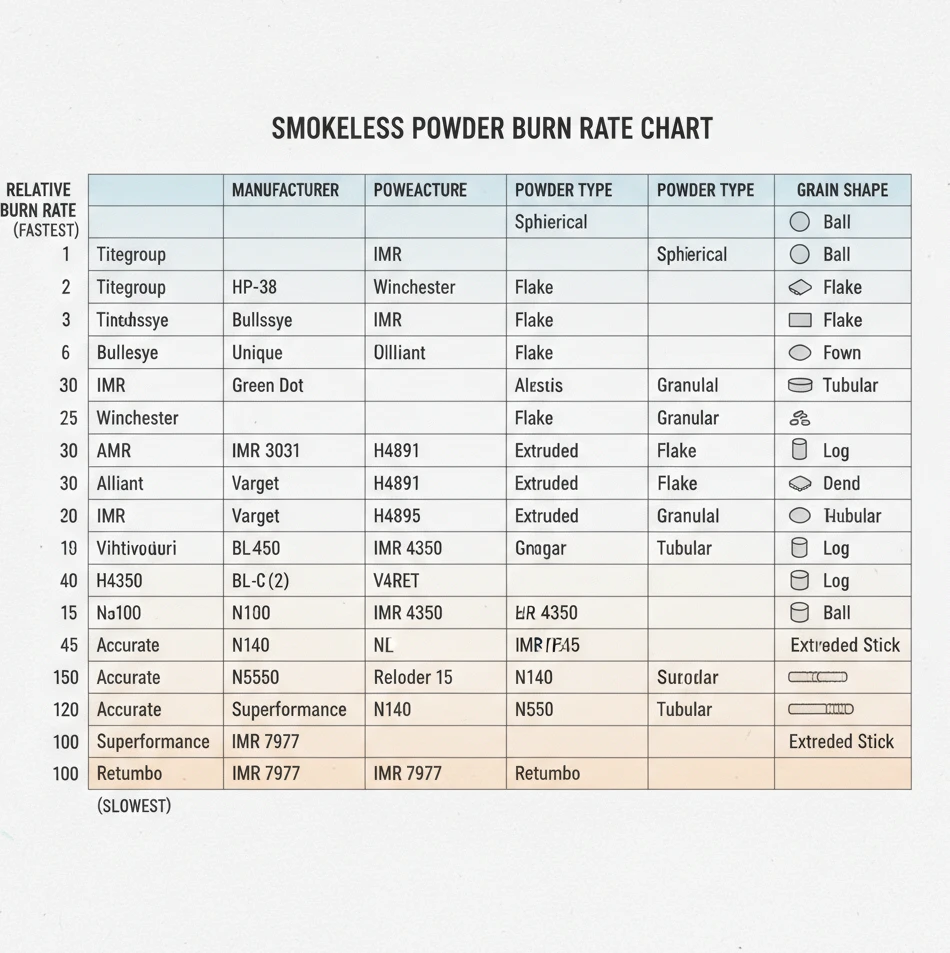
Burn rate charts are indispensable tools for any serious reloader. They serve as a standardized reference, listing various smokeless powders from different manufacturers and arranging them according to their relative burn speeds. These charts are not absolute scientific measurements but rather comparative rankings that allow reloaders to intelligently select powders for specific applications. By understanding where a powder sits on this spectrum, you can make educated guesses about its suitability for a particular cartridge, bullet weight, and firearm barrel length.
Navigating these charts requires understanding that a powder listed as “faster” than another will generally produce higher peak pressures more quickly. This information is critical when working with published load data, as substituting a powder with a significantly different burn rate without careful consideration can lead to dangerous pressure levels. The chart acts as a visual guide, helping you avoid common mistakes and efficiently narrow down your powder choices for any given reloading project. It’s a crucial step in ensuring both safety and optimal performance.
Key Information Found on Burn Rate Charts
Burn rate charts typically display a list of smokeless powders organized from fastest to slowest burning. Each entry usually includes the manufacturer’s name, the specific powder designation (e.g., IMR 4064, Varget), and its relative position in the burn rate spectrum. Some charts may also provide additional information such as the powder’s physical form (e.g., extruded, spherical, flake) and its intended use categories, such as “pistol,” “shotgun,” or “rifle.” This comprehensive data allows for a more nuanced selection process.
Crucially, these charts offer a comparative framework. A powder listed higher on the chart burns faster than one listed lower. While exact burn rates are complex to measure and vary slightly with conditions, the relative order is highly consistent across reputable charts. This relative ranking is what reloaders leverage to make informed decisions. For example, if you’re looking for a powder for a light .38 Special load, you’d consult the chart to find faster-burning options typically used for such applications, avoiding slow powders that might over-pressurize the case. Understanding these charts is fundamental to effective smokeless gun powder reloading.
Comparing Different Powder Manufacturers
Burn rate charts are invaluable for comparing powders across different manufacturers. While each company develops its own proprietary formulas, a standardized chart allows reloaders to understand how, for instance, a particular Alliant powder compares in burn speed to a Hodgdon or Accurate powder. This is particularly useful when a preferred powder is out of stock or when seeking a suitable substitute. By referencing the chart, you can identify powders from different brands that occupy similar positions in the burn rate spectrum.
It is important to remember that while burn rate charts provide a relative order, exact performance can vary slightly between brands due to subtle differences in manufacturing and formulation. Always consult a reputable reloading manual or manufacturer’s data when making a powder substitution, even if powders appear adjacent on a burn rate chart. This comparative analysis helps reloaders make informed decisions, especially when considering newer or alternative propellant options available in the market. This is a key aspect of successful smokeless powder selection.
Where to Find Reliable Burn Rate Data
Reliable burn rate data is primarily found in the technical publications and websites of major smokeless powder manufacturers themselves, as well as in comprehensive reloading manuals published by reputable organizations. Companies like Hodgdon, Alliant Powder, Vihtavuori, and Accurate Powder often provide their own burn rate charts or data within their product literature and online resources. These are considered authoritative sources as they are directly related to the products being tested and categorized.
Additionally, many established reloading manuals, such as those from Sierra Bullets, Lyman Products, and Hornady, include their own meticulously compiled burn rate charts. These manuals often cross-reference data and provide extensive load information. Always prioritize data from the powder manufacturer or a well-respected reloading manual. Avoid relying on unverified or anecdotal data from forums or unofficial websites, as this can lead to dangerous errors. For example, consulting the official Hodgdon Reloading Data center is a prime example of seeking authoritative information.
Fast Burn Rate Powders: Ideal Applications and Considerations
Fast-burning smokeless powders are characterized by their rapid ignition and quick development of peak pressure within the cartridge case. This characteristic makes them exceptionally well-suited for specific types of firearms and ammunition where efficient powder consumption in a short timeframe is beneficial. Their use is often dictated by the volume of the cartridge case and the length of the firearm’s barrel, as these factors directly influence how effectively a powder can perform its job.
When used appropriately, fast-burning powders can contribute to lower recoil and reduced muzzle flash compared to slower-burning propellants in the same application. However, their rapid pressure generation also means they demand careful handling. Overloading or using them in cartridges or firearms for which they are not designed can quickly lead to dangerous over-pressurization. Understanding these nuances is critical for safe and effective reloading, particularly for common handgun ammo and rimfire ammo.
Best Suited for Shorter Barrels and Lighter Bullets (e.g., .22LR, many handgun ammo loads)
Fast-burning powders are the go-to choice for cartridges that utilize shorter barrels and lighter-weight projectiles. This includes many common rimfire ammo calibers, such as .22LR, as well as a wide array of handgun cartridges like 9mm Luger, .40 S&W, and .45 ACP. In these applications, the shorter barrel length means the bullet exits relatively quickly. A fast powder generates its maximum pressure early, effectively pushing the bullet out of the barrel before significant pressure can drop.
Using a fast powder with lighter bullets in these shorter barrels ensures efficient powder burn and optimal velocity. A slower powder might not fully combust by the time the bullet leaves the muzzle, resulting in wasted propellant, lower velocity, and increased muzzle flash. This makes fast powders ideal for maximizing performance and consistency in these popular firearm and ammunition combinations. Choosing the right powder is central to successful smokeless gun powder reloading.
Reduced Recoil and Muzzle Flash Potential
One of the notable advantages of using fast-burning powders in appropriate applications is their tendency to produce less felt recoil and reduced muzzle flash. Because these powders burn quickly and generate their peak pressure early in the barrel, the overall time that pressure is acting on the bullet and the firearm is generally shorter. This contributes to a “snappier” but often less sustained recoil impulse compared to slower powders.
Furthermore, by achieving near-complete combustion before the bullet clears the muzzle, fast powders typically result in less unburnt propellant exiting the barrel. This directly translates to a reduction in muzzle flash, making them more desirable for shooting in low-light conditions or for applications where minimizing visual signature is important. This benefit is particularly appreciated when reloading for self-defense or tactical scenarios, and also plays a role in plinking with rimfire ammo.
Common Pitfalls: Over-Pressurization with Heavy Bullets
A significant pitfall when working with fast-burning powders is attempting to use them with heavy bullets or in larger case capacities than they are designed for. In such scenarios, the powder can ignite and produce its peak pressure too rapidly for the bullet’s mass and the barrel’s length to manage. This leads to an extreme spike in internal ballistic pressure, far exceeding safe operating limits for the firearm and cartridge.
This over-pressurization can manifest as flattened or blown primers, ejector marks on cartridge rims, difficult extraction, and in severe cases, potentially catastrophic firearm failure. It’s imperative to always consult reputable load data and adhere to recommended powder charges. Never assume a fast powder is suitable for a heavy bullet in a given cartridge without verifying through established reloading resources. This is a critical safety consideration when using primers and propellant for your loads.
Understanding the ‘Speed’ of Your Smokeless Powder: A Reloading Essential
The term “speed” in smokeless powders refers to how quickly the propellant burns and generates pressure after ignition. This characteristic is not an arbitrary label but is determined by the powder’s chemical composition, grain size, shape, and density. Manufacturers often categorize powders from “fast” to “slow” to provide guidance for reloaders.
Fast-burning powders ignite rapidly and reach peak pressure early in the cartridge’s pressure curve. They are ideal for lighter bullets and shorter barrels where rapid pressure development is beneficial for efficient acceleration. Examples include powders like Hodgdon Clays or Alliant e3. Conversely, slow-burning powders ignite and burn more gradually, producing pressure over a longer duration. These are better suited for heavier bullets and larger case volumes, allowing for sustained acceleration and higher velocities without exceeding safe pressure limits. Common examples of slow powders include IMR 4831 or Hodgdon H1000. Understanding this spectrum is crucial for selecting the correct propellant for a specific application, be it for cartridge loading or other ballistic pursuits.
Medium Burn Rate Powders: The Versatile Middle Ground
Medium burn rate smokeless gun powders occupy a critical space in the reloading world, offering a balance that makes them suitable for a surprisingly diverse array of firearms and ammunition. These powders are the workhorses for many reloader’s arsenals because they generally provide good performance without the extreme pressure considerations often associated with fast-burning powders or the specific case volume requirements of slow burners. Their versatility stems from their ability to efficiently generate significant energy for propelling bullets across a broad spectrum of calibers, from popular handgun cartridges to many common rifle rounds. Understanding where these powders fit is key to achieving consistent and safe reloads.
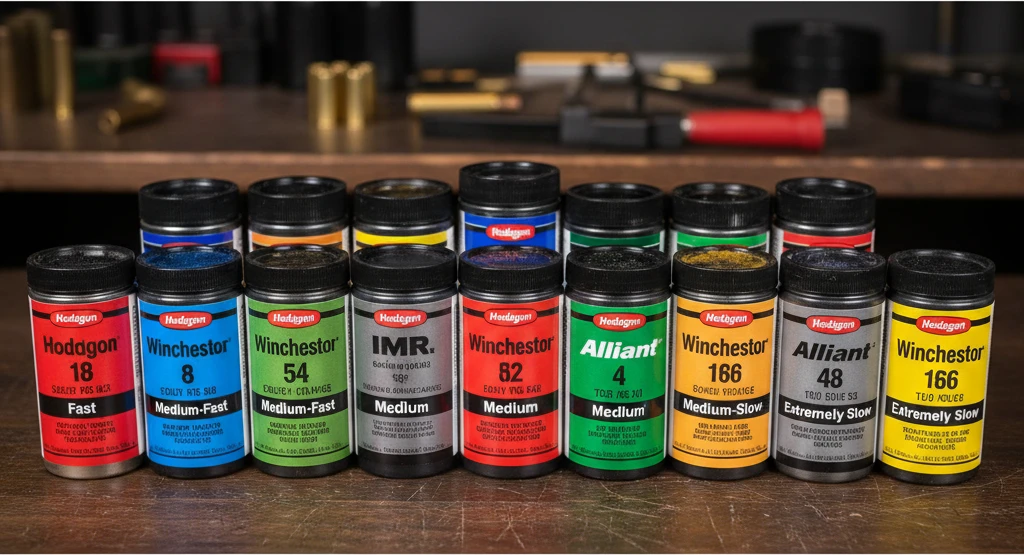
The decision to use a medium burn rate powder often hinges on its ability to perform well in cartridges that aren’t at the extreme ends of pressure or volume. For instance, many standard handgun ammo loads, such as .45 ACP or 9mm Luger with heavier bullets, can benefit from the controlled yet powerful burn these powders offer. Similarly, numerous rifle ammo applications, particularly those using medium-sized cases like .308 Winchester or 6.5 Creedmoor, find an optimal partner in medium burn rate powders. They strike a sweet spot where they can fill the case adequately, promote efficient powder ignition and burn, and keep peak pressures within manageable and safe limits for both the firearm and the components. This makes them an excellent starting point for new reloaders and a reliable choice for experienced ones seeking broad applicability. The correct choice here can significantly impact accuracy and consistent performance.
Effective Across a Wide Range of Cartridges (e.g., many rifle ammo and shotgun ammo loads)
Medium burn rate powders truly shine due to their inherent adaptability. They are frequently the go-to choice for a vast majority of common cartridges encountered by reloaders. This includes numerous standard shotgun ammo loads where a consistent, predictable burn is paramount for pattern performance. For rifle enthusiasts, these powders are indispensable for a multitude of calibers, from popular hunting rounds like the .30-06 Springfield and .270 Winchester to versatile cartridges used in precision shooting disciplines. Their burn characteristics allow for efficient use of propellant in medium-sized cases, where faster powders might lead to excessive pressure spikes or incomplete burns, and slower powders might not fully ignite or develop optimal velocity. This makes them a forgiving yet highly effective option, reducing the need for an extensive inventory of specialized powders for diverse shooting needs. The ability to achieve good results across such a wide spectrum of firearms significantly simplifies the reloading process for many enthusiasts, making them a cornerstone of modern reloading practices.
Balancing Velocity and Pressure
One of the most significant advantages of medium burn rate powders is their capacity to achieve a harmonious balance between bullet velocity and safe operating pressure. Unlike fast-burning powders, which can generate dangerously high pressures very quickly, or slow-burning powders, which may require very large case volumes to be efficient, medium powders offer a more controlled pressure curve. This means that as the powder burns, it builds pressure steadily, accelerating the bullet effectively without reaching critical limits too early. This controlled burn is crucial for maximizing the potential of a given cartridge and firearm combination. For example, in many smokeless gun powder applications, the goal is to push the bullet to its desired velocity while ensuring the firearm’s action and the cartridge case remain within their structural integrity limits. Medium burn rate powders help achieve this delicate equilibrium, leading to consistent shot-to-shot performance and reduced wear on firearms. This balance is also vital for component longevity and safety, making them a preferred choice for many reloading projects where both performance and safety are paramount.
Examples of Medium Burn Rate Powders for Different Calibers
To illustrate the broad utility of medium burn rate powders, consider specific examples. For instance, Hodgdon’s Varget is a highly regarded medium-slow burning powder often used in .223 Remington, .308 Winchester, and 6.5 Creedmoor, offering excellent accuracy and velocity. Alliant’s Reloder 15 is another popular choice, performing exceptionally well in cartridges like the .30-06 and various magnum pistol rounds, providing a good blend of power and control. For shotgun enthusiasts, powders like Alliant’s Red Dot or Hodgdon’s Clays, though leaning towards the faster end, are often considered in the medium category for specific shotgun ammo loads, providing clean burns and consistent results for clay sports. Even in some heavier handgun loads, such as those for .357 Magnum or .44 Magnum, powders like Accurate No. 7 or Alliant’s Power Pistol can function effectively as medium burn rate options, striking a balance between achievable velocities and manageable pressures. These examples underscore the interchangeable and adaptable nature of these propellants across various shooting disciplines and firearm types.
Slow Burn Rate Powders: Maximizing Performance in Larger Cases
Slow burn rate smokeless gun powders are specifically engineered for cartridges that possess large powder capacities relative to their bore size. These propellants require more time and volume to reach their optimal burning pressure, making them ideal for magnum rifle cartridges and other high-volume applications. Their primary advantage lies in their ability to extract the maximum possible velocity from a given amount of propellant without generating excessive pressures too quickly. This characteristic is essential for hunters and long-range shooters who rely on high bullet energy and ballistic efficiency. When used in appropriate applications, slow-burning powders ensure that the entire powder charge is consumed efficiently before the bullet exits the barrel, thereby maximizing the work done on the projectile. Their selection is crucial for achieving peak performance in specific firearm types.
The performance gains offered by slow burn rate powders are most evident in cartridges designed for heavy, high-velocity projectiles. This includes classic magnum rifle ammo like the .300 Winchester Magnum, .338 Lapua Magnum, or .375 H&H Magnum, where a substantial powder charge is needed to propel heavy bullets at high speeds over long distances. These powders are formulated to burn progressively, ensuring that the pressure builds gradually as the bullet travels down the barrel, thus enabling the powder to impart sustained energy. This sustained energy transfer translates directly into higher muzzle velocities, flatter trajectories, and greater downrange energy retention, which are critical factors for successful hunting and precision shooting at extended ranges. Choosing the right slow-burning powder for these applications is not just about achieving maximum velocity; it’s about maximizing efficiency and ensuring a safe, predictable pressure curve that suits the cartridge’s design.
Essential for High-Volume Cartridges (e.g., magnum rifle ammo)
The fundamental reason slow burn rate powders are indispensable for high-volume cartridges, particularly magnum rifle ammo, is the substantial case capacity they offer. These large cases can accommodate significantly more propellant than standard cartridges. Fast or medium burn rate powders, when used in such large volumes, would detonate or produce dangerously high pressures long before the bullet has traveled a sufficient distance down the barrel to utilize the energy effectively. Slow-burning powders, on the other hand, are designed to ignite and burn progressively over a longer duration. This extended burn time allows the pressure to build gradually and be sustained throughout the bullet’s travel down the barrel, ensuring that nearly all the propellant’s potential energy is converted into kinetic energy for the bullet. Without these specific propellants, achieving optimal velocities and ballistic performance in powerful magnum calibers would be impossible.
Achieving Peak Velocity and Efficiency
Slow burn rate powders are the key to unlocking the ultimate velocity potential and efficiency in larger cartridge cases. Their gradual combustion ensures that the pressure curve is optimized for sustained acceleration of the projectile. This means that instead of a rapid spike in pressure that quickly dissipates, slow powders provide a longer, more consistent push on the bullet. This sustained force is what allows for the highest achievable velocities in cartridges like the .300 RUM (Remington Ultra Magnum) or .338 Norma Magnum. Beyond just raw speed, this controlled burn also leads to greater propellant efficiency; a larger percentage of the powder’s energy is effectively used to propel the bullet rather than being wasted as unburnt powder or excessive muzzle flash. This efficiency is particularly important for long-range shooting where every bit of velocity and consistent ballistic performance matters. When reloading rifle ammo for hunting or competitive disciplines demanding extreme range, the careful selection of a slow-burning powder is paramount to maximizing these critical parameters.
When to Avoid Slow Powders (e.g., short-barreled handguns)
While slow burn rate powders excel in large rifle cases, they are generally unsuitable and often dangerous when used in cartridges with limited case volume, such as those found in short-barreled handguns. In these smaller cases, a slow-burning powder may not have sufficient volume to ignite and burn completely before the bullet exits the barrel. This can result in very low velocities, significant muzzle flash as unburnt powder ignites in the open air, and, more critically, dangerously high and uncontrolled pressure spikes. The powder essentially builds up pressure within the confined space of the case for too long, overwhelming the firearm’s components. For example, attempting to load handgun ammo like a .45 ACP or 9mm Luger with a powder designed for a .338 Lapua Magnum would be a recipe for disaster. Fast or medium burn rate powders are always recommended for these applications to ensure safe and efficient operation. Reloading data specific to your cartridge and firearm is essential to avoid these risks.
Matching Powder Burn Rate to Your Project: A Practical Guide
Selecting the correct smokeless gun powder burn rate is one of the most crucial steps in successful and safe reloading. It is not a one-size-fits-all decision; rather, it depends heavily on the specific characteristics of the cartridge, the firearm, and the intended use. Factors like bullet weight, case capacity, barrel length, and even the type of shooting (hunting, competition, or plinking) all play a significant role in determining which powder burn rate will yield optimal results. Overlooking these variables can lead to suboptimal performance, increased wear on firearms, or, in the worst-case scenario, dangerous pressure excursions. Therefore, a methodical approach to powder selection, guided by reliable reloading data, is essential for any reloader aiming for consistent accuracy, safety, and efficiency with their reloaded ammunition.
The interplay between different components dictates the ideal powder choice. A heavier bullet for a given caliber will require a slightly slower powder to generate enough pressure to accelerate it effectively. Conversely, a lighter bullet might perform better with a faster powder. Case capacity is also paramount; larger cases can accommodate more powder and thus benefit from slower-burning propellants to ensure complete and efficient combustion. Barrel length influences the time available for the powder to burn and accelerate the bullet. Shorter barrels may benefit from faster powders that reach peak pressure quickly, while longer barrels can utilize slower powders to sustain acceleration over a greater distance. Understanding these relationships is key to tailoring your reloads for maximum effectiveness. Reloading resources often provide specific powder recommendations for various bullet weights and barrel lengths, which are invaluable guides for this process.
Factors to Consider: Bullet Weight, Case Capacity, Barrel Length
When selecting a smokeless gun powder, several key physical characteristics of your ammunition project must be carefully evaluated. Bullet weight is a primary driver; heavier bullets require more force to achieve desired velocities, often necessitating a powder with a slower burn rate to build and sustain adequate pressure. Conversely, lighter bullets can be propelled effectively by faster powders, which generate peak pressure more rapidly. Case capacity is equally critical. A large-volume case, common in many magnum rifle cartridges, can hold a significant charge of powder. Using a fast-burning powder here would lead to dangerously high pressures very quickly. Slow-burning powders are designed to fill these larger volumes efficiently, ensuring a complete and sustained burn. Finally, barrel length affects the time available for powder combustion. In short-barreled firearms, like many handguns, faster powders burn efficiently and reach peak pressure rapidly. Longer barrels offer more time for slower-burning powders to ignite and accelerate the bullet to higher velocities, maximizing their potential. Ignoring these factors can lead to underperforming ammunition or unsafe pressure levels.
Reloading for Hunting vs. Sport Shooting
The distinction between reloading for hunting and sport shooting often influences powder selection. For hunting, especially for large game or shots at extended ranges, hunters often prioritize flatter trajectories and reliable energy transfer downrange. This typically leads to the selection of slower-burning powders for rifle cartridges to achieve maximum velocity and ballistic efficiency, ensuring the projectile retains sufficient energy upon impact. In contrast, sport shooting disciplines, such as precision target shooting or competitive shooting, may prioritize utmost consistency and accuracy above raw velocity. While slower powders can still be effective, reloaders in these disciplines might opt for powders that offer exceptional lot-to-lot consistency and predictable burn rates, even if it means a slight compromise in maximum velocity. For disciplines like shotgun ammo for clay sports, specific medium-to-fast powders are chosen for their clean burn and consistent shot patterns. The goal is always optimal performance for the specific application, whether it’s ethical harvesting of game or precise shot placement on a target.
Leveraging Burn Rate for Optimal Performance in Handgun Ammo, Rifle Ammo, and Rimfire Ammo
Effectively matching powder burn rate to your specific ammunition type is fundamental to achieving optimal performance. For handgun ammo, especially in shorter barrels, faster to medium burn rate powders are generally preferred. They ignite quickly and reach peak pressure efficiently within the limited barrel length, minimizing muzzle flash and maximizing velocity. Many common cartridges like 9mm Luger, .40 S&W, and .45 ACP perform exceptionally well with these types of propellants. For rifle ammo, the situation is more nuanced. Smaller capacity rifle cases might use medium burn rate powders, while larger cases, particularly magnum calibers, necessitate slow burn rate powders to fully utilize the case volume and achieve high velocities. Rimfire ammunition, such as .22 LR, is typically factory-loaded with proprietary, highly specialized powders that are not available to the handloader. Attempting to replicate rimfire loads with standard smokeless powders is generally not recommended due to unique case designs and safety considerations. The principle remains consistent: match the powder’s burning characteristics to the cartridge’s volume and intended application.
Safety First: The Critical Importance of Correct Burn Rate Selection
The selection of the correct smokeless gun powder burn rate is not merely a matter of performance; it is intrinsically tied to the fundamental principle of safety in reloading. Using a powder with an inappropriate burn rate for a given cartridge or firearm can lead to catastrophic failures. Over-pressurization is the most significant risk, potentially causing firearm damage, injury, or worse to the shooter and bystanders. Understanding the pressure limits of your firearm and ammunition components, and selecting a powder that operates well within those limits, is paramount. This requires diligence, adherence to reliable reloading data, and a thorough understanding of how different powder types behave in various conditions. Prioritizing safety above all else ensures that the rewarding hobby of reloading remains a safe and enjoyable pursuit.
The consequences of using the wrong powder can be severe and far-reaching. Fast-burning powders in large rifle cases might produce excessive muzzle flash but typically won’t reach dangerous pressures as quickly as slow powders in small cases. However, slow-burning powders in small cases, such as short-barreled handguns, can cause a rapid, uncontrolled pressure spike. This is because the slow powder doesn’t burn efficiently in the limited volume, leading to a build-up of immense pressure before the bullet can exit. This over-pressurization can manifest as difficult bolt extraction, case rupture, or even firearm failure. Reloading data from reputable sources, like powder manufacturers’ websites or established reloading manuals, is indispensable. These resources provide tested and verified load data, including recommended powders and safe charge weights for specific cartridge and bullet combinations. Deviating from this data, especially by using a powder with an incorrect burn rate or exceeding recommended charges, significantly increases risk. Therefore, meticulous attention to detail and a commitment to established safety protocols are non-negotiable.
Understanding Pressure Limits and Over-Pressurization Risks
Every firearm and cartridge has a defined safe operating pressure limit, often measured in pounds per square inch (psi) or CUP (copper units of pressure). Exceeding these limits, known as over-pressurization, is one of the most dangerous outcomes of incorrect powder selection. Slow-burning powders, when used in insufficient case volumes, can create a situation where the powder burns for an extended period inside the case, leading to a rapid and uncontrolled rise in pressure that can far surpass the firearm’s design capabilities. This can result in case ruptures, blown primers, firearm damage, or even catastrophic failure, potentially causing serious injury to the shooter and anyone nearby. Even medium or fast powders, if used with excessive charges or in the wrong cartridge, can lead to dangerous pressures. Always consult up-to-date reloading manuals and manufacturer data for specific pressure guidelines for your cartridge and firearm. Never guess or assume safe pressures; always rely on verified data and understand the potential consequences of over-pressurization.
The Dangers of Using the Wrong Powder Type
The risks associated with using the wrong type of smokeless gun powder extend beyond just pressure issues. For example, using a powder designed for a much larger cartridge in a smaller one can lead to extreme muzzle flash and inefficient burning, while not necessarily reaching dangerous pressures. However, the reverse scenario, using a powder too fast for a large case, can result in a “flashover” where the powder ignites too quickly, creating a sharp pressure spike, and then the remaining powder burns inefficiently. This leads to poor performance and excessive fouling. The most critical danger, as discussed, remains over-pressurization. A slow powder in a small handgun case, for instance, will not burn efficiently and will build excessive pressure rapidly, far beyond safe limits. This can lead to case blowouts, damage to the firearm, and severe injury. Always confirm that the powder’s burn rate is appropriate for the specific cartridge’s case volume and the barrel length of the intended firearm, using reliable reloading data as your guide.
Recommended Safety Practices for Reloaders
To ensure safe reloading practices, adherence to a few core principles is vital. Firstly, always use current and reputable reloading data from sources like powder manufacturers (e.g., Hodgdon, Alliant) or well-established reloading manuals. This data specifies appropriate powders, charge weights, and expected velocities and pressures for specific cartridges and bullet combinations. Secondly, use a precise powder measure and verify its accuracy regularly. Inaccurate measurements can lead to dangerously overloaded cartridges. Thirdly, inspect every cartridge you reload for obvious defects, such as over-seated bullets, incorrect primer seating, or damaged cases. Fourthly, when working with a new load or powder, start with the minimum recommended charge weight and incrementally increase it, observing for any signs of excessive pressure like difficult extraction, flattened primers, or ejector marks on the case rim. Finally, properly store your smokeless gun powder and primers in a cool, dry, well-ventilated area away from ignition sources and out of reach of children. Following these practices, particularly regarding correct powder selection and meticulous load development, is the cornerstone of safe reloading.
Beyond Burn Rate: Other Powder Characteristics to Consider
While burn rate is a crucial metric when selecting smokeless gun powder for your handloads, it’s far from the only factor influencing performance and safety. Understanding other powder characteristics ensures you choose the right propellant for your specific firearm, cartridge, and reloading goal, whether it’s for handgun ammo, rifle ammo, or shotgun ammo. Neglecting these can lead to suboptimal accuracy, inconsistent cycling, or even dangerous pressure spikes. For instance, the physical form of the powder granules plays a significant role in how easily it measures and dispenses, directly impacting the consistency of your loads.
Beyond burn rate, consider the physical form of the powder. Powders come in various shapes, such as spherical (ball), extruded (stick), and flake. Spherical powders are generally less dense and tend to meter more consistently through powder measures due to their uniform shape and smooth surface. Extruded powders, while often offering high energy density, can be more prone to bridging or inconsistent flow. Flake powders, common in shotshell loads, can also present metering challenges if not handled carefully. The goal is to achieve the highest possible metering consistency to ensure each cartridge receives the precise powder charge, which is paramount for accuracy and safe operation. Irregularly shaped powders can lead to variations in charge weight, even when using the same powder measure setting.
Temperature sensitivity is another critical characteristic. Some powders perform predictably across a wide range of temperatures, while others experience significant velocity shifts with ambient temperature changes. This is particularly important for hunters operating in diverse climates or competitive shooters where extreme precision is required. Powders with high temperature stability minimize velocity variations, ensuring consistent performance whether you’re shooting in the heat of summer or the cold of winter. If a powder’s performance fluctuates drastically with temperature, your point of impact could shift considerably, rendering your carefully crafted loads less effective. Researching a powder’s performance stability across different environmental conditions is vital for reliable results.
Finally, understanding the difference between single-base and double-base powders is essential. Single-base powders primarily consist of nitrocellulose, while double-base powders contain both nitrocellulose and nitroglycerin. The addition of nitroglycerin in double-base powders generally increases their energy output and burn rate potential, often making them suitable for magnum loads or high-performance cartridges. However, they can also be more sensitive to temperature variations and may produce more barrel heat. Choosing between them often depends on the desired velocity, pressure limits of the cartridge, and the specific application. For instance, a fast-burning single-base powder might be ideal for a .38 Special, while a slower-burning double-base powder could be better suited for a .30-06.
Troubleshooting Common Reloading Issues Related to Powder
Reloaders, both new and experienced, can encounter issues stemming from their choice or use of smokeless gun powder. When problems arise, it’s essential to systematically diagnose the cause, often pointing back to the propellant. One of the most disheartening issues is inconsistent velocity readings between shots. This directly impacts accuracy, making it difficult to achieve tight groups downrange. If your chronograph data shows significant swings, it’s a strong indicator that something is amiss with your powder charges or the powder itself. This could stem from poor metering, inconsistent powder lots, or even issues with the powder’s burn characteristics not matching the specific cartridge and firearm combination.
Another critical area for troubleshooting is identifying signs of excessive pressure. Over-pressure situations are dangerous and can cause firearm damage or injury. Symptoms include flattened or cratered primers, ejector marks on the case head, sticky bolt lift on bolt-action rifles, or even blown primers. If you observe these indicators, the first component to scrutinize is the powder charge. Are you using a charge weight that exceeds recommended maximums? Is the burn rate too fast for the cartridge and bullet combination, causing pressure to spike prematurely? Over-reliance on faster-burning powders in applications where slower ones are recommended can quickly lead to unsafe pressure levels. Always consult a reliable reloading manual and cross-reference data to ensure your loads are within safe parameters for your specific firearm and ammunition type, such as rifle ammo.
To combat these issues and refine your loads for precision, a methodical approach is key. Start by verifying your powder charges with a calibrated scale. For critical applications, consider weighing each charge individually rather than relying solely on a volumetric powder measure. If you’re experiencing velocity inconsistencies, ensure you are using a powder that is well-suited to your cartridge’s case volume and bullet weight. A powder that is too fast can lead to pressure spikes before the bullet reaches optimal velocity, while a powder that is too slow may not fully burn, resulting in lower velocities and increased muzzle flash. When aiming for accuracy, particularly with smokeless gun powder intended for precision shooting, even small variations can make a difference. Experimenting with different powders within recommended charge ranges, meticulously recording results, and carefully observing pressure signs will guide you toward optimal performance. For further insights into selecting the right components, exploring resources on smokeless gun powder for reloading performance can be beneficial.
The Role of Primers in the Burn Rate Equation
While much attention is given to the smokeless gun powder itself, the primer plays an indispensable, albeit often overlooked, role in the overall ignition process and, consequently, the performance of your reloaded ammunition. The primer is the initial spark that ignites the powder charge, and its output directly influences how the powder begins to burn. Primers influence ignition by providing a specific amount of heat and flame intensity. This initial impulse is critical, especially for slower-burning powders or those that require a more vigorous start to achieve optimal combustion. If the primer’s output is insufficient, the powder may burn erratically, leading to inconsistent velocities and poor accuracy, regardless of how well-selected the powder is.
Matching the primer type to the powder and cartridge is a fundamental aspect of successful reloading. Different cartridges and different types of smokeless gun powder demand varying ignition characteristics. For instance, magnum primers are designed to produce a hotter, longer-lasting flame than standard primers, which is often necessary to reliably ignite slower-burning magnum rifle powders. Using a standard primer with a slow magnum powder can result in ignition hang-fires or reduced velocities, while using a magnum primer with a fast pistol powder might generate an unnecessarily large flame, potentially leading to detonation or excessive pressure spikes. Careful consideration of primer type and its compatibility with your chosen powder and firearm chambering, whether for handgun ammo or rifle ammo, is paramount for safe and consistent results. Understanding the nuances of primers essential for reloading consistency can significantly elevate your handloads.
The impact of primers on overall firing consistency cannot be overstated. A primer that provides a uniform and energetic ignition every time ensures that the smokeless gun powder begins to burn in a predictable manner. This consistency in the initial ignition phase translates directly to consistency down the barrel and at the target. In competitive shooting or precision reloading scenarios, even minor variations in primer output can lead to noticeable flyers. Conversely, using high-quality primers that are consistently manufactured and properly matched to your powder charge and cartridge will contribute significantly to achieving repeatable results. For those looking to delve deeper into the world of reloading components, exploring the latest top reloading component choices for 2027 can provide valuable insights.
About author


Add comment