

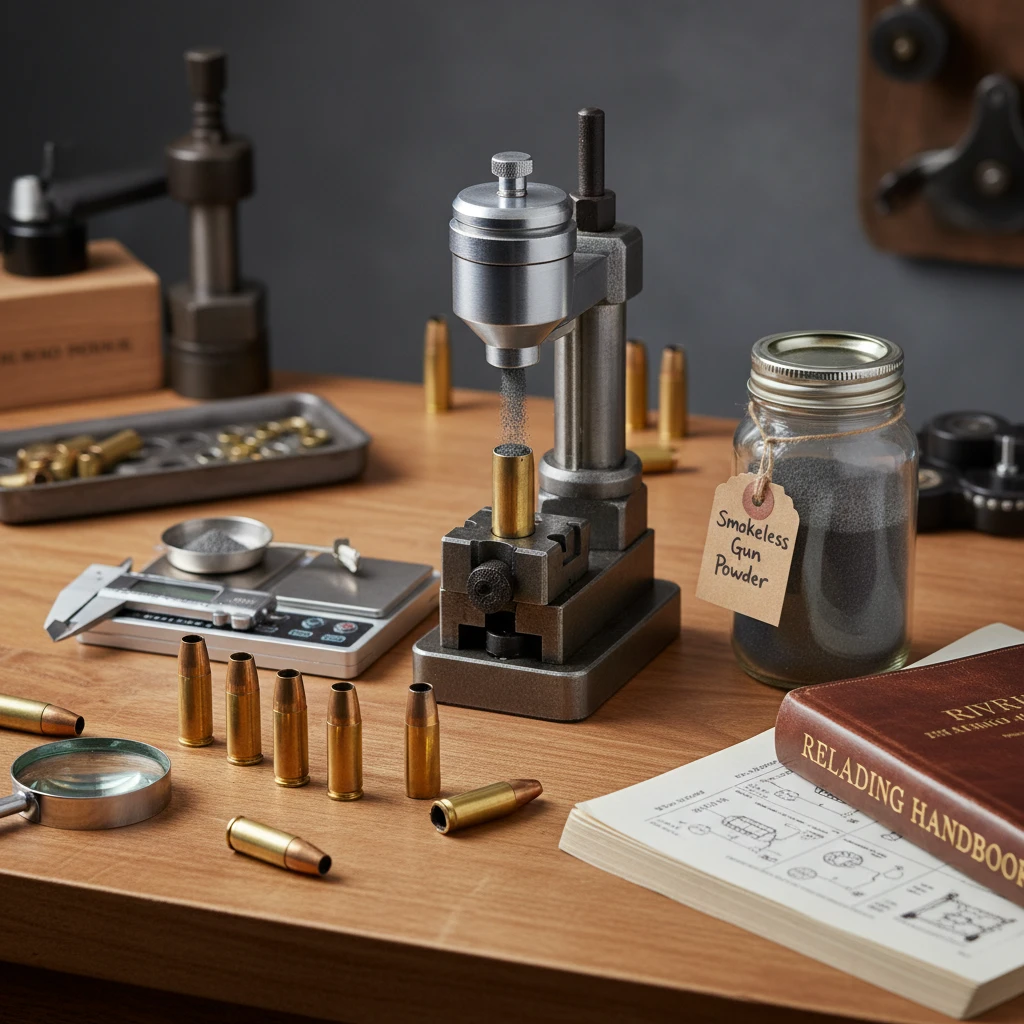
Smokeless Gunpowder: Reloading for Accuracy
The pursuit of a perfectly tuned firearm often leads reloaders down the path of meticulous component selection and precise powder handling. Smokeless gunpowder, a significant advancement over its black powder predecessors, offers a cleaner, more powerful, and consistent burn when managed correctly. This section will explore the fundamental principles that make smokeless gunpowder the propellant of choice for accuracy-focused reloading.
Unlocking Precision: The Role of Smokeless Gunpowder in Accurate Reloading
The quest for enhanced accuracy in hand-loaded ammunition is profoundly influenced by the characteristics of the smokeless gunpowder used. Unlike black powder, which burns relatively slowly and produces significant fouling, smokeless powders offer a much cleaner and more controlled combustion. This clean burn is crucial for maintaining consistent firearm performance shot after shot, as it minimizes residue buildup that can alter chamber dimensions and affect bullet seating. The burn rate of a smokeless powder directly dictates how quickly pressure rises within the cartridge case and how that pressure is applied to the bullet. A powder with an appropriate burn rate for a given cartridge and firearm will generate optimal velocity and maintain a stable pressure curve, translating directly into more predictable bullet trajectories and tighter shot groups. Factors like powder shape, size, and composition also contribute to the uniformity of the burn. Reloaders must understand that even minor variations in powder charges can lead to significant deviations in velocity and accuracy, making careful measurement and consistent powder handling paramount. For detailed guidance on achieving consistent loads, consult our insights on smokeless gun powder load data best practices.
The physical properties of smokeless gunpowder play a vital role in its metering and ignition. Powders are often categorized by their physical form: **granulated, flake, or tubular**. Granular powders tend to meter more consistently than flakes, which can clump or break apart, leading to variations in charge weight. Tubular powders, while often providing excellent performance, can also be prone to bridging in powder measures. The density of the powder also affects how much volume translates to a specific weight, influencing the choice of powder measure and the potential for “double charging” or insufficient charges. The goal is always to achieve a highly uniform powder charge for every round loaded. This uniformity is the bedrock of reliable and repeatable accuracy, ensuring that each shot behaves identically to the last. Furthermore, the choice of powder can significantly impact recoil. Faster-burning powders tend to produce a sharper, more immediate recoil impulse, while slower-burning powders distribute the pressure over a slightly longer duration, potentially resulting in a more manageable recoil, especially in larger caliber rifle loads.
Understanding Smokeless Gunpowder: Types and Characteristics for Reloaders
Smokeless gunpowders are broadly classified into two main types: **single-base and double-base**. Single-base powders primarily consist of nitrocellulose, while double-base powders also contain nitroglycerin, which increases their energy density and burn rate. This difference in composition directly impacts their burn characteristics and the pressures they generate. Double-base powders often provide higher velocities but can be more sensitive to temperature fluctuations and may produce more heat, potentially leading to faster barrel wear. Reloaders must be aware of these differences when selecting a powder for their specific application. The burn rate is arguably the most critical characteristic. Powders are sequenced from fastest to slowest, and selecting a powder within the appropriate range for a given cartridge and bullet weight is essential for safe and accurate reloading. For instance, a fast-burning powder might be ideal for short-barreled handguns, while a slow-burning powder is necessary for long rifle cartridges to allow sufficient time for the powder to burn completely before the bullet exits the barrel.
Beyond single and double-base classifications, smokeless powders are further distinguished by their physical form and burn characteristics, often referred to as “fast,” “medium,” or “slow” burning powders. Fast-burning powders, such as Alliant’s Red Dot or Hodgdon’s Clays, are typically used in lighter loads for .38 Special, .45 ACP, or shotgun shells. They generate pressure quickly, making them suitable for shorter barrel lengths where powder may not have time to fully combust. Medium-burning powders, like Alliant’s Unique or Hodgdon’s Universal, offer a broader range of applications and are often a good choice for .308 Winchester, 30-06 Springfield, and many common handgun cartridges. They provide a good balance of velocity and manageable pressure. Slow-burning powders, such as Hodgdon’s H1000 or IMR 7828, are generally reserved for high-capacity rifle cartridges like the .300 Winchester Magnum or .338 Lapua Magnum. These powders require longer barrel lengths to achieve full efficiency and optimal velocity, as they burn more gradually and sustain pressure for a longer duration. Understanding these categories is fundamental to successful reloading and can be further explored in resources dedicated to reloading: smokeless powder choices.
Choosing the Right Smokeless Gunpowder for Your Handgun and Rifle Loads
Selecting the correct smokeless gunpowder is a multifaceted decision that depends on several key factors, including the specific firearm, cartridge caliber, bullet weight, intended use (e.g., hunting, competition, self-defense), and desired velocity. For handgun ammunition, faster to medium-burning powders are typically favored. For example, in a .45 ACP cartridge, powders like Hodgdon’s Titegroup or Alliant’s Bullseye are often chosen for their ability to produce consistent ignition and good accuracy with moderate bullet weights. For magnum handgun cartridges such as the .357 Magnum or .44 Magnum, slower-burning powders like Alliant’s 2400 or Hodgdon’s Lil’ Gun are often recommended to achieve full velocity potential. When reloading for handgun ammo, consistency in powder charges is paramount, as small variations can have a magnified effect due to the lower volume of propellant and shorter barrel lengths.
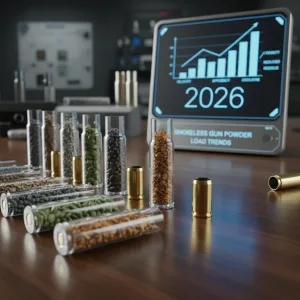
For rifle cartridges, the choice of gunpowder becomes even more critical due to the wider range of calibers, bullet weights, and barrel lengths involved. Generally, slower-burning powders are preferred for rifles to ensure complete powder combustion and optimal velocity before the bullet exits the barrel. For example, in a .30-06 Springfield, medium-slow powders like IMR 4350 or Hodgdon’s Varget are common choices, providing excellent accuracy and a good balance of velocity. For larger, high-powered rifle cartridges such as the .300 Winchester Magnum, very slow-burning powders like Hodgdon’s Retumbo or Alliant’s RL25 are often necessary to maximize performance. It is absolutely crucial to consult up-to-date load data manuals from reputable sources like Hodgdon, Alliant, or Vihtavuori, as well as the specific firearm manufacturer’s recommendations, before attempting any load development. Never exceed published maximum loads, and always start with the minimum charge weight and work up incrementally. Experienced reloaders often find success exploring new trends, as highlighted in discussions about 2026: Top Reloading Powder Trends.
The Critical Link: How Primers Impact Smokeless Gunpowder Ignition and Accuracy
While smokeless gunpowder is the engine of a cartridge, the primer is the ignition switch, and its role in achieving accuracy cannot be overstated. A primer provides the initial spark to ignite the gunpowder. Primer sensitivity varies, with magnum primers designed to deliver a hotter, longer-lasting flame than standard primers, which is essential for reliably igniting slower-burning magnum rifle powders. Using the wrong type of primer can lead to under- or over-ignition, resulting in inconsistent velocities and poor accuracy. For instance, a standard small rifle primer in a large magnum rifle cartridge might not provide enough energy to ignite the large charge of slow-burning powder efficiently, leading to “hang fires” or inconsistent burns. Conversely, using a magnum primer in a cartridge that calls for a standard primer could potentially generate excessive pressure if paired with a fast-burning powder.
The consistency of primer ignition directly influences the uniformity of the powder burn. A primer that provides a clean and complete ignition every time ensures that the powder begins burning consistently. Any variability in primer performance—whether due to age, manufacturing defects, or improper seating—can translate into shot-to-shot deviations in muzzle velocity. This, in turn, leads to less predictable bullet flight and diminished accuracy. Proper primer seating is also crucial; a primer that is seated too deep can create excessive resistance to ignition, while a primer that stands proud of the case head can cause ignition issues or even function-related problems. For a comprehensive understanding of how different primers affect performance, refer to our guide on primer types: reloading for precision. Ensuring you have the correct and high-quality primers is as vital as choosing the right smokeless gunpowder for optimal results.
Measuring for Consistency: Powder Measurement Techniques for Precision
Achieving pinpoint accuracy when reloading smokeless gunpowder hinges on the precise measurement of powder charges. Even minuscule variations can lead to significant deviations in bullet velocity and, consequently, shot placement. Two primary methods are employed: manual powder tricklers and automatic powder dispensers. Manual tricklers offer the utmost control for experienced reloaders, allowing for fine adjustments grain by grain, crucial for high-precision rifle loads. Automatic dispensers, while faster, require careful calibration and are best suited for high-volume handgun or shotgun ammo reloading where extreme micro-precision is less critical than consistency. The choice often depends on the application and the reloader’s experience level. For instance, a benchrest shooter aiming for sub-MOA groups will likely prefer a manual trickler for absolute charge control, whereas a hunter loading shotgun ammo for clay pigeons might opt for an automatic dispenser for efficiency.
When selecting a powder measure, several factors come into play. Consistency in thrown charges is paramount. Look for measures with precisely machined hoppers and rotors that minimize static cling and powder bridging. For smokeless gunpowder, which can vary in flake size and density, a measure that handles these variations well is essential. Static electricity can be a significant problem, causing powder to cling to the dispenser’s components, leading to undercharges. Anti-static treatments or periodic wiping with an anti-static cloth can mitigate this. Furthermore, consider the range of charge weights the dispenser can accurately handle. If you reload for multiple calibers, a measure with a wide operating range is more versatile. For those delving into advanced reloading techniques or seeking the absolute best in consistency, investing in a high-quality digital scale to verify dispensed charges is a wise decision. Regularly checking dispensed charges against a precise beam scale ensures your powder measure is performing optimally and helps maintain uniformity across your ammunition.
To ensure consistent results, it’s vital to understand the nuances of different powder types. Fine-grained, spherical powders tend to meter more consistently than bulky, extruded powders. When using extruded powders, shaking or tapping the powder measure can sometimes lead to denser charges, introducing variability. The environment also plays a role; temperature and humidity can affect powder density and static buildup. Always consult reputable load data, such as that provided by powder manufacturers or reliable reloading manuals, for recommended charge weights. Never exceed maximum charge recommendations, as this can lead to dangerous pressure spikes. For those new to reloading or seeking to refine their techniques, understanding these measurement principles is a cornerstone of success. Resources like Smokeless Powder: Reloading Essentials offer further guidance on these critical aspects.
Case Preparation: A Foundation for Accurate Smokeless Gunpowder Loads
The preparation of cartridge cases is a foundational step in achieving accurate reloads with smokeless gunpowder. Neglecting proper case preparation can negate the benefits of precise powder measurement and high-quality components. Key processes include cleaning, resizing, and trimming cases to uniform dimensions. Dirty or damaged cases can cause feeding issues, inconsistent ignition, and compromised accuracy. Cleaning methods range from ultrasonic cleaners to vibratory tumblers, ensuring cases are free of fouling and debris. Resizing brings the case back to its original dimensions, preparing it to accept a new primer and bullet. This step is crucial because fired cases can stretch and expand, particularly in semi-automatic firearms. A properly resized case ensures a snug fit in the chamber, contributing to consistent headspacing and preventing case head separation during firing.
Case trimming is another critical aspect, especially for rifle ammunition where precise headspace is paramount for accuracy. Cases that are too long can cause bolt binding issues and lead to imprecise bullet seating, impacting the case’s neck tension and potentially causing bullet runout. Uniform case length ensures that the bullet is seated to the same depth in relation to the rifling in every round, leading to consistent ignition and ballistic performance. Many reloaders use case trimmers that are either manual or powered, often with adjustable collars to set the desired length. For high-volume reloading or for those seeking extreme precision, automated case preparation systems are available. The importance of consistent case length cannot be overstated, particularly when working with high-pressure loads for rifle ammo or for disciplines demanding exceptional accuracy. Consulting resources such as Smokeless Gun Powder: Load Data Best Practices can provide further context on how case dimensions influence performance.
Deburring and chamfering the case mouths after trimming are often overlooked but essential steps. Deburring removes any sharp edges created by the trimming process, preventing brass shavings from contaminating the powder charge or obstructing bullet seating. Chamfering gently bevels the inside and outside edges of the case mouth, making it easier to start the bullet during the seating process and reducing the risk of shaving bullet jacket material. This also aids in guiding the bullet smoothly into the case. For bottlenecked rifle cases, a uniform neck tension is vital; it needs to be tight enough to hold the bullet securely but not so tight that it impedes ignition or causes excessive pressure. This tension can be adjusted by the resizing die’s neck diameter. For progressive press users, ensuring the case feeder is properly adjusted to present cases correctly is also part of meticulous case preparation. Thorough and consistent case preparation is the bedrock upon which reliable and accurate reloaded ammunition is built, directly impacting the performance of your smokeless gun powder loads.
Bullet Selection: Synergizing with Smokeless Gunpowder for Optimal Performance
The synergy between bullet selection and smokeless gunpowder is critical for achieving optimal performance in reloaded ammunition. Different bullets have varying weights, shapes, construction, and ballistic coefficients, all of which interact with the burning characteristics of the powder and the firearm’s rifling. For instance, lighter, faster bullets often perform best with faster-burning powders, while heavier, slower bullets benefit from slower-burning powders that provide a sustained pressure curve. The goal is to match the bullet’s performance characteristics with the powder’s energy delivery to achieve the desired velocity, accuracy, and terminal effect. Understanding the intended application – whether it’s handgun ammo for self-defense, rifle ammo for hunting, or specialized rounds for competition – will guide bullet and powder choices. A bullet designed for rapid expansion might require a specific velocity window that can only be reliably achieved with a particular powder and charge combination.
Ballistic coefficient (BC) is a key consideration, especially for long-range shooting. A higher BC means the bullet retains its velocity and energy better downrange, making it less susceptible to wind drift and drop. This often requires a bullet that can be driven to higher velocities, which in turn dictates the type of smokeless gunpowder suitable for the load. Similarly, bullet construction plays a significant role in terminal ballistics. For hunting, expanding bullets are desired, and their expansion characteristics are directly influenced by the velocity at which they strike the target, which is a function of the powder charge. For target shooting, monolithic bullets or those with robust jackets might be preferred for their consistency and ability to withstand high velocities without deforming. The website’s section on Reloading: Smokeless Powder Choices offers valuable insights into selecting appropriate powders for various bullet types.
When pairing bullets with smokeless gunpowder, it’s crucial to consult load data from reputable sources. These sources typically list recommended powders, charge weights, and velocities for specific bullet weights and types in various cartridges. Over-reliance on generic recommendations can lead to suboptimal performance or unsafe conditions. For example, using a powder designed for heavier bullets with a lighter bullet of the same caliber might result in dangerously high pressures, even at moderate charge weights. Conversely, using a fast-burning powder with a very heavy bullet might not generate enough velocity for optimal performance or could lead to incomplete powder burn. Always begin with the minimum recommended charge and work up incrementally while monitoring for signs of excessive pressure. This methodical approach ensures both safety and the best possible accuracy from your chosen bullet and smokeless gun powder combination.
Troubleshooting Common Reloading Issues with Smokeless Gunpowder
Reloading smokeless gunpowder, while rewarding, can present challenges. One of the most common issues is inconsistent velocity between rounds. This often stems from variations in powder charges, but other factors can contribute. If you’re using a powder dispenser, verify its consistency by weighing multiple throws. Static electricity can cause powder to cling to the dispenser, leading to lighter charges. Ensuring cases are uniformly prepped, including consistent bullet seating depth and neck tension, is also vital. If your cases are not resized correctly, they might headspace improperly, affecting ignition and burn rates. Furthermore, ensure you are using the correct primers for your intended load, as primer sensitivity can impact ignition consistency. Using a chronograph to track velocities is an invaluable tool for diagnosing these issues.
Another frequent problem is poor accuracy, often manifesting as wide shot groups. While powder measurement and bullet selection are primary culprits, several other factors can be at play. Check for bullet runout – the degree to which a bullet is not perfectly aligned with the case centerline. This can be caused by improper bullet seating, worn resizing dies, or damaged case mouths. Inconsistent neck tension can also lead to bullet wobble. Inspect your resized cases for concentricity issues. If you’re reloading rifle ammo, inconsistent neck sizing can lead to the bullet not engaging the rifling uniformly. Ensure your rifle’s bore is clean and free from obstructions. Sometimes, the issue is simply a mismatch between the bullet’s rifling twist rate and the bullet’s design; heavier bullets require faster twist rates to stabilize properly. Consulting reloading guides, such as those found on Smokeless Gun Powder: Master Your Loads, can offer further diagnostic pathways.
Pressure-related issues, such as sticky extraction or ejected cases showing signs of flattening or ejector wipe, indicate that the pressure in the chamber is too high. This is a critical safety concern. Common causes include exceeding recommended powder charges, using faster-burning powders than recommended for a given bullet weight, or seating bullets too deeply, reducing the case’s powder capacity. Using a powder measure that is not calibrated correctly can also lead to overcharging. Always start with the minimum recommended charge weight from a reliable source and work up incrementally. If you experience sticky extraction, stop shooting the load immediately and consult published load data for safe parameters. Another troubleshooting area is feeding issues, especially in semi-automatic firearms. This can be due to improperly resized cases, inconsistent overall cartridge length, or worn magazines. Ensuring your reloads are within established specifications is paramount for both safety and performance.
Safety First: Best Practices When Handling and Storing Smokeless Gunpowder
Working with smokeless gunpowder requires a disciplined approach to safety. Proper handling and storage are paramount to prevent accidents and ensure the longevity of your reloading components. Always begin by consulting the manufacturer’s safety data sheet (SDS) for specific guidelines related to the type of powder you are using. This document provides critical information on hazards, first aid measures, and recommended personal protective equipment (PPE). When measuring or pouring gunpowder, do so in a well-ventilated area to minimize inhalation of fine particles. Avoid static electricity by grounding yourself and your equipment, especially during warmer, drier conditions. A common pitfall is the careless transfer of powder between containers, which can create a static charge. Using anti-static mats and containers can significantly reduce this risk.
Storage conditions are equally vital. Smokeless gunpowder is sensitive to extreme temperatures and humidity. Store it in its original, sealed container, away from direct sunlight, heat sources, and moisture. A cool, dry environment, such as a dedicated gun safe or a climate-controlled cabinet, is ideal. Avoid storing large quantities together; break them down into smaller, manageable amounts if possible. Never store gunpowder near open flames, sparks, or incompatible materials like oils or solvents. A common mistake is placing powder in areas that experience significant temperature fluctuations, such as a garage or shed, which can degrade the propellant over time. For optimal shelf life and consistent performance, adherence to recommended storage practices is non-negotiable.
When it comes to handling, always use appropriate tools like dedicated powder measures and funnels. Avoid using metal funnels that can generate static electricity. Clean up any spills immediately and thoroughly. Small amounts of spilled powder can be a fire hazard. If you are reloading for precision rifle ammunition or handguns, consistent powder charges are crucial, and a safe, clean environment contributes directly to this accuracy. Understanding the chemical properties of smokeless gunpowder is key; it’s a highly energetic material that demands respect and meticulous attention to detail. For a deeper dive into the nuances of various powders and their characteristics, consider exploring resources on smokeless gunpowder load data best practices.
Testing and Tuning Your Smokeless Gunpowder Loads for Peak Accuracy
Achieving peak accuracy with reloaded ammunition hinges on meticulous testing and tuning of your smokeless gunpowder loads. This process involves systematically evaluating how different powder charges and other component variations affect bullet performance. The goal is to find the “sweet spot” where your rifle or handgun delivers consistent, tight groups. Start with published load data from reputable sources, such as the powder manufacturer or established reloading manuals. Always begin with the minimum recommended charge weight and work upwards in small increments. Never exceed the maximum charge weight listed for your specific firearm and components, as this can lead to dangerous pressure spikes.
When testing, focus on one variable at a time. This might mean using the same bullet and primer, but varying the smokeless gunpowder charge. Shoot from a stable rest to eliminate shooter error as a significant factor. Pay attention to group size, but also to signs of pressure, such as flattened primers, ejector marks on brass, or sticky bolt lift. An example of effective testing might involve loading five rounds each of three different powder charges within the safe range. Shoot these groups at 100 yards, noting the impact point and group diameter. Look for the charge that consistently produces the smallest, most cohesive group. This methodical approach, often referred to as a “ladder test,” is a cornerstone of accurate smokeless gunpowder load development.
Beyond powder charges, bullet selection, primer type, and case preparation all play a role. For instance, a particular bullet might perform exceptionally well with one type of smokeless gunpowder but poorly with another. Similarly, the choice of primer type for reloading can influence ignition consistency and, consequently, accuracy. Once you’ve identified a promising powder charge, consider fine-tuning the overall length (OAL) of your cartridges. Small adjustments to OAL can significantly impact how the bullet engages the rifling upon firing. Documenting every aspect of your testing—powder charge, bullet, primer, OAL, ambient temperature, and resulting group—is crucial for replicating successful loads and troubleshooting issues. This detailed record-keeping is invaluable for refining your ammunition for competitive shooting or hunting.


About author


Add comment