

Primer Types: Reloading for Precision
This guide delves deep into the world of primers, dissecting their types, functions, and the critical impact they have on your reloading endeavors. By mastering the intricacies of primer selection and application, you can unlock a new level of precision and confidence in every round you assemble, transforming your reloading efforts from routine to refined.
Unlocking Your Firearm’s Potential: The Crucial Role of Primers in Reloading
Primers are the unsung heroes of ammunition, acting as the initiation system that sets off the combustion of gunpowder. This tiny device, typically a small metal cup containing a sensitive explosive compound and a striker, plays a disproportionately large role in the overall performance of a cartridge. When struck by the firing pin, the primer ignites, producing a hot flame that travels through a small vent (the flash hole) into the main powder column, initiating a rapid and controlled burn. This initial ignition must be consistent and energetic enough to ignite the entire powder charge effectively, leading to predictable projectile launch. A primer’s reliability directly influences ignition consistency, which in turn impacts muzzle velocity, extreme spread, and the overall accuracy of your reloads.
For the precision reloader, selecting the correct primer is a critical decision that can significantly elevate performance. While often overlooked in favor of powders and bullets, the primer’s chemical composition and physical characteristics directly affect the ignition timing and pressure curve of a given load. A primer that ignites too slowly or too weakly can result in incomplete powder burn, leading to flyers and inconsistent velocity. Conversely, an overly sensitive or energetic primer might cause excessive pressure spikes, compromising safety and accuracy. Choosing the right primer is about harmonizing its ignition characteristics with the specific smokeless gun powder and cartridge design you are working with. Understanding these interactions is key to developing loads that perform optimally, whether for precision match shooting or reliable hunting scenarios.
Understanding the Ignition System
The ignition system of a firearm, when reloading, centers around the primer’s ability to reliably initiate gunpowder combustion. The process begins with the firing pin striking the primer cup. This impact compresses the sensitive, shock-sensitive primary explosive material within the primer, causing it to detonate. The resulting flame is channeled through the primer’s flash hole and ignites the main charge of smokeless gun powder in the cartridge case. The quality of this initial ignition is paramount; a weak or inconsistent strike can lead to hangfires, misfires, or incomplete powder burn, all of which negatively affect accuracy and shooter confidence. The primer acts as the critical first step in a chain reaction that propels the bullet down the barrel.
Why Primer Choice Matters for Precision Reloading
Precision reloading demands consistency above all else. Every component in a cartridge contributes to its final performance, but primers are fundamental to achieving tight shot groups. Different primer formulations have varying sensitivities and flame temperatures, which can subtly alter the ignition characteristics of the smokeless gun powder. For instance, a faster-igniting primer might be beneficial with certain slower-burning powders to ensure complete combustion at lower velocities, while a hotter primer could be necessary for large-capacity cases or when working with powders that are more difficult to ignite. Matching the primer’s ignition energy to the specific powder charge and bullet weight is crucial for consistent pressure and velocity. This careful selection prevents issues like ignition irregularities that can manifest as flyers, significantly impacting the precision of your loads. For advanced load development, consulting resources on smokeless gun powder load development can highlight the role primers play.
The Two Main Families: Boxer vs. Berdan Primers Explained
When delving into reloading, you’ll encounter two primary types of primer designs: Boxer and Berdan. The distinction is significant, primarily affecting the ease with which spent primers can be removed and replaced, a critical factor for the home reloader. Understanding these differences is essential for selecting the right components and avoiding potential problems during the reloading process. While both serve the same fundamental purpose – to ignite the gunpowder – their internal construction and the design of the cartridge case they inhabit dictate how they are handled and reloaded.
The fundamental difference lies in the primer pocket design of the cartridge case and the primer itself. Boxer primers are typically found in most modern American ammunition, while Berdan primers are more common in European and military surplus ammunition. The ease of reloading varies greatly between the two. For the vast majority of handloaders, especially those new to the craft or focused on standard sporting ammunition, the prevalence and ease of use of Boxer primers make them the preferred choice. Understanding which type your brass uses is the first step in successful reloading and component selection, especially when sourcing cases or deciding on initial purchases of smokeless gun powder for various calibers.
Identifying Boxer Primers: The Reloading Enthusiast’s Choice
Boxer primers are characterized by a single, centrally located anvil that is integrated into the primer itself. The primer cup contains the explosive compound, and when struck, it crushes against this anvil, creating ignition. Crucially, the cartridge case designed for a Boxer primer has a single, larger flash hole. This design feature is what makes Boxer-primed brass exceptionally well-suited for reloading. After firing, the spent Boxer primer can be easily pushed out from the inside of the case, typically using a decapping pin on a resizing die or a dedicated hand primer tool. This ease of removal and replacement makes them the standard and preferred choice for most reloaders worldwide. The ability to efficiently process cases with Boxer primers is a major reason why much of the popular reloading equipment and dies are geared towards this system, ensuring accessibility for enthusiasts.
Understanding Berdan Primers: Common in Military Surplus Ammunition
Berdan primers differ significantly in their construction and application. Instead of a separate anvil integrated into the primer cup, Berdan primers rely on an anvil that is part of the cartridge case itself. The case features two small flash holes, and the primer cup is designed to crush against the internal anvil formed by the base of the case. This design, while often considered more robust and less prone to primer setback in high-pressure military applications, presents a significant challenge for reloaders. To remove a spent Berdan primer, one must typically use a specialized tool designed to hook under the rim of the primer and pry it out from the outside, or employ methods like using a dental pick or even drilling to extract it. This extraction process is often more time-consuming and can be difficult, especially with cases that have been fired multiple times or exhibit carbon buildup in the primer pocket. Consequently, Berdan-primed brass is generally considered less desirable for most reloaders due to the added difficulty in preparing the cases.
The Impact of Primer Pocket Design on Reloading
The design of the primer pocket within a cartridge case is intrinsically linked to the type of primer it accepts and, consequently, the reloading process. Cases designed for Boxer primers have a single, relatively large primer pocket that accommodates the primer’s integrated anvil. This larger pocket depth and the presence of a single flash hole make for straightforward primer seating and de-priming. In contrast, Berdan-primed cases have a more complex primer pocket that incorporates the anvil directly into the case head, often with two smaller flash holes. This design choice, while potentially offering greater structural integrity in some applications, makes primer removal more arduous. A loose primer pocket can lead to ignition failures or safety issues, such as primer blow-by. Conversely, a pocket that is too tight can make seating primers difficult or even dangerous. Understanding the specific primer pocket dimensions and condition of your brass is crucial for safe and effective reloading, as incorrect primer seating is a common cause of ignition problems, which can be further explored in guides on reloading primer ignition problems.
Size Matters: Small vs. Large Rifle and Pistol Primers
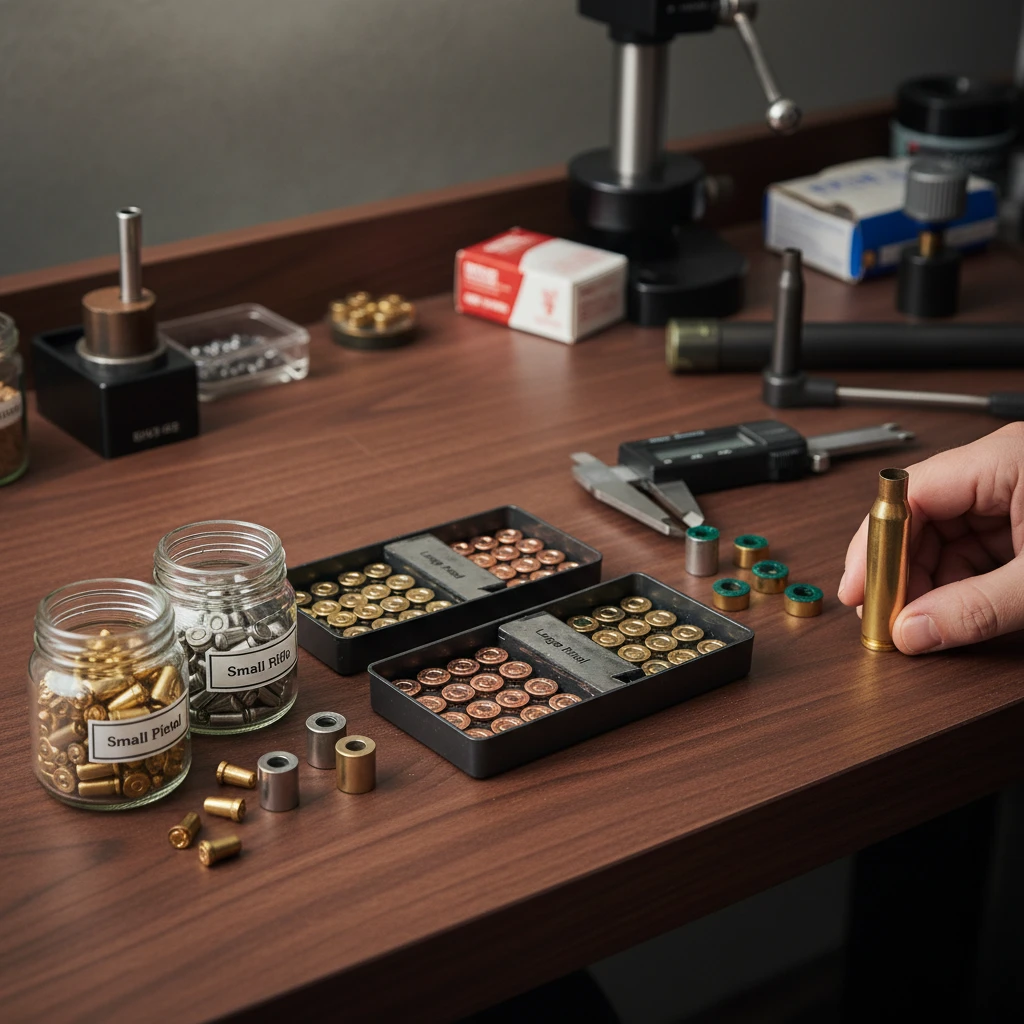
Primers are not only categorized by their ignition system but also by their physical dimensions. The two primary size classifications are “small” and “large,” and these apply to both pistol and rifle cartridges. This sizing is critical because the primer must fit snugly within the cartridge case’s primer pocket to ensure proper seating and reliable ignition. Using the wrong size primer can lead to a host of problems, ranging from frustrating misfires to dangerous pressure spikes, directly impacting the safety and accuracy of your reloaded ammunition. Properly identifying and matching primer size to your cartridge brass is a fundamental step in the reloading process, as vital as selecting the correct smokeless gun powder for your intended application.
The distinction between small and large primers is straightforward: large primers have a greater diameter than small primers. This difference dictates which cartridge cases they are designed to fit. Generally, smaller caliber cartridges, both pistol and rifle, tend to use small primers, while larger or more powerful cartridges often utilize large primers. Manufacturers adhere to strict industry standards for these dimensions to ensure interchangeability and safety. However, there are exceptions and variations, particularly with older or less common cartridges, making it essential for reloaders to consult reliable load data and verify the specifications of their brass. This careful attention to detail is what separates casual reloading from precision ammunition crafting.
Matching Primer Size to Your Cartridge Case
The cardinal rule of primer selection is to match the primer size to the cartridge case’s primer pocket dimensions. For example, a .45 ACP case is designed for a large pistol primer, while a 9mm Luger case uses a small pistol primer. Similarly, rifle cartridges like the .223 Remington (5.56x45mm NATO) typically use small rifle primers, whereas a .30-06 Springfield uses a large rifle primer. The primer pocket is engineered to have a specific tolerance for the primer cup; a correctly sized primer will seat with a slight interference fit, ensuring it remains secure during firing and handling. Using a primer that is too small will result in a loose fit, potentially allowing the primer to back out (setback) under firing pressure, leading to firearm malfunctions or dangerous gas leakage. Conversely, a primer that is too large will not seat properly, or may even refuse to seat at all, preventing the case from being chambered or fired.
Consequences of Mismatching Primer Sizes
The ramifications of mismatching primer sizes can be severe and range from minor inconveniences to significant safety hazards. If you attempt to seat a large primer into a pocket designed for a small primer, it likely won’t seat fully. If you force it, you risk damaging the case, the primer, or your priming tool. In the rare case that a large primer is forced into a small pocket and fired, the excess pressure can cause the primer to rupture, potentially damaging the firearm and injuring the shooter. Conversely, using a small primer in a large primer pocket creates a loose fit. While the small primer might appear to seat initially, it will not be supported by the case rim and pocket walls. When fired, the immense pressure can cause the small primer to extrude backward into the action of the firearm (primer blow-by), creating a dangerous gas leak and potentially damaging the firing pin or bolt. Always verify the correct primer size for your specific cartridge caliber and brass by consulting reloading manuals or reliable online resources before purchasing components, including your handgun ammo components.
Common Cartridge Examples for Small and Large Primers
Understanding which primer size is standard for common cartridges is essential for efficient reloading. For pistol cartridges, small pistol primers are typically used in calibers such as 9mm Luger, .380 ACP, .40 S&W, and 10mm Auto. Large pistol primers are the standard for calibers like .45 ACP, .44 Magnum, and .357 Magnum. In rifle ammunition, small rifle primers are found in cartridges like .223 Remington (5.56x45mm NATO), .204 Ruger, and .22-250 Remington. Large rifle primers are standard for cartridges such as .308 Winchester, .30-06 Springfield, .270 Winchester, 7mm Remington Magnum, and .300 Winchester Magnum. It’s important to note that some cartridges, like the .40 S&W and 10mm Auto, have transitioned to small primer pockets from older large primer designs for case manufacturing efficiency. Always double-check your specific brass, as some manufacturers may use different primer pocket sizes for the same caliber, especially with military surplus or older brass.
Performance Degrees: Standard vs. Magnum Primers
Beyond size and ignition type, primers also come in different performance levels, primarily categorized as “standard” and “magnum.” This distinction relates to the amount and intensity of the flame they produce upon ignition. Magnum primers contain a slightly larger quantity of priming compound or a different, more potent mixture, resulting in a hotter and longer-lasting flame compared to their standard counterparts. This increased ignition energy is designed to ensure the complete and rapid combustion of larger or slower-burning gunpowder charges, which are often used in larger-capacity cartridges or those designed for higher velocities. The choice between standard and magnum primers is crucial for achieving optimal performance and safety, as it directly influences how effectively your gunpowder ignites.
Using the correct primer type is not just about consistency; it’s about managing pressure and ensuring predictable burn rates for your chosen smokeless gun powder. A standard primer might be perfectly adequate for many common loads, but for certain applications, particularly those involving magnum cartridges or specific powder selections, a magnum primer becomes a necessity. Failure to use a magnum primer when one is recommended can lead to incomplete powder burn, reduced velocity, and increased fouling, ultimately compromising accuracy. Conversely, using a magnum primer when a standard one would suffice can sometimes lead to undesirable pressure increases, especially in smaller cases or with faster-burning powders. Understanding the role of these performance degrees allows reloaders to fine-tune their loads for superior results.
When to Reach for Magnum Primers
Magnum primers are specifically engineered to provide a more energetic and prolonged flame than standard primers, making them essential for igniting slower-burning smokeless gun powders typically found in larger-capacity cartridges. You should reach for magnum primers when reloading cartridges that are classified as magnum, such as the 7mm Remington Magnum, .300 Winchester Magnum, or .338 Lapua Magnum. Additionally, magnum primers are often recommended when using very large powder charges, even in non-magnum cartridges, or when working with smokeless gun powders that are known to be more difficult to ignite, such as some of the slower-burning rifle powders. Consulting reliable load data is paramount; reloading manuals and reputable online sources will specify when a magnum primer is recommended or required for a particular load combination. Ignoring these recommendations can lead to ignition inconsistencies and suboptimal performance.
Potential Pitfalls of Overusing Magnum Primers
While magnum primers offer increased ignition energy, their overuse can lead to unintended consequences and potential safety hazards. The primary pitfall is an unnecessary increase in pressure. If a magnum primer is used with a faster-burning powder or in a smaller cartridge case where a standard primer provides sufficient ignition, the hotter and longer flame can cause the powder to burn too quickly, leading to a pressure spike. This can result in exceeding safe pressure limits, potentially damaging the firearm or causing injury. Another consideration is the potential for premature ignition or hangfires if a magnum primer’s sensitivity is not matched to the firearm’s firing pin energy. For example, some older firearms or those with lighter firing pin springs may not reliably ignite a magnum primer without modification. Always adhere to manufacturer recommendations for primer type and never substitute a magnum primer for a standard primer without consulting authoritative load data that specifically addresses such a substitution.
Impact on Smokeless Gun Powder Burn Rates
The relationship between primers and the burn rate of smokeless gun powder is intricate. Standard primers provide a flame sufficient to ignite most common medium-burning rifle and pistol powders. However, as the volume of the cartridge case increases and the powder charge becomes larger and slower-burning, the initial flame from a standard primer may not be sufficient to ignite the entire powder charge efficiently. This can result in incomplete combustion, leading to lower velocities and increased fouling. Magnum primers, with their hotter and more sustained flame, are designed to overcome this, ensuring that even slow-burning powders ignite thoroughly and burn more completely. This leads to more consistent pressure development and velocity, which are critical for precision shooting and reliable performance in hunting applications. For instance, when reloading for hunting, consistent performance in varying temperatures can be influenced by proper powder ignition, a factor enhanced by the correct primer choice, especially when considering smokeless gun powder for hunters.
Beyond the Basics: Specialty Primers for Advanced Reloading
While standard primers serve most common reloading needs, advanced shooters and those pursuing extreme accuracy often benefit from specialized options. Specialty primers are engineered with tighter tolerances and unique chemical compositions to provide more consistent ignition and a cleaner burn, crucial for high-performance ammunition. These often come at a higher price point but can be the deciding factor in shaving critical fractions of an inch off a target or improving group consistency. Understanding the nuances of these advanced components is key to unlocking the full potential of your reloads, especially when chasing match-grade performance or pushing the boundaries of ballistic efficiency in your rifle ammo. They are not merely an incremental upgrade; they represent a deliberate choice to optimize every facet of the ignition process for superior results.
The Role of ‘Target’ or ‘Match’ Primers for Extreme Precision
For disciplines demanding pinpoint accuracy, such as long-range shooting or competitive target shooting, ‘target’ or ‘match’ primers are indispensable. These primers are manufactured to exceptionally tight specifications, ensuring consistent flame characteristics and minimal velocity variations from shot to shot. The sensitive propellant bed requires a precise and predictable ignition source, and match primers deliver just that. They often contain a more sensitive priming compound and are designed to ignite propellant charges with greater uniformity, reducing the variables that can lead to fliers. When reloading for precision rifle cartridges, where minute differences in performance can mean the difference between a win and a loss, investing in match primers is a logical step. Their enhanced consistency directly translates to a tighter velocity spread, a critical factor for maintaining ballistic stability over long distances. These are meticulously crafted components for those who leave nothing to chance in their pursuit of ballistic perfection. For detailed guidance on optimizing your precision loads, consult resources on smokeless gun powder precision reloading for match shooting.
Exploring Shotgun Primers: Different Needs for Different Shotgun Ammo
Shotgun primers operate under different pressure dynamics than their handgun or rifle counterparts, primarily due to the larger case volume and the nature of shotshell propellants. There are two main types: standard and magnum shotgun primers. Standard primers are adequate for most target loads and light game loads, providing a reliable ignition for typical propellant charges. However, when working with heavier payloads, slower-burning propellants, or shooting in cold weather conditions, magnum shotgun primers become essential. These primers produce a longer-lasting, hotter flame, which is necessary to ensure complete and efficient ignition of the larger powder charges common in magnum loads. Using a standard primer with a magnum load can lead to incomplete combustion, poor patterns, and inconsistent velocities. Conversely, using a magnum primer with a light load might create excessive pressure spikes. Careful selection based on the intended use and load data is paramount for safe and effective shotgun ammo reloading. Explore more on this topic at shotgun ammo mastering bird hunting loads.
Considerations for Rimfire Ammunition Reloading (and why it’s often not feasible)
Reloading rimfire ammo, particularly common calibers like .22LR, presents unique challenges that often make it impractical for the average handloader. The primary obstacle is the design of the rimfire cartridge itself. The priming compound is spun into the hollow rim of the case, making it incredibly difficult to reliably remove and replace without damaging the case or risking an accidental detonation. Furthermore, the primers in rimfire cartridges are often integral to the case structure and cannot be safely removed using standard reloading dies. While some specialized tools and techniques exist for advanced users, the cost and complexity generally outweigh the savings or performance benefits for most. The risk of inconsistent ignition or creating an unsafe condition is significantly higher compared to centerfire reloading. For recreational shooting and plinking, purchasing factory-loaded rimfire ammunition is almost always the more economical and safer choice. You can find information on improving accuracy with factory loads at rimfire ammo improving accuracy for target practice.
Consistency is Key: Factors Affecting Primer Performance
The primer is the initial catalyst for the entire combustion process in a cartridge. Even the slightest inconsistency in its performance can propagate through the load, impacting accuracy, velocity, and pressure. Therefore, understanding and controlling the factors that influence primer function is paramount for any reloader seeking consistent and reliable results. From the initial seating to long-term storage, every step matters. Paying attention to these details ensures that your carefully crafted loads perform as expected, whether for hunting, competition, or self-defense. The goal is to eliminate as many variables as possible, and the primer is a crucial starting point in that endeavor. Mastering these aspects will elevate your reloading from simply assembling components to precision engineering your ammunition.
Primer Seating Depth: A Critical Variable
Primer seating depth is arguably one of the most critical variables in primer performance. A primer that is seated too deep can cause issues such as high primer issues, which may lead to slam-fire in semi-automatic firearms or excessive pressure signs. Conversely, a primer that is not seated fully, or is proud of the case head, can lead to failure to fire, as the firing pin may not strike it with sufficient force. The ideal seating depth ensures the primer cup is flush or slightly below the case head, allowing for proper support from the firearm’s bolt face or breech face. This optimal depth also contributes to the primer cup containing the initial combustion pressure effectively. Many reloaders use primer seating gauges to ensure uniformity. Taking the time to seat each primer correctly, with consistent pressure and depth, directly impacts the reliability and safety of your handgun ammo and rifle loads.
Handling and Storage: Maintaining Primer Integrity
Primers are sensitive components that require careful handling and storage to maintain their integrity and reliability. Exposure to moisture is the primary enemy, as it can degrade the priming compound, rendering the primer inert or causing inconsistent ignition. Always store primers in their original packaging, which is designed to protect them from environmental factors. Keep them in a cool, dry place, away from heat sources, sparks, or open flames. Avoid dropping or jarring primers, as this can potentially initiate them. For long-term storage, consider using sealed plastic containers to further protect against humidity. Proper handling also extends to the reloading bench; ensure your hands are clean and free of oils or solvents that could contaminate the primers. Maintaining the quality of your primers directly influences the consistency of your reloads, ensuring reliable ignition for every shot fired from your rifle or handgun.
The Influence of Primer Hardness on Firing Pin Strikes
Primer hardness refers to the resistance of the primer cup to deformation by the firing pin. This is particularly relevant when reloading for firearms with strong firing pin springs or semi-automatic actions, which can generate significant impact force. Standard primers are designed for general use, but firearms like bolt-action rifles with light triggers or certain types of semi-autos might require harder primers. These harder primers are designed to withstand a heavier firing pin strike without puncturing or deforming excessively, thus preventing misfires or slam-fires. Conversely, if a primer is too hard for a firearm with a weak firing pin or light spring, it may not ignite reliably. Conversely, using a primer that is too soft in a firearm with a powerful firing pin can lead to pierced primers and gas leaks. Understanding your firearm’s firing pin characteristics is crucial for selecting the appropriate primer hardness, especially for critical applications like competitive shooting or self-defense loads.
Matching Primers to Your Reloading Goals and Projectiles
Selecting the correct primer is not a one-size-fits-all decision; it’s a critical component in the intricate dance of powder, projectile, and firearm. The primer’s role is to initiate the burn of the smokeless gun powder, and its characteristics – from flame temperature and duration to sensitivity – must be harmonized with the specific propellant and projectile being used. This synergy is what unlocks optimal performance, whether you’re aiming for extreme precision in rifle ammo, reliable function in handgun ammo, or consistent patterns in shotgun ammo. Neglecting this crucial match can lead to underperformance, inconsistent results, or even unsafe pressure fluctuations. Therefore, a thoughtful approach to primer selection, considering its interaction with all other load components, is fundamental to successful reloading.
Synergy with Smokeless Gun Powder Selection
The choice of smokeless gun powder significantly dictates the type of primer needed. Fast-burning pistol powders, often used in handgun ammo, generally ignite more readily and require standard small pistol or large pistol primers. Their rapid burn rate means a quick, hot flame from the primer is sufficient for complete combustion. In contrast, slower-burning rifle powders, especially those used in high-capacity cartridges or for long-range applications, benefit from primers that provide a more sustained and energetic flame. Magnum primers are often recommended for these slower powders to ensure they ignite fully and without delay. Using a fast primer with a slow powder might result in incomplete or erratic ignition, leading to poor accuracy and inconsistent velocity. Always consult reliable load data, which often specifies the type of primer—standard or magnum—required for optimal performance with a particular powder and cartridge combination. For insights into choosing the right powder, refer to guides on reloading: finding the right smokeless gun powder.
Optimizing for Different Bullet Types and Weights
While the primary influence on primer selection comes from the propellant, the bullet type and weight can also play a secondary role, particularly in magnum loads. For example, heavier bullets or those designed for deep penetration often require slower-burning powders, which, as previously discussed, may necessitate a magnum primer for consistent ignition. In some high-performance rifle loads, a magnum primer can help ensure that the entire charge of powder ignites cleanly when propelling a heavy projectile at high velocities. For standard loads with lighter bullets, a standard primer is typically sufficient. The goal is to achieve a complete and efficient burn of the propellant charge, propelling the bullet consistently. When delving into advanced load development, understanding these subtle interactions between primer, powder, and bullet can lead to significant improvements in accuracy and performance for both rifle ammo and handgun ammo.
Achieving Consistent Velocity Spread for Rifle Ammo and Handgun Ammo
A consistent velocity spread is a hallmark of well-engineered ammunition, and the primer is a critical factor in achieving this. A primer that provides a uniform flash temperature and duration ensures that the propellant ignites in precisely the same manner for every shot. This uniformity in ignition directly translates to a tighter velocity spread, which is essential for predictable bullet trajectory, especially in rifle ammo intended for long distances. For handgun ammo, while extreme velocity consistency might be less critical than for rifle rounds, it still contributes to a more predictable point of impact and a smoother shooting experience. Using a primer that is too sensitive or too weak can introduce significant variation in ignition timing, leading to wider velocity spreads and reduced accuracy. Choosing the correct primer and seating it consistently are foundational steps in minimizing this variability.
Troubleshooting Common Primer-Related Reloading Issues
Despite meticulous care, reloaders can sometimes encounter issues stemming from primers. These problems can range from complete ignition failures to subtle performance degradations that impact accuracy. Recognizing the common symptoms and understanding their root causes is crucial for safe and effective reloading. Many primer-related failures can be diagnosed by careful observation of the fired primer and the firearm’s behavior. Addressing these issues promptly prevents wasted components and, more importantly, ensures the safety of the shooter and the firearm. This section aims to provide practical guidance on identifying and resolving these frequently encountered challenges, helping you maintain confidence in your reloaded ammunition.
Failure to Fire: Diagnosing Primer Problems
A ‘failure to fire’ (FTF) is one of the most frustrating reloading issues, and primers are often at the center of the problem. The most common causes include primers that are not seated fully or are seated too deep. A proud primer simply won’t be struck with enough force by the firing pin. A primer seated too deep might be crushed by the breech face, preventing ignition. Another possibility is a spent primer that has been reinserted into a resized case, which is impossible to ignite. Contamination from moisture or exposure to excessive heat can also render a primer inert. Inspecting the unfired primer is key: check if it appears dented (meaning the firing pin struck it) or if it looks untouched. If dented, the issue is likely the primer itself or its seating depth. If untouched, the firing pin mechanism or the firearm’s geometry is the probable culprit. For a deeper dive into ignition problems, consult resources on reloading primers diagnosing common ignition problems.
Pistol Powder Ignition Issues Related to Primer Choice
For handgun ammo, inconsistent ignition of pistol powder, often manifesting as squib loads or erratic cycling in semi-automatic firearms, can sometimes be traced back to the primer. Using a primer with insufficient flame temperature or duration for a particular pistol powder can lead to incomplete combustion. This is more common with slower-burning powders sometimes used in larger capacity handgun cartridges. If a primer is too weak, it may not generate enough heat to ignite the powder charge efficiently, especially if the powder is also on the slower end of the spectrum. Conversely, using a magnum primer with a very fast-burning pistol powder could potentially cause an overly rapid pressure rise, though this is less common than ignition failure. Always adhere to load data that specifies the type of primer (standard or magnum) recommended for the chosen powder and cartridge combination. This ensures adequate energy transfer for reliable ignition of your handgun rounds.
Understanding ‘Cratered’ Primers and Flattened Primers
‘Cratered’ primers and flattened primers are indicative of excessive pressure within the cartridge case. A cratered primer occurs when the firing pin leaves an indentation, and the rim of the firing pin hole in the bolt face flares outwards around it, creating a raised rim or “crater” in the primer cup. This is often caused by a firing pin that protrudes too far into the case or by excessive pressure pushing the case head back against the bolt face. Flattened primers, where the primer has been forced completely flush against the case head, obscuring the firing pin mark, are another sign of dangerously high pressures. These conditions typically arise from using too much powder, the wrong type of powder for the application, or incorrectly seated primers that allow excessive case head expansion. If you encounter these signs in your reloaded rifle ammo or handgun ammo, stop shooting immediately and investigate your load data and techniques. This is a critical safety issue.
Procuring the Right Primers for Your North American Reloading Needs
Selecting the correct primers is a foundational step in achieving precision with your reloaded ammunition. For shooters in North America, understanding the nuances of primer types, availability, and reputable sourcing is paramount. Primers are sensitive explosive devices responsible for initiating the combustion of smokeless gun powder, and their performance directly impacts ignition consistency, a critical factor for accuracy. Common types include small rifle, large rifle, small pistol, and large pistol primers, each with specific applications. Beyond these broad categories, primers can also be categorized by their intended use, such as standard and magnum loads. Magnum primers contain a slightly larger or more potent priming compound, designed to ignite slower-burning powders more effectively. Using the wrong primer type, like a standard primer with a magnum load or vice versa, can lead to inconsistent ignition, misfires, or, in extreme cases, dangerous pressure spikes. Always consult reliable load data for your specific caliber and chosen powder to determine the appropriate primer. Careful primer selection is not just about performance; it’s a crucial safety consideration for all reloading endeavors.
Navigating Availability of Handgun Ammo and Rifle Ammo Components
The availability of reloading components, including primers, can fluctuate significantly, influenced by manufacturing schedules, demand, and global supply chains. For both handgun ammo and rifle ammo reloading, securing a consistent supply of primers is essential for uninterrupted practice and competition. While major manufacturers like Federal, CCI, and Winchester produce a wide range of primers, specific types can sometimes be in high demand. It’s advisable to build relationships with several trusted retailers who can provide updates on stock levels and anticipated restocks. Keeping a balanced inventory across different primer sizes you frequently use, rather than a massive stock of a single type, can mitigate the impact of localized shortages. Consider the potential need for both standard and magnum variants for calibers that can utilize a variety of smokeless gun powder charges. Proactive purchasing and diversifying your supplier base are key strategies to ensure you always have the necessary components on hand for your reloading projects.
The Importance of Reputable Suppliers for Primers and Smokeless Gun Powder
When procuring sensitive and potentially hazardous materials like primers and smokeless gun powder, partnering with reputable and trustworthy suppliers is non-negotiable. These components are critical to the safe and effective functioning of your reloaded ammunition. Established retailers understand and adhere to strict regulations regarding the handling, storage, and shipping of explosive materials. They also typically offer a wider selection of quality products from well-known manufacturers, ensuring consistency and reliability. Purchasing from unknown or disreputable sources can expose you to counterfeit or substandard products, which pose significant safety risks and can lead to catastrophic equipment failure or injury. Always look for suppliers with clear contact information, secure payment options, and a history of positive customer reviews. Websites that clearly outline their policies on hazardous materials and provide detailed product information are generally a good indicator of a professional operation. Investing time in vetting your suppliers protects both your investment and your safety.
Understanding Shipping Regulations for Explosive Components
Shipping primers and smokeless gun powder involves adherence to stringent regulations designed to ensure public safety. In North America, these regulations are primarily governed by agencies like the Department of Transportation (DOT) in the United States and Transport Canada. These rules dictate packaging, labeling, and transportation methods for hazardous materials. Most commonly, these components are shipped via ground freight, and carriers have specific requirements they must meet. Due to these regulations, shipping costs for primers and powder can be higher than for non-hazardous items, and there are often limits on the quantity that can be shipped at once. It’s crucial for reloaders to be aware of these shipping restrictions, as they can impact the overall cost and logistics of acquiring components. Many reputable retailers will clearly outline their shipping policies for hazardous materials on their websites, providing transparency about any associated fees or limitations.
Building Your Precision Reloading Toolkit: Essential Primer Resources
Beyond the physical components, a well-equipped reloader relies on accurate data and a supportive community to refine their craft. For precision reloading, understanding primer performance within specific load combinations is vital. This involves consulting authoritative sources that provide tested and verified load data. Your toolkit should include not only quality reloading equipment but also the knowledge base to use it effectively. This includes comprehensive reloading manuals, access to reliable online forums, and an understanding of how different primer types interact with various smokeless gun powder formulations and bullet weights. The right resources empower you to develop safe, accurate, and consistent ammunition tailored to your specific firearm and shooting discipline. Without this knowledge, even the best equipment will yield suboptimal results.
Recommended Reloading Manuals for Primer Data
Comprehensive reloading manuals serve as the cornerstone for any serious reloader, offering meticulously tested load data that includes primer recommendations. Leading publishers like Lyman, Hornady, Sierra, and Hodgdon provide extensive data covering a vast array of calibers, bullets, and smokeless gun powders. Within these manuals, you’ll find specific sections detailing which primer type (e.g., small rifle primer, large pistol primer, magnum variants) is recommended for each load recipe. This information is crucial because primers are not interchangeable across all applications; using the wrong one can compromise safety and accuracy. These manuals also often include valuable background information on primer function, safety precautions, and best practices. For instance, Lyman’s Reloading Handbook is renowned for its thoroughness and detailed explanations, making it an indispensable resource for both novice and experienced reloaders seeking precise primer information.
Online Forums and Communities for Expert Advice
While reloading manuals offer foundational data, the dynamic nature of reloading often leads to specific questions and challenges that benefit from community input. Online forums and dedicated reloading communities provide an invaluable platform for sharing experiences, troubleshooting issues, and learning from seasoned reloaders. These digital spaces allow users to ask questions about primer selection for unique loads, discuss the performance of different brands, and gain insights into real-world applications not always covered in print. Members often share their own tested load data, modification tips, and safety advice. When seeking advice on primers, look for discussions that reference reputable sources and emphasize safety. Engaging with experienced individuals in these forums can provide practical, up-to-the-minute advice that complements the data found in traditional manuals, fostering a collaborative learning environment for precision reloading.
Investing in Quality Reloading Dies and Equipment for Consistent Primer Seating
Achieving precision in reloading extends beyond just selecting the right components; the quality of your reloading equipment plays a pivotal role, particularly in the critical step of primer seating. Investing in high-quality reloading dies and a robust press ensures that each component is handled with precision and consistency. For primers, this means ensuring they are seated to the correct depth and orientation within the primer pocket. Over-seated primers can lead to misfires due to interference with the firing pin, while under-seated primers may not provide sufficient support to the case head during firing, risking a dangerous blow-by. Reputable die sets are manufactured to exacting tolerances, designed to function smoothly and accurately with a variety of cases. Furthermore, tools like primer seating tools or presses with integrated, adjustable seating stems allow for fine-tuning, ensuring each primer is set uniformly. Consistent primer seating is a direct contributor to reliable ignition and, consequently, improved shot-to-shot accuracy.


About author


Add comment