
Smokeless Gun Powder: Best Calibers for Reloading
The world of reloading ammunition offers a pathway to enhanced accuracy, cost savings, and customization that factory-loaded ammunition simply can’t match. Central to this process is the selection of the correct smokeless gun powder, a critical component that dictates bullet velocity, pressure, and overall performance. As we move further into 2026, the landscape of available powders and their optimal applications continues to evolve, demanding a keen understanding of the nuances involved.
This guide delves into the best smokeless gun powder calibers for reloading, offering practical advice and actionable insights for both beginners and seasoned reloaders. We’ll explore the different types of powders, their burning rates, and the specific calibers they excel in, ensuring you achieve consistent and reliable results every time you hit the range. Understanding how to choose the right powder is key to safe and accurate shooting.
Unlocking Precision: Why Reloading with Smokeless Powder Matters in 2026
Cost Savings: How reloading minimizes your shooting expenses.
In 2026, the cost of factory ammunition remains a significant expense for many shooters. Reloading offers a substantial opportunity to mitigate these costs. By purchasing components in bulk – bullets, primers, brass, and primers, and of course, smokeless powder – reloaders can significantly reduce the per-round cost compared to buying commercially manufactured ammunition. For example, a reloader making 9mm rounds might save 30-50% per round, depending on component choices and bulk purchasing strategies. The initial investment in reloading equipment, such as a press, dies, and powder measure, is quickly recouped through continued savings. Furthermore, reloaders can reuse their brass casings multiple times, extending the savings even further. The economic benefits of reloading are undeniable, especially for high-volume shooters. Note that some specialized tools may be needed depending on the particular caliber and the desired level of precision.
Customization: Tailoring your loads for peak performance.
Beyond cost savings, the ability to customize ammunition is a primary driver for reloaders. Factory ammunition is designed to meet general performance standards, which may not always align with specific firearms or shooting disciplines. Reloading allows you to fine-tune your ammunition to achieve optimal accuracy, velocity, and recoil characteristics. For example, a competitive shooter might develop a load that minimizes recoil for faster follow-up shots, while a hunter might develop a load that maximizes bullet energy for ethical game harvesting. This level of customization is simply not available with commercially manufactured ammunition. Reloading also gives you the flexibility to experiment with different bullet weights, powder charges, and seating depths to find the “sweet spot” for your particular firearm. Just be sure to reference trusted load data when experimenting; a resource such as this one may be helpful.
Component Availability: Navigating the reloading market as of March 2026.
As of March 2026, the availability of reloading components, including smokeless powder, remains subject to market fluctuations and supply chain dynamics. It’s crucial for reloaders to stay informed about current market conditions and plan their purchases accordingly. While shortages experienced in previous years have eased somewhat, certain powders or primers might still be difficult to find or priced higher than usual. Reloaders should consider diversifying their powder choices and exploring alternative brands or types that offer similar performance characteristics. Building relationships with reputable suppliers and monitoring online forums and communities can provide valuable insights into component availability and pricing trends. It’s also wise to maintain a sufficient inventory of essential components to avoid disruptions to your reloading activities. Remember to always store powders in a cool, dry place, away from direct sunlight and potential sources of ignition. Safe storage is paramount. You may want to also read up on selecting the best primers.
Decoding Smokeless Gun Powder: Types and Burning Rates Explained
Single-Base vs. Double-Base Powders: Choosing the right type.
Smokeless gun powder comes in two primary types: single-base and double-base. Single-base powders consist primarily of nitrocellulose and are generally considered more temperature stable and produce less fouling. They are often favored for rifle cartridges and applications where consistent performance is paramount. Double-base powders contain both nitrocellulose and nitroglycerin, resulting in higher energy content and potentially greater velocity. However, they can be more sensitive to temperature changes and may produce more fouling. The choice between single-base and double-base powder depends on the specific caliber, bullet weight, and desired performance characteristics. Consult reputable reloading manuals and load data to determine the appropriate powder type for your application. For example, a high-volume .223 reloader might appreciate the cleaner burning of a single-base powder, even if it means slightly lower velocities compared to a double-base option.
Understanding Burning Rates: Fast, medium, and slow powders.
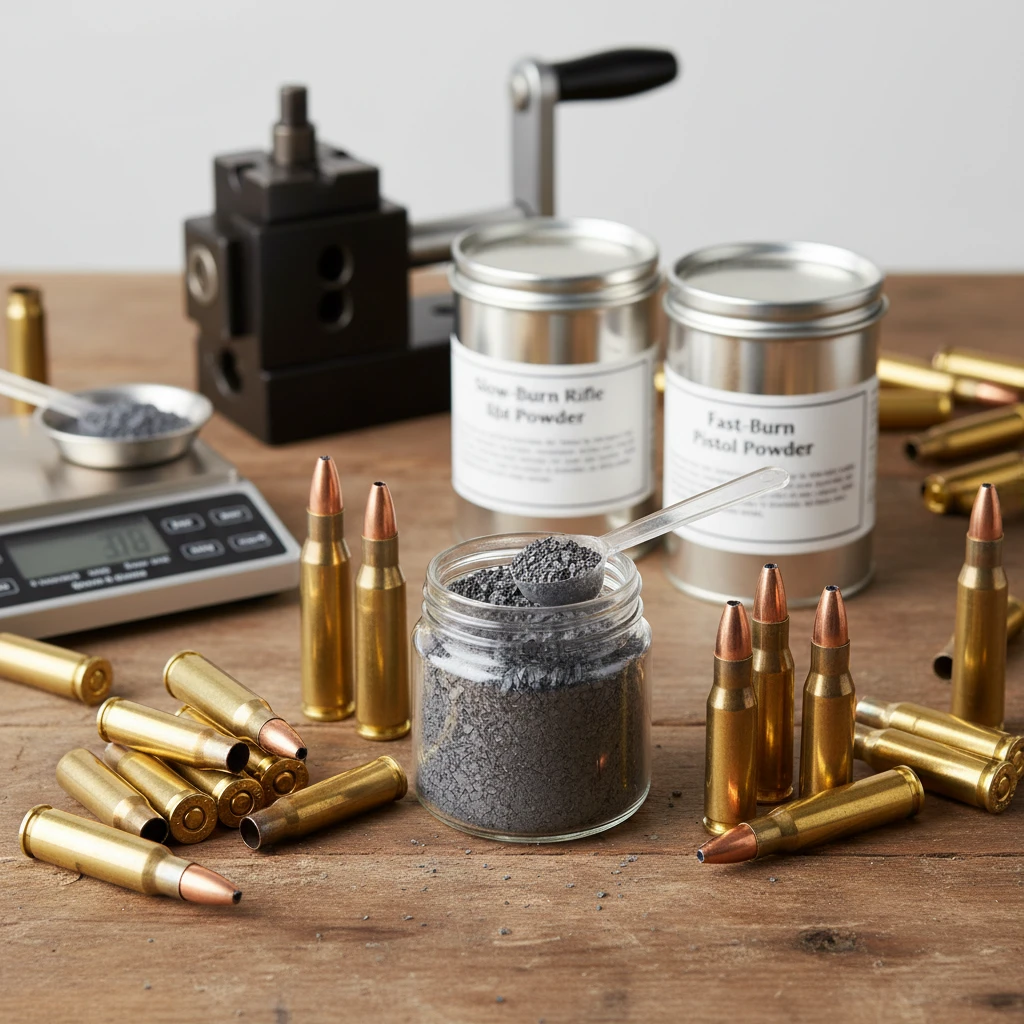
Burning rate is a critical characteristic of smokeless powder that determines how quickly it generates pressure within the cartridge. Powders are generally categorized as fast, medium, or slow burning. Fast-burning powders are typically used in handgun cartridges and smaller rifle cartridges, as they generate pressure quickly and efficiently. Medium-burning powders are versatile and suitable for a wide range of cartridges, while slow-burning powders are best suited for larger rifle cartridges with heavier bullets, allowing for a more gradual pressure build-up and higher velocities. Selecting the correct burning rate is essential for achieving optimal performance and avoiding dangerous pressure levels. Using a powder that is too fast can result in excessive pressure and potential firearm damage, while using a powder that is too slow can result in incomplete combustion and reduced velocity. Always refer to reliable load data to determine the appropriate burning rate for your specific cartridge and bullet combination. For a deeper dive, Northern Reloading offers resources to help in understanding burn rates.
Safety Considerations: Handling and storage best practices for smokeless gun powder.
Smokeless gun powder is a potentially hazardous material that requires careful handling and storage. Always follow established safety protocols and guidelines to prevent accidents and ensure your safety. Store smokeless powder in a cool, dry, and well-ventilated area, away from direct sunlight, heat sources, and open flames. Never store powder in close proximity to primers or ammunition. Keep powder containers tightly sealed to prevent moisture absorption and degradation. Avoid smoking or using electronic devices while handling smokeless powder. Wear safety glasses and gloves to protect your eyes and skin from exposure. Always double-check the powder type and charge weight before loading each cartridge. Never exceed the maximum recommended powder charge listed in reputable reloading manuals. Dispose of any spilled powder immediately and properly. Never mix different types of powder. Following these safety precautions will help ensure a safe and enjoyable reloading experience. If you are new to reloading, consider taking a reloading safety course offered by reputable organizations. For additional information, refer to resources dedicated to reloading safety.
Best Smokeless Gun Powder Calibers for Handgun Ammo Reloading
9mm Luger: Popular powders and load data.
The 9mm Luger is one of the most popular handgun calibers in the world, prized for its versatility and affordability. Several smokeless powders are well-suited for reloading 9mm ammunition. Popular choices include Hodgdon Titegroup, Accurate No. 5, and Winchester AutoComp. Titegroup is known for its clean burning and consistent performance, while Accurate No. 5 offers slightly higher velocities. AutoComp is designed to improve accuracy in compensated pistols. When selecting a powder for 9mm reloading, consider the bullet weight and desired velocity. Lighter bullets generally require faster-burning powders, while heavier bullets can benefit from slightly slower-burning powders. Consult reputable reloading manuals or online load data resources for specific charge weights and velocity information. Always start with the minimum recommended charge weight and gradually increase it until you achieve the desired performance. Pay close attention to pressure signs and never exceed the maximum recommended charge weight. With careful powder selection and consistent reloading practices, you can produce accurate and reliable 9mm ammunition tailored to your specific firearm and shooting needs.
.45 ACP: Achieving optimal performance with different powders.
The .45 ACP is a classic handgun caliber renowned for its stopping power and accuracy. Reloading .45 ACP ammunition offers the opportunity to optimize performance for various applications, from target shooting to self-defense. Several smokeless powders are well-suited for reloading .45 ACP, including Alliant Bullseye, Accurate No. 2, and Winchester 231 (also known as Hodgdon HP-38, which is the same powder sold under a different label). Bullseye is a fast-burning powder that delivers consistent results, while Accurate No. 2 offers slightly higher velocities with lighter bullets. Winchester 231 is a versatile powder that performs well with a wide range of bullet weights. When selecting a powder for .45 ACP reloading, consider the bullet weight, desired velocity, and intended use. Heavier bullets generally require slightly slower-burning powders, while lighter bullets perform well with faster-burning powders. Always consult reputable reloading manuals or online load data resources for specific charge weights and velocity information. Start with the minimum recommended charge weight and gradually increase it until you achieve the desired performance. Pay attention to pressure signs and never exceed the maximum recommended charge weight. Optimal performance hinges on careful powder selection and diligent reloading practices.
.38 Special/.357 Magnum: Versatile powders for target and self-defense loads.
The .38 Special and .357 Magnum are versatile revolver calibers that can be loaded with a wide range of bullet weights and powder charges, making them suitable for both target shooting and self-defense. Several smokeless powders are excellent choices for reloading these calibers. For .38 Special, popular options include Alliant Bullseye, Accurate No. 2, and Hodgdon Titegroup. For .357 Magnum, suitable powders include Hodgdon H110, Winchester 296 (which is the same powder as H110, just sold under a different name), and Alliant 2400. Bullseye and Titegroup are fast-burning powders that work well with lighter bullets in .38 Special, while H110 and 2400 are slow-burning powders that deliver high velocities with heavier bullets in .357 Magnum. When reloading .38 Special or .357 Magnum, it’s crucial to select the appropriate powder for the desired performance. Lighter target loads in .38 Special typically use faster-burning powders, while full-power .357 Magnum loads require slower-burning powders. Always consult reputable reloading manuals or online load data resources for specific charge weights and velocity information. Extreme caution should be exercised when reloading .357 Magnum with slow-burning powders, as small changes in powder charge can significantly affect pressure. Start with the minimum recommended charge weight and gradually increase it, carefully monitoring for pressure signs. These calibers provide a wide degree of flexibility for reloaders.
Top Choices for Rifle Ammo Reloading with Smokeless Gun Powder
.223 Remington/5.56 NATO: Powders for accuracy and velocity.
The .223 Remington and 5.56 NATO are widely used rifle cartridges known for their accuracy and versatility. Reloading these cartridges allows you to tailor your ammunition to specific rifles and shooting applications. Several smokeless powders are well-suited for reloading .223 Remington/5.56 NATO, including Hodgdon Varget, IMR 4895, and Accurate 2230. Varget is a popular choice for its temperature stability and consistent performance across a range of bullet weights. IMR 4895 is a versatile powder that works well with both lighter and heavier bullets. Accurate 2230 is known for its high velocity potential. When selecting a powder for .223 Remington/5.56 NATO reloading, consider the bullet weight, barrel length, and desired velocity. Lighter bullets typically require faster-burning powders, while heavier bullets benefit from slower-burning powders. Consult reputable reloading manuals or online load data resources for specific charge weights and velocity information. Always start with the minimum recommended charge weight and gradually increase it until you achieve the desired performance. Pay attention to pressure signs and never exceed the maximum recommended charge weight. Achieving optimal accuracy often involves experimentation with different powder and bullet combinations.
.308 Winchester/7.62 NATO: Reliable choices for precision shooting.
The .308 Winchester and 7.62 NATO are popular rifle cartridges known for their accuracy and long-range capabilities. Reloading these cartridges offers the opportunity to develop highly precise and consistent ammunition for various shooting disciplines. Several smokeless powders are reliable choices for reloading .308 Winchester/7.62 NATO, including Hodgdon Varget, IMR 4064, and Alliant Reloder 15. Varget is a widely used powder known for its temperature stability and excellent accuracy. IMR 4064 is another popular choice that offers consistent performance across a range of bullet weights. Alliant Reloder 15 is known for its high velocity potential and suitability for heavier bullets. When selecting a powder for .308 Winchester/7.62 NATO reloading, consider the bullet weight, barrel length, and intended use. Heavier bullets typically require slower-burning powders, while lighter bullets may perform better with slightly faster-burning powders. Always consult reputable reloading manuals or online load data resources for specific charge weights and velocity information. It is important to note that small variations in powder charge can significantly affect pressure and accuracy, so consistency is key. Start with the minimum recommended charge weight and gradually increase it, carefully monitoring for pressure signs.
.30-06 Springfield: Selecting powders for diverse bullet weights.
The .30-06 Springfield is a classic rifle cartridge renowned for its versatility and ability to handle a wide range of bullet weights. Reloading this cartridge allows you to tailor your ammunition to specific hunting or target shooting applications. Several smokeless powders are well-suited for reloading .30-06 Springfield, including IMR 4895, Hodgdon H4350, and Alliant Reloder 19. IMR 4895 is a versatile powder that performs well with a wide range of bullet weights, making it a good all-around choice. Hodgdon H4350 is a slower-burning powder that is ideal for heavier bullets, delivering excellent velocity and accuracy. Alliant Reloder 19 is another excellent choice for heavier bullets, offering high velocity and consistent performance. When selecting a powder for .30-06 Springfield reloading, consider the bullet weight and intended use. Lighter bullets typically perform well with medium-burning powders, while heavier bullets benefit from slower-burning powders. Consult reputable reloading manuals or online load data resources for specific charge weights and velocity information. Always start with the minimum recommended charge weight and gradually increase it until you achieve the desired performance. Remember, proper powder selection is just one aspect of successful reloading, as a holistic strategy is always best. Consistent reloading practices, including precise powder measurements and proper seating depth, are essential for achieving optimal accuracy and reliability.
Smokeless Gun Powder Considerations for Shotgun Reloading (and When To Use)
Gauge-Specific Powders: 12 gauge, 20 gauge, and beyond.
When reloading shotgun shells, selecting the appropriate smokeless gun powder is crucial for optimal performance and safety. Different gauges require powders with varying burn rates and densities. For example, a 12 gauge load typically requires a different powder than a 20 gauge. Many reloaders find that powders like Hodgdon Universal Clays or Alliant Red Dot are versatile choices for a range of gauges, but specialized powders offer the best performance for specific loads. Choosing the right powder ensures consistent velocities, proper pressures, and clean burning.
Consider your specific shooting needs when selecting your powder. Are you primarily shooting skeet, trap, or hunting? Each discipline may benefit from different powder characteristics. For instance, competition shooters often prefer powders that produce minimal recoil and consistent patterns. Hunters, on the other hand, may prioritize powders that deliver higher velocities for longer-range shots. Experimentation with different powder and load combinations is often necessary to find the optimal setup for your shotgun and shooting style. Always consult reputable reloading manuals for safe starting loads and data.
Load Data Importance: Adhering to published recipes.
Adhering to published load data is non-negotiable for safe and effective shotgun reloading. Shotgun reloading is very sensitive to pressure changes; even slight deviations from recommended recipes can lead to dangerous pressure spikes. Reloading manuals provide meticulously tested recipes that specify the exact components, powder charge, wad type, and shot weight for a given load. Never substitute components or deviate from the published data without understanding the potential consequences. Always start with the minimum recommended powder charge and gradually work up while carefully monitoring for signs of excessive pressure. For more detailed information on achieving accurate load data, see this page.
Steel Shot vs. Lead Shot: Powder compatibility.
The type of shot you use, whether steel shot or lead shot, significantly impacts powder selection. Steel shot is much lighter than lead shot for the same volume, and it requires a faster-burning powder to achieve adequate velocities and pressures. Steel shot loads also necessitate the use of specialized wads that protect the shotgun barrel from the harder steel pellets. Never use lead shot load data for steel shot, or vice versa. Doing so can result in dangerously high pressures. Consult load data specifically designed for the type of shot you intend to use. Furthermore, be aware of regulations regarding the use of lead shot in certain areas, as many jurisdictions now require the use of non-toxic alternatives like steel shot.
Mastering the Reloading Process: A Step-by-Step Guide Using Smokeless Powder
Case Preparation: Cleaning, resizing, and priming.
The foundation of any good reload starts with meticulously prepared cases. Begin by cleaning the spent cases to remove any residue from previous firings. Tumbling or using a sonic cleaner will help achieve this. Next, inspect each case for any signs of damage, such as cracks, splits, or excessive wear, and discard any compromised cases. Resizing is typically not required for shotgun shells, as they are often crimped rather than full-length resized. However, ensure that the case mouth is properly sized to accept the new wad. Finally, prime the cases with the appropriate shotgun primers. Ensuring proper primer seating is crucial for consistent ignition. You may also want to read more about diagnosing common ignition problems with reloading primers.
Powder Charging: Accurate measurement and dispensing techniques.
Accurate powder charging is paramount for safety and consistency. Use a high-quality powder scale and measure each charge with precision. Powder measures can be used for dispensing powder, but they should be checked frequently against a scale to ensure accuracy. When using a powder measure, establish a consistent technique to minimize variations in charge weight. For example, always use the same speed and motion when operating the measure. Double-check each powder charge before seating the wad to avoid undercharges or overcharges. A well-lit workspace and a systematic approach can help prevent errors.
Bullet Seating: Achieving consistent cartridge overall length (COAL).
In shotgun reloading, “bullet seating” refers to the process of properly seating the wad and crimping the shell. Consistent crimps are essential for achieving uniform pressures and velocities. Use a shotgun reloading press with adjustable crimping dies to ensure that each shell is crimped to the correct depth. A shallow crimp can result in poor ignition and inconsistent patterns, while an overly deep crimp can increase pressures. Measure the finished shell length and compare it to the recommended length in your reloading manual. Adjust the crimping die as needed to achieve the correct overall length. Pay close attention to the feel of the press during the crimping process; any unusual resistance could indicate a problem.
Safety First: Avoiding Common Mistakes When Reloading with Smokeless Powders
Overcharging Dangers: Recognizing the risks and prevention methods.
Overcharging with smokeless powder is one of the most dangerous mistakes in reloading. Even a small increase in powder charge can lead to a significant increase in pressure, potentially causing damage to the firearm and serious injury to the shooter. To prevent overcharging, always double-check each powder charge against your reloading manual. Use a powder scale to verify the accuracy of your powder measure. Visually inspect each case to ensure that it contains the correct amount of powder. Implement a system for tracking which cases have been charged and which have not. If you are unsure about a particular charge, err on the side of caution and disassemble the shell.
Double Charges: How to prevent this critical error.
A double charge of smokeless powder is an extremely dangerous situation that can lead to catastrophic firearm failure. It occurs when a case is accidentally charged with twice the intended amount of powder. The best way to prevent double charges is to use a single-stage reloading press and visually inspect each case after it has been charged. Use a loading block to hold cases in an upright position, making it easier to see the powder level. Consider using a powder check system that automatically detects overcharges or undercharges. Never rush the reloading process, and always maintain focus on the task at hand. A single lapse in concentration can have devastating consequences. Reloading safety should always be paramount, as you can learn more at this resource.
Using Incorrect Data: Verifying load data from reputable sources.
Using incorrect load data is another common mistake that can lead to dangerous pressures. Always verify your load data from reputable sources, such as reloading manuals published by powder manufacturers or bullet manufacturers. Do not rely on internet forums or unverified sources for load data. Be sure that the load data you are using is specifically for the components you are using, including the powder type, bullet weight, primer type, and case manufacturer. If you are unsure about the correct load data, contact the powder manufacturer or a qualified reloading expert for assistance. Cross-referencing data from multiple sources can also help ensure accuracy.
Alternatives to Common Smokeless Gun Powders (and When to Choose Them)
When to consider a different brand or type of powder.
There are several situations when exploring alternatives to your go-to smokeless gun powder makes sense. If your preferred powder is unavailable, understanding suitable substitutes is crucial. Consider factors like burn rate, energy content, and density. A powder with a similar burn rate will generally produce comparable velocities and pressures. Additionally, if you are seeking to optimize performance for a specific application, such as reducing recoil or improving accuracy, experimenting with different powders can be beneficial. For instance, a faster-burning powder may be preferable for light target loads, while a slower-burning powder may be better suited for heavier hunting loads.
Factors impacting powder availability and pricing.
Powder availability and pricing can fluctuate significantly due to various factors. Demand surges, supply chain disruptions, and regulatory changes can all impact the availability and cost of smokeless powders. During periods of high demand, such as following major events or legislative changes, powder prices may increase dramatically, and certain types of powder may become difficult to find. Be prepared to adapt your reloading practices if your preferred powder is unavailable. Consider stocking up on powder when prices are favorable to mitigate the impact of future shortages. Monitoring market trends and staying informed about industry news can help you make informed purchasing decisions.
Troubleshooting Reloading Issues: What to Do When Things Go Wrong with Smokeless Powder
Inconsistent Ignition: Identifying and addressing the causes.
Inconsistent ignition is a common problem when reloading with smokeless gun powder, manifesting as variations in velocity and point of impact. One primary cause is an insufficient primer strike, which can stem from a weak firing pin spring or excessive headspace. To address this, regularly inspect and maintain your firearm’s firing pin mechanism. Another culprit is insufficient crimp, which prevents the powder from building adequate pressure for reliable ignition. Ensure the correct crimp is applied based on the bullet and cartridge type. Primer seating depth also plays a critical role; primers should be seated firmly and consistently, but not crushed. A primer that’s not fully seated can cause a delay in ignition, while a crushed primer can be damaged and fail to ignite properly.
Consider the specific load data for your chosen caliber and powder. Variations in temperature can also influence ignition consistency. For example, some powders are more sensitive to temperature changes than others. For extreme temperature conditions, using a temperature-insensitive powder can significantly improve consistency. Finally, check for contamination of the powder or primers. Moisture, oil, or other debris can inhibit ignition. Store your components in a cool, dry place and inspect them before use. Follow the guidance in this article on reloading safety to minimize such risks.
Pressure Signs: Recognizing warning signs and taking corrective action.
Recognizing pressure signs is crucial for safe reloading. Excessive pressure can damage your firearm and pose a significant risk of injury. Common pressure signs include flattened or cratered primers, ejector marks on the case head, and difficulty extracting the fired case. Flattened primers indicate that the pressure inside the cartridge exceeded the primer’s ability to contain it. Ejector marks, which are shiny or raised areas on the case head, suggest that the case expanded excessively during firing. Stiff extraction means the case is tightly wedged in the chamber due to overpressure.
If you observe any of these signs, immediately stop shooting and reduce your powder charge. A gradual increase in powder charge during load development is essential, allowing you to monitor for pressure signs at each step. Always consult reputable reloading manuals for safe load data, and never exceed the maximum recommended charge. Consider that different firearms may exhibit pressure signs at slightly different levels, so it’s crucial to be vigilant and cautious. Case head expansion measurements using a micrometer can provide additional insights into pressure levels, but require careful calibration and interpretation. Incorrect measurements can lead to dangerously high-pressure loads. Another factor is bullet seating depth. Seating bullets too deeply increases pressure, while insufficient seating depth can affect accuracy and consistency.
Poor Accuracy: Diagnosing and resolving accuracy problems.
Poor accuracy in reloaded ammunition can be frustrating, but it’s often solvable with careful troubleshooting. Start by examining the consistency of your reloading process. Variations in powder charge, bullet seating depth, and crimp can all contribute to accuracy issues. Use a high-quality powder measure to ensure consistent charges, and verify your scale’s accuracy regularly. Bullet seating depth should be consistent to within a few thousandths of an inch, and the crimp should be uniform. Also, consider bullet selection. Some bullets are inherently more accurate than others, and the bullet’s design should be appropriate for the firearm’s twist rate. Incompatible bullet and barrel combinations will never yield acceptable accuracy.
Examine your cases for signs of damage or inconsistency. Cases with uneven neck tension or excessive runout can negatively impact accuracy. Annealing cases can help to ensure uniform neck tension and extend case life. If the cases are damaged, consider purchasing new brass to eliminate them as a variable. Finally, consider the firearm itself. A loose scope mount, a dirty barrel, or a worn crown can all degrade accuracy. Ensure your scope is securely mounted and properly zeroed, and clean your barrel regularly to remove fouling. Sometimes, the challenge lies in finding the optimal powder load for your rifle. It’s also crucial to maintain excellent shooting form, as inconsistencies in your technique can mask the true accuracy potential of your ammunition.
Advanced Reloading Techniques: Optimizing Performance with Smokeless Gun Powder
Powder Compression: Understanding its effects on performance.
Powder compression refers to the practice of deliberately compressing the powder charge within the cartridge case. While not always necessary, it can sometimes improve accuracy and consistency, especially with certain powders and calibers. Compressed loads can promote more uniform ignition, leading to more consistent velocities and reduced shot-to-shot variation. However, excessive compression can also lead to dangerous pressure spikes and should be approached with caution. Generally, slow-burning powders are more amenable to compression than fast-burning powders.
When developing compressed loads, start with the minimum recommended charge and gradually increase it, carefully monitoring for pressure signs. Always consult reputable reloading manuals for guidelines on powder compression for your specific caliber and powder. Be aware that compressed loads can be more sensitive to variations in bullet seating depth, so consistency is paramount. Powder compression also affects bullet seating depth; deeper seating increases pressure more rapidly. Some reloaders use a powder compression die to achieve consistent compression, but these dies require careful setup and adjustment. Powder bridging, where the powder forms a solid mass, is a potential issue with some powders, requiring careful attention to loading techniques. When working with compressed loads, it’s often helpful to compare performance with non-compressed loads to determine if the compression is actually beneficial. Note that extreme compression can deform bullets or damage the case mouth, leading to feeding or accuracy issues.
Primer Selection: Matching primers to powder characteristics.
Primer selection is crucial for optimizing performance. Primers ignite the powder charge, and their characteristics can significantly influence ignition consistency and pressure. Different primers produce different flame intensities and durations, and matching the primer to the powder characteristics is essential. Magnum primers are designed to ignite slow-burning powders in large-capacity cases, while standard primers are suitable for smaller cases and faster-burning powders. Using a magnum primer with a fast-burning powder can lead to excessive pressure and potentially dangerous conditions.
Conversely, using a standard primer with a slow-burning powder may result in incomplete or inconsistent ignition. Consider the ambient temperature when selecting primers. Some primers are more sensitive to temperature changes than others. For extreme cold weather conditions, using a primer designed for cold weather can improve ignition reliability. Always consult reloading manuals for primer recommendations for your specific caliber and powder. Some powders are known to be more difficult to ignite, requiring a hotter primer. When switching primers, it’s essential to re-evaluate your load data, as primer changes can affect pressure and velocity. Follow the guidelines in this article on selecting the right primers. Document your primer choices and results meticulously, allowing you to refine your primer selections over time. Bear in mind that primer availability can vary, making it necessary to experiment with different brands and types to find the best combination for your needs.
Case Annealing: Extending case life and improving consistency.
Case annealing is the process of heating the neck and shoulder of a brass cartridge case to relieve stress and restore its original softness. This process extends case life and improves consistency, especially after multiple reloads. Repeated firing hardens the brass, making it more brittle and prone to cracking, particularly at the neck. Annealing restores the brass’s ductility, allowing it to better grip the bullet and seal the chamber. Cases that have been annealed exhibit more consistent neck tension, which improves accuracy and reduces velocity variations.
There are various methods for annealing, including using a torch, induction annealing machines, and specialized annealing kits. Regardless of the method, it’s crucial to heat the brass to the correct temperature. Overheating can ruin the brass, while underheating provides little benefit. Temperature-indicating compounds can help to ensure accurate annealing. After annealing, quench the cases in water to stop the annealing process. Annealing is particularly beneficial for bottlenecked cartridges, which experience greater stress during firing and resizing. However, it can also improve the performance of straight-walled cartridges. Consistent annealing requires careful attention to detail and precise temperature control. Cases that have been improperly annealed can exhibit erratic performance, defeating the purpose of the process. Regular annealing, typically after every 3-5 reloads, can significantly extend case life, saving money and improving consistency.
Staying Compliant: Legal Considerations for Reloading Smokeless Gun Powder in North America (2026)
Storage regulations for smokeless gun powder.
Storing smokeless gun powder safely and legally is paramount. Both the United States and Canada have regulations governing the quantity and manner in which smokeless powder can be stored. In the United States, federal regulations stipulate limits on the quantity of smokeless powder stored in a residence. These limits often vary by state and local jurisdiction, so it’s crucial to check local ordinances. Generally, quantities exceeding 50 pounds require special permits and storage facilities.
In Canada, storage regulations are similar, with limits on the maximum allowable quantity. Powder must be stored in its original container or in a container that is specifically designed for storing explosives. The storage area must be cool, dry, and well-ventilated, away from sources of heat or ignition. It’s also important to keep smokeless powder out of reach of children and unauthorized individuals. Secure storage cabinets or locked containers are recommended. Storing powder in damp or humid environments can degrade its quality and potentially render it unsafe. Regular inspections of your powder storage area are recommended to ensure compliance with all applicable regulations. Always consult the local fire marshal or relevant authorities for specific storage requirements in your area. Non-compliance can result in fines, confiscation of materials, and potential legal action.
Transportation guidelines within Canada and United States.
Transporting smokeless gun powder requires adherence to specific guidelines to ensure safety and compliance with regulations. In both Canada and the United States, there are limitations on the quantity of smokeless powder that can be transported in a personal vehicle. The specific quantities vary by jurisdiction, but generally, amounts exceeding a few pounds require special precautions. Powder should be transported in its original packaging or in a container that is specifically designed for the purpose. The container should be secured to prevent movement during transport, and it should be kept away from sources of heat or ignition.
In the United States, the Department of Transportation (DOT) has regulations governing the transportation of hazardous materials, including smokeless powder. These regulations cover packaging, labeling, and documentation requirements. Similarly, in Canada, the Transportation of Dangerous Goods (TDG) Act outlines the requirements for transporting dangerous goods, including smokeless powder. When crossing state or provincial borders, it’s essential to be aware of the regulations in each jurisdiction. Some jurisdictions may have stricter rules than others. Avoid transporting powder in the passenger compartment of your vehicle. Instead, store it in the trunk or cargo area, away from occupants. Always carry documentation that identifies the type and quantity of powder being transported. Non-compliance with transportation regulations can result in fines, vehicle impoundment, and potential legal action.
Recent legal updates impacting reloaders.
Staying informed about recent legal updates impacting reloaders is essential for compliance. Laws and regulations governing the possession, storage, and transportation of smokeless gun powder can change frequently, and it’s important to stay abreast of these changes. In both Canada and the United States, there have been recent updates to regulations concerning background checks for the purchase of ammunition components, including smokeless powder and primers. Some states and provinces have implemented stricter regulations on the sale of reloading supplies, requiring additional documentation or permits.
It’s important to monitor legislative changes at the federal, state, and provincial levels. Industry organizations and advocacy groups often provide updates on legal developments affecting reloaders. Regularly consult with legal experts or firearms associations to ensure you’re in compliance with current regulations. Changes to import and export regulations can also affect the availability and cost of reloading supplies. Keep records of your purchases of smokeless powder and primers, as these records may be required in some jurisdictions. It is also crucial to pay attention to regulations concerning the online sale and shipment of reloading supplies, as these rules can vary significantly. Failure to comply with legal updates can result in serious consequences, including fines, criminal charges, and loss of firearms privileges. You can find valuable information regarding load data on burn rates and reloading safety.
Where to Buy Quality Smokeless Gun Powder and Primers at Northern Reloading
Navigating our selection of smokeless gun powder
At Northern Reloading, we offer a comprehensive selection of smokeless gun powder to meet the needs of every reloader, from beginners to seasoned professionals. Our inventory includes a variety of powder types, each with its own unique burn rate and characteristics. Whether you’re reloading handgun ammo, rifle ammo, or shotgun ammo, you’ll find the perfect powder for your application. We carry powders from leading manufacturers, known for their quality, consistency, and reliability.
Our website features detailed product descriptions, including burn rate charts and recommended uses, to help you make an informed decision. We also provide customer reviews and ratings to give you insights from other reloaders. Our search filters allow you to narrow down your options based on powder type, burn rate, manufacturer, and price. Our knowledgeable customer service team is available to answer your questions and provide expert advice. We understand that selecting the right powder can be daunting, so we’re here to help you every step of the way. At Northern Reloading, we are committed to providing high-quality products and exceptional customer service, ensuring that you have a positive reloading experience. We regularly update our inventory to reflect the latest products and trends in the reloading industry. Remember to check your primers before loading.
Selecting the right primers for your reloading needs
Choosing the right primers is essential for reliable ignition and consistent performance. Northern Reloading offers a wide selection of primers to match your specific reloading needs. Our inventory includes small pistol primers, large pistol primers, small rifle primers, and large rifle primers, as well as magnum primers for high-performance loads. We carry primers from trusted brands, known for their quality and consistency. Our product descriptions provide detailed specifications, including primer type, cup material, and recommended uses. We also offer resources on maximizing primer performance.
Our website features a primer selection guide to help you choose the right primer for your caliber and powder. We also provide customer reviews and ratings to give you insights from other reloaders. Our search filters allow you to narrow down your options based on primer type, manufacturer, and price. At Northern Reloading, we understand that primers are a critical component of your reloads, so we only offer products that meet our high standards for quality and reliability. Our customer service team is available to answer your questions and provide expert advice. We are committed to helping you select the right primers for your specific application, ensuring that you achieve consistent and reliable results.
Special offers and promotions on ammunition and reloading supplies
At Northern Reloading, we’re committed to providing our customers with the best possible value on ammunition and reloading supplies. We regularly offer special deals and promotions on a variety of products, including smokeless gun powder, primers, and ammunition. Sign up for our email newsletter to receive exclusive discounts and notifications about upcoming sales. Our website features a dedicated “Deals” section where you can find the latest offers.
We also offer volume discounts on bulk purchases, allowing you to save even more. Follow us on social media for updates on promotions and special events. We frequently partner with leading manufacturers to offer exclusive deals on their products. Our promotions are designed to help you save money while still getting the high-quality ammunition and reloading supplies you need. Check back often to see our latest offers, and don’t miss out on these great opportunities to save. We believe that everyone should have access to affordable ammunition and reloading supplies, and we’re committed to making that a reality.
Troubleshooting reloading issues, implementing advanced techniques, and staying legally compliant are crucial for any reloader. Selecting the right components, storing them safely, and adhering to all applicable regulations will ensure both safety and optimal performance.
For a wide selection of high-quality smokeless gun powder, primers, and other reloading supplies, along with expert advice and helpful resources, visit northernreloading.si.
About author


Add comment