

Handgun Ammo Reloading: Optimal Loads
For many firearm owners in 2026, the allure of reloading handgun ammunition extends beyond mere cost savings. It’s about a refined shooting experience, a deeper understanding of ballistic performance, and the satisfaction of crafting rounds tailored to specific needs. Whether you’re a competitive shooter striving for tighter groups or a responsible citizen seeking reliable self-defense ammunition, mastering the art of handgun ammo reloading offers unparalleled advantages.
This journey into precision reloading requires a thoughtful approach to component selection, an understanding of fundamental reloading principles, and access to accurate data. We’ll explore the essential elements that contribute to optimal handgun loads and guide you towards achieving the performance you desire from your firearm.
Unlocking Precision: Why Handgun Ammo Reloading is a Smart Choice for 2026 Shooters
The decision to reload handgun ammunition in 2026 is driven by a confluence of factors, with rising costs and the pursuit of personalized performance at the forefront. For shooters who frequent the range or participate in various shooting sports, the expense of factory-new ammunition can quickly become a significant budgetary consideration. Reloading offers a direct pathway to reducing the per-round cost, making more frequent practice sessions accessible without compromising quality. Beyond the economic advantages, however, lies the profound ability to fine-tune ammunition performance, a capability largely absent when relying solely on commercially produced rounds.
The evolving landscape of ammunition costs means that diligent reloaders can achieve substantial savings over time. This economic benefit allows shooters to invest in higher-quality components or simply shoot more, thereby honing their skills more effectively. Furthermore, the ability to tailor ammunition to specific firearms is a game-changer. Every handgun has unique feeding characteristics, chamber dimensions, and barrel tolerances that can be optimized with custom-loaded ammunition. This personalized approach can lead to improved accuracy and reliability, directly translating to a more satisfying and effective shooting experience. It’s about moving from a one-size-fits-all solution to a bespoke one, designed for your specific equipment and shooting style.
Gaining deeper control over your shooting experience is perhaps the most compelling reason for many to embrace handgun ammo reloading. It’s not just about putting bullets downrange; it’s about understanding the intricate science and art behind each shot. By carefully selecting primers, powders, bullets, and cases, reloaders can influence crucial ballistic factors such as velocity, pressure, and terminal performance. This level of control allows for experimentation and refinement, enabling shooters to develop loads that are not only accurate but also perform optimally in their intended application, whether it be for target shooting, competition, or self-defense. The satisfaction derived from understanding and mastering these elements is a significant reward in itself.

Decoding the Components: What Goes into Optimal Handgun Ammo Reloads
Crafting optimal handgun ammunition requires a thorough understanding of each component’s role and how they interact. At the heart of every reliable round are the primers, which initiate the firing sequence. These small, sensitive devices contain a small amount of explosive compound that, when struck by the firing pin, ignites the propellant. For handguns, common primer types include small pistol and large pistol primers, with variations like magnum primers offering a slightly hotter ignition. Selecting the correct primer for your intended load and firearm is critical; using an incorrect type can lead to ignition failures or, in some cases, dangerously high pressures. Consistency in primer seating depth is also paramount for consistent ignition and ejection, making a reliable priming tool essential. For more on primer selection and its impact on consistency, consult resources on primer essentials.
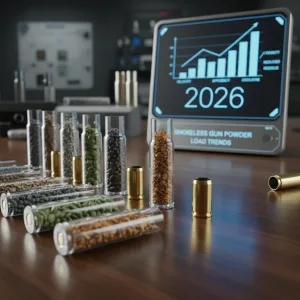
The choice of smokeless gun powder is arguably the most influential factor in achieving desired performance characteristics. Powders vary significantly in burn rate, from fast-burning powders suitable for lighter bullet weights and shorter barrels, to slower-burning powders that excel with heavier bullets and magnum calibers. Incorrect powder selection or charge weight can lead to underperformance, excessive recoil, or dangerous pressure spikes. Understanding the relationship between powder type, charge weight, and bullet weight for a specific caliber is crucial for both safety and accuracy. Reloaders must consult reputable load data and adhere strictly to recommended charge ranges. Exploring the nuances of smokeless gun powder can significantly improve your reloading outcomes.
Bullet selection dictates much of the ammunition’s terminal performance and accuracy potential. Handgun bullets come in a vast array of weights, constructions, and profiles, each suited for different purposes. For range practice, full metal jacket (FMJ) bullets offer durability and affordability. For self-defense, hollow point (HP) or jacketed hollow point (JHP) designs are engineered to expand upon impact, increasing energy transfer and reducing over-penetration. The bullet’s weight must be compatible with the firearm’s rifling twist rate and the powder charge for optimal stability and accuracy. Moreover, the bullet’s construction – whether lead, plated, or jacketed – influences its velocity potential and how it interacts with the barrel and targets. Different bullet types have distinct characteristics, which are explored in detail later.
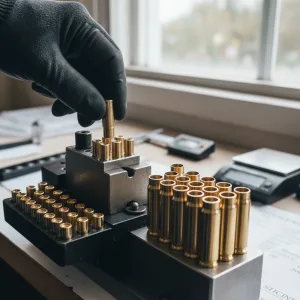
Finally, case preparation forms the bedrock of consistent and reliable reloads. Brass cases, once fired, undergo resizing to return them to their original dimensions, allowing them to be reloaded. This process also involves inspecting cases for defects, trimming them to a uniform length for proper bullet seating, and cleaning them to remove fouling and debris. Properly prepared cases ensure smooth feeding in the firearm and contribute to consistent headspace, which is vital for predictable ignition and accuracy. Neglecting case preparation can lead to feeding issues, misfires, and potentially dangerous malfunctions. A meticulous approach to case preparation is as important as selecting high-quality primers and powders.
Caliber-Specific Load Data: Finding Your Handgun’s Sweet Spot
Each handgun caliber possesses unique characteristics that dictate the optimal combination of components for safe and effective reloading. For instance, 9mm Luger, a ubiquitous cartridge, offers a wide range of bullet weights and powder choices, but careful attention must be paid to maintaining safe pressures, especially when pushing higher velocities. The .45 ACP, known for its larger case capacity, typically uses slower-burning powders and heavier bullets, demanding a different approach to powder selection and charge weight compared to smaller calibers. The classic .38 Special, often used in revolvers, benefits from fast-burning powders and can be highly accurate when loaded with appropriate bullet weights and charge ranges, though hot-rodding it into .357 Magnum territory requires extreme caution and adherence to distinct load data.
In 2026, accessing reliable and up-to-date load data is paramount for safe and effective reloading. Reputable sources include the technical data sheets provided by major powder manufacturers (e.g., Hodgdon, Alliant, Accurate), comprehensive reloading manuals from publishers like Lyman and Hornady, and well-maintained online databases from established reloading organizations. Always cross-reference data from multiple reliable sources when possible. It is crucial to remember that load data is specific to the exact components listed – primer type, powder type and lot number, bullet manufacturer and weight, and case type. Deviating from these specifications without consulting updated data can compromise safety. Exploring current trends in reloading powder trends can also inform your component choices.
Interpreting pressure signs and velocity charts is an essential skill for every handloader. Pressure signs are physical indicators that a particular load is exceeding safe operating limits for the firearm and cartridge. These can include flattened or cratered primers, ejector marks on the case rim, stiff extraction, or even case head expansion. Velocity charts, found in load manuals, provide expected muzzle velocities for various component combinations. While high velocity is often desirable, it must be achieved within safe pressure limits. When pressure signs appear, it indicates a need to reduce the powder charge immediately or investigate other potential issues, such as bullet seating depth or excessive crimp. Understanding these indicators is a critical safety measure.
Bullet Types for Handgun Reloading: Matching Performance to Purpose
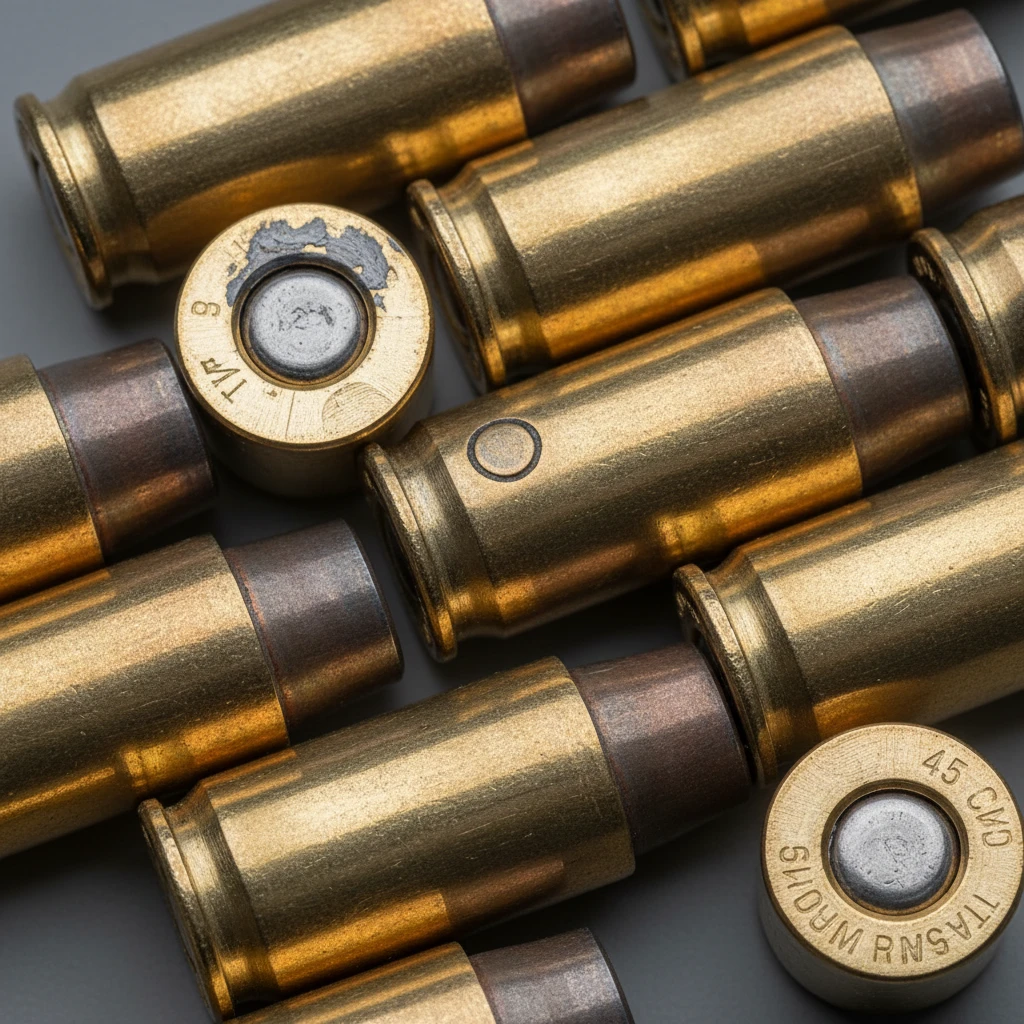
The selection of bullet type for handgun reloading is dictated by the intended application, with each design offering distinct advantages. Full Metal Jacket (FMJ) bullets are characterized by a soft lead core fully encased in a copper or gilding metal jacket. This construction makes them durable, relatively inexpensive, and ideal for range practice and casual target shooting. Their consistent shape and composition generally lead to predictable accuracy, and their jacketed nature reduces lead fouling in the barrel. However, FMJ bullets are designed to pass through targets without significant expansion, making them less suitable for self-defense applications where terminal ballistics are critical.
For self-defense and hunting scenarios where controlled expansion and energy transfer are paramount, Hollow Point (HP) and Jacketed Hollow Point (JHP) bullets are the preferred choice. These bullets feature a cavity in the nose designed to cause them to expand upon impact with soft tissue, significantly increasing their diameter and energy deposition. JHPs, with their jacketed construction, offer a balance of controlled expansion and penetration, preventing excessive fragmentation while ensuring reliable expansion. The effectiveness of HP and JHP designs is heavily influenced by the bullet’s construction, velocity, and the target medium. Reloading for self-defense requires careful consideration of these factors to ensure reliable expansion and adequate penetration. For more on this topic, explore handgun ammo reloading for self-defense.
Lead Round Nose (LRN) bullets, often referred to as lead bullets, are a cost-effective option that finds favor among many reloaders. Composed entirely of lead, they lack a metallic jacket, making them generally less expensive than jacketed alternatives. LRN bullets are popular for plinking, informal target shooting, and in certain revolver applications where their softer composition can reduce barrel wear compared to harder jacketed bullets. However, their unjacketed nature means they can leave lead residue in barrels, requiring more frequent cleaning, and they are prone to deformation if seated too deeply or crimped too aggressively. Despite these considerations, LRN bullets offer simplicity and affordability for many common handgun calibers.
Beyond the common types, a variety of specialty bullets cater to niche applications and specific shooting disciplines. Flat-nose bullets, for example, offer a wider meplat (nose surface) than round-nose profiles, which can improve terminal performance by creating a larger wound channel, particularly in lever-action firearms. Wadcutters are designed to cut clean, round holes in paper targets, making them excellent for precise target shooting and scoring. Semi-wadcutters combine features of both, with a conical nose and a flat meplat. These specialized designs allow reloaders to optimize ammunition for very specific purposes, from competition shooting that rewards clean target holes to hunting where controlled expansion and penetration are critical.
Smokeless Gun Powder: The Heartbeat of Your Handgun Loads
The correct selection and application of smokeless gun powder is paramount to achieving safe, accurate, and consistently performing handgun ammunition. It’s not merely about filling a case; it’s about understanding the intricate science behind propellant combustion and how it directly influences projectile velocity, pressure, and overall firearm function. Reloading enthusiasts must delve into the specific properties of various powders to tailor loads to their intended purpose, whether that’s for precise target shooting, reliable self-defense, or effective hunting. Misjudging powder characteristics can lead to underwhelming performance, excessive recoil, or, in the worst-case scenario, dangerous pressure spikes. Therefore, a thorough grasp of powder behavior is the first and most critical step in mastering your handgun reloads.
The efficacy of any handgun load is largely dictated by the powder’s burn rate. This rate describes how quickly the powder ignites and combusts within the cartridge case. Fast-burning powders, such as Hodgdon’s Clays or Alliant’s Red Dot, ignite rapidly and generate peak pressure early in the barrel’s travel. They are generally suited for lighter bullet weights and lower velocity loads, often used in applications where extreme recoil reduction is desired or for older firearms with lower pressure tolerances. Conversely, slow-burning powders, like Alliant’s Reloder 15 or Accurate Arms 2460, burn more gradually, producing sustained pressure further down the barrel. These are typically employed with heavier bullets to achieve higher velocities and maximize energy transfer. Selecting a powder with a burn rate that is too fast for a given load can result in “flash-over,” where the powder ignites unevenly, leading to inconsistent velocities and potential damage. Too slow a powder can result in unburned powder left in the barrel (fouling) or dangerously high pressures if the bullet is too light or the charge is too heavy, straining the firearm beyond safe limits. Understanding these dynamics is crucial for both safety and performance optimization.
The universe of smokeless gun powders for handguns can be broadly categorized into several families, each with distinct characteristics. Single-base powders, primarily nitrocellulose, are common for many handgun applications and are known for their cleaner burning properties and predictable performance. Double-base powders, containing both nitrocellulose and nitroglycerin, offer higher energy density, allowing for greater velocity or smaller charge weights, but can sometimes be more sensitive to temperature fluctuations and may produce more fouling. Within these families, powders are further distinguished by their granulation (size and shape of the powder grains), which affects their metering characteristics and burn rate. For instance, spherical or “ball” powders often meter more consistently through automated powder measures than extruded or “stick” powders. Familiarizing yourself with established powder manufacturers like Hodgdon, Alliant, IMR, and Accurate Arms, and their respective product lines, is essential. Exploring resources such as smokeless gunpowder reloading guides and manufacturer data will reveal options specifically recommended for your chosen caliber and bullet weight.
Beyond burn rate and chemical composition, several practical factors must influence your smokeless powder selection for handgun ammo. Velocity is often a primary goal; achieving specific muzzle velocities requires pairing the right powder with the correct charge weight and bullet. For example, if you’re reloading for a .45 ACP for target practice, a faster powder might be chosen to keep recoil manageable, while for self-defense loads where maximum energy transfer is prioritized, a slower powder with a heavier bullet might be preferred. Recoil is another critical consideration; faster powders and lighter bullets generally produce less felt recoil, making them more comfortable for extended shooting sessions or for shooters sensitive to recoil. Conversely, heavier bullets propelled by slower-burning powders will impart more recoil. Finally, fouling, the residue left in the firearm’s barrel, is an important factor for many shooters. Some powders burn cleaner than others, and some are more prone to leaving carbon or copper fouling. While all powders will eventually contribute to fouling, certain formulations are engineered for reduced residue, which can extend the time between cleanings and maintain accuracy over longer firing strings. Consulting comprehensive load data and firearm-specific recommendations is a prudent step before committing to a particular powder choice.
Primer Selection: Small Components, Big Impact on Reliability
The primer, though diminutive, is the indispensable ignition source for any metallic cartridge. In handgun ammo reloading, its role is often understated but critically important for ensuring reliable and consistent ignition. A primer is essentially a small cup containing a sensitive explosive compound. When struck by the firing pin, it detonates, producing a flame that ignites the smokeless gunpowder in the cartridge case. Without a properly functioning primer, the cartridge will not fire, rendering the entire reloading effort moot. Beyond simply initiating combustion, the type and quality of the primer can subtly influence the overall performance of a load by affecting the consistency of ignition. Differences in primer cup thickness, sensitivity, and the composition of the priming compound can lead to variations in how quickly and intensely the gunpowder ignites, which can, in turn, affect velocity and pressure. Therefore, choosing the correct primer and ensuring its proper seating is as vital as selecting the right powder for safe and accurate reloads.
The most fundamental distinction in pistol primers lies between small pistol primers and large pistol primers. This difference is dictated by the primer pocket size found in the base of the cartridge case. Small pistol primers are used in a wide array of popular handgun cartridges, including 9mm Luger, .38 Special, .40 S&W, and .45 ACP. Large pistol primers, as their name suggests, are for cases with a larger primer pocket, such as .357 Magnum, .44 Magnum, and .45 Colt. It is absolutely critical to use the correct primer size for your specific cartridge; using a large pistol primer in a pocket designed for a small pistol primer will not fit and can lead to dangerous pressure build-up, while a small pistol primer in a large pocket may seat too deeply and result in misfires or inconsistent ignition. Always consult reliable load data or examine a factory cartridge for your caliber to confirm the correct primer size. This distinction is a foundational element of safe reloading practices, ensuring that the components are mechanically compatible before any powder is even considered.
In certain high-performance handgun applications, magnum primers become a necessary consideration. These primers are designed with a hotter flame and a slightly more sensitive composition compared to standard primers. They are specifically recommended for cartridges that produce higher pressures or for loads using slower-burning magnum pistol powders. For instance, when reloading potent cartridges like the .44 Magnum or .357 Magnum, particularly with heavier bullet weights or slower powders, a magnum primer can ensure more complete and consistent ignition. This is because slower powders require a more robust ignition source to burn efficiently and reach their full potential. Using a standard primer with a slow-burning powder in a high-pressure cartridge might result in incomplete combustion, leading to reduced velocity, inconsistent performance, and potentially unburned powder residue. However, it’s crucial not to use magnum primers indiscriminately. In standard cartridges or with fast-burning powders, a magnum primer can sometimes generate excessive initial pressure, leading to potentially unsafe conditions. Always adhere strictly to the load data provided by reputable sources; they will specify when a magnum primer is required or recommended for optimal results and safety.
Ultimately, the success of your handgun reloads hinges on the consistency of ignition provided by the primer. Even with the perfect powder charge and bullet combination, inconsistent primer performance can lead to erratic shot placement and unpredictable velocities. This consistency is achieved through several factors: first, the quality and uniformity of the primer itself. Reputable manufacturers invest heavily in quality control to ensure that each primer within a batch performs similarly. Second, the correct seating depth is crucial. Primers should be seated flush with the base of the case or, in some firearm designs, slightly below flush. A primer that is seated too high may not be struck by the firing pin reliably, leading to a misfire. Conversely, a primer seated too deep can cause slam-fire issues in certain semi-automatic actions or contribute to inconsistent ignition. Using a quality priming tool and feeling for the distinct “snap” as the primer seats ensures proper placement. For more detailed information on ensuring consistent ignition, refer to resources on primer types and reloading for precision. Uniformity in how the primer ignites the powder is the bedrock of reliable ammunition.
Achieving Optimal Handgun Ammo Loads: A Step-by-Step Approach
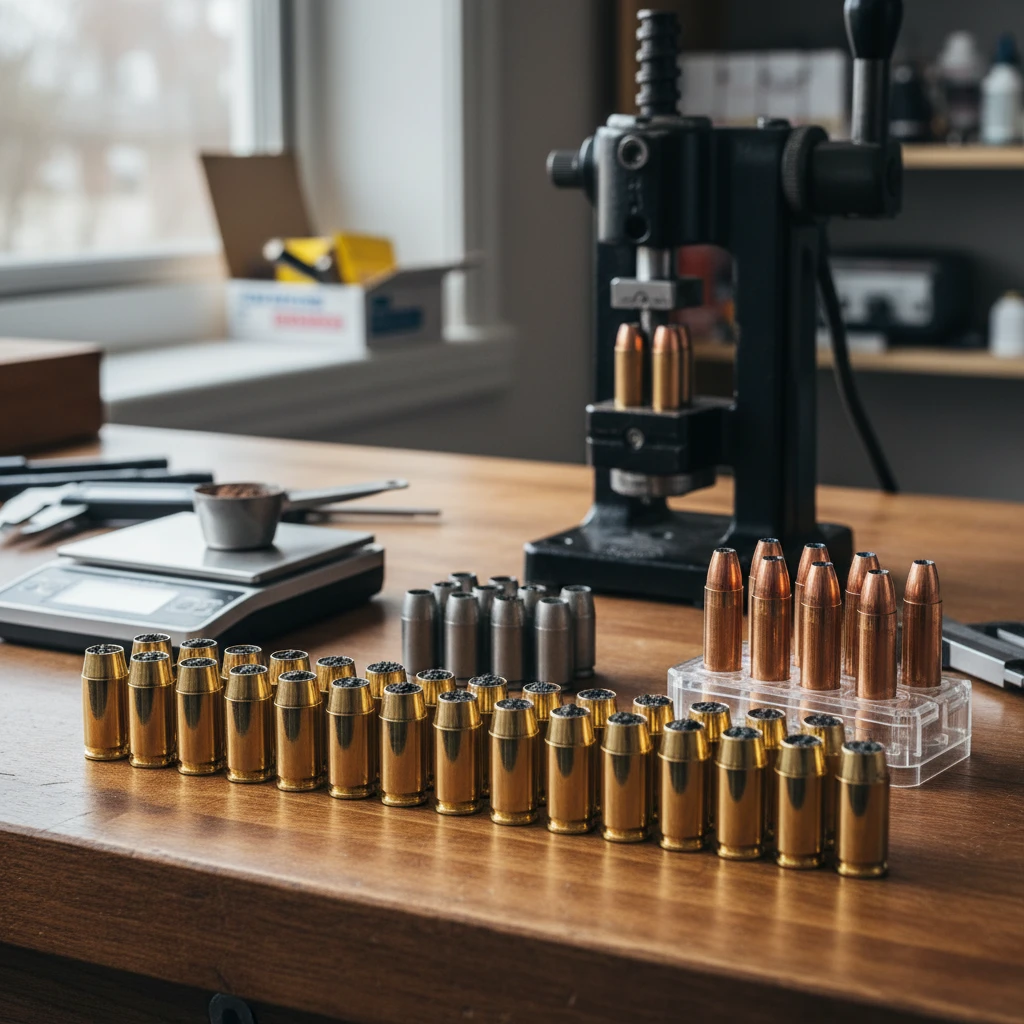
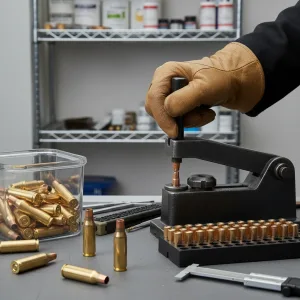
The pursuit of optimal handgun ammo loads is a methodical process that requires precision, attention to detail, and a well-organized workspace. It begins with establishing a dedicated reloading bench, which serves as the central hub for all reloading activities. This bench should be sturdy enough to withstand the forces involved in resizing cases and seating bullets, and it should be positioned in a well-lit, well-ventilated area to ensure safety and comfort. Essential equipment includes a reliable reloading press, such as a single-stage or turret press, capable of performing case resizing, priming, powder charging, and bullet seating. A high-quality powder scale, calipers for measuring case and bullet dimensions, and a case trimmer are also indispensable tools. Organization is key; keeping components like cases, bullets, primers, and powder neatly arranged and easily accessible minimizes errors and streamlines the reloading process. Furthermore, having access to up-to-date reloading manuals from reputable sources is non-negotiable. These manuals contain the critical load data necessary for safe and effective ammunition creation. Setting up your reloading bench correctly is the foundational step towards consistently producing high-quality ammunition.
The cornerstone of safety and accuracy in any reload is the precise measurement of powder. Overcharging powder can lead to dangerously high pressures, potentially damaging the firearm or causing injury, while undercharging can result in a weak ignition or inconsistent velocity. Given that even small discrepancies in powder charge can have significant effects, using a reliable powder scale is paramount. Digital scales offer high precision, often measuring down to a tenth of a grain, and should be regularly calibrated to ensure accuracy. For those reloading large quantities, a powder dispenser can increase speed, but it’s always recommended to trickle powder charges with a scale to confirm the dispenser’s accuracy for each batch, especially when working up new loads. Many reloaders develop a routine of weighing every charge, while others weigh a statistically significant sample to verify the dispenser’s consistency. Regardless of the method, adherence to published load data is critical. Never exceed the maximum recommended charge for any given component combination, and always start with the minimum charge when developing a new load, incrementally increasing it while carefully observing the firearm’s function and checking for any pressure signs. Referencing guides on smokeless gunpowder load data best practices can further refine this process.
Achieving consistent overall length (OAL) for your handgun ammunition is another vital step in ensuring reliable feeding and accurate shooting. OAL refers to the length of the loaded cartridge from the tip of the bullet to the base of the case. This dimension is critical because it dictates how the cartridge will fit and function within the firearm’s chamber and magazine. If cartridges are too long, they may not chamber properly, leading to feeding failures. If they are too short, it can affect the bullet’s jump to the rifling, potentially impacting accuracy. The OAL is controlled by the bullet seating die on your reloading press. After resizing and priming, and with the correct powder charge added, the bullet is placed in the case mouth and pushed into the desired depth by the seating die. Using a high-quality pair of calipers to measure the OAL of your newly seated rounds against the recommended dimensions in your reloading manual is essential. Minor variations are acceptable, but significant deviations can indicate problems with the seating die adjustment or the bullet itself. Ensuring a consistent OAL contributes directly to reliable cycling and predictable projectile flight.
Finally, the crimp applied to the case mouth plays a crucial role in both case retention and consistent ignition. A crimp is the process of slightly constricting the case mouth inward, holding the bullet firmly in place and preventing it from backing out under recoil or magazine manipulation. For many semi-automatic handgun cartridges, a “taper crimp” is used, which gently reduces the case mouth diameter to create tension on the bullet. For revolvers, a “roll crimp” might be employed, where the case mouth is actually rolled inward to create a more substantial hold, especially important for heavier bullets that may be more prone to “walking” out of the case. The strength of the crimp is important; too light a crimp may not secure the bullet adequately, while too heavy a crimp can deform the bullet or even buckle the case. A proper crimp ensures that the bullet remains seated during the firing sequence, allowing for optimal pressure build-up and consistent ignition. It also guarantees that cartridges feed reliably from magazines and align properly in the chamber. Understanding the specific crimp requirement for your caliber and applying it judiciously is a mark of a skilled reloader.
Troubleshooting Common Reloading Issues: Avoiding Pitfalls
Reloading, while rewarding, can sometimes present challenges. One of the most common issues encountered relates to primer seating problems. A primer may fail to seat fully, seating too high, or it may seat too deep. If a primer is seated too high, it might not be struck effectively by the firing pin, leading to a “no-fire” condition or a weak ignition. Conversely, seating a primer too deep can cause issues, especially in semi-automatic firearms, where it might protrude enough to interfere with the bolt’s forward travel or lead to slam-fire events where the cartridge fires as the bolt closes. Remedies for primer seating issues involve ensuring your priming tool is properly adjusted and that the primer pockets are clean and free of debris. After resizing, it’s good practice to inspect the primer pockets for any obstructions. If a primer is not seating correctly, removing it carefully and re-attempting the seating process with a clean pocket is usually the solution. Always follow the manufacturer’s instructions for your priming tool and ensure you are using the correct size primer for your cartridge. Proper primer seating is fundamental for reliable ignition.
Another frequent stumbling block is inconsistent feeding and extraction, particularly with newly reloaded handgun ammo. This can manifest as cartridges failing to chamber smoothly, getting jammed in the action, or cases failing to eject after firing. Several factors can contribute to this. If the resized case dimensions are not correct, particularly the case rim or body diameter, it can impede the magazine’s ability to push the cartridge into the chamber, or the extractor may not be able to grip the rim properly. Similarly, if the overall cartridge length (OAL) is too long or too short, it can cause feeding malfunctions. Bullets that are not seated straight or are deformed can also contribute to feeding problems. For extraction issues, a case that has not been properly sized, or one with excessive headspace, might expand too much upon firing, causing it to stick in the chamber. Ensure your resizing die is adjusted correctly and that your cases are not excessively stretched. Cleaning your firearm’s chamber and ensuring smooth component quality is also crucial for reliable feeding and extraction.
Identifying signs of over-powered or under-powered loads is a critical safety and performance aspect of reloading. Over-powered loads, often resulting from too much powder or incorrect component combinations, can lead to dangerous pressure spikes. Signs of excessive pressure include flattened or cratered primer rims, ejector marks on the case rim, difficulty extracting the spent casing, and in severe cases, bulging or rupturing of the case. Conversely, under-powered loads typically result from too little powder or a very slow powder being used with light bullets. Symptoms include inconsistent or low velocities, weak extraction, and sometimes, unburned powder in the barrel. A more serious concern with under-powered loads in some rifle calibers (though less common in handguns) is “squib” loads, where the bullet fails to exit the barrel entirely, creating a dangerous obstruction. Always visually inspect your fired brass for these pressure signs. If you observe any indicators of over-pressure, immediately reduce the powder charge and consult reliable load data. Never assume a load is safe without evidence.
Case neck tension is a subtle yet significant factor that impacts both bullet retention and ignition consistency, particularly in handgun ammo. The neck tension is the degree to which the resized case mouth grips the bullet. A properly sized case mouth will provide enough friction to hold the bullet securely, preventing it from “walking” out of the case due to recoil or magazine manipulation. This is especially important in firearms with higher recoil or in magazines where cartridges are subjected to repeated jarring. Insufficient neck tension can lead to bullet setback, which effectively reduces the powder capacity of the case and can cause pressure issues. Conversely, excessive neck tension can make seating the bullet difficult or even deform the bullet. Reloading dies are designed to provide appropriate neck tension, but adjustments may be necessary depending on the specific brass alloy, bullet type, and firearm. The quality of the brass and the bullet’s jacket material can influence the required neck tension. Ensuring correct neck tension contributes to both the durability of your reloaded ammunition and the consistency of the powder burn.
Beyond Handgun Ammo: Exploring Reloading for Other Firearms
While handgun ammo reloading often takes center stage for its accessibility and common use in self-defense and sport shooting, the principles and benefits extend significantly to other firearm types. Reloading rifle ammo, rimfire ammo, and shotgun ammo each presents unique opportunities for customization, cost savings, and enhanced performance. Understanding the distinct requirements and challenges of each category allows reloaders to maximize their experience and achieve superior results, whether for precision long-range shooting, competitive clay sports, or plinking with rimfire cartridges. Expanding your reloading repertoire beyond handgun cartridges can unlock new levels of proficiency and enjoyment with your firearms.
Rimfire ammo reloading: unique challenges and rewards
Reloading for rimfire ammunition, such as .22LR, presents a distinct set of challenges compared to centerfire cartridges. The primary hurdle is the design of the rimfire case itself: the priming compound is located within the rim, making it incredibly difficult and often impractical for hobbyists to safely and consistently reload. Specialized equipment and a deep understanding of the risks are paramount, and for many, the economic savings are often outweighed by the complexity and potential for error. However, for dedicated enthusiasts seeking ultimate control over their ammunition, successful rimfire reloading can yield highly precise rounds for competitive shooting disciplines where minute accuracy is critical. The rewards lie not just in potential cost savings but in the pursuit of perfect ammunition tailored for specific rimfire firearms and shooting applications. Exploring resources on reloading specific calibers can provide insight, but always prioritize safety and published data.
Rifle ammo reloading: precision for distance
Rifle ammo reloading is where the pursuit of extreme precision and long-range accuracy truly shines. Shooters often reload for rifle cartridges to achieve ballistic performance unavailable in factory loads, tailoring bullet weight, powder charge, and seating depth to specific rifles and intended distances. This level of customization is crucial for competitive shooters and hunters who rely on consistent, accurate bullet placement at extended ranges. The process demands meticulous attention to detail, particularly in managing smokeless gun powder charges and ensuring uniform case neck tension. Understanding ballistic coefficients and the effects of atmospheric conditions becomes as important as the reloading process itself. Reliable reloading components, especially high-quality primers and appropriate smokeless powder, are foundational to achieving the accuracy rifle shooters demand. Many reloaders find immense satisfaction in developing loads that consistently hit their intended mark, mile after mile.
Shotgun ammo reloading: versatility and cost savings
Reloading shotgun shells offers a significant pathway to cost savings, especially for high-volume shooters of clay sports like skeet and trap. The components for shotgun shells—wads, hulls, primers, and shot—are readily available, and reloading can dramatically reduce the per-round cost compared to purchasing factory ammunition. Beyond economics, reloading allows for considerable versatility in tailoring loads for specific shooting disciplines. For instance, bird hunters might develop loads optimized for specific game birds and hunting distances, while clay shooters can fine-tune their loads for optimal patterns and recoil characteristics. This customization ensures that the ammunition perfectly complements the shooter’s technique and the demands of the shooting environment. Exploring different smokeless gun powder types and shot weights is integral to mastering shotgun ammo reloading for maximum effectiveness and efficiency.
When to consider factory ammunition instead of reloading
While reloading offers numerous advantages, there are specific scenarios where opting for factory ammunition is the more practical or prudent choice. For beginners just entering the shooting sports, factory loads provide a safe and convenient way to gain experience without the initial investment in reloading equipment and the learning curve associated with the process. Similarly, if your firearm is sensitive to ammunition variations, or if you are using a rare or specialized firearm for which reloading data is scarce or non-existent, factory ammunition guarantees consistent performance and safety. Extreme time constraints or situations where access to reloading components is limited also favor factory loads. Furthermore, for certain very low-volume shooting needs or when specific, commercially-produced ammunition offers unique ballistic advantages not easily replicated through reloading, purchasing factory rounds makes sense. It is always a balance between cost, time, customization, and the specific demands of the shooting application.
Safety First: Essential Guidelines for Handgun Ammo Reloading
The cornerstone of successful and responsible handgun ammo reloading is an unwavering commitment to safety. Reloading firearms ammunition involves working with potentially volatile components and precise measurements, where even minor deviations can lead to dangerous outcomes. Therefore, establishing and adhering to strict safety protocols is not merely recommended; it is absolutely critical. This begins with a thorough understanding of the reloading process, the materials involved, and the potential hazards. Creating a dedicated, clean, and well-lit reloading space, free from distractions, is paramount. Furthermore, maintaining open communication about safety practices within a reloading community or with experienced mentors can reinforce good habits and provide valuable insights. Prioritizing safety ensures that the rewarding experience of handloading ammunition remains a safe and enjoyable pursuit for all involved.
The non-negotiable importance of following published load data
Adhering strictly to published load data is perhaps the single most important safety guideline in handgun ammo reloading. Reloading manuals and reputable online sources provide carefully tested and verified information on safe powder charges, bullet weights, and overall cartridge lengths for specific firearm and component combinations. Deviating from this data, whether by increasing powder charges beyond recommended maximums or by using components not specified in the data, can lead to dangerous pressure spikes. These over-pressure situations can cause catastrophic firearm failure, resulting in severe injury to the shooter and bystanders. It is crucial to use the most current data available, as manufacturers occasionally revise recommendations based on new testing and insights. Always consult multiple reliable sources when in doubt, and treat published load data as a non-negotiable rule for safe reloading.
Safe handling and storage of primers and smokeless gun powder
The safe handling and storage of primers and smokeless gun powder are paramount to preventing accidental ignition. Primers are sensitive to impact, friction, and static electricity; therefore, they should always be handled with care, avoiding dropping or crushing them. Store primers in their original packaging, away from heat sources, open flames, and corrosive materials. Likewise, smokeless gun powder is a highly combustible material. It should be stored in its original container, in a cool, dry, and well-ventilated area, away from any ignition sources. Keep both primers and powder out of reach of children and unauthorized individuals. When working with these components, it’s advisable to wear safety glasses and avoid creating excessive friction or static electricity. Proper storage and careful handling are fundamental to a safe reloading environment.
Understanding pressure limits and avoiding overloads
A critical aspect of safe reloading is a thorough understanding of chamber pressure and the proactive measures to avoid dangerous overloads. Each firearm and cartridge combination is designed to operate within specific pressure limits, typically measured in pounds per square inch (psi). Exceeding these limits can cause significant damage to the firearm and pose a severe risk of injury to the shooter. Overloads can occur due to using too much powder, incorrect powder type, or improperly sized components. Reloaders must meticulously follow recommended load data for their specific caliber, bullet, and powder combination. Using a chronograph can help identify potential pressure issues by measuring bullet velocity, as higher-than-expected velocities often indicate an overload. Regularly inspecting fired cartridge cases for signs of excessive pressure, such as flattened primers, ejector marks, or case head expansion, is also an essential practice to confirm safe operating parameters.
The role of reloading dies and presses in maintaining safe tolerances
Reloading dies and presses play a crucial role in maintaining the precise tolerances necessary for safe and functional ammunition. The reloading press provides the mechanical force to perform essential operations like resizing fired cases to their original dimensions, decapping spent primers, priming new cases, and seating bullets. Reloading dies are specifically designed for each cartridge caliber and ensure that these operations are performed accurately, returning the cartridge to within safe and functional specifications. For example, the resizing die reforms the case to ensure proper headspace and chamber fit, while the seating die controls bullet depth, which directly impacts the overall cartridge length and, consequently, the internal pressure. Using high-quality dies and a robust press, along with proper adjustment techniques, helps ensure that each reloaded round is dimensionally correct, minimizing the risk of feeding issues or dangerous pressure fluctuations within the firearm. This mechanical precision is fundamental to producing reliable and safe ammunition.

About author


Add comment