

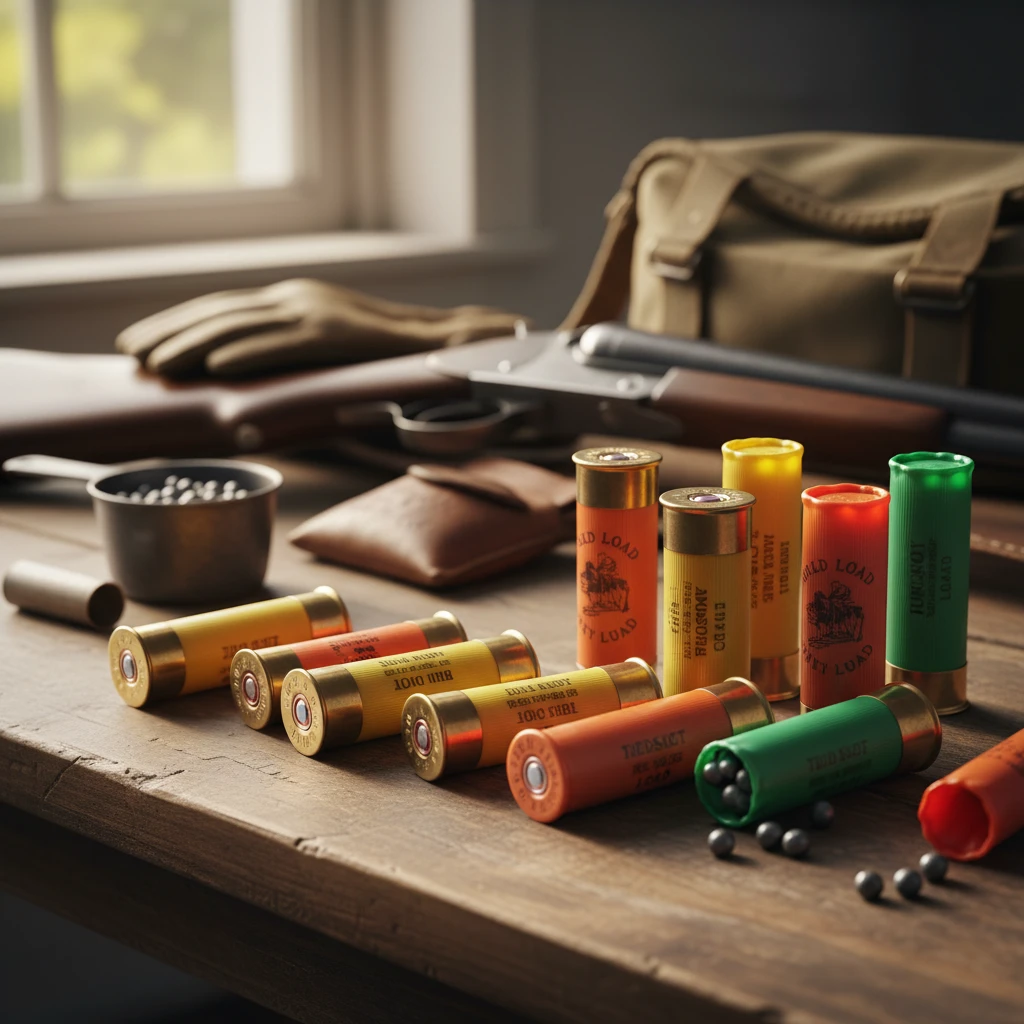
Shotgun Ammo: Mastering Bird Hunting Loads
This section delves into the critical components of shotgun ammunition that directly influence performance for bird hunting. We’ll explore how gauge, shot size, and velocity interact to affect your effectiveness, helping you make informed decisions to elevate your hunting experience.
Beyond the Blaster: Unlocking Your Shotgun’s Potential for Feathered Friends
The shotgun is a hunter’s most versatile tool when pursuing upland game and waterfowl. However, a shotgun’s true potential is unlocked not just by the firearm itself, but by the ammunition it fires. Selecting the correct shotgun ammo can dramatically improve your chances of a clean harvest, reduce cripples, and ensure a more enjoyable hunting experience. It’s about understanding the science and art behind the shell, and how each component contributes to its performance in the field.
Think of your shotgun and its ammunition as a finely tuned system. Just as a race car driver wouldn’t put standard tires on a track designed for slick performance, a bird hunter shouldn’t use generic loads for specific game. The energy transfer, pellet pattern, and range are all dictated by the shell’s design. Mastering these elements means understanding what makes a particular load effective for a specific bird, under varying conditions, thereby enhancing both success and ethical hunting practices.
The Thrill of the Hunt: Why Shotgun Choice Matters
The pursuit of feathered game is a deeply rewarding experience, demanding precision, patience, and the right equipment. Your shotgun choice is significant, but the ammunition you load into it dictates the ultimate outcome of your shots. Different bird species present unique challenges, from their flight speed and altitude to their size and resilience. A load that’s perfect for flushing woodcock might be entirely inadequate for long-range duck hunting. This mismatch can lead to missed opportunities, wounded birds, and ethical dilemmas in the field.
The goal is always a swift, humane dispatch. This is achieved when enough pellets, carrying sufficient energy, strike the bird in a vital area. Understanding the interplay of shot size, pellet count, and velocity allows you to create a dense, effective pattern at the range you’re most likely to encounter your quarry. For instance, smaller shot sizes spread more widely, offering a larger area of effect for fast-flying, smaller birds, while larger shot sizes retain energy better for bigger game at greater distances. Making informed ammunition choices is a cornerstone of responsible and successful bird hunting.
Setting the Stage for Success: Bird Hunting Scenarios
Bird hunting encompasses a wide array of environments and quarry, each demanding a tailored approach to ammunition selection. Consider the difference between hunting dove in an open field versus flushing grouse in dense cover. For dove, you might engage targets at moderate distances with a relatively fast flight path. Here, a load with a good balance of pellet count and velocity is often preferred, with smaller shot sizes like No. 8 or No. 7.5 being common. The focus is on a widespread pattern to compensate for the bird’s erratic flight.
Contrast this with waterfowl hunting. Ducks and geese are often engaged at longer ranges, particularly when decoying. These larger birds require more kinetic energy to bring down effectively. Consequently, hunters typically opt for larger shot sizes, such as No. 4 or No. 2, and often utilize heavier payloads to ensure adequate penetration and energy transfer. Understanding the typical ranges and the specific needs of the game you pursue is crucial for selecting the optimal shotgun ammo. For those interested in the foundational aspects of firearms and their performance, exploring resources on various ammunition types can be beneficial.
Understanding Shotgun Gauge: The Foundation of Your Load Selection
Shotgun gauge is a historical measurement that essentially indicates the bore diameter of the shotgun. It’s derived from the number of lead balls of a specific diameter that would equal one pound. For example, a 12-gauge shotgun means that 12 lead balls of its bore diameter would weigh one pound. This system, while archaic, remains the primary way shotguns are classified and directly influences the type and amount of ammunition they can safely and effectively fire. The gauge dictates the potential payload capacity, recoil, and overall size of the shotgun itself.
Choosing the correct gauge is often a primary consideration when purchasing a shotgun, and it inherently narrows down your ammunition choices. While there’s significant overlap in ammunition types, certain gauges are better suited for specific hunting applications due to their balance of power, shot capacity, and manageable recoil. Understanding the nuances of each common gauge will help you select the most appropriate ammunition for your hunting needs, ensuring optimal performance and a more comfortable shooting experience, especially for extended periods in the field.
The Dominant Duo: 12 Gauge and 20 Gauge Explained
The 12-gauge shotgun reigns supreme in popularity for a reason: its versatility and power. It can handle a wide range of loads, from light target loads to heavy magnum loads, making it suitable for virtually any bird hunting scenario. Its larger bore allows for heavier payloads of shot, and it can propel those pellets with significant energy, making it effective for everything from small game to large waterfowl. However, this power often comes with a more substantial recoil, which can be a deterrent for smaller-statured shooters or those sensitive to it.
The 20-gauge offers a compelling alternative, particularly for those seeking a lighter recoil impulse without sacrificing too much performance. While it carries a smaller payload than a 12-gauge, modern 20-gauge loads are highly effective for a vast majority of bird hunting. They are often favored by younger hunters, women, or anyone who prioritizes a more comfortable shooting experience. A 20-gauge can effectively handle most upland game and even many waterfowl species when appropriate loads are used. For reloaders, understanding the principles of smokeless gun powder load data best practices is crucial for both 12 and 20 gauge to achieve optimal performance and safety.
Beyond the Big Two: When to Consider 28 Gauge or .410 Bore
While 12 and 20 gauges are the workhorses of bird hunting, the 28-gauge and .410 bore offer unique advantages for specific applications. The 28-gauge is often lauded for its light recoil and fast handling characteristics, making it a joy to shoot. It excels in situations where quick target acquisition is key, such as flushing upland birds at moderate ranges. While its payload is smaller than the 20-gauge, its tight patterns can be surprisingly effective, often delivering cleaner kills than one might expect. It’s a favorite among experienced bird hunters who appreciate its finesse.
The .410 bore is the smallest of the common shotgun gauges and is typically used for very close-range hunting of small game and birds, such as quail or rabbits. It is renowned for its extremely light recoil, making it an excellent choice for introducing new shooters to the shotgun. However, its diminutive size means a significantly smaller payload and less downrange energy. Success with a .410 requires exceptional marksmanship and understanding its effective range limitations. For those venturing into reloading these smaller gauges, careful attention to smokeless gun powder accurate load data for your caliber is paramount for safe and effective performance.
Matching Gauge to Game: Practical Applications
Selecting the right gauge for your target game is a critical step toward successful hunting. For large waterfowl like geese or late-season ducks, the power and payload capacity of a 12-gauge are highly advantageous. Its ability to deliver more pellets at longer ranges with sufficient energy is essential for ethical harvests. For upland birds such as pheasants or grouse, both 12-gauge and 20-gauge shotguns are highly effective. The 12-gauge offers more flexibility for longer shots, while the 20-gauge provides a lighter package for walking long distances.
When hunting smaller, faster upland birds like quail or woodcock, the 20-gauge often shines due to its quicker handling and reduced recoil, allowing for faster follow-up shots. The 28-gauge is also an excellent choice for these birds, offering an even more refined shooting experience. The .410 bore is best reserved for very close-range situations, perhaps hunting squirrels or flushing roosters in extremely tight cover. For reloaders, consistency is key, and understanding how different types of primers can affect ignition and overall performance is part of mastering the craft for any gauge.
Pellet Power: Decoding Shot Size for Optimal Lethality
Shot size is perhaps the most misunderstood yet critical factor in selecting shotgun ammunition for bird hunting. It refers to the diameter of the individual pellets within the shotshell. Generally, smaller shot numbers (e.g., BB, No. 1, No. 2) denote larger pellets, while higher numbers (e.g., No. 5, No. 6, No. 7.5) indicate smaller pellets. The choice of shot size directly impacts the number of pellets in your load and the energy each pellet carries. A load with more, smaller pellets offers a wider pattern, increasing the chance of hitting a fast-moving target, while larger, heavier pellets retain more energy for deeper penetration at longer ranges.
The key is to balance pellet count with individual pellet energy. Too small a pellet, and it may lack the energy to humanely dispatch larger or more distant birds. Too large a pellet, and you might have too few pellets in your pattern to reliably hit the bird, especially at moderate to close ranges. This is why specific shot sizes are recommended for different species and hunting scenarios. Understanding these trade-offs is fundamental to maximizing your effectiveness and ensuring ethical harvests in the field.
From BB to 7.5: A Comprehensive Shot Size Guide
Shot sizes for bird hunting typically range from BB (largest) down to No. 9 (smallest). Larger sizes like BB and BBB are generally reserved for larger game like turkeys or waterfowl at extended ranges due to their superior penetration and energy retention. Moving down the scale, No. 1, No. 2, and No. 4 shot are common for duck and goose hunting, offering a good balance of pellet count and energy. For mid-sized upland game like pheasants, No. 4, No. 5, and No. 6 are popular choices, providing a good pattern density and sufficient energy.
Smaller shot sizes, such as No. 7.5, No. 8, and No. 9, are primarily used for smaller, faster-flying birds and clay targets. No. 7.5 and No. 8 are excellent for doves, quail, and snipe, offering a high pellet count for a dense pattern ideal for these quick targets. No. 9 shot is rarely used for hunting but is common in skeet loads for clay shooting. The choice often comes down to the specific bird, the expected range, and the desired pattern density. The number of pellets in a shell is inversely proportional to their size; a shell filled with No. 8 shot will contain significantly more pellets than one filled with No. 2 shot.
The Sweet Spot: Recommended Shot Sizes for Common Bird Species
Identifying the “sweet spot” for shot sizes depends heavily on the species you’re pursuing and the typical hunting conditions. For small, fast upland birds like quail, dove, and snipe, No. 7.5 and No. 8 shot are generally considered optimal. These sizes provide enough pellets in the pattern to reliably hit a small, agile target at typical hunting ranges (20-35 yards). They offer a good balance between pattern density and individual pellet energy for these birds.
For larger upland game such as pheasants and grouse, which are often encountered at slightly longer ranges and possess tougher feathers, No. 5 or No. 6 shot is often recommended. These larger pellets carry more energy and penetrate better, increasing the likelihood of a clean kill. When it comes to waterfowl, especially ducks and geese, the choice shifts towards larger shot sizes. No. 4 shot is a very common and effective choice for most duck hunting, while geese may warrant No. 2 or even BB shot due to their larger size and thicker plumage. Always consult local regulations, as some areas may restrict certain shot types, especially regarding lead alternatives.
Understanding Payload Weight: More Than Just Numbers
Payload weight, often expressed in ounces (e.g., 1 oz, 1 1/8 oz, 1 1/4 oz), refers to the total weight of the shot contained within a shotshell. A heavier payload means more pellets, which can translate to a denser pattern and more energy delivered to the target. For a given gauge, a heavier payload typically requires more propellant to achieve optimal velocity, and this increased powder charge can also lead to higher recoil. Therefore, payload weight is intrinsically linked to shot size and velocity, forming a complex equation for performance.
For instance, a 12-gauge load advertised as “heavy” might feature a 1 1/4 oz or 1 3/8 oz payload, often paired with larger shot sizes for waterfowl. Conversely, lighter loads, perhaps 7/8 oz or 1 oz, are common in target loads or for lighter gauges like the 20-gauge, designed for less recoil and less demanding applications. When reloading, carefully selecting the right smokeless gun powder to match your desired payload weight and velocity is crucial for both safety and performance. Achieving the perfect balance is key to effective shooting.
Velocity Virtues: Speed and its Impact on Your Shotgun Ammo
Muzzle velocity is a critical, yet often overlooked, component of shotgun ammunition performance. It refers to the speed at which the pellets leave the muzzle of the shotgun. Higher velocities mean the pellets travel faster, reaching the target quicker and maintaining their energy for a longer duration downrange. This speed affects not only the time it takes for pellets to reach the target but also how much energy they deliver upon impact, and how much they drop due to gravity over distance. Understanding velocity is key to optimizing your shot placement and ensuring ethical kills.
The interplay between velocity, shot size, and payload weight is complex. A faster load might seem inherently better, but it’s not always the case. For example, extremely high velocities can sometimes lead to faster pellet expansion or deformation upon leaving the barrel, potentially degrading pattern quality. Conversely, very slow loads might not deliver enough energy to the target or may fall below lethality thresholds at longer ranges. Therefore, choosing the right velocity for your specific hunting scenario is as important as selecting the correct shot size and gauge.
Faster is Not Always Better: The Nuances of Muzzle Velocity
While it might seem intuitive that faster pellets are always superior, the reality of shotgun ballistics is more nuanced. Extremely high muzzle velocities can, in some instances, lead to increased pellet deformation as they exit the barrel and travel through the air. This deformation can disrupt the aerodynamic stability of the pellets, potentially resulting in less uniform patterns and reduced downrange effectiveness, especially with softer lead shot. Furthermore, higher velocities often come with increased recoil, which can negatively impact a shooter’s ability to maintain a stable platform for subsequent shots.
The ideal velocity is often a compromise between reaching the target quickly, retaining energy, and maintaining good pattern integrity. For many common bird hunting applications, standard velocity loads (typically 1100-1200 feet per second for 12-gauge) offer an excellent balance of performance characteristics. They provide ample energy and speed for most upland and moderate-range waterfowl hunting while minimizing recoil and promoting consistent patterns. For specialized applications, such as very long-range duck hunting, specialized high-velocity or “magnum” loads might be considered, but they come with their own set of trade-offs in recoil and pattern behavior.
Understanding ‘High Velocity’ and ‘Standard Velocity’ Loads
‘Standard velocity’ loads, often found in the 1150 to 1200 feet per second (fps) range for 12-gauge ammunition, represent a well-balanced choice for a wide array of bird hunting pursuits. They provide a good combination of pellet energy, speed, and manageable recoil, making them suitable for everything from flushing upland birds to decoying ducks at moderate distances. These loads are reliable, consistent, and generally produce good patterns.
‘High velocity’ loads, typically exceeding 1300 fps for 12-gauge, are designed to deliver pellets to the target faster and with more retained energy at longer ranges. They are often favored by waterfowl hunters who face challenging conditions or need that extra edge for longer shots. However, these loads usually generate more recoil, which can be fatiguing during a long day in the field. It’s crucial to note that the benefits of extreme velocity can be diminished if pattern density suffers or if the shooter cannot effectively manage the increased recoil. For reloaders, understanding how smokeless gun powder advanced load development strategies can help achieve specific velocity targets safely is critical.
The Role of Velocity in Downrange Energy and Pellet Drop
Muzzle velocity plays a significant role in how much energy your shot pellets retain as they travel downrange. Faster-moving pellets lose energy more slowly than slower-moving ones due to reduced air resistance over time. This retained energy is crucial for ethically dispatching game birds, as it directly relates to the pellet’s ability to penetrate feathers and vital organs. Higher velocity loads, therefore, can offer an advantage for shots taken at the edge of your effective range, ensuring the pellets still possess sufficient energy upon impact.
Velocity also influences pellet drop due to gravity. A faster-moving pellet is less affected by gravity over a given distance compared to a slower-moving one. This means that for a given sight picture, a faster load will strike higher on the target than a slower load. Understanding this effect is vital for accurate shooting. Hunters using high-velocity loads may need to adjust their aim slightly differently than those using standard velocity loads, especially at longer distances, to compensate for the reduced trajectory arc. This is a key consideration when refining your shooting technique and ammunition choice.
Material Matters: Lead, Steel, and Beyond for Responsible Hunting
The choice of shot material profoundly impacts hunting performance and environmental responsibility. For decades, lead shot dominated waterfowl and upland bird hunting due to its density, which allowed for efficient energy transfer and reliable kills at typical ranges. Its malleability meant it deformed upon firing, creating a more consistent, spreading pattern. However, environmental concerns, particularly lead poisoning in waterfowl that ingested spent shot from feeding grounds, led to widespread bans on lead shot for waterfowl hunting in many regions. This shift mandated the exploration and adoption of alternative shot materials, each with its own set of advantages and drawbacks that hunters must understand.
Understanding the properties of different shot materials is crucial for making informed decisions. Density is key, as it dictates how well the shot retains energy downrange. Larger, denser pellets can be used to achieve the same downrange energy as smaller lead pellets, or alternatively, smaller pellets can be used for increased pellet count in a given load for better pattern density, but this comes with trade-offs. The hardness of the shot also matters; hard shot resists deformation during firing and impact, which can lead to more consistent patterns and less pellet-on-pellet strike within the shot string, potentially increasing downrange energy retention. Hunters must balance the ethical imperative of clean kills with the practicalities of ammunition performance and availability.
The Traditional Choice: Why Lead Shot Remains Popular (and its limitations)
Lead shot’s enduring popularity stems from its inherent qualities that have made it a trusted performer for generations of bird hunters. Its superior density is the primary advantage, meaning that lead pellets carry more energy at range compared to similarly sized pellets made from lighter materials. This density translates to better penetration through feathers and tissue, increasing the likelihood of a clean, humane kill. Furthermore, lead is soft, which allows the pellets to deform slightly upon impact. This deformation can help create a more effective wound channel and increase the effective range by promoting a more consistent, spreading pattern. For upland bird hunting, where shots are often at closer ranges and projectile contamination is less of a concern, lead remains a favored option for many.
However, the environmental consequences of lead shot cannot be ignored, especially in waterfowl hunting where ammunition residue accumulates in aquatic environments. The ingestion of lead shot by waterfowl can lead to lead poisoning, a serious and often fatal condition. This ecological impact has led to strict regulations and outright bans on lead shot for waterfowl in many jurisdictions, pushing hunters to seek alternatives. While lead is still permitted for many upland game birds, its widespread use is becoming increasingly scrutinized. Understanding these limitations is paramount for responsible hunting practices and for complying with evolving wildlife regulations.
The Steel Revolution: Environmental Concerns and Performance Considerations
The transition to steel shot, primarily driven by environmental concerns regarding lead contamination in waterfowl habitats, marked a significant turning point in shotgun ammunition. Steel is considerably less dense than lead, which means that for a given pellet size, steel retains less energy downrange. To compensate for this, steel loads typically use larger pellet diameters than lead loads, and often carry a higher pellet count to ensure adequate pattern density. However, steel is also much harder than lead. This hardness means steel pellets maintain their spherical shape better during flight, leading to a tighter, more consistent pattern, but they do not deform upon impact, which can reduce their energy transfer efficiency and penetration compared to lead.
Hunters using steel shot must adjust their expectations and techniques. Because steel is harder and doesn’t deform like lead, the risk of pellet deformation from pellet-on-pellet strikes within the shot string is reduced, which can actually improve pattern integrity. However, this also means that the perceived “softness” and wound channel created by lead’s deformation are absent. Steel can also be more prone to “blowouts” in certain barrels if not loaded properly, a phenomenon where pellets can fragment upon exiting the muzzle. For optimal performance with steel, hunters often need to employ different choke constrictions than they would with lead, favoring more open chokes to manage the tighter patterns steel tends to produce, especially at longer ranges.
Exploring Newer Alternatives: Bismuth, Tungsten, and Their Pros/Cons
As the demand for effective, non-toxic alternatives to lead and steel grows, bismuth and tungsten-based shots have emerged as premium options for discerning bird hunters. Bismuth shot is chemically similar to lead and has a density only slightly lower than lead, allowing it to perform much like lead in terms of energy transfer and pattern consistency. It is also non-toxic and biodegradable, making it an environmentally sound choice. However, bismuth can be more brittle than lead and can fragment if fired at excessively high velocities or through very tight chokes, although modern manufacturing has significantly improved its durability. It is also considerably more expensive than steel or lead.
Tungsten, particularly in its composite forms blended with polymers, offers a density greater than lead, meaning smaller tungsten pellets can deliver the same downrange energy as larger lead pellets. This allows for exceptionally dense patterns with a high pellet count, even at longer ranges, offering superior penetration and effectiveness. Tungsten alloy shots are incredibly hard and resist deformation, leading to very consistent patterns. The primary drawback is their high cost; tungsten is one of the densest and most expensive materials used in shotgun ammunition, making these loads a significant investment. Nevertheless, for hunters seeking the ultimate in performance and willing to pay a premium, bismuth and tungsten-based loads provide an excellent, environmentally responsible solution.
Choosing the Right Shell Length: Fit and Function for Your Firearm
The length of your shotgun shell is not merely a matter of preference; it’s a critical factor directly linked to your firearm’s capabilities and the intended application of the ammunition. Shotgun chambers are designed to safely and effectively contain the combustion gases and propel the shot payload. Using a shell that is too long for the chamber can lead to catastrophic failures, dangerous pressure build-ups, and damage to the firearm. Conversely, using a shell that is too short might not engage the ejector properly or could result in inefficient gas sealing, reducing performance. Therefore, understanding the standard shell lengths and ensuring compatibility with your specific shotgun is a fundamental aspect of safe and effective shooting.
Shell length dictates more than just physical fit; it also directly influences the amount of powder and shot a shell can carry. Longer shells generally accommodate larger powder charges and heavier shot payloads. This increased payload can translate to more pellets in the charge or larger, heavier pellets, potentially extending the effective range and hitting power of the ammunition. However, this also comes with trade-offs, most notably increased recoil. Responsible hunters must consider their firearm’s specifications, their own shooting capabilities, and the type of game they are pursuing to select the appropriate shell length that balances payload, performance, and manageability.
Common Shell Lengths: 2 ¾”, 3″, and 3 ½”
The most prevalent shell lengths encountered by bird hunters are 2 ¾-inch, 3-inch (often referred to as “magnum” shells), and 3 ½-inch (sometimes called “super magnum” shells). The 2 ¾-inch shell is the standard and most common length, found in virtually all 12-gauge and 20-gauge shotguns. They offer a good balance of performance for most upland and some waterfowl hunting scenarios, with manageable recoil. These shells are versatile and readily available, making them a go-to choice for many hunters across various disciplines.
Moving up, the 3-inch shell provides an increased payload compared to its 2 ¾-inch counterpart. This translates to more shot pellets or heavier pellets, allowing for denser patterns and greater downrange energy, particularly beneficial for waterfowl hunting or shooting at slightly longer ranges. The 3 ½-inch shell represents the maximum common length for 12-gauge shotguns, offering the largest possible payload of shot. These shells are designed for the most demanding situations, such as hunting large waterfowl at extreme distances, but they also generate significantly more recoil. It’s crucial to remember that a shotgun chambered for 2 ¾-inch shells cannot safely fire 3-inch or 3 ½-inch shells, and while a 3 ½-inch chamber can typically fire shorter shells, always verify your firearm’s specifications.
Ensuring Compatibility: Matching Shell Length to Your Shotgun’s Chamber
The most critical aspect of selecting shotgun shells is ensuring they are compatible with your firearm’s chamber dimensions. Shotguns are manufactured with chambers designed to safely accommodate specific maximum shell lengths. For instance, a shotgun marked “2 ¾ inch” or “2 ¾ inch or 3 inch” has specific limitations. Attempting to chamber or fire a shell that exceeds your shotgun’s rated chamber length can lead to serious firearm damage and severe safety risks. The chamber must be able to expand and contain the pressures generated during firing, and an over-length shell can prevent proper sealing or cause the action to unlock prematurely under pressure.
To verify compatibility, always check the markings on your shotgun’s barrel or receiver, or consult your firearm’s owner’s manual. A 12-gauge shotgun chambered for 2 ¾-inch shells can only safely fire 2 ¾-inch shells. A shotgun marked “3-inch magnum” can typically fire both 2 ¾-inch and 3-inch shells. Similarly, a shotgun chambered for 3 ½-inch shells can usually fire all shorter lengths (2 ¾-inch and 3-inch) as well. However, it is imperative to understand that shorter shells may not cycle correctly in some firearms designed for longer shells. Always confirm your shotgun’s specifications before purchasing ammunition to avoid dangerous malfunctions and ensure optimal performance.
The Trade-offs: Payload and Recoil with Longer Shells
The allure of longer shotgun shells, such as 3-inch or 3 ½-inch options, often lies in their promise of a heavier payload. This increased payload can translate to more pellets in the shot charge, which theoretically leads to a denser pattern and a higher probability of hitting the target. Alternatively, longer shells can accommodate larger, heavier pellets, providing greater downrange energy retention and penetration, which is beneficial for extending effective shooting ranges. This capability is especially attractive for hunters pursuing large waterfowl or game birds at distances where shorter shells might fall short in delivering a clean, decisive shot.
However, the significant trade-off for this increased payload is the corresponding increase in recoil. Longer shells generally burn more powder and propel a heavier charge of shot, resulting in a more forceful impulse felt by the shooter. This heightened recoil can be uncomfortable, making follow-up shots more difficult, and can even lead to flinching or a breakdown in shooting form, ultimately reducing accuracy. For smaller-statured shooters or those sensitive to recoil, the benefits of a heavier payload might be negated by the inability to shoot effectively. It’s a delicate balance between maximizing on-target energy and maintaining shooting comfort and control, which often leads experienced hunters to select the longest shell their firearm and personal tolerance can manage effectively.
Beyond the Brands: Evaluating Performance and Reliability in Bird Hunting Loads
While popular ammunition brands often carry a reputation for quality, focusing solely on brand names can overlook critical performance differences and nuances essential for successful bird hunting. Numerous factors contribute to a load’s effectiveness, including the quality of the shot material, the consistency of the powder charge, the design of the wad, and the overall manufacturing precision. Understanding these elements allows hunters to move beyond brand loyalty and select ammunition that truly performs in the field, delivering reliable patterns and humane kills under various conditions. A diligent approach to evaluating ammunition can lead to improved shooting success and a deeper understanding of your equipment.
The reliability of ammunition is paramount, especially in critical hunting moments. Factors like consistent ignition from quality primers, uniform powder burn rates, and the integrity of the hull and seal all contribute to a load’s consistent performance. A poorly manufactured load can result in erratic patterns, ignition failures, or unexpected recoil, all of which can compromise a hunt. Therefore, investing time in understanding what makes a load perform well, reading specifications carefully, and conducting personal field tests is crucial for building confidence in your ammunition choices. This diligence ensures you are not just buying a box of shells, but a reliable tool for ethical and successful hunting.
What Constitutes a ‘Good’ Load? Key Performance Indicators
A truly “good” bird hunting load is one that consistently achieves its intended purpose: to dispatch game cleanly and ethically. This hinges on several key performance indicators, with pattern density and uniformity being paramount. A good load will distribute pellets evenly across the target area, ensuring a sufficient number of hits to incapacitate the bird without unnecessarily damaging the meat. This consistency is influenced by the shot material’s properties, the pellet size, the powder charge, and the wad design.
Beyond patterning, downrange energy retention is critical. This refers to the ability of the shot pellets to maintain their velocity and thus their kinetic energy as they travel towards the target. Loads with higher downrange energy ensure better penetration through feathers and muscle, increasing the likelihood of a quick kill. A good load also exhibits reliable ignition and consistent velocity, meaning every shell fires promptly and predictably, and the velocity of the pellets is similar from one shell to the next. Finally, for the hunter, manageable recoil is a significant factor; a good load should allow for comfortable shooting and quick follow-up shots without inducing flinching or poor shooting form. The combination of these indicators determines a load’s true effectiveness in the field.
Reading the Box: What Manufacturer Specifications Tell You
The information printed on a shotshell box is a treasure trove of data for the informed hunter. While brand and product names are prominent, crucial details about the load’s performance characteristics are also provided. Key specifications include the shot material (e.g., lead, steel, bismuth), shot size (e.g., #6, #7 ½, #4), and the shot weight (often expressed in ounces or grams). Understanding shot size is vital; smaller numbers typically indicate larger pellets suitable for larger or tougher game at longer ranges, while higher numbers signify smaller pellets for smaller game and denser patterns at closer ranges. The shot weight directly relates to the payload and potential for dense patterns.
Pay close attention to the listed m bước, often expressed in feet per second (fps) or meters per second (m/s). This indicates the velocity of the shot pellet at the muzzle. Higher velocities generally mean better downrange energy, but can also increase recoil. The box may also specify the wad type (e.g., plastic, fiber) and the intended use (e.g., waterfowl, upland). For steel shot, note any specific warnings or recommendations regarding barrel compatibility (e.g., use only with shotguns rated for steel shot and specific choke recommendations). Deciphering these specifications allows you to make an educated choice about whether a particular load is suited for your firearm, game, and hunting style.
Personalizing Your Choice: Field Testing and Observation
While manufacturer specifications and expert advice provide valuable starting points, the ultimate test of any shotgun load is its performance in your hands, on your chosen game, with your specific firearm. Field testing is an indispensable part of the process. This involves observing how a particular load patterns, how it performs on game, and how it feels during firing. For instance, even if a load’s specifications look good on paper, its pattern might be too tight or too open for your typical shooting distances and gun/choke combination.
Make detailed notes during your hunts. Observe the results of your shots: Were the kills clean? Were there any cripples that escaped? How did the shot perform at different ranges? Did you notice any issues with recoil or consistency? For example, an experienced hunter might notice that a certain load consistently drops birds that are slightly farther than they expected, or conversely, that a load seems to tear up smaller game birds too much at closer ranges. This direct observation allows you to fine-tune your ammunition selection, moving beyond generic recommendations to identify loads that perfectly match your shooting style, your firearm, and the specific demands of the birds you pursue. This personalized approach is key to becoming a more effective and ethical hunter.
Mastering the Shotgun Load: Practical Tips for the Field
Selecting the right ammunition is only part of the equation for successful bird hunting. True mastery involves understanding how your chosen load interacts with your firearm and the environment, and employing techniques that maximize your chances of a clean, ethical harvest. This includes diligent pattern testing, a thorough understanding of chokes, and a commitment to ethical shooting practices. By focusing on these practical aspects, hunters can significantly improve their success rates and minimize wasted game. Effectively managing your shotgun load is a continuous learning process that enhances both skill and responsibility in the field.
The synergy between your ammunition, your shotgun, and your shooting skill is crucial. A perfectly matched load fired from a properly choked barrel, by a well-practiced shooter, will yield far better results than any single element alone. Taking the time to understand and implement these practical tips transforms a hunter from a mere participant into a proficient practitioner. It’s about respecting the game, your firearm, and your own capabilities by ensuring that every shot taken is with the highest probability of success and ethical outcome. This holistic approach is what distinguishes an experienced hunter.
Pattern Testing: The Unsung Hero of Shotgun Accuracy
Pattern testing is arguably the most critical, yet often overlooked, step in preparing for bird hunting. It’s the process of firing your shotgun with a specific load at a large paper target (typically 30×30 inches or larger) at various typical hunting ranges (e.g., 20, 30, and 40 yards) to observe how the shot pellets distribute. A good pattern is one that is evenly distributed with a sufficient number of pellets hitting the vital areas of a bird-sized silhouette, without large gaps where a bird could pass through untouched. This allows you to see the actual performance of a specific load with your firearm and choke combination.
The results of pattern testing are invaluable. They reveal whether a particular load is performing as expected, helping you identify the optimal range for that load and choke. If you see large holes in your pattern, you might need to adjust your choke or consider a different load. Conversely, if the pattern is too tight, you might be missing faster-moving birds at closer ranges. For example, testing a 12-gauge shotgun with 3-inch #2 steel shot through a modified choke might reveal a pattern that is too dense at 20 yards but excellent at 40 yards, informing your shooting decisions. This hands-on evaluation is far more reliable than relying solely on manufacturer claims and is fundamental to ethical shooting.
Understanding Chokes and Their Interaction with Ammunition
Choke is the constriction at the muzzle end of a shotgun barrel, designed to control the spread of the shot pattern. Different levels of choke constriction—such as cylinder (no constriction), improved cylinder, modified, improved modified, and full—affect how tightly the shot column stays together as it leaves the barrel. The interaction between choke and ammunition is profound; a tighter choke generally results in a tighter pattern at longer ranges, while a more open choke produces a wider pattern at closer distances. For instance, using a full choke with modern steel shot can sometimes result in overly tight patterns at short ranges, leading to “blowouts” or pellet deformation, or simply blowing birds completely out of the sky.
Selecting the appropriate choke for a given situation is critical for achieving effective patterns. For many upland game birds, especially when using lead shot at moderate ranges, an improved cylinder or modified choke is often ideal. For waterfowl hunting, particularly with steel shot at longer distances, an improved modified or even a full choke might be considered. However, it’s vital to pattern test each ammunition and choke combination. Some loads perform best with tighter chokes, while others might be more forgiving. Understanding your firearm’s specific choke capabilities and how different ammunition types behave within them is a cornerstone of successful shotgunning. Remember, many modern shotguns are only rated for specific types of shot (like steel) with certain chokes; always consult your firearm’s manual.
Ethical Considerations: Minimizing Cripples and Waste
The pursuit of bird hunting carries a significant ethical responsibility: to ensure clean, humane kills and to minimize cripples and wasted game. This responsibility begins with selecting the appropriate ammunition for the task at hand and understanding its limitations. Using ammunition that is too light, too small, or that produces poor patterns for the game being hunted or the range at which it is being engaged directly increases the risk of wounding birds without recovering them. For example, attempting to shoot small-pellet steel at large waterfowl at extended ranges significantly increases the likelihood of non-lethal hits.
Beyond ammunition choice, ethical shooting involves knowing your effective range and adhering to it strictly. This means understanding how your chosen load patterns and only taking shots where you are confident you can place enough pellets into the bird’s vital organs to ensure a swift, humane kill. Practicing these skills through consistent pattern testing and careful observation of your shots in the field is paramount. Furthermore, hunters should commit to making every reasonable effort to recover any bird they shoot at, regardless of whether they believe it to be fatally wounded. This includes tracking downed birds diligently and using all available means to locate them. Ethical hunting is about respecting the wildlife and the privilege of participating in this tradition.
Common Bird Hunting Ammo Misconceptions and How to Avoid Them
Many bird hunters operate under a set of assumptions about ammunition that, while perhaps well-intentioned, can lead to suboptimal performance and missed opportunities in the field. One of the most pervasive beliefs is the idea that a single type of shotgun ammo can effectively handle every bird species and hunting scenario imaginable. This approach often overlooks the nuanced ballistic requirements dictated by factors like game size, typical engagement distances, and even the specific shotgun and choke combination being used. Understanding and debunking these common misconceptions is the first step toward truly mastering your bird hunting endeavors and ensuring you have the right tools for the job.
The ‘One Size Fits All’ Fallacy
The notion that one type of shotgun shell suffices for all bird hunting is a significant oversight. A small, fast-moving target like a dove presents entirely different challenges than a larger, tougher bird such as a goose or turkey. For instance, using the same light target load intended for clay pigeons or small upland birds on a late-season duck would likely result in crippled cripples and lost game. Conversely, employing heavy magnum loads for quail would be excessive, potentially destroying meat and providing no practical advantage. The key is to match your ammunition’s payload (pellet count and weight), velocity, and shot size to the specific quarry. This requires research into typical bird weights, flight patterns, and the effective range of different shot sizes. For example, sizes like #7.5 or #8 are excellent for smaller upland game and waterfowl over decoys at close ranges, while #4 or #2 shot are more appropriate for larger ducks, geese, and turkeys at extended distances. Don’t fall into the trap of believing a single load can do it all; tailor your choices to maximize your success and respect for the game.
Overestimating Your Effective Range
Another common pitfall is overestimating a particular ammunition load’s effective range, which often leads to taking shots that are simply too far. Every shot size has a practical limit beyond which its energy and pattern density become insufficient to humanely dispatch game. For example, while #7.5 shot might be devastating at 25 yards, its effectiveness drops dramatically beyond 35-40 yards due to pellet energy loss and increasing pattern “holes.” Hunters who consistently take shots at the extreme edge of their perceived range risk wounding birds, leading to loss and ethical concerns. It’s crucial to understand the ballistic properties of your chosen loads and the limitations imposed by pellet size and velocity. This often means practicing shooting at known distances and being disciplined enough to pass on shots that fall outside your truly effective envelope. Knowing your limitations and those of your equipment is as important as knowing how to shoot accurately. Invest time in understanding how your chosen shotgun ammo performs at various distances; this knowledge will significantly increase your ethical harvest rate.
Ignoring Shotgun/Choke/Load Synergy
The interaction between your shotgun, its choke, and the ammunition you select is a critical, yet often overlooked, component of successful bird hunting. A misunderstood synergy here can lead to poor patterns and missed opportunities. For instance, a tight choke like a full or extra-full choke paired with a fast, light target load might produce a very tight, but small, pattern that is difficult to connect with on fast-moving birds. Conversely, an open choke like a cylinder or improved cylinder might be ideal for close-range flushing birds, but it won’t hold a consistent pattern at longer distances, especially with larger shot sizes. The actual shot charge, pellet material (lead, bismuth, steel), and velocity all play a role in how the shot interacts with the choke constriction. It’s essential to pattern your shotgun with the specific loads you intend to hunt with. This involves shooting at paper targets at various distances to visually assess the pattern density and coverage. Many experienced hunters consult resources on choke constrictions and their effects on different shotgun ammo types to fine-tune their setup for specific game and hunting conditions. Finding the optimal combination requires experimentation and understanding that your shotgun and choke are not merely passive components but active participants in the ballistics equation.
Alternatives to Standard Bird Hunting Loads (and when to choose them)
While standard bird hunting loads are effective for many common scenarios, exploring alternatives can unlock new levels of performance and adaptability in the field. These alternatives aren’t necessarily “better” in all situations, but they offer distinct advantages for specific types of game or hunting environments. Understanding these options allows you to make more informed decisions, ensuring you’re not just using the most common ammo, but the most effective ammo for your specific hunt. This might involve stepping up in payload for tougher birds, utilizing specialized designs for challenging conditions, or even considering the benefits of hand-crafting your own loads if you possess the requisite knowledge and equipment.
When to Consider Heavier Payloads for Larger Game
For hunters pursuing larger, tougher game birds, such as geese, turkeys, or certain upland species like pheasants in dense cover, standard loads may lack the necessary energy and pellet count to ensure clean, ethical kills. This is where heavier payloads become indispensable. Heavier payloads typically feature more ounces of shot or larger shot sizes, designed to deliver greater downrange energy and create denser, more effective patterns at typical engagement distances for these game birds. For instance, a goose hunter might opt for loads with 1 ¼ to 1 ½ ounces of #2 or BBB shot, providing the “punch” needed to penetrate dense feathers and muscle at ranges of 40-60 yards. Similarly, turkey hunting often demands specialized loads with large shot sizes like #4 or #5, packed at high velocities to ensure a lethal pattern on a relatively small kill zone. The decision to use a heavier payload is predicated on the game’s size, its typical shot distance, and the density of its protective plumage. Always remember that while heavier payloads offer more power, they can also increase recoil and may not perform optimally in all shotgun/choke combinations, making initial patterning crucial.
Exploring Specialty Loads for Specific Hunting Scenarios
Beyond simply increasing payload, a wealth of specialty shotgun ammo exists to address very particular hunting challenges. For instance, hunting waterfowl in areas where lead shot is prohibited necessitates the use of non-toxic alternatives like steel, bismuth, or tungsten. Steel shot, while readily available and cost-effective, requires larger shot sizes and higher velocities to retain energy, and can be harder on barrels without appropriate chokes. Bismuth and tungsten blends offer densities closer to lead, allowing for smaller shot sizes and better patterns but at a significantly higher cost. For small game hunters in overgrown environments, loads designed for improved pattern density at closer ranges might be beneficial, while bird watchers focused on conservation might choose loads with specific shot compositions that degrade more rapidly in the environment if missed. Some loads even feature buffered payloads or advanced wad designs to improve pattern consistency at longer ranges. Understanding these nuanced options allows hunters to select ammunition that not only respects local regulations but also maximizes their effectiveness and ethical harvest rates under specific environmental conditions.
The Role of Reloading Components (primers, smokeless gun powder) for Custom Loads (for experienced reloaders)
For the dedicated and experienced reloader, the world of custom ammunition opens up a realm of precision and adaptability far beyond off-the-shelf options. By carefully selecting components such as primers and smokeless gun powder, shooters can tailor loads to their exact specifications, optimizing for specific shot sizes, velocities, and desired pattern characteristics. This process, often referred to as handloading, requires meticulous attention to detail, adherence to safe load data, and a thorough understanding of ballistic principles. Reloading allows for the creation of loads that might be unavailable commercially, such as specific shot/velocity combinations for obscure game birds or niche shooting disciplines. It can also be a cost-effective way to maintain a steady supply of ammunition for frequent shooters. Resources like reloading manuals and online data are essential for finding accurate load recipes, and components like high-quality smokeless gun powder and reliable primers from reputable manufacturers are critical for consistency and safety. While not for the novice, mastering reloading can provide unparalleled control over your ammunition’s performance, allowing you to fine-tune your shotgun’s capabilities.
Ensuring Your Arsenal is Ready: Storage and Safety for Shotgun Ammunition
Proper care and handling of your shotgun ammunition are paramount, not only for maintaining its integrity and ensuring reliable performance in the field but also for safeguarding yourself and others. Ammunition is a consumable product with inherent energetic potential, and its safe storage and handling are non-negotiable aspects of responsible firearm ownership. Neglecting these crucial elements can lead to dangerous malfunctions, degraded performance, and potential accidents. Investing time in understanding best practices for storage, recognizing signs of degradation, and adhering to strict safety protocols will significantly enhance your overall shooting experience and contribute to a safer environment for everyone.
Proper Ammunition Storage: Maintaining Integrity and Safety
The way you store your shotgun ammo directly impacts its longevity and reliability. Ammunition should always be kept in a cool, dry environment, away from extreme temperature fluctuations and direct sunlight. Heat can degrade propellants and primers, while moisture can lead to corrosion and primer failure. Many shooters utilize specialized ammunition storage containers, often made of durable plastic or metal, which offer protection from the elements and organized storage. These containers help prevent contamination and damage to the shells. It’s also wise to store ammunition separately from firearms, particularly in a location inaccessible to children or unauthorized individuals. For those living in humid climates, desiccants or silica gel packs can be added to storage containers to absorb excess moisture. Following these guidelines ensures that your ammunition remains in optimal condition, ready to perform when you need it most, and importantly, remains safe from accidental ignition or damage.
Understanding Ammunition Shelf Life
While modern ammunition is designed for significant longevity, it’s not immortal. Understanding the concept of ammunition shelf life is crucial for ensuring reliable function. Factors like storage conditions, as mentioned, play the most significant role. Ammunition stored in ideal, climate-controlled conditions can remain potent for many years, often decades. However, ammunition exposed to extreme heat, humidity, or physical damage will degrade much faster. Signs of degradation can include bulging or dented cases, cracked hull mouths, corroded or puffy primers, and faded or peeling printing on the shell. If you notice any of these signs, it’s best to err on the side of caution and properly dispose of the ammunition. It’s good practice to periodically inspect your stored ammunition, especially older stock, and consider using older ammunition before newer stock, a principle known as FIFO (First-In, First-Out). Reliable shotgun ammo is a cornerstone of safe and effective hunting.
Safe Handling Practices in the Field and at Home
Safe handling of ammunition extends from your home storage to the hunting field. At home, always ensure firearms are unloaded and safely stored before handling ammunition. When loading magazines or the shotgun itself, do so deliberately and without haste. In the field, treat every round as if it were live. Avoid dropping or mishandling ammunition, as this can lead to damage that compromises performance or safety. Ensure that unused rounds are safely stored back in their original packaging or a designated ammunition carrier. Never mix different types or brands of ammunition in the same container unless clearly labeled, as velocity and performance characteristics can vary. Always be aware of your surroundings and the direction of your muzzle. Following these fundamental safety practices minimizes the risk of accidents and ensures a responsible hunting experience. This diligence extends to understanding the specific handling requirements for components like smokeless gun powder and primers if you are involved in reloading.
Factors Affecting Ammunition Performance
Beyond storage and handling, several intrinsic factors can influence how your ammunition performs. The specific components used, such as the quality of the powder, the primer’s sensitivity, and the projectile’s construction, all contribute to its reliability and effectiveness. For instance, the type of propellant used can affect how it burns under different temperature conditions. Similarly, the casing material and its fit within the firearm’s chamber can impact extraction and overall cycling. Consistency in manufacturing is paramount; ammunition from reputable manufacturers generally exhibits higher uniformity in ballistic performance, meaning each shot will behave more predictably than with mass-produced, inconsistent rounds. Understanding these nuances can help you choose the right ammunition for your specific firearm and intended use, whether for target practice or hunting. The choice between different types of cartridge cases, for example, can sometimes influence reloading efficiency and consistency.
The environment in which ammunition is stored also plays a crucial role. Extreme temperatures, both hot and cold, can degrade propellant and primers, leading to inconsistent ignition or reduced velocity. High humidity is another enemy, promoting corrosion on metallic components like the case and primer, which can cause misfires or hangfires. Therefore, storing ammunition in a cool, dry, and stable environment, away from direct sunlight and potential contaminants, is essential for maintaining its integrity over time. Proper ventilation in storage areas is also important to prevent the buildup of any volatile compounds that might form from degrading components.


About author



Add comment