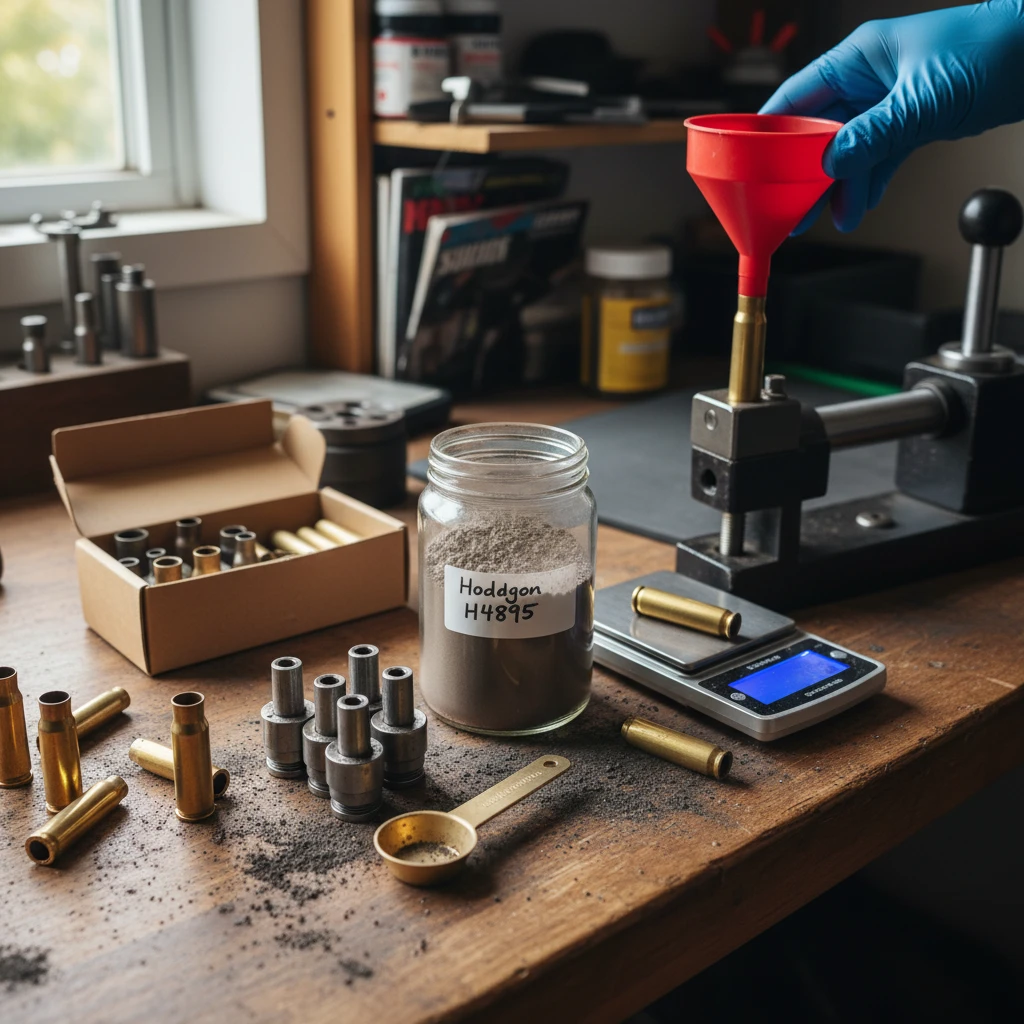
Reloading your own ammunition is a rewarding endeavor, offering significant cost savings and the ability to tailor loads for specific firearms and shooting disciplines. At the heart of successful reloading lies the careful selection of smokeless gun powder, a component that directly influences performance, safety, and accuracy.
Choosing the correct smokeless powder is not merely about finding a fill-in for your cartridge case; it’s a nuanced decision that impacts everything from muzzle velocity and recoil to the overall pressure generated within your firearm. Understanding the properties of different powders is paramount for achieving optimal results and ensuring safe operation.
Unlocking Precision: Why Your Choice of Smokeless Gun Powder Matters
The smokeless gun powder you select is arguably the most critical component in your reloading process. It’s the energetic heart of your ammunition, responsible for propelling the bullet from the barrel at a controlled and predictable rate. An ill-suited powder can lead to erratic performance, poor accuracy, increased wear on your firearm, and, in severe cases, dangerous pressure spikes. For those seeking to enhance their shooting experience, whether for competitive target shooting, ethical hunting, or reliable self-defense, a deep understanding of powder characteristics is indispensable. The objective is always to find a powder that consistently delivers the desired velocity and energy with manageable pressure and recoil, all while maintaining accuracy.
The Foundation of Reloading Success
Every successful reload begins with a foundation of knowledge and the right components. When it comes to smokeless gun powder, this means understanding its fundamental role. It’s not just about filling the case volume; it’s about creating a controlled explosion that generates the necessary force to launch a projectile. This process is governed by precise chemical reactions and physical properties of the powder grains themselves. Without the correct powder, even the best components, such as high-quality bullets and primers, will fail to produce satisfactory results. Proper selection ensures that your reloaded ammunition performs reliably and safely with your specific firearm and chosen bullet. This is the bedrock upon which all other aspects of precision reloading are built, ensuring consistency and predictable outcomes with every shot.
Beyond Just a Filler: The Role of Smokeless Powder
Smokeless powder is far more than a simple filler material; it’s a carefully engineered propellant designed to optimize ballistic performance. Its primary function is to generate a high volume of rapidly expanding gas when ignited by a primer. This gas pressure then acts upon the base of the bullet, forcing it down the barrel. The rate at which the powder burns is a key characteristic that dictates how quickly this pressure builds and is sustained. Different cartridges and bullet weights require specific burn rates to achieve optimal velocity without exceeding safe pressure limits. Understanding this interplay is crucial for developing loads that are not only potent but also safe and consistent, avoiding issues like excessive recoil or inconsistent ignition, which can compromise accuracy and firearm longevity. Properly matched powder ensures efficient energy transfer to the bullet.
Decoding Smokeless Powder Types: Burn Rate and Its Impact
The vast array of smokeless gun powders available to reloaders can seem daunting, but the most crucial differentiating factor is their burn rate. This characteristic dictates how quickly the powder combusts within the cartridge case after ignition. Burn rate is not arbitrary; it’s a result of the powder’s chemical composition, grain size, shape, and the presence of deterrent coatings. Powders are generally categorized as fast, medium, or slow burning, and this classification directly impacts their suitability for different cartridges and bullet weights. Choosing a powder with the correct burn rate is essential for achieving optimal performance, preventing dangerous pressure spikes, and ensuring consistent ignition. Incorrectly matching burn rate can lead to a host of problems, from inefficient propellant use to catastrophic firearm failure.
Fast Burning Powders for Rimfire and Light Handgun Loads
Fast-burning powders are characterized by their rapid combustion. They ignite quickly and reach peak pressure early in the cartridge’s firing sequence. This makes them ideal for smaller, higher-pressure cartridges like those used in many rimfire ammo applications and lighter handgun loads. For instance, in cartridges like .22 LR or common 9mm loads with lighter bullets, a fast-burning powder ensures that the powder is fully consumed before the bullet exits the barrel, maximizing efficiency. Using a fast powder in a large rifle cartridge, however, can lead to dangerously high pressures because the powder burns too quickly for the bullet’s mass to control the pressure rise, potentially causing case ruptures or firearm damage. When reloading, consider these powders for applications where a quick, energetic burn is needed for efficient bullet acceleration in smaller case volumes. For more on rimfire ammo, explore our dedicated guides.
Medium Burning Powders for Versatile Handgun and Rifle Cartridges
Medium-burning powders strike a balance, offering a burn rate suitable for a wide range of applications. They are exceptionally versatile and form the backbone of many popular handgun and rifle loads. These powders provide a more sustained pressure curve, making them excellent choices for cartridges such as .38 Special, .45 ACP, .223 Remington, and .308 Winchester, especially with moderate bullet weights. Their balanced burn rate allows for efficient powder consumption and energy transfer across a broader spectrum of firearm actions and bullet types. For reloaders working with common calibers, a medium-burning powder often represents a safe and effective starting point. Their adaptability makes them a staple for general-purpose handgun ammo and many standard rifle ammo applications. Many reloaders find these to be the most commonly used types in their arsenal.
Slow Burning Powders for Magnum Handgun and Heavy Rifle Loads
Slow-burning powders are designed to combust gradually, releasing their energy over a longer period. This characteristic is crucial for large-capacity cartridges, particularly magnum handgun rounds and heavy-caliber rifle cartridges. In these applications, a slower burn rate allows the bullet to travel further down the barrel before peak pressure is reached, enabling the propellant to efficiently accelerate heavy bullets to high velocities without generating excessive pressure. Examples include powders suitable for cartridges like .300 Winchester Magnum, .338 Lapua Magnum, or powerful handgun loads such as .44 Magnum. Using a slow-burning powder in a small-caliber cartridge can result in incomplete combustion, muzzle flash, and significantly reduced performance, as the powder may not fully burn before the bullet leaves the barrel. Careful selection ensures optimal performance for demanding applications.
Understanding the Burn Rate Chart: Your Essential Guide
A burn rate chart is an indispensable tool for any reloader. It provides a comparative ranking of various smokeless gun powders, listing them from fastest to slowest burning. These charts, published by reputable reloading component manufacturers and publications, are invaluable for selecting appropriate powders for specific cartridges and bullet weights. While charts offer a general guideline, it’s important to remember that burn rates can vary slightly between manufacturers and even different lots of the same powder. Always consult a comprehensive and up-to-date burn rate chart when making your powder selection, and cross-reference this information with published load data for your specific cartridge. These charts are a crucial reference for safe and effective reloading, helping you avoid the pitfalls of using a powder with an unsuitable burn rate.
Matching Powder to Your Firearm and Cartridge: A Practical Approach
Successfully reloading ammunition hinges on the precise match between the smokeless gun powder, the cartridge, and the firearm. This isn’t a one-size-fits-all scenario; different combinations demand distinct powder characteristics to achieve optimal performance and safety. A powder that excels in a .223 Remington rifle might be entirely inappropriate for a .45 ACP handgun, and vice versa. The goal is to utilize a powder that burns efficiently within the confines of the cartridge case and barrel, delivering the desired velocity and accuracy without exceeding safe pressure limits. This careful consideration of each element ensures that your reloaded ammunition functions reliably, consistently, and safely, allowing you to harness the full potential of your firearm and ammunition components.
Handgun Ammo Reloading: Balancing Recoil and Velocity
When reloading handgun ammo, the interplay between recoil, velocity, and shooter comfort is paramount. Fast- to medium-burning powders are typically favored for most common handgun cartridges. Fast-burning powders can provide excellent velocity in smaller cartridges, but care must be taken to avoid excessive pressure. Medium-burning powders offer a broader range of application and often a smoother recoil impulse, making them ideal for target shooting and general self-defense loads. For instance, loading 9mm Luger or .40 S&W often involves powders that facilitate rapid gas generation for good slide function without overly sharp recoil. Achieving a balance means selecting a powder that allows you to reach desired velocities for reliable firearm operation and effective terminal performance, while keeping recoil manageable for follow-up shots and shooter endurance. This balance is key for developing satisfying and effective handgun ammo.
Rifle Ammo Reloading: Optimizing for Accuracy and Power
Rifle ammunition reloading presents unique challenges and opportunities, particularly in optimizing for both accuracy and power. For accurate rifle ammo, particularly in mid-sized cartridges like .223 Remington or .308 Winchester, medium-burning powders are often the go-to choice. They provide a consistent pressure curve that promotes stable bullet flight and predictable harmonics. For cartridges designed for long-range shooting or hunting larger game, slow-burning powders become essential. These allow for the efficient acceleration of heavier bullets to high velocities, maximizing ballistic coefficient and downrange energy. The choice of powder directly impacts the ability to achieve tight groups and consistent performance at extended distances. For reloaders focused on hunting, exploring options detailed in our guide on smokeless gun powder for hunters can be highly beneficial.
Shotgun Ammo Reloading: Considerations for Different Gauges and Loads
Reloading shotgun shells introduces a different set of variables, including gauge, shot weight, and intended use (e.g., target shooting, hunting waterfowl, or slugs). For shotgun ammo, powder selection is critical for achieving consistent patterns and effective shot velocity. Medium-to-slow burning powders are commonly used, with the specific choice depending on the shell length, payload weight, and gauge. For instance, reloading 12 gauge shells with heavy shot charges often requires a slower-burning powder to ensure complete combustion and efficient propulsion. Conversely, lighter target loads might utilize slightly faster powders. It’s crucial to adhere strictly to published load data, as deviations can significantly alter pressure and performance. Understanding the specific requirements for each gauge and load type is vital for producing safe and effective reloads.
Rimfire Ammo Reloading: Specialized Needs for Small Calibers
While less common for handloaders due to the sealed nature of most rimfire cartridges, understanding the powder requirements for rimfire ammo is still relevant for those seeking to experiment or for specific niche applications. Rimfire cartridges, such as the ubiquitous .22 LR, typically use very small amounts of fast-burning powder. The compact case volume necessitates a powder that ignites rapidly and burns almost completely before the bullet travels a significant distance. This allows for efficient acceleration without the risk of excessive pressure build-up, which can be dangerous in such small cartridges. The consistency of rimfire ammo is highly dependent on this precise powder-to-case volume ratio. For those interested in optimizing their rimfire experience, resources on rimfire ammo accuracy can offer valuable insights.
Key Factors in Selecting the Ideal Smokeless Gun Powder
Beyond burn rate, several other critical factors influence the selection of the ideal smokeless gun powder. These elements work in concert to determine not only the performance of your reloaded ammunition but also its safety. Overlooking any of these can lead to suboptimal results or potentially dangerous situations. Therefore, a comprehensive approach that considers the bullet’s characteristics, the desired ballistic outcome, and the environmental conditions under which the ammunition will be used is essential for success. Careful evaluation of these aspects will guide you toward the most suitable powder for your specific reloading project.
Bullet Weight and Construction: A Crucial Pairing
The weight and construction of the bullet are fundamental considerations when selecting smokeless gun powder. Heavier bullets require more energy to accelerate to a given velocity compared to lighter bullets. Consequently, slower-burning powders are generally preferred for heavier bullets, as they provide a more sustained pressure curve to push the mass efficiently. Conversely, lighter bullets can be propelled to high velocities with faster-burning powders. Bullet construction also plays a role; a solid copper bullet may behave differently pressure-wise than a lead bullet with a jacket. Always consult reliable load data that specifically matches your chosen bullet weight and type to ensure you are using a powder that will perform optimally and safely. The relationship between bullet mass and powder burn rate is a cornerstone of safe and effective load development. For more on bullet weight and its impact, refer to detailed ballistics guides.
Desired Velocity and Pressure Limits: Safety First!
Achieving a desired velocity is a primary goal for many reloaders, but it must always be balanced with safe pressure limits. Every cartridge has a maximum allowable pressure (MAP) defined by industry standards. Exceeding this limit can lead to case rupture, firearm damage, and severe injury. Smokeless powders vary in their energy output and burn characteristics, meaning that two different powders can produce vastly different pressure levels when used in the same quantity with the same bullet. Always consult up-to-date reloading manuals and software that provide pressure data for specific loads. Start with the minimum recommended powder charges and work up incrementally, carefully monitoring for any signs of excessive pressure, such as sticky extraction or flattened primers. Safety is non-negotiable; never guess when it comes to pressure. For comprehensive safety guidance, consult our resources on smokeless gun powder safety.
Intended Use: Target Shooting, Hunting, or Self-Defense
The intended purpose of your reloaded ammunition significantly dictates the ideal smokeless gun powder choice. For target shooting, especially precision disciplines, powders that offer extreme consistency and mild recoil are often favored to allow for quick follow-up shots and minimal shooter fatigue. For hunting applications, powders that deliver maximum velocity and energy transfer for controlled expansion and deep penetration are paramount. Many hunters rely on specific powders designed for magnum handgun ammo or powerful rifle ammo. For self-defense, a balance of reliable cycling of semi-automatic firearms, sufficient velocity for barrier penetration, and manageable recoil for rapid threat engagement is key. Each use case has unique performance requirements that steer powder selection towards specific burn rates and energy profiles.
Environmental Conditions: Temperature and Altitude Effects
Environmental factors, particularly temperature and altitude, can subtly but significantly influence smokeless gun powder performance. Most modern smokeless powders are formulated to be relatively insensitive to temperature fluctuations, but extreme cold can slow down the burn rate, potentially reducing velocity and increasing the possibility of ignition issues. Conversely, extreme heat can slightly increase the burn rate, leading to higher pressures. Altitude can affect powder performance primarily through its impact on air density, which can influence the efficiency of propellant combustion. While these effects are generally minor for most standard loads, they become more pronounced in extreme conditions or when operating near the maximum pressure limits of a cartridge. For critical applications or reloading in harsh climates, consider powders specifically designed for temperature stability. Reference guides on primer selection for extreme weather can offer additional context on environmental influences.
Beyond the Burn Rate: Understanding Powder Characteristics
While burn rate is the foundational metric for smokeless powders, a truly informed reloader considers several other critical characteristics that influence both the loading process and the final performance of a cartridge. These factors can significantly impact the consistency, accuracy, and safety of your handloads, making their understanding paramount for anyone aiming for reliable results. Moving beyond just matching a powder’s burn rate to a caliber is where precision reloading truly begins, especially when aiming for superior accuracy in disciplines like match shooting.
Granule Size and Shape: Pourability and Metering Accuracy
The physical form of smokeless powder granules plays a crucial role in how easily and accurately it can be measured. Powders with fine, spherical granules, for example, tend to flow very smoothly from powder measures, leading to consistent charge weights. This is particularly important for high-volume reloading where speed and repeatability are key. Conversely, irregularly shaped or large granules can bridge in powder measures, resulting in erratic drops and potentially dangerous overcharges or undercharges. For precision handloads, especially those intended for target practice or competitive events, consistent powder charges are non-negotiable. Reloaders often find that certain granular forms are easier to work with in progressive presses, minimizing the risk of spills and ensuring that each case receives the intended amount of powder.
Cleanliness and Residue: Impact on Firearm Performance
The combustion of smokeless powder leaves behind residue, and the amount and nature of this residue can affect firearm function over time. Some powders are formulated to burn cleaner, minimizing the buildup of fouling in the barrel, action, and gas systems (in the case of gas-operated firearms). Excessive fouling can lead to increased friction, reduced accuracy, and potential cycling issues, particularly in semi-automatic firearms. Clean-burning powders are often favored by competitive shooters and those who fire many rounds during a session, as they reduce the need for frequent cleaning and help maintain consistent performance. For hunters or those using firearms in adverse conditions, a powder that leaves minimal corrosive residue is also a significant advantage, protecting the firearm’s metal components from premature wear and tear.
Consistency and Lot-to-Lot Variation: Ensuring Reliable Results
One of the most critical, yet often overlooked, aspects of smokeless powder is its consistency, both within a single lot and from one lot to another. Reputable manufacturers strive for extremely tight tolerances in their powder production to ensure that each batch performs identically. However, minor variations can occur, and experienced reloaders often suggest testing new lots of their preferred powders to confirm that performance hasn’t changed. Lot-to-lot consistency is vital for maintaining the reliability of established loads. A sudden shift in performance from a previously trusted powder can lead to unexpected pressure spikes or velocity drops, impacting accuracy and potentially compromising safety. Many reloaders will purchase multiple pounds of the same lot if they find a load that works exceptionally well for a particular rifle or handgun.
Smokeless Powder Additives: Enhancing Performance
Modern smokeless powders often contain various additives that enhance their performance characteristics. These additives can include deterrent coatings to control the burn rate, stabilizers to prolong shelf life, and de-coppering agents that reduce copper fouling in the bore. Some powders are also formulated with flash suppressants, which are particularly useful in military or tactical applications where minimizing muzzle flash is a safety and tactical advantage. Understanding these additives can help a reloader choose a powder that not only meets their ballistic needs but also contributes to firearm longevity and shooter comfort. For instance, powders with de-coppering properties can make barrel cleaning significantly easier, a welcome benefit for any shooter.
Leveraging Reloading Data: Your Blueprint for Success
Developing safe and accurate handloads hinges on access to and understanding of reliable reloading data. This data serves as the foundation upon which all successful reloads are built, guiding the selection of components and the precise quantities needed for optimal performance. Without this critical information, the reloading process becomes a dangerous guessing game, risking catastrophic firearm failure and personal injury. Whether you’re reloading for hunting big game or seeking sub-MOA accuracy at the range, adhering to tested load data is the single most important step you can take.
Why Reputable Load Data is Non-Negotiable
The pressure generated within a firearm’s chamber during firing is immense. Incorrect powder charges, bullet weights, or seating depths can quickly lead to pressures far exceeding the firearm or cartridge’s design limits, a situation known as an over-pressure event. These events can result in anything from a stuck case or blown primer to a catastrophic firearm failure, causing severe injury or death. Reputable reloading data is derived from rigorous testing by powder manufacturers, firearm companies, and independent researchers who utilize specialized equipment to measure pressure and velocity. This data provides safe starting points and maximum load limits for specific cartridge and component combinations. Ignoring this established knowledge in favor of untested loads is a direct invitation to danger.
Interpreting Reloading Manuals and Online Resources
Reloading manuals, published by major component manufacturers like Hodgdon, Alliant, and Vihtavuori, are invaluable resources. They typically detail tested loads for a wide array of calibers, providing specific bullet weights, powder types and charges, primer information, and measured velocities. When consulting these manuals, it is crucial to use data that precisely matches your components: the exact bullet weight and type, the specific powder, and the correct primer. In addition to print manuals, many component manufacturers provide online load data on their websites, which is often updated with new product information or additional tested loads. These online resources are typically well-organized and searchable, making it easier to find the information you need for your specific caliber.
Starting Low and Working Up: A Safe Methodology
The cardinal rule of load development is to always start with the manufacturer’s recommended minimum or starting load and incrementally increase the powder charge, working up towards the maximum load if accuracy or performance improvements are desired. This methodology allows you to monitor your firearm and the cartridge for any signs of excessive pressure, such as stiff bolt lift, ejector marks on case rims, or flattened primers. Working up a load involves firing a small group of rounds at each incremental powder charge increase, noting the velocity and checking for pressure signs. This systematic approach ensures that you find a load that performs well in your specific firearm while staying well within safe operating parameters.
The Role of Chronographs in Verifying Load Data
While reloading manuals provide tested velocities, a chronograph is an essential tool for any serious reloader to verify this data in their own firearm. Factors such as barrel length, twist rate, ambient temperature, and even slight variations in component manufacturing can influence actual velocity. A chronograph measures the speed of a bullet as it passes over its sensors, providing real-world velocity figures for your handloads. Using a chronograph allows you to confirm that your loads are producing the expected velocities and to further refine your handloads for maximum accuracy and consistency. It’s particularly useful when developing loads for precision shooting, where velocity spread directly impacts ballistic consistency.
Common Pitfalls to Avoid When Choosing Smokeless Powder
The selection of smokeless powder is a nuanced decision that impacts every aspect of a reloader’s success. Many aspiring handloaders fall into common traps that can lead to frustration, wasted components, and, most importantly, unsafe shooting conditions. Understanding these pitfalls before you begin can save you considerable trouble and ensure a safer, more rewarding reloading experience. Whether you’re loading for hunting trips or competitive events, avoiding these common mistakes is key to consistent performance.
The Danger of Incorrect Powder Selection: Over-Pressure and Under-Performance
Choosing the wrong type of smokeless powder for a particular cartridge and bullet combination is perhaps the most dangerous mistake a reloader can make. Using a fast-burning powder in a large case intended for slow-burning powder can lead to extremely high pressures very quickly, potentially causing a catastrophic failure of the firearm. Conversely, using a slow-burning powder in a small case can result in incomplete combustion, poor velocity, and excessive fouling, leading to under-performance and erratic ignition. For example, trying to use a pistol powder like Hodgdon Titegroup in a .308 Winchester rifle cartridge would be incredibly dangerous due to its rapid burn rate.
Ignoring Bullet Dynamics: Why One Size Doesn’t Fit All
Reloading data is specific not only to the caliber and powder but also to the bullet’s weight, construction, and intended use. A load developed for a heavy, monolithic bullet might produce dangerously high pressures when fired with a lighter, jacketed projectile of the same caliber. Similarly, the seating depth of different bullet types can affect case fill volume and the pressure curve. Ignoring bullet dynamics means failing to account for how the bullet interacts with the bore and how its mass and form influence pressure generation. Always consult load data that specifically lists the bullet weight and type you are using; generic data can be misleading and unsafe.
Relying on Anecdotal Evidence Over Tested Data
The internet is rife with “loads that work” shared by well-meaning individuals. While personal experiences can offer insights, relying solely on anecdotal evidence for powder selection and charge weights is a hazardous practice. These shared loads may have been developed in different firearms, with slightly different components, or under different conditions, and may not be safe or optimal for your specific setup. Tested load data from reputable manufacturers is the result of rigorous scientific testing and validation. Always cross-reference personal accounts with published data, and prioritize the latter for safety and reliability.
Compromising on Quality: The Temptation of Off-Brand Powders
The allure of cheaper, lesser-known brands of smokeless powder can be tempting, especially when reloading in large quantities. However, these off-brand powders may lack the stringent quality control and consistency that established manufacturers maintain. Inconsistent burn rates, unpredictable pressure behavior, and higher sensitivity to temperature changes are all potential risks associated with lower-quality smokeless powders. For critical applications like hunting or competitive shooting, where reliability is paramount, investing in powders from well-respected, known brands is a wise decision that enhances both safety and performance.
The Symbiotic Relationship: Powder, Primers, and Your Projectiles
The successful handload is a delicate balance of several key components: the smokeless powder, the primer, and the bullet. These elements do not function in isolation; rather, they engage in a symbiotic relationship where the performance of one directly influences the others. Understanding how these components interact is essential for achieving consistent ignition, optimal velocity, and predictable accuracy, especially when developing loads for various ammunition types like handgun ammo or rifle rounds.
How Primers Influence Powder Ignition
The primer’s role is to provide the initial spark that ignites the smokeless powder charge. Different primers have varying levels of sensitivity and output energy. Small rifle primers, for example, typically contain more explosive material than small pistol primers, designed to ignite slower-burning rifle powders more effectively. Using an underpowered primer can lead to delayed ignition, hang fires (where the powder ignites late), or even misfires, especially with slow-burning powders. Conversely, a primer with too much energy in certain applications could potentially lead to premature ignition or erratic burn rates. Ensuring you select the correct primer type and strength for your intended powder and cartridge is fundamental to reliable ignition, a topic thoroughly explored in guides to selecting primers for optimal performance.
Synergy with Different Bullet Types: JHP, FMJ, and Beyond
The type of bullet used significantly impacts the overall performance of a handload and how it interacts with the powder and primer. A jacketed hollow-point (JHP) bullet, designed for expansion, may require a different powder charge or velocity window than a full metal jacket (FMJ) bullet, which is designed for deeper penetration. Lead bullets, often used in cowboy action shooting or for economical practice, have different friction characteristics and may require load adjustments. Synergy with bullet types means understanding how the bullet’s weight, construction, and intended purpose influence the pressure curve and the optimal powder charge needed to achieve desired velocities and terminal ballistics. This consideration is crucial whether you’re loading for hunting, self-defense, or precision target practice.
Factors Affecting Primer Choice for Your Reloads
Selecting the correct primer involves more than just matching its size to the cartridge case. Several factors influence the ideal primer choice for your reloads. For instance, magnum primers offer a hotter flame and are often recommended for large capacity rifle cartridges or when using slower-burning powders to ensure complete ignition. Conversely, standard primers are usually sufficient for smaller cartridges or faster powders. Environmental conditions can also play a role; certain primers are formulated for extreme weather reloading, offering greater reliability in cold or wet conditions. Additionally, the type of firearm being used can influence primer choice; some bolt-action rifles may be less sensitive to primer variations than semi-automatic actions that rely on consistent cycling.
Building Your Smokeless Powder Arsenal: A Strategic Shopping List
Selecting the correct smokeless gun powder is paramount for successful and safe handloading. It’s not a one-size-fits-all scenario; different firearm types, calibers, and desired performance characteristics necessitate specific powder choices. Building a comprehensive powder arsenal involves understanding the nuances of burn rates, powder shapes, and their intended applications. For instance, pistol cartridges generally benefit from faster-burning powders that generate peak pressure quickly, while rifle cartridges often require slower-burning powders to achieve optimal velocity and efficiency over a longer barrel. Beginners should focus on a few versatile powders that cover the most common calibers they intend to reload, gradually expanding as their experience and needs grow. Consulting load data from reputable sources is not just recommended, it’s essential for safety and performance. Referencing resources like the Hodgdon reloading data center can provide crucial starting points and detailed load information for a vast array of cartridges and powders.
Essential Powders for Common Handgun Ammo
For handgun reloading, a few key powders can cover a significant portion of common calibers. For example, in the 9mm Luger, .45 ACP, and .40 S&W families, powders like Alliant Unique or Hodgdon CFE Pistol are often excellent starting points. These are typically medium-speed burning powders that offer good versatility and a wide pressure curve suitable for many bullet weights. For lighter loads or smaller caliber handguns like .38 Special or .32 Auto, faster-burning powders such as Alliant Bullseye or Hodgdon Titegroup excel. These burn quickly, developing pressure rapidly and efficiently in shorter barrels. It’s vital to understand that using a powder too fast for a given cartridge can lead to unsafe pressure spikes, while a powder too slow might not burn completely, resulting in poor performance and fouling. Always cross-reference your intended application with powder burn rate charts and published load data.
Must-Have Powders for Popular Rifle Ammo
Rifle cartridges present a broader spectrum of powder requirements due to their larger case volumes and longer barrels. For common hunting calibers like the .30-06 Springfield or .270 Winchester, medium-to-slow burning powders such as IMR 4064 or Hodgdon Varget are often ideal. These powders provide excellent case fill, consistent ignition, and efficient powder burn throughout the barrel length, leading to consistent velocities and accuracy. For magnum cartridges or those designed for extreme long-range shooting, even slower burning powders like Hodgdon Retumbo or Alliant RL22 might be necessary to achieve peak performance. The goal with rifle powders is often to ensure the powder is still burning efficiently as the bullet exits the muzzle, maximizing energy transfer and minimizing muzzle flash and unburnt powder. Reloading smokeless gun powder for rifles requires meticulous attention to detail, especially when venturing into calibers optimized for maximum ballistic coefficients and extended engagement distances.
Specialty Powders for Niche Applications
Beyond the mainstream, certain reloading endeavors demand specialty powders. For example, reduced recoil loads or cast bullet loads in rifle cartridges might perform better with faster-burning powders, often used in handgun cartridges, to avoid excessive pressure spikes and ensure proper ignition in larger cases with lighter projectiles. Conversely, extremely high-pressure, high-velocity loads for competitive precision shooting or specialized hunting scenarios might require very dense, slow-burning powders that allow for maximum charge weights without exceeding pressure limits. Another area is rimfire ammunition reloading, where specialized, very fine-grained powders are often used to ensure consistent ignition and performance in small cartridges. Understanding these niche requirements is key to achieving optimal results in specific shooting disciplines.
Where to Find High-Quality Smokeless Gun Powder
Sourcing reliable and high-quality smokeless gun powder is crucial for safe and effective reloading. Reputable online retailers and local gun shops are the primary channels for purchasing these components. When buying, always ensure the powder is from a well-known manufacturer with a consistent reputation for quality control, such as Alliant, Hodgdon, IMR, or Accurate. Inspect the packaging for any signs of damage or tampering. Due to fluctuating supply and demand, it’s often wise to stock up on preferred powders when they are available. Keep an eye on reputable dealers like Northern Reloading, which specialize in providing a wide selection of smokeless gun powder suitable for various firearm applications.
Safety First: Handling and Storing Smokeless Gun Powder Responsibly
Smokeless gun powder, while essential for handloading, is a highly energetic material and demands respect and adherence to strict safety protocols. Understanding its properties and potential hazards is the first step in ensuring a safe reloading process. This involves not only how you handle the powder during the loading process but also how you store it to maintain its integrity and prevent accidents. Even minor deviations from recommended practices can lead to dangerous situations, including explosions, fires, or compromised ammunition. Therefore, a thorough understanding of safety guidelines is non-negotiable for any reloader, whether they are loading common handgun ammo or specialized rifle cartridges.
Understanding Safety Data Sheets (SDS)
Every chemical substance, including smokeless gun powder, comes with a Safety Data Sheet (SDS). This document is an invaluable resource, providing comprehensive information on the product’s physical and chemical properties, potential hazards, safe handling procedures, emergency measures, and storage recommendations. For reloaders, consulting the SDS for the specific powder being used is as critical as checking a load manual. It details flammability risks, toxicity, reactivity, and appropriate personal protective equipment (PPE) needed. While often available online from manufacturers or chemical suppliers, it’s prudent to have easy access to the SDS for any powder you keep on hand. Reading and understanding these sheets ensures you are aware of the risks and how to mitigate them effectively.
Proper Storage Conditions: Temperature, Humidity, and Ventilation
The longevity and stability of smokeless gun powder are directly influenced by its storage environment. Ideal conditions involve keeping powder in a cool, dry place, away from direct sunlight and sources of heat or ignition. Extreme temperature fluctuations can cause the powder to degrade over time, potentially leading to inconsistent performance or increased flammability. High humidity can also affect the powder, though modern smokeless powders are generally more resistant to moisture than their black powder predecessors. Proper ventilation is also important; while smokeless powder doesn’t produce toxic fumes in storage, good airflow helps dissipate any potential vapors and reduces the risk of static electricity buildup, which could be an ignition source. Store powders in their original, tightly sealed containers, and avoid storing them in attics, garages, or basements where temperature and humidity can be extreme.
Safe Handling Practices During Reloading
During the reloading process, meticulous attention to detail is paramount when handling smokeless gun powder. Always measure powder charges accurately using a reliable powder scale or dispenser; never “eyeball” or estimate powder amounts. Ensure your reloading bench is clean and free from any contaminants that could react with the powder or cause accidental ignition. Static electricity is a significant concern; grounding yourself and your equipment can help prevent static discharge. Avoid smoking, open flames, or sparks in the reloading area. If you spill powder, clean it up immediately and thoroughly. It’s also wise to use non-sparking tools when working with any energetic material. Remember that even small amounts of spilled powder can pose a significant fire hazard.
Disposal of Unused or Expired Powder
Disposing of unused or expired smokeless gun powder requires caution. Never simply discard it in household trash, as it can pose a fire hazard to sanitation workers and the environment. The safest method for disposing of small quantities is often to burn it off in small, controlled amounts outdoors, away from structures and flammable materials, in a safe location such as a gravel pit. However, this should only be done with extreme caution and awareness of local regulations. For larger quantities or if you are unsure about safe disposal methods, contact your local fire department or hazardous waste disposal facility for guidance. They can provide specific instructions or direct you to appropriate disposal services. Never mix old powder with new powder, as degradation can affect the entire batch.


Add comment