

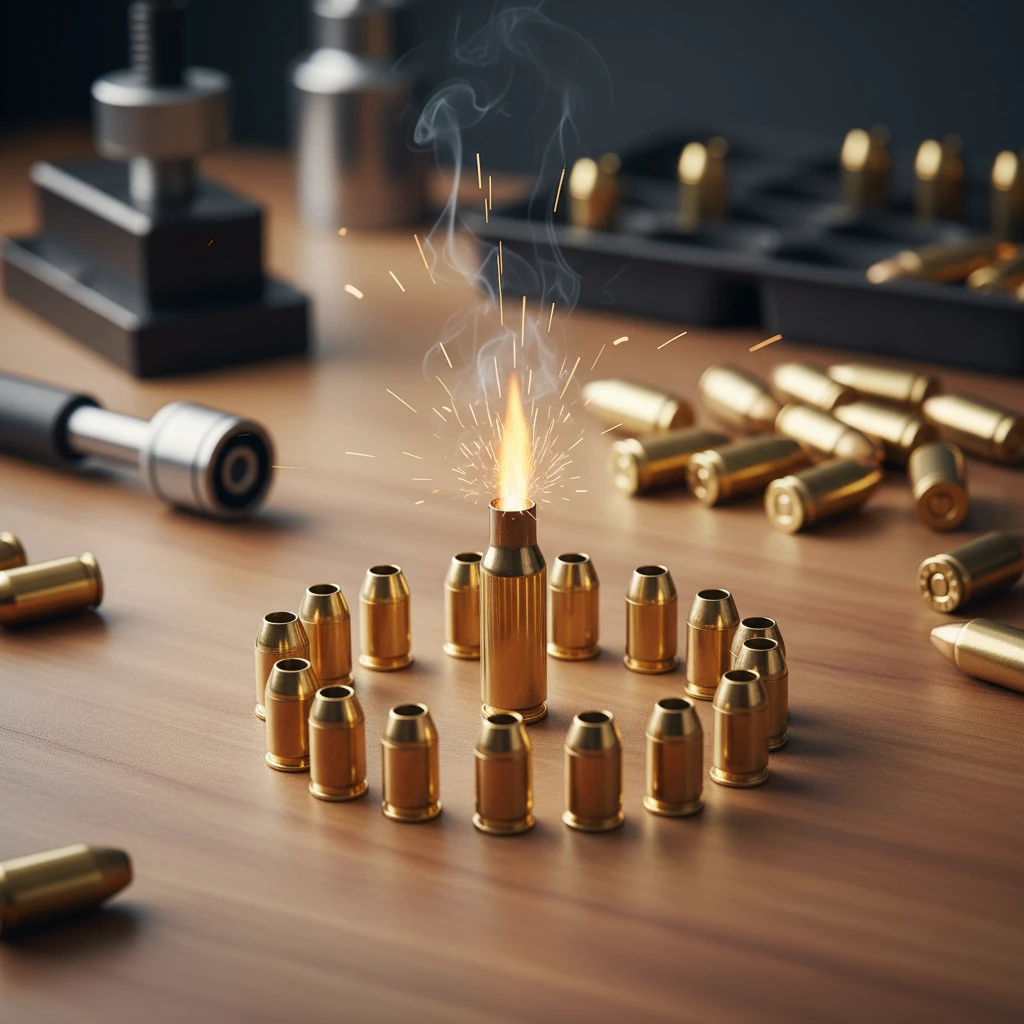
Primers: Igniting Reloading Success Every Time
In the intricate world of ammunition reloading, the primer often plays the role of the unsung hero. While attention frequently focuses on the projectile or the smokeless gun powder charge, the primer is the catalyst that ignites the entire process. Its consistent and reliable function is paramount to achieving accurate, safe, and effective reloaded cartridges.
Without a properly functioning primer, even the most meticulously assembled round will fail to fire. This can range from a minor inconvenience at the range to a critical failure in a hunting or self-defense scenario. Understanding the nuances of primers is therefore not just about component selection; it’s about ensuring the fundamental success of every reload you undertake. For those seeking to elevate their reloading game, mastering primer selection and handling is an essential step.
The Unsung Hero of the Reloading Bench: Why Primers Matter Most
The primer is a small, yet potent component that initiates the firing sequence of a cartridge. Its primary function is to deliver a sharp, controlled impact to a sensitive chemical compound, which in turn creates a flame. This flame then ignites the main propellant charge – the smokeless gun powder – within the cartridge case. The rapid burning of this powder generates expanding gases that propel the bullet down the barrel. The effectiveness of this entire chain reaction hinges on the primer’s ability to perform its role flawlessly.
A primer’s design is critical to its performance. It consists of a small metal cup containing an anvil and a shock-sensitive priming mixture. When struck by the firing pin, the cup is momentarily deformed, crushing the mixture against the anvil. This friction and impact generate heat and a small flame that escapes through a flash hole in the cartridge case, igniting the powder. The sensitivity, output, and consistency of this ignition are all influenced by the primer’s chemical composition and construction.
The consequence of primer failure can be severe. A “dud” or misfire leaves you with an inert round, potentially at a critical moment. Beyond misfires, incorrect primer selection can lead to other issues. For instance, using a primer with too much power could potentially over-pressure a load, especially in cartridges with less forgiving powder capacities. Conversely, a primer that is too weak might not fully ignite the powder charge, leading to erratic velocities and poor accuracy. Therefore, understanding the critical role of primers is the first step towards successful reloading, ensuring reliability for your handgun ammo and rifle ammo alike.
Proper handling and storage of primers are also crucial. They are sensitive to moisture, extreme temperatures, and static electricity. Exposure to any of these can degrade their performance or, in rare cases, cause accidental ignition. Always store them in their original packaging, in a cool, dry place, away from direct sunlight and sources of heat or sparks. When handling, avoid dropping them or subjecting them to unnecessary shock. This meticulous care ensures that when the time comes, your primers will deliver the consistent ignition you depend on for accurate shooting.
Understanding Primer Types: Small Pistol, Large Pistol, and Beyond
The world of reloading is segmented by cartridge types, and primers are similarly categorized to match these needs. The most common distinctions are based on the intended firearm and caliber, broadly falling into pistol and rifle categories. Within these, further divisions exist based on the physical size of the primer pocket designed into the cartridge case. This standardization ensures that the correct primer is used for optimal performance and safety. Understanding these fundamental types is crucial for anyone embarking on reloading various calibers of handgun ammo or rifle ammo.
Pistol primers are generally divided into two main sizes: small pistol primers and large pistol primers. Small pistol primers are used in many popular handgun calibers such as 9mm Luger, .38 Special, .40 S&W, and .45 ACP. Large pistol primers, as the name suggests, are for larger diameter primer pockets found in cartridges like .44 Magnum, .45 Colt, and .357 Magnum. The primary difference, beyond physical dimensions, is often the amount and type of priming compound used, tailored to efficiently ignite the typical powder charges found in these respective handgun rounds. Choosing the wrong size will prevent the primer from seating correctly, leading to a failed ignition or a dangerous malfunction.
Beyond pistol calibers, rifle primers also come in both small and large sizes, often designated as small rifle primers and large rifle primers. These are typically used in rifle cartridges, with small rifle primers found in calibers like .223 Remington and .22-250 Remington, while large rifle primers are common in cartridges such as .308 Winchester, .30-06 Springfield, and .300 Winchester Magnum. Rifle cartridges generally use larger powder charges than handgun cartridges, and rifle primers are designed with a slightly hotter or more sustained flame to ensure complete and consistent ignition of these bulkier propellant charges. This is vital for achieving the consistent burn rates necessary for accurate rifle ammo performance. For a deeper understanding of how powder burn rates influence your reloads, consider exploring insights on smokeless gun powder burn rates.
There are also specialized primer types designed for specific applications. Magnum primers, available in both pistol and rifle configurations (e.g., magnum pistol primers, magnum rifle primers), contain a hotter-burning compound designed to ensure reliable ignition of the larger powder charges common in magnum cartridges. Similarly, shotshell primers are a distinct category entirely, engineered for the unique needs of shotshells and are not interchangeable with firearm primers. This careful categorization ensures that reloaders can select the exact component needed for the intended cartridge, promoting safety and optimal performance in all types of ammunition.
Bridging the Gap: Boxer vs. Berdan Primers for Your Reloading Projects
When delving into reloading, you’ll inevitably encounter two distinct primer designs: Boxer and Berdan. While both serve the fundamental purpose of igniting gunpowder, their internal construction and case compatibility differ significantly, impacting how you approach spent primer removal and the overall reloading process. Understanding this distinction is critical for sourcing the correct components and ensuring successful reloads, particularly for rifle ammo and certain handgun ammo.
Boxer primers are the most common type found in ammunition manufactured in the United States and are prevalent in most North American reloading components. They feature a cup that contains a priming compound and a separate anvil that is integrated into the primer itself. This design means the anvil is a permanent part of the primer. When the cartridge is fired, the Boxer primer is ejected from the case entirely, and the anvil comes with it. This makes spent primer removal straightforward: they are simply pushed out from the inside of the cartridge case using a tool, often integrated into reloading presses or available as separate hand tools. This ease of removal is a major reason for their popularity among reloaders.
Berdan primers, on the other hand, are more common in European ammunition and some military surplus. Their design is different: the primer cup itself does not contain an anvil. Instead, the cartridge case has two small holes and a built-in anvil formed within the case’s primer pocket. When a Berdan primer is fired, it is ejected, but the anvil remains seated in the case. Removing spent Berdan primers typically requires pushing them out from the inside with a tool that engages the edges of the primer pocket, or by using specialized decapping tools designed for Berdan cases. This process can be more challenging and labor-intensive compared to Boxer primers, and some reloaders find it impractical for high-volume work.
The choice between Boxer and Berdan primers primarily depends on the ammunition you are reloading. Most modern reloading manuals and components are geared towards Boxer-primed cases. If you acquire spent cases that are Berdan-primed, you must ensure you can find Berdan primers of the correct size (small or large) to reload them. Trying to use Boxer primers in a Berdan-primed case, or vice-versa, is not possible. The availability of Berdan primers can also be more limited compared to Boxer primers, especially in the North American market. For those focused on consistent and efficient reloading, sticking with Boxer-primed cases is often the more practical choice. If you’re interested in the smokeless gun powder side of things, understanding its role in ignition is also key; explore smokeless gun powder to unlock reloading performance.
Choosing the Right Primer for Your Handgun Ammo and Rifle Ammo Loads
Selecting the correct primer is a non-negotiable step in the reloading process, directly impacting the safety, reliability, and accuracy of your finished ammunition. The decision hinges on several factors, primarily the type of firearm and cartridge you are loading, and the specific performance characteristics you aim to achieve. For both handgun ammo and rifle ammo, using the manufacturer’s recommendations and understanding primer designations is paramount. Reference reloading manuals or manufacturer data for specific caliber requirements.
For handgun cartridges, the first decision is between small pistol primers and large pistol primers, dictated by the primer pocket diameter of the specific cartridge case. Once the size is determined, consider the potential need for magnum primers. If you are loading a magnum handgun cartridge (e.g., .357 Magnum, .44 Magnum) or a standard cartridge with a heavy charge of slow-burning powder, a magnum pistol primer might be recommended. Magnum primers provide a slightly hotter and longer-lasting flame to ensure complete ignition of these larger or slower-burning powder charges, preventing hangfires or incomplete burns that can degrade accuracy. For less demanding handgun loads, standard pistol primers are perfectly adequate and generally more economical.
When reloading rifle ammo, the considerations become even more critical due to the higher pressures and larger powder volumes involved. You’ll need to choose between small rifle primers and large rifle primers based on your cartridge case. Similar to handguns, magnum rifle cartridges or those loaded with maximum charges of slow-burning powders often benefit from magnum rifle primers. These are designed to reliably ignite substantial propellant charges, crucial for achieving consistent velocities and maintaining accuracy at longer ranges. It’s also important to note that some high-performance, or “match-grade,” rifle cartridges might specify a particular primer type for optimal ignition consistency.
Beyond size and power, certain specialized primers exist for specific needs. For example, #209 shotshell primers are used exclusively for shotshell reloading and are not interchangeable with firearm primers. Some reloaders also opt for non-corrosive primers, which use modern chemical compounds that do not leave corrosive residues in the bore of the firearm, simplifying cleaning. For those experimenting with different powder types, exploring resources on smokeless gun powder selection can further enhance your reloading knowledge. Always consult authoritative reloading data, such as that provided by powder manufacturers or reputable reloading manuals, to ensure you are selecting the correct primer for your specific load and firearm. This attention to detail is key to successful reloading primers and consistent results.
The Role of Primers in Achieving Consistent Accuracy with Smokeless Gun Powder
The primer, though small, is the heartbeat of ignition for any cartridge. Its primary function is to initiate the combustion of smokeless gun powder, a process critical for consistent accuracy. When the firing pin strikes the primer, it crushes a sensitive, explosive compound, generating a flame that ignites the main powder charge. The timing and completeness of this ignition directly influence the pressure curve within the firearm’s chamber, which in turn affects bullet velocity and stability. A consistent primer ignition ensures that each shot behaves predictably, minimizing variations that can lead to flyers or poor groups on paper. This is particularly vital for disciplines where precision is paramount, such as competitive shooting or long-range hunting.
Different types of primers are designed to meet specific needs. Small rifle primers and large rifle primers are used in rifle cartridges, with the size correlating to the amount of powder the cartridge typically holds. Similarly, small pistol primers and large pistol primers are standard for handgun ammunition. However, the consistency of ignition also depends on factors beyond just the primer’s size and type. The primer’s depth of seating, the integrity of the primer pocket, and the primer’s overall quality play significant roles. A primer seated too high can prevent the bolt from closing fully, while one seated too deep might result in slam-fire issues or delayed ignition. Ensuring proper primer seating is a fundamental step in reloading, directly impacting safety and accuracy.
For those reloading for accuracy-dependent firearm types like precision bolt-action rifles or competition handguns, understanding primer performance is key. Federal Gold Medal Match primers, for example, are widely regarded for their consistency and sensitivity, contributing to a uniform burn rate and reduced extreme spreads in velocity. Conversely, using the wrong primer type or a low-quality primer can introduce unwanted variables. For instance, using a small pistol primer in a cartridge designed for a large pistol primer will likely result in incomplete ignition and drastically reduced performance. Always consult reliable reloading data, such as that provided by powder manufacturers or reputable reloading manuals, to select the correct primer for your specific cartridge and intended use. Exploring the nuances of primer selection is a vital aspect of optimizing any reloaded ammunition for peak performance, complementing the careful selection of smokeless gun powder.
Beyond the Basics: Exploring Magnum Primers and Their Applications
While standard primers are sufficient for many applications, certain cartridges and intended uses demand more energetic ignition. This is where magnum primers come into play. Magnum primers contain a more potent priming compound and are designed to produce a larger, hotter flame compared to their standard counterparts. This increased ignition power is particularly beneficial when working with large-capacity rifle cartridges or those loaded with slower-burning smokeless gun powder, which require a more substantial initial push to ignite effectively and consistently. Examples include cartridges like the .300 Winchester Magnum, .338 Lapua Magnum, or heavy magnum handgun rounds.
The decision to use a magnum primer is not arbitrary; it’s a calculated choice based on the specific propellant and cartridge combination. Using magnum primers in standard cartridges can sometimes lead to over-pressurization, especially if the powder charge is not adjusted accordingly. This is because the hotter, larger flame can cause the powder to burn much faster than intended, generating excessive pressure. Reloading data explicitly lists when magnum primers are recommended or required. For instance, when reloading for cartridges like the .30-06 Springfield or .308 Winchester with slower magnum-rate powders, a magnum primer might be specified to ensure complete and consistent ignition. It’s crucial to refer to the latest smokeless gun powder burn rate charts and load data to make informed decisions.
The application of magnum primers extends beyond just large rifle cartridges. In the handgun realm, certain powerful loads, especially those using slower-burning powders in large-volume cases, may also benefit from magnum pistol primers. For example, reloading .44 Magnum or .357 Magnum cartridges with certain powder types might call for magnum pistol primers to achieve optimal performance and ignition consistency. Failure to use the correct primer type can result in ignition problems, poor accuracy, and potentially dangerous pressure excursions. Always adhere to the expert recommendations found in reputable reloading manuals and online resources when choosing between standard and magnum primers for your rifle ammo or handgun ammo projects.
Handling and Storage: Keeping Your Primers Safe and Functional
Primers are highly sensitive energetic materials, and their safe handling and proper storage are paramount to prevent accidental ignition and ensure their longevity. Never store primers in extreme temperatures or in direct sunlight, as heat can degrade the priming compound, rendering them less reliable or even inert over time. A cool, dry environment is ideal. Many reloaders store their primers in their original packaging, which is designed for safety and protection. Avoid placing primers in metal containers that could create static electricity, which can be a significant ignition hazard. Instead, use the plastic trays they come in, or store them in their original cardboard boxes.
When handling primers, it’s essential to minimize shock and friction. Avoid dropping primers or allowing them to slide against hard surfaces. The friction generated can be enough to cause ignition. Many reloaders use primer tools that gently pick up and seat primers one at a time, reducing the risk of accidental discharge. It is also advisable to handle primers in a well-ventilated area. While modern primers are designed with safety features, complacency can lead to accidents. A common safety practice is to keep only a small quantity of primers on your workbench while reloading, with the bulk stored securely elsewhere. This minimizes the potential consequences of an accidental ignition.
The functional lifespan of primers is also dependent on their storage conditions. Exposure to moisture is particularly detrimental. Corrosion of the primer cup can occur, which can impede reliable ignition or lead to hangfires. Ensure that your storage area is not humid, and if you live in a damp climate, consider using desiccant packs within your primer storage containers. Always inspect primers for any signs of corrosion, damage, or degradation before use. Proper storage not only enhances safety but also ensures that your investment in these critical reloading components yields consistent results for your reloading primers and ammunition.
Common Primer Ignition Issues and How to Troubleshoot Them
Primer ignition problems are among the most frustrating issues a reloader can encounter, directly impacting firearm function and safety. The most common culprits include failure to fire (a dud primer) or hangfires (a significant delay between trigger pull and ignition). A failure to fire can stem from several sources: a faulty primer itself, insufficient firing pin energy, or a primer that wasn’t seated deep enough. If you experience a dud, safely remove the round, inspect the primer to see if it was struck, and if so, consider if your firing pin is making adequate contact. If multiple duds occur, it might indicate a batch issue with the primers or a problem with your firearm’s ignition system.
Hangfires are particularly dangerous as they can cause shooters to flinch or move the firearm after the expected discharge, leading to unpredictable results. A hangfire often points to a weak or delayed ignition of the primer compound. This can be caused by old, degraded primers, improper storage that has led to moisture contamination, or sometimes, an incorrect primer seating depth where the primer isn’t fully supported by the primer pocket or the bolt face. If you suspect a hangfire, never immediately eject the round. Wait for a prolonged period (e.g., 30 seconds or more) before safely clearing the firearm. If hangfires persist, it’s a strong indication that the primers or the propellant may be compromised, and a thorough review of your components and process is necessary.
Another critical issue to address is slam-fire, where the round fires the instant the bolt is closed, often without the trigger being pulled. This is usually a result of excessive firing pin protrusion combined with insufficient headspace or a primer seated too high. For bolt-action firearms, ensuring the firing pin doesn’t protrude too far past the bolt face when in battery is key. For semi-automatic firearms, the bolt design and firing pin spring play a crucial role. Always verify your handgun ammo reloading or rifle ammo reloading procedures against published data and safe practices. If you encounter any of these ignition issues, it’s wise to pause your reloading session, re-evaluate your technique, inspect your components, and consult authoritative reloading resources like those from Hodgdon or Lyman. Troubleshooting primer ignition problems often requires a systematic approach to pinpoint the root cause and restore confidence in your reloaded ammunition.
Optimizing Primer Seating for Reliable Ignition Every Time
Achieving consistent and reliable ignition is paramount for successful reloading, and the seating depth of your primers plays a critical role. Improper seating can lead to a host of issues, from misfires to dangerous over-pressures. The goal is to seat the primer so that its face is flush with the bottom of the primer pocket, or very slightly below, depending on the firearm and cartridge specifications. Over-seating a primer can crush the anvil within the primer, preventing it from striking effectively when the firing pin hits. Conversely, under-seating leaves the primer protruding, which can cause the cartridge to fail to chamber properly or, in semi-automatic firearms, result in the bolt not closing fully. This can also lead to slam-fire events in certain rifle actions if the bolt closing mechanism forces the primer to detonate.
Several factors influence proper primer seating. The precise dimensions of the primer pocket in your cartridge case are fundamental. Variations between case manufacturers, and even between batches of the same manufacturer, can exist. Similarly, primers themselves vary slightly in their dimensions. It is crucial to use a reliable priming tool, whether it’s a hand primer, a press-mounted primer, or a case-feed priming system. These tools provide consistent pressure and allow for tactile feedback. A good rule of thumb is to feel for a slight “dimple” or a subtle click as the primer fully seats. Always consult your reloading manual for specific cartridge recommendations regarding primer seating depth, as it can vary based on the propellant and intended use of the ammunition. For example, some high-performance loads may specify a slightly deeper seat to prevent detonation from inertia when the bolt closes rapidly.
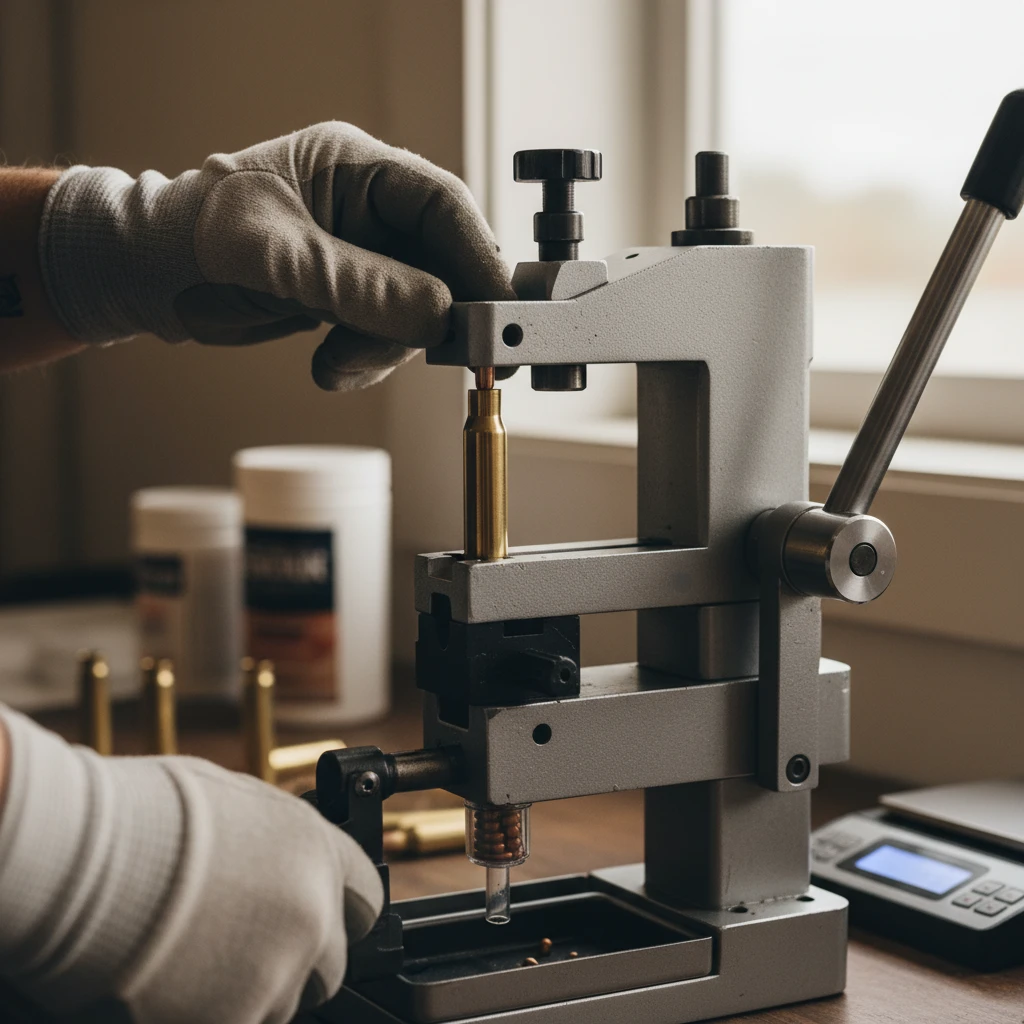
Common pitfalls to avoid include rushing the process and relying solely on visual cues. While flush is generally the target, subtle under-seating can be harder to detect visually. The tactile feel is often a better indicator for experienced reloaders. Another mistake is using excessive force, which can deform the primer or even cause it to detonate prematurely – a dangerous situation. Ensure your priming tool is properly adjusted and that you are using the correct primer type (small pistol, large pistol, small rifle, large rifle, magnum variants) for your specific load. Using the wrong size primer can lead to both poor ignition and safety hazards. Understanding the intricacies of reloading primers is a cornerstone of safe and effective ammunition creation.
To implement best practices, begin by inspecting your primer pockets for debris or damage, which can interfere with seating. Practice with inert primers or once-fired brass to develop a feel for the correct seating depth. When reloading for specific firearms, especially bolt-action rifles, it’s wise to chamber a few rounds and check if the bolt closes smoothly and without excessive resistance. If you encounter resistance, a primer might be under-seated. For semi-automatic firearms, a primer that is too proud can prevent the bolt from locking, leading to cycling issues. When in doubt, err on the side of seating slightly deeper rather than shallower, within the safe parameters outlined by your reloading data. This proactive approach to primer seating significantly enhances the reliability of your reloaded ammunition, whether it’s for handgun ammo or rifle applications.
The Impact of Primer Choice on Shotgun Ammo Performance
For shotgun enthusiasts, particularly those involved in clay sports like trap and skeet, or hunters pursuing waterfowl, the choice of primer is far from trivial. Primers are the initial spark that ignites the propellant, and their type directly influences the velocity and consistency of your shotshell loads. Shotgun primers are generally larger and designed to deliver a more substantial flame and longer burn duration compared to their handgun or rifle counterparts. This is necessary to ignite the larger volumes of slower-burning smokeless gun powder typically used in shotshells. Mismatched primers can lead to inconsistent pellet velocity, wide shot patterns, and, in extreme cases, incomplete propellant burn, resulting in a “pop” instead of a report and potentially leaving unburnt powder in the bore.
Shotgun primers come in several categories, primarily distinct by their intended use and power. Standard primers are suitable for most general-purpose loads, offering reliable ignition for typical target loads and field ammunition. Magnum primers, conversely, are designed for use with heavier charges of slower-burning powders or in larger capacity shotshells, providing a hotter, more sustained flame. Using magnum primers in standard loads is generally not recommended, as it can lead to dangerously high pressures. Conversely, using standard primers in magnum loads might result in ignition issues and a significant loss of performance. Shotgun ammo reloading for specific disciplines demands careful attention to these details to ensure optimal performance and safety.
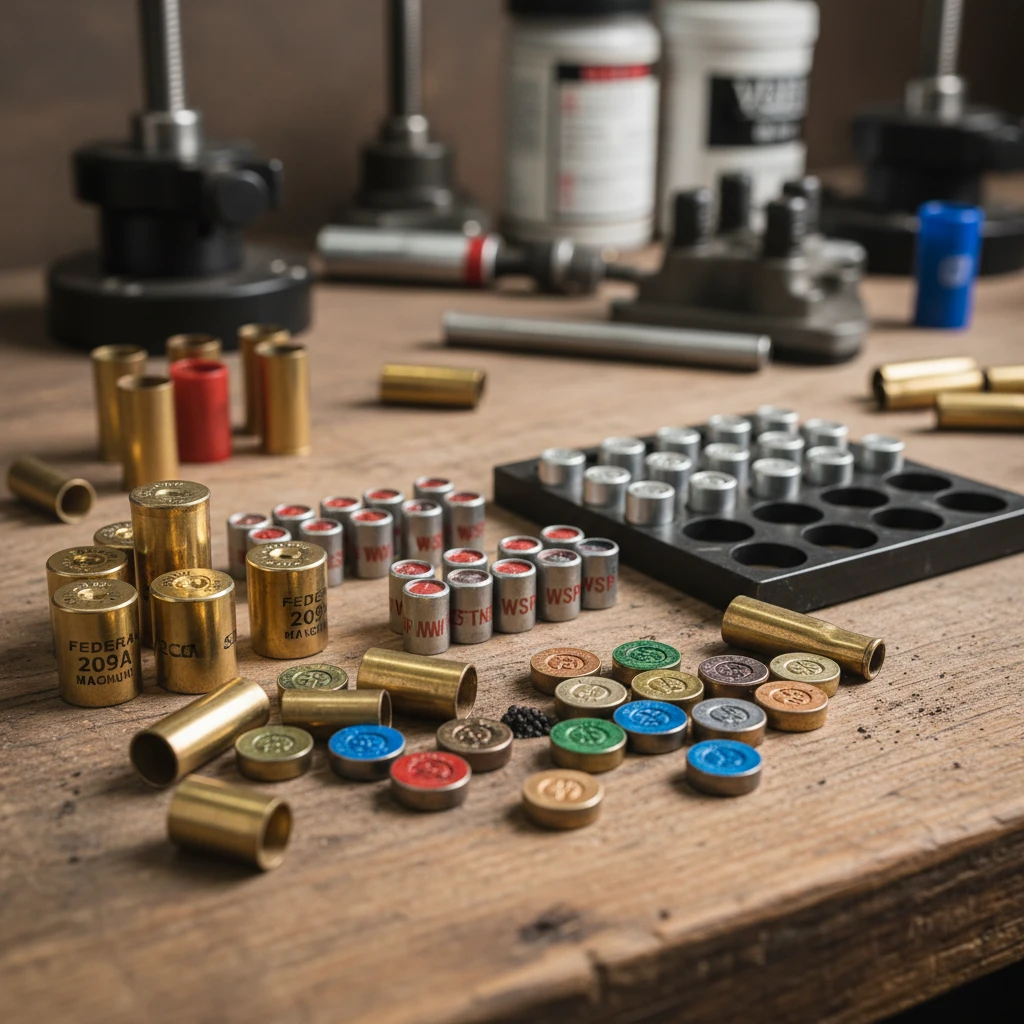
The decision to use a standard or magnum primer often hinges on the specific propellant and the target velocity you aim to achieve. Reloading data is essential here; always follow published load recipes precisely. When developing your own loads or deviating from standard recipes, careful consideration of the primer’s output is necessary. For instance, if you are experimenting with a heavily compressed load or a particularly slow-burning propellant, a magnum primer might be required to ensure complete and timely ignition. Conversely, if your load data specifies a standard primer and a particular powder, using a magnum primer could increase pressure beyond safe limits, impacting the integrity of your firearm and potentially causing injury. This is a critical safety consideration when working with any component, including smokeless gun powder.
For those involved in competitive shooting or demanding hunting scenarios, consistency is key. Using the same brand and type of primer across all your reloaded ammunition ensures uniformity in ignition characteristics. This predictability is vital for achieving consistent shot-to-shot performance and tight patterns. Many experienced reloaders will perform extensive testing to validate their chosen primer’s impact on their specific loads and firearms. The goal is always to achieve a clean, complete burn that propels the shot column with optimal velocity and pattern density. If you are looking to fine-tune your shotshell loads, understanding the nuances of primer selection is a significant step toward success.
Where to Find Quality Primers for Your Reloading Needs in Canada and the USA
Sourcing high-quality reloading components, especially critical items like primers, is essential for any reloader, whether you’re in Canada or the United States. The availability and selection of primers can vary, but reputable dealers often maintain robust inventories of popular brands and types. When searching for quality primers, look for established manufacturers known for their consistency and reliability. Brands such as Federal, Remington, Winchester, CCI, and Sellier & Bellot are widely recognized for producing dependable primers that perform consistently across various calibers and reloading applications. These brands are often the benchmark against which others are measured.
When purchasing primers, especially in bulk, consider the regulations in your specific region. While primers themselves are not typically classified as explosives in the same way as smokeless gunpowder, they are still sensitive components and subject to shipping and handling regulations. Online retailers specializing in ammunition and reloading supplies, like Northern Reloading, are excellent resources. They often have a comprehensive selection of primers for handgun ammo, rifle, and shotshell reloading, catering to the diverse needs of shooters across North America. These dealers understand the shipping requirements and ensure that products are delivered safely and legally to your door. Many also offer competitive pricing and detailed product descriptions, aiding your decision-making process.
Factors to consider when choosing a supplier include shipping costs, return policies, and customer service. For reloaders in Canada and the USA, finding a vendor that efficiently serves both markets can simplify procurement. Northern Reloading is a prime example of such a retailer, dedicated to providing a wide range of reloading primers and other essential supplies to enthusiasts across both countries. Their commitment to stocking reputable brands ensures that you can find the specific primers needed for your projects, whether you’re loading for common hunting calibers, precision rifle ammo, or competitive pistol rounds. They also often carry a variety of smokeless gun powder to complement your primer choices.
Beyond established brands, paying attention to reviews and asking for recommendations within shooting communities can also guide your purchase. Many shooters share their experiences with different primer brands and suppliers, providing valuable insights. However, always prioritize purchasing from legitimate and well-regarded vendors to avoid counterfeit or substandard products. For those looking to consolidate their purchases and ensure a reliable supply chain for their reloading endeavors, exploring comprehensive online stores is often the most practical approach. This ensures you have access to the necessary components to keep your ammunition projects moving forward safely and effectively.


About author


Add comment