

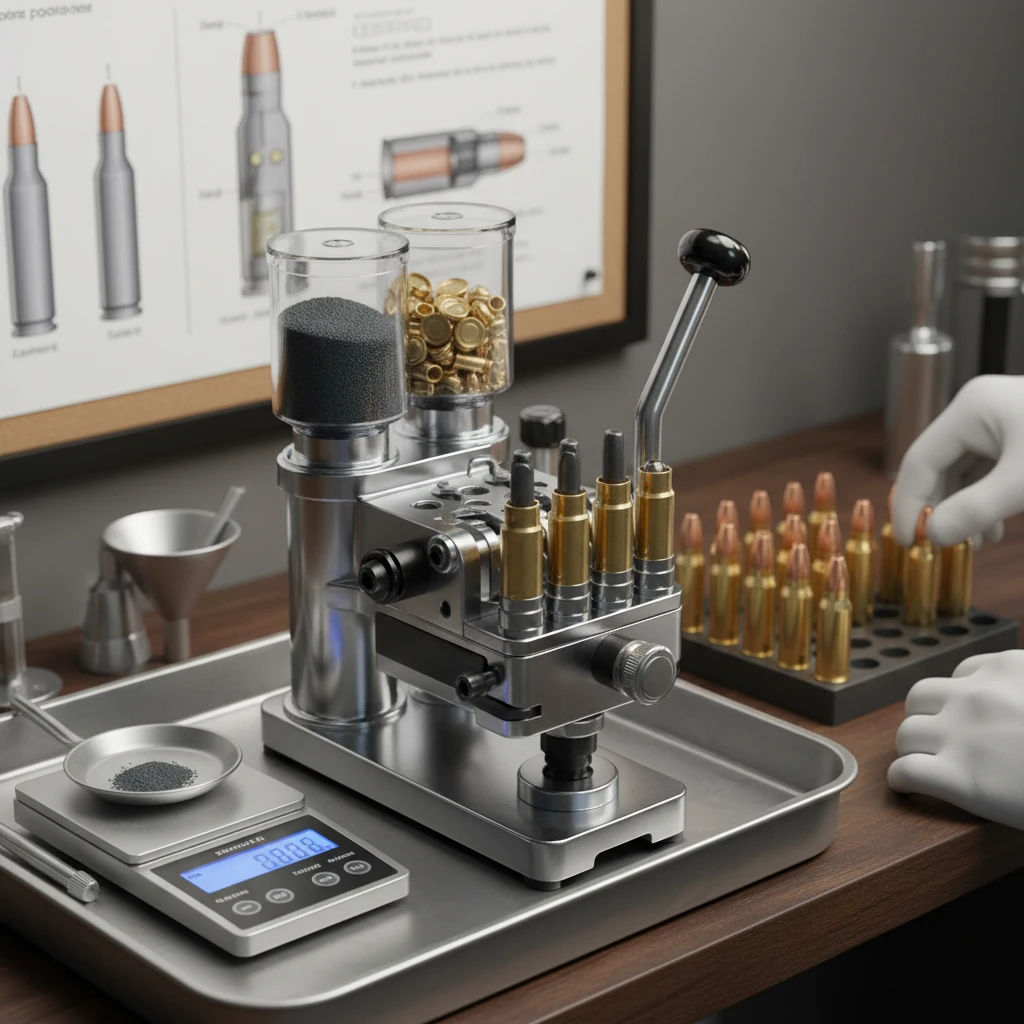
Smokeless Gun Powder: Advanced Reloading Techniques
Stepping beyond the basics of smokeless gun powder reloading opens up a world of possibilities for achieving superior accuracy, consistency, and customized performance in your ammunition. Understanding the nuances of powder selection, precision measurement, and primer handling allows reloaders to fine-tune their rounds for specific firearms and shooting applications. This journey into advanced techniques requires a deeper understanding of the factors that influence ballistic performance and the meticulous application of proven methods.
Whether you are a competitive shooter aiming for tighter groupings, a hunter seeking optimal terminal ballistics, or simply an enthusiast passionate about maximizing the potential of your firearms, mastering advanced reloading techniques will significantly enhance your shooting experience. Let’s delve into the key aspects of advanced smokeless gun powder reloading in 2026, providing actionable insights and practical guidance to elevate your skills.
Unlocking Peak Performance: Moving Beyond Beginner Smokeless Gun Powder Reloading (2026)
Why Advance Your Reloading Skills?
Advancing your reloading skills offers several significant benefits. First, it enables you to tailor ammunition performance to specific firearms and applications. Factory ammunition is designed to function reliably in a wide range of guns, often sacrificing peak performance for broader compatibility. Reloading allows you to optimize for your specific barrel length, chamber dimensions, and intended use. Secondly, advanced reloading techniques can improve accuracy and consistency, critical for competitive shooting and hunting. Reduced velocity spreads, consistent bullet seating depths, and optimized powder charges translate to tighter groupings and more predictable trajectories. Finally, understanding the advanced aspects of reloading provides a deeper understanding of internal ballistics and firearm mechanics, enhancing your overall knowledge and enjoyment of shooting sports. Learning advanced reloading can be a path to better accuracy.
Understanding Performance Metrics: Velocity, Accuracy, and Pressure
The three primary metrics for evaluating ammunition performance are velocity, accuracy, and pressure. Velocity, measured in feet per second (fps), directly affects the bullet’s trajectory, energy, and time of flight. Higher velocities generally result in flatter trajectories and greater terminal energy, but they also increase pressure. Accuracy refers to the consistency of bullet impact points, typically measured in minutes of angle (MOA). A smaller MOA indicates tighter groupings and better accuracy. Pressure, measured in pounds per square inch (PSI), indicates the force exerted within the cartridge during firing. Exceeding maximum pressure limits can damage your firearm and pose a safety hazard. Understanding the interplay between these metrics is crucial for optimizing your reloads. Increasing powder charges typically increases velocity and pressure, but beyond a certain point, the accuracy may decrease due to increased recoil or bullet instability. You might find more info in this reloading data guide.
The Role of Smokeless Gun Powder in Achieving Optimal Results
Smokeless gun powder is the engine that drives ammunition performance. The type, amount, and burn rate of the powder directly influence velocity, pressure, and accuracy. Different powders are formulated to produce different pressure curves, which affect the acceleration of the bullet down the barrel. A powder with a faster burn rate generates higher pressures early in the firing sequence, while a slower-burning powder produces a more gradual pressure increase. Matching the powder to the cartridge, bullet weight, and barrel length is essential for achieving optimal results. For example, a fast-burning powder might be suitable for short-barreled handguns, while a slow-burning powder is often preferred for long-barreled rifles. The careful selection and precise measurement of smokeless gun powder are fundamental to advanced reloading.
Advanced Powder Selection: Choosing the Right Smokeless Gun Powder for Specific Applications
Analyzing Burn Rate Charts and Data
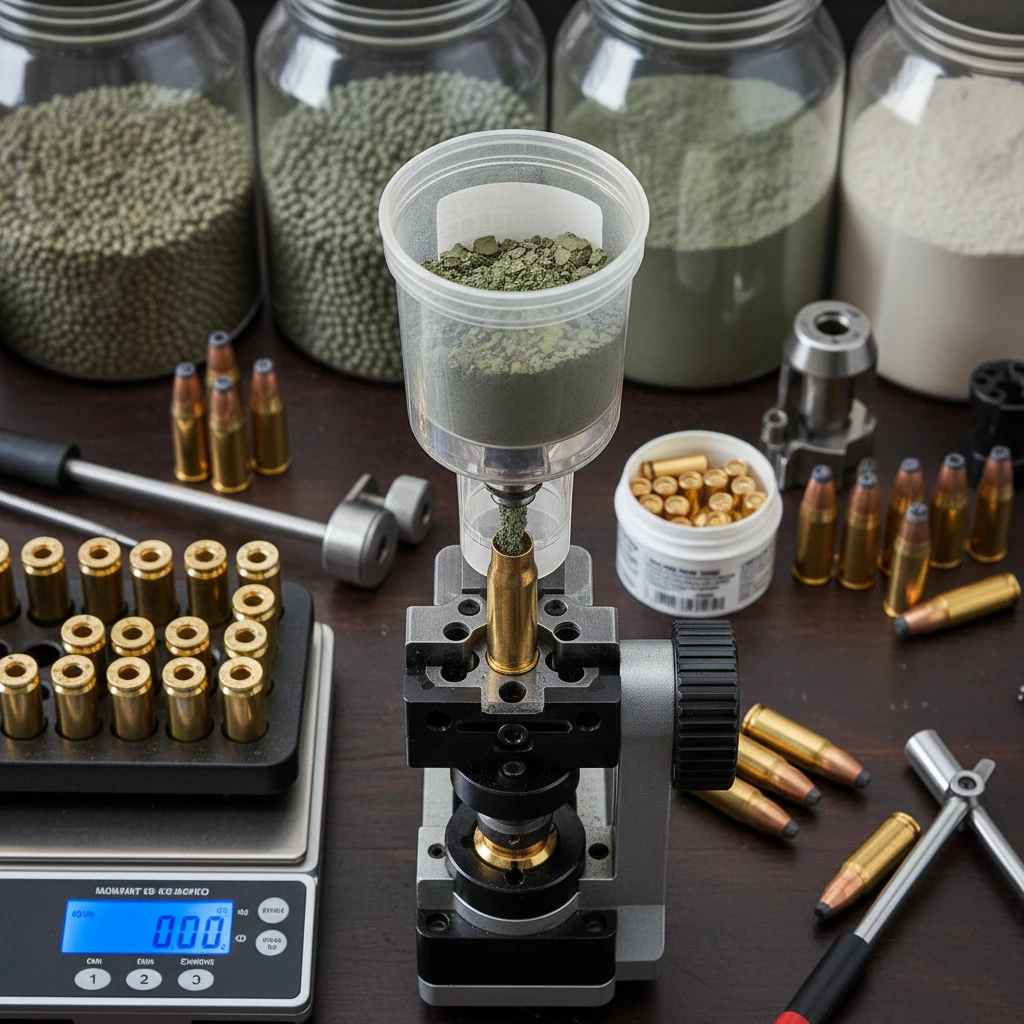
Burn rate charts provide a relative comparison of different smokeless gun powders. These charts typically rank powders from fastest to slowest burning. However, it’s crucial to understand that burn rate charts are only a starting point. The actual performance of a powder can vary depending on the specific cartridge, bullet weight, and firearm. Reloading manuals and online resources often provide detailed reloading data, including recommended powder charges, velocities, and pressures for various combinations of components. Analyzing this data is essential for selecting the appropriate powder and developing safe and accurate loads. Always start with the recommended starting load and gradually increase the charge weight, while carefully monitoring for signs of excessive pressure, such as flattened primers or stiff bolt lift.
Matching Powder to Caliber and Bullet Weight
Matching the powder to the caliber and bullet weight is paramount for achieving optimal performance. Lighter bullets generally require faster-burning powders, while heavier bullets typically perform better with slower-burning powders. This is because heavier bullets require more sustained pressure to achieve their optimal velocity. Using a powder that is too fast for a heavy bullet can result in incomplete combustion and poor performance, while using a powder that is too slow for a light bullet can generate excessive pressure. For example, a .223 Remington cartridge with a 55-grain bullet might perform well with a medium-burning powder like Hodgdon Varget, while a .308 Winchester cartridge with a 175-grain bullet might require a slower-burning powder like IMR 4350. Reloading manuals provide specific recommendations for powder selection based on caliber and bullet weight.
Considerations for Handgun Ammo, Rifle Ammo, and Shotgun Ammo Reloading
The considerations for powder selection differ depending on whether you are reloading handgun ammo, rifle ammo, or shotgun ammo. Handgun ammo typically requires faster-burning powders due to the shorter barrel lengths. Consistent powder charges are crucial for achieving consistent velocities and accuracy in handguns. Rifle ammo offers a wider range of powder choices, depending on the cartridge and bullet weight. Slower-burning powders are often preferred for maximizing velocity in rifles. Shotgun ammo reloading involves different types of powders specifically designed for shotgun shells. These powders are formulated to produce consistent patterns and reliable cycling. Each type requires specialized loading equipment and techniques. The smokeless gun powder guide could be helpful for selecting the right one.
Navigating the Various Types of Smokeless Gun Powder: Single-Base, Double-Base, and Triple-Base
Smokeless gun powders are classified into three main types: single-base, double-base, and triple-base. Single-base powders consist primarily of nitrocellulose. They are generally considered to be more temperature-stable and produce less fouling. Double-base powders contain both nitrocellulose and nitroglycerin. They typically produce higher velocities than single-base powders but can be more sensitive to temperature changes. Triple-base powders contain nitrocellulose, nitroglycerin, and nitroguanidine. They are primarily used in military applications due to their high energy and reduced muzzle flash. Understanding the differences between these types of powders is essential for making informed decisions about powder selection. Single-base powders are often preferred for target shooting due to their consistency, while double-base powders may be chosen for hunting applications where maximum velocity is desired. Always consult reloading manuals for specific recommendations on powder types and charges.
Precision Measurement Techniques: Dispensing Smokeless Gun Powder with Extreme Accuracy
The Importance of Consistent Powder Charges
Consistent powder charges are paramount for achieving consistent velocities and accuracy. Even small variations in powder charge can significantly affect bullet trajectory and point of impact. For example, a variation of just 0.1 grain in a .223 Remington load can cause a noticeable shift in the bullet’s point of impact at 100 yards. Consistency is especially important for competitive shooting, where even slight variations can mean the difference between winning and losing. Therefore, it is crucial to employ precise measurement techniques to ensure that each cartridge receives the same powder charge. This involves using high-quality powder measures, calibrating your equipment regularly, and paying attention to detail throughout the reloading process.
Techniques for Manual Powder Trickling: Tools and Best Practices
Manual powder trickling is a technique used to precisely adjust powder charges to the desired weight. This involves using a small tool called a powder trickler to add individual granules of powder to the pan until the exact weight is achieved. This is particularly useful when working with stick powders, which can be difficult to measure accurately with a powder measure. Best practices for manual powder trickling include using a high-quality scale, calibrating the scale regularly, and trickling the powder slowly and carefully. It is also important to use a consistent technique for trickling the powder to avoid variations in weight. For example, always trickle the powder from the same height and at the same rate. A well-lit workspace and a steady hand are essential for accurate powder trickling.
Advanced Electronic Powder Dispensers: Calibration and Usage Tips
Electronic powder dispensers offer a convenient and accurate way to measure powder charges. These devices automatically dispense powder to a pre-set weight, eliminating the need for manual trickling. However, it is crucial to calibrate electronic powder dispensers regularly to ensure accuracy. Calibration involves using a set of calibrated weights to verify that the dispenser is measuring accurately. Usage tips for electronic powder dispensers include using a static-free environment, allowing the dispenser to warm up before use, and cleaning the dispenser regularly. It is also important to use a consistent powder type and to avoid using the dispenser in areas with drafts or vibrations. Many electronic powder dispensers offer advanced features, such as automatic over-throw correction and multiple charge settings.
Dealing with Static Electricity and Powder Bridging
Static electricity and powder bridging can interfere with accurate powder dispensing. Static electricity can cause powder granules to cling to the dispensing equipment, leading to inconsistent charges. Powder bridging occurs when powder granules clump together, preventing the powder from flowing freely. To combat static electricity, use a grounding strap or anti-static spray on your equipment. You can also try wiping the equipment with a dryer sheet. To prevent powder bridging, use a powder baffle in your powder measure and agitate the powder regularly. You can also try using a powder with a finer grain size, which is less prone to bridging. Storing smokeless gun powder properly can help to prevent dangerous outcomes. See also: smokeless gun powder storage and safety tips.
Primer Selection and Seating: Mastering the Art of Primer Handling for Consistent Ignition
Understanding Primer Sensitivity and Its Impact on Performance
Primer sensitivity refers to the amount of force required to ignite the primer compound. Primers that are too sensitive can be prone to accidental ignition, while primers that are not sensitive enough may result in misfires. Primer sensitivity can also affect the consistency of ignition, which can impact velocity and accuracy. Generally, magnum primers are slightly less sensitive than standard primers, due to their larger charge of priming compound. The sensitivity of the primer also depends on the type of primer compound used. Some primer compounds are more sensitive to impact than others. Understanding primer sensitivity is crucial for selecting the appropriate primer for your firearm and reloading application. For example, some firearms may require more sensitive primers for reliable ignition.
Choosing the Right Primer Type: Small Rifle, Large Rifle, Small Pistol, Large Pistol
Primers are available in four main types: small rifle, large rifle, small pistol, and large pistol. Each type is designed for specific cartridges and firearms. Small rifle primers are typically used in cartridges with smaller case capacities, such as the .223 Remington and 9mm. Large rifle primers are used in cartridges with larger case capacities, such as the .308 Winchester and .30-06 Springfield. Small pistol primers are used in handgun cartridges, such as the 9mm and .38 Special. Large pistol primers are used in larger handgun cartridges, such as the .45 ACP and .44 Magnum. Selecting the correct primer type is essential for reliable ignition and safe operation. Using the wrong primer type can result in misfires, squibs, or even damage to your firearm. Always consult reloading manuals for specific recommendations on primer selection. If you’re still unsure, this guide to choosing the right primer might help you.
Techniques for Uniform Primer Seating Depth
Uniform primer seating depth is crucial for consistent ignition and accuracy. If primers are not seated to the same depth, the firing pin may strike the primer with varying force, resulting in inconsistent ignition. Ideally, primers should be seated slightly below the case head. This ensures that the primer is fully supported by the primer pocket and that the firing pin can reliably ignite the primer compound. Techniques for achieving uniform primer seating depth include using a high-quality priming tool, applying consistent pressure during seating, and inspecting each primer after seating. Some priming tools feature adjustable seating depth settings, allowing you to fine-tune the seating depth for your specific cartridges. It is important to avoid over-seating primers, as this can damage the primer compound and reduce sensitivity.
Troubleshooting Common Primer Seating Issues
Common primer seating issues include crushed primers, inverted primers, and primers that are not fully seated. Crushed primers are typically caused by excessive force during seating. Inverted primers occur when the primer is inserted into the primer pocket upside down. Primers that are not fully seated may protrude from the case head, causing feeding problems or misfires. To troubleshoot these issues, inspect your priming tool for any damage or misalignment. Ensure that you are using the correct primer size and type for your cartridges. Apply consistent pressure during seating and avoid using excessive force. If you continue to experience problems, consult a qualified gunsmith or reloading expert. Always prioritize safety and follow proper reloading procedures to prevent accidents. For example, you might try using a different priming tool.
A partner site discusses similar issues: problems can often have more than one potential cause, so be methodical in your troubleshooting.
Bullet Selection: Optimizing Bullet Choice for Your Smokeless Gun Powder and Firearm
Understanding Bullet Weight, Shape, and Construction
Bullet selection is a critical component of successful reloading. The weight of the bullet, typically measured in grains, significantly affects the pressure generated when firing. Heavier bullets generally require less powder to achieve the same velocity as lighter bullets, but they also generate higher pressures. Bullet shape, including round nose, flat nose, hollow point, and boat tail, influences aerodynamic performance and terminal ballistics. Construction materials also vary, with options like lead, copper-jacketed lead, solid copper, and even specialized alloys. These choices directly impact expansion, penetration, and overall performance on the target. For example, a lighter, faster bullet may be suitable for varmint hunting, while a heavier, slower bullet may be preferred for large game hunting where deep penetration is required. Understanding these fundamental aspects allows reloaders to tailor their ammunition to specific needs.
Matching Bullet Diameter to Your Firearm’s Bore
Ensuring the correct bullet diameter is paramount for safety and accuracy. A bullet that is too small will not engage the rifling properly, leading to poor accuracy and potential gas leakage, which can damage the firearm. Conversely, a bullet that is too large can cause excessive pressure, potentially leading to catastrophic failure of the firearm. The bore diameter is the measurement of the inside of the barrel from land to land. Consult your firearm’s manual or a reputable gunsmith to determine the correct bullet diameter for your specific firearm. For instance, a .308 Winchester typically uses a bullet diameter of .308 inches. Always verify this measurement before reloading to prevent damage or injury. Reloading manuals provide extensive data on bullet diameters and appropriate loads.
Considerations for Different Shooting Disciplines: Hunting, Target Shooting, and Plinking
The ideal bullet selection varies greatly depending on the intended shooting discipline. For hunting, bullet selection must consider the game being pursued and the ethical considerations of ensuring a clean kill. Expanding bullets, such as hollow points or soft points, are often preferred for hunting medium to large game because they deliver significant energy transfer and create a larger wound channel. Target shooting often emphasizes accuracy over terminal ballistics. Match-grade bullets with consistent weights and dimensions are crucial. For plinking, which focuses on recreational shooting, less expensive bullets, such as lead round nose or full metal jacket projectiles, are often adequate and more cost-effective. It is important to choose bullets that are appropriate for both the firearm and the intended use case. Consider visiting a sporting goods store and speaking with a professional to help guide your bullet choice if needed.
The Role of Ballistic Coefficient (BC) in Long-Range Accuracy
Ballistic Coefficient (BC) is a measure of a bullet’s ability to overcome air resistance in flight. A higher BC indicates a more streamlined bullet that will retain its velocity better and be less affected by wind drift. For long-range shooting, selecting bullets with a high BC is crucial for achieving consistent accuracy. Bullets with boat-tail designs and pointed tips generally have higher BCs than those with flat bases and round noses. Reloaders should consult ballistic tables or use ballistic calculators to determine the optimal bullet BC for their specific shooting conditions. For example, if shooting at targets beyond 500 yards, a bullet with a BC of 0.500 or higher would be preferred over a bullet with a BC of 0.300. A difference in BC can result in several inches of bullet drop downrange.
Case Preparation: Essential Steps for Ensuring Case Integrity and Reloading Success
The Importance of Case Cleaning and Annealing
Case preparation is a crucial step in the reloading process, directly impacting the safety and performance of your ammunition. Dirty cases can cause malfunctions and inconsistencies in powder ignition. Cleaning removes carbon fouling, dirt, and lubricants that can interfere with resizing and primer seating. Annealing, the process of heating the case neck to relieve stress from repeated resizing, is equally important. This prevents neck splits and ensures consistent neck tension, contributing to improved accuracy. Many reloaders use ultrasonic cleaners or tumbling media to clean their cases. Annealing can be performed using specialized annealing machines or by hand with a torch, but care must be taken to avoid overheating the case body, which can weaken the brass. Starting with properly cleaned and annealed cases sets the stage for a successful and safe reloading session.
Resizing Techniques: Full-Length vs. Neck Sizing
Resizing is a critical step in returning fired brass to its original dimensions, allowing it to chamber correctly in the firearm. Full-length resizing returns the entire case to factory specifications, ensuring reliable chambering in all firearms of that caliber. This is especially important for semi-automatic firearms and lever-action rifles where consistent chambering is crucial. Neck sizing, on the other hand, only resizes the neck of the case, which holds the bullet. Neck sizing can improve accuracy by maintaining a tighter fit between the case and the chamber, but it is generally only suitable for bolt-action rifles where the brass is fired in the same rifle each time. Using the same brass in the same rifle allows you to maintain fire-formed dimensions. Deciding between full-length and neck sizing depends on the type of firearm and the desired level of accuracy. A good rule of thumb is to always full-length resize for semi-automatic firearms and consider neck sizing for bolt-action rifles used exclusively for target shooting.
Deburring and Chamfering Case Mouths
Deburring and chamfering the case mouths are essential for ensuring smooth bullet seating and preventing damage to the bullet during the seating process. Deburring removes the sharp edges from the inside and outside of the case mouth, which can be created during the trimming process or through repeated firing and resizing. Chamfering creates a slight bevel on the inside of the case mouth, allowing the bullet to be seated smoothly and without shaving off lead or copper. This is particularly important when using boat-tail bullets, which have a sharp base. Neglecting to deburr and chamfer can lead to inconsistent bullet seating depths, decreased accuracy, and potential damage to the bullet. Both deburring and chamfering are typically done with specialized tools designed for this purpose, ensuring a consistent and uniform result.
Trimming Cases to the Correct Length
During firing, brass cases tend to stretch and lengthen. Over time, this can lead to excessive case length, which can create safety issues by increasing pressure or preventing proper chambering. Trimming cases to the correct length, as specified in reloading manuals, ensures consistent case volume and prevents these problems. Case trimming should be done after resizing and before bullet seating. There are several types of case trimmers available, ranging from manual trimmers to power trimmers, each offering different levels of speed and precision. It is important to measure each case with a caliper to ensure that it is trimmed to the correct length. Cases that are too short are generally not a problem, but cases that are too long must be trimmed to avoid safety hazards. Consistent case length contributes to consistent pressures and improved accuracy. Reloading data often specifies the trim length.
Chronographing and Load Development: Interpreting Data and Fine-Tuning Your Reloads
Setting Up and Using a Chronograph Safely
A chronograph is an invaluable tool for reloaders, allowing them to measure the velocity of their reloads. Setting up a chronograph correctly is crucial for obtaining accurate data. Typically, the chronograph is placed a short distance in front of the muzzle, following the manufacturer’s instructions for distance and alignment. Ensure the sensors are properly aligned and that the lighting conditions are adequate. Safety is paramount when using a chronograph. Always follow safe gun handling practices and wear appropriate eye and ear protection. Be mindful of the shot placement to avoid damaging the chronograph. After each shot, the chronograph displays the velocity of the bullet, which can then be recorded and analyzed. It is imperative to review the chronograph manual for the specific model being used before starting to reload. Many modern chronographs can connect to smartphones via Bluetooth to easily record data.
Analyzing Velocity Data and Identifying Pressure Signs
Analyzing velocity data is essential for understanding the performance of your reloads and identifying potential pressure signs. A chronograph provides velocity readings for each shot, which can then be used to calculate average velocity, extreme spread (the difference between the highest and lowest velocity), and standard deviation (a measure of velocity consistency). High extreme spread and standard deviation indicate inconsistent loads. More importantly, unusually high velocities can be a sign of excessive pressure. Other pressure signs include flattened primers, difficult extraction, and bulging cases. If any of these signs are observed, the load should be immediately reduced. Conversely, low velocities may indicate insufficient powder or improper primer selection. Comparing the observed velocities to published reloading data helps ensure that the reloads are within safe pressure limits. This information is critical to avoiding catastrophic failure of your firearm.
Developing Accurate and Consistent Loads Through Incremental Powder Adjustments
Developing accurate and consistent loads involves carefully adjusting the powder charge in small increments and monitoring the resulting velocity and accuracy. Start with the minimum powder charge listed in a reputable reloading manual and gradually increase the charge, typically in increments of 0.1 to 0.3 grains, depending on the cartridge. After each increment, fire a group of 3-5 shots and measure the velocity with a chronograph. Observe the targets for accuracy and watch for any signs of excessive pressure. The goal is to find the powder charge that provides the best combination of accuracy and velocity without exceeding safe pressure limits. This process is often referred to as a “ladder test.” It’s important to remember that different firearms will perform differently with the same load. Therefore, load development should be tailored to the specific firearm being used.
Documenting Your Reloading Data for Future Reference
Thorough documentation of your reloading data is crucial for maintaining consistency and ensuring safety in future reloading sessions. Record every detail of your reloads, including the bullet type and weight, powder type and charge, primer type, case manufacturer, case length, and overall cartridge length (COAL). Also, document the velocity data obtained from the chronograph, as well as any observations about accuracy and pressure signs. This data can be stored in a notebook, spreadsheet, or reloading software. Having a detailed record of your reloads allows you to reproduce accurate and safe loads in the future. It also helps you troubleshoot any issues that may arise and allows you to learn from your experiences. Consistent documentation is a hallmark of responsible reloading. Consider using a standardized template for recording data to ensure consistency.
Advanced Crimping Techniques: Optimizing Bullet Retention and Ignition Consistency
Understanding the Different Types of Crimps: Roll Crimp, Taper Crimp
Crimping is the process of securing the bullet in the case by deforming the case mouth. There are two primary types of crimps: roll crimps and taper crimps. A roll crimp is used primarily for revolver cartridges and some rifle cartridges with heavy recoil. It involves rolling the case mouth into a cannelure (a groove) on the bullet, providing a firm grip that prevents bullet movement under recoil. A taper crimp, on the other hand, is typically used for semi-automatic pistol cartridges and some rifle cartridges. It involves pressing the case mouth against the bullet without rolling it, providing sufficient tension to prevent bullet setback during feeding and chambering. The choice of crimp depends on the cartridge type and the intended use. For example, a heavy recoiling magnum handgun cartridge requires a strong roll crimp, while a 9mm pistol cartridge requires a taper crimp. Selecting the right primer is also essential for consistent ignition.
Adjusting Crimp Depth for Optimal Bullet Retention
Adjusting the crimp depth is critical for achieving optimal bullet retention without creating excessive pressure. Too little crimp may allow the bullet to move during feeding or under recoil, leading to malfunctions or inconsistent velocities. Too much crimp can deform the bullet, increase pressure, and decrease accuracy. The ideal crimp depth is one that provides sufficient bullet retention without significantly altering the bullet’s shape or increasing pressure. This can be determined by carefully observing the crimp and measuring the overall cartridge length (COAL). A slight increase in COAL after crimping indicates that the crimp is deforming the bullet. A visual inspection of the crimp should reveal a uniform and consistent deformation of the case mouth. It is recommended to start with a light crimp and gradually increase the depth until the desired bullet retention is achieved.
The Impact of Crimp on Pressure and Velocity
The crimp has a direct impact on the pressure and velocity of the reloaded cartridge. A heavier crimp increases the initial resistance to bullet movement, which can increase pressure and potentially increase velocity, up to a certain point. However, excessive crimping can raise pressures to unsafe levels. Conversely, a lighter crimp reduces the initial resistance, which can lower pressure and velocity. The relationship between crimp, pressure, and velocity is complex and depends on several factors, including the cartridge type, powder type, and bullet type. Reloaders should consult reloading manuals for recommended crimp depths and monitor velocity data with a chronograph to ensure that their reloads are within safe pressure limits. A change in crimp depth can significantly alter the performance of a reload, so it’s important to make adjustments in small increments and carefully evaluate the results.
Troubleshooting Over-Crimping and Under-Crimping
Over-crimping and under-crimping are common problems that reloaders may encounter. Over-crimping can be identified by a visible deformation of the bullet, a significant increase in pressure, and a decrease in accuracy. It can also cause the case mouth to buckle or crack. The solution is to reduce the crimp depth. Under-crimping, on the other hand, can be identified by bullet movement during feeding or under recoil, inconsistent velocities, and poor accuracy. The solution is to increase the crimp depth. Troubleshooting crimping issues requires careful observation, measurement, and experimentation. Start by visually inspecting the crimp and measuring the COAL. Then, adjust the crimp depth in small increments and monitor the results. With patience and attention to detail, reloaders can achieve optimal crimping and improve the performance of their reloads.
For advanced techniques and specialized tools, consider seeking out resources from reputable reloading supply companies or experienced reloaders.
Reloading Safety: Best Practices for Handling Smokeless Gun Powder and Primers
Safe Storage and Handling of Smokeless Gun Powder
Safe storage of smokeless gun powder and primers is paramount to prevent accidents. Always store smokeless gun powder in its original container, away from heat, open flames, and direct sunlight. A cool, dry, and well-ventilated area is ideal. The quantity of smokeless gun powder stored should be limited to what is reasonably needed for reloading activities. Never store smokeless gun powder in damp basements or hot attics. Primers should be stored separately from smokeless gun powder, also in a cool, dry location. The ideal storage temperature for smokeless gun powder is between 60-70°F (15-21°C). Avoid storing smokeless gun powder in areas where children or unauthorized individuals have access. A locked cabinet or storage container specifically designed for smokeless gun powder is highly recommended. Regularly inspect storage areas for signs of moisture, temperature fluctuations, or pests.
Preventing Static Electricity Buildup
Static electricity can ignite smokeless gun powder. To prevent buildup, ground yourself before handling smokeless gun powder or primers. This can be achieved by touching a grounded metal object, such as a water pipe or a metal workbench leg. Avoid wearing synthetic clothing that can generate static electricity. A cotton or natural fiber lab coat is preferred. Maintain a clean and dust-free workspace to minimize static buildup. Use anti-static mats on your reloading bench. When dispensing smokeless gun powder, use a static-dissipative powder measure. Regularly wipe down surfaces with a damp cloth to reduce static. Avoid using vacuum cleaners near smokeless gun powder, as they can generate static electricity. Pay particular attention to static prevention during dry weather conditions, when static electricity is more prevalent. Regularly check and maintain your grounding system to ensure its effectiveness.
Proper Disposal of Spent Primers and Unusable Powder
Spent primers can still contain a small amount of energetic material and should be disposed of safely. Soak spent primers in water or used motor oil to render them inert before disposal. Local regulations may dictate specific disposal methods, so check with your municipality or waste management facility. Unusable smokeless gun powder should also be rendered inert before disposal. A common method involves mixing the smokeless gun powder with water until it becomes a slurry. This process neutralizes the smokeless gun powder’s explosive properties. Once neutralized, the slurry can be disposed of according to local regulations. Never pour smokeless gun powder down the drain or dispose of it in the trash without first rendering it inert. Contact your local fire department or hazardous waste disposal center for guidance on proper disposal procedures if you are unsure.
Emergency Procedures in Case of Accidental Spills or Mishaps
In the event of a smokeless gun powder spill, immediately turn off all potential ignition sources, such as open flames, electrical equipment, and static-generating devices. Carefully sweep up the smokeless gun powder using a non-sparking brush and dustpan. Do not use a vacuum cleaner. Place the collected smokeless gun powder in a sealed container and dispose of it properly according to local regulations. If a fire occurs, evacuate the area immediately and call emergency services. Do not attempt to extinguish a smokeless gun powder fire with water, as this can spread the fire. A Class D fire extinguisher is designed for use on metal fires and may be suitable for small smokeless gun powder fires, but only if it is safe to approach the fire. In case of eye contact with smokeless gun powder, flush the eyes with water for at least 15 minutes and seek medical attention. If smokeless gun powder is ingested, seek immediate medical attention. Always keep a first-aid kit readily available in your reloading area.
Troubleshooting Common Reloading Issues: Diagnosing and Resolving Problems in Your Reloaded Ammunition
Addressing Squib Loads and Failure-to-Fire Issues
A squib load, where a bullet lodges in the barrel due to insufficient powder, is extremely dangerous. If a squib load occurs, immediately cease firing. Carefully remove the lodged bullet using a bullet puller or a similar tool. Thoroughly inspect the barrel for obstructions before resuming firing. Failure-to-fire issues can stem from several causes. First, check the primer seating depth to ensure the primer is fully seated. A high primer can cause inconsistent ignition. Second, examine the firing pin for damage or weakness. A worn firing pin may not strike the primer with sufficient force. Third, consider the primer itself. Ensure you are using the correct primer type for the cartridge and that the primers are stored properly to prevent degradation. Finally, check the powder charge to ensure it is within the specified range and that the powder has not been contaminated. If issues persist, consult a reloading manual or seek guidance from an experienced reloader. For example, if you are reloading rifle ammo and experience frequent squib loads, the first check should be the powder measure and the powder being used.
Identifying and Correcting Pressure Signs
Excessive pressure can damage firearms and pose a significant safety risk. Identifying pressure signs is crucial for safe reloading. Common pressure signs include flattened or cratered primers, difficult extraction of the cartridge case, and excessive recoil. Flattened primers occur when the primer’s edges become flush with the cartridge case head. Cratered primers exhibit a raised ring around the firing pin indentation. Difficult extraction indicates that the cartridge case is tightly lodged in the chamber due to high pressure. To correct pressure issues, reduce the powder charge in small increments until the pressure signs disappear. Always consult a reputable reloading manual for safe powder charge ranges. Ensure that the bullet is properly seated to the correct depth. Over-crimping can also increase pressure. If pressure signs persist despite reducing the powder charge, consider using a different powder or bullet. Regular inspection of fired cases is essential for monitoring pressure levels.
Troubleshooting Inconsistent Accuracy
Inconsistent accuracy in reloaded ammunition can be frustrating. Several factors can contribute to this issue. Start by ensuring that all components are consistent, including the bullet weight, type, and manufacturer; the powder type and charge; and the primer type. Variations in any of these components can affect accuracy. Next, examine the bullet seating depth. Inconsistent seating depth can alter the internal ballistics and impact accuracy. Use a consistent crimp to ensure uniform bullet retention. Check the case neck tension. Insufficient neck tension can allow the bullet to move during firing, leading to poor accuracy. Annealing the case necks can improve neck tension consistency. Clean your firearm’s barrel regularly to remove fouling and improve accuracy. If accuracy issues persist, experiment with different powder charges and bullet seating depths within safe limits. Consider using a chronograph to measure muzzle velocity and identify inconsistencies in your reloads. It’s also worth noting that choosing the right primer can significantly affect accuracy; see our guide on choosing the right primer for more information.
Dealing with Bullet Seating Depth Problems
Proper bullet seating depth is critical for both safety and accuracy. If bullets are seated too deeply, it can increase pressure significantly. If bullets are seated too shallowly, it can cause feeding problems or affect accuracy. Use a reliable seating die and adjust it carefully according to the reloading manual’s recommended seating depth for the specific bullet and cartridge. Measure the overall cartridge length (OAL) using calipers to ensure consistency. Check the bullet seating depth after each adjustment. If bullets are being seated inconsistently, inspect the seating die for damage or debris. Ensure that the cartridge case is properly sized before seating the bullet. Insufficient case neck tension can also lead to inconsistent seating depths. Use a bullet puller to remove bullets that have been seated incorrectly. Adjust the seating die until the desired seating depth is achieved. Consider using a seating die with a micrometer adjustment for more precise control.
Staying Current: Emerging Trends and Technologies in Smokeless Gun Powder Reloading (2026)
Advances in Powder Manufacturing and Blending
The smokeless gun powder industry is continually evolving, with advances in manufacturing and blending techniques leading to more consistent and efficient powders. Expect to see more temperature-stable powders that maintain consistent performance across a wider range of environmental conditions. Improved blending processes are resulting in powders with more uniform particle size and distribution, leading to more consistent ignition and burning rates. Manufacturers are also exploring new additives to enhance powder performance, such as reducing fouling and improving energy output. New “green” propellants are emerging, designed to be more environmentally friendly and reduce harmful emissions. These advances directly impact reloaders by offering improved accuracy, consistency, and reduced cleaning requirements. Stay updated by following industry publications and attending shooting sports events to learn about the latest powder innovations.
New Tools and Equipment for Precision Reloading
Advancements in reloading tools and equipment are making precision reloading more accessible than ever before. Digital powder dispensers offer precise and consistent powder charges, eliminating the guesswork associated with manual measures. Automated case preparation tools streamline the process of cleaning, sizing, and priming cases. High-precision bullet seating dies with micrometer adjustments allow for precise control over bullet seating depth. Chronographs are becoming more affordable and user-friendly, allowing reloaders to measure muzzle velocity and optimize their loads for accuracy. New cartridge case analyzers can detect subtle variations in case dimensions, helping to identify potential problems before they affect accuracy or safety. 3D printing is also emerging as a tool for creating custom reloading components, such as bullet seating stems and powder dippers. By investing in these advanced tools, reloaders can achieve greater precision and consistency in their reloaded ammunition.
The Future of Reloading Software and Data Analysis
Reloading software and data analysis tools are becoming increasingly sophisticated, providing reloaders with valuable insights into their reloading process. Software programs can calculate ballistic trajectories, predict pressure levels, and optimize loads for specific firearms. Online databases offer extensive reloading data for a wide range of cartridges and powders. Chronograph data can be easily imported into software programs for analysis, allowing reloaders to identify inconsistencies and optimize their loads for maximum accuracy. Mobile apps are also emerging, providing reloaders with convenient access to reloading data and ballistic calculators on their smartphones. The use of artificial intelligence (AI) and machine learning is also on the horizon, with the potential to analyze vast amounts of reloading data and identify optimal load combinations for specific applications. Embrace these digital tools to enhance your reloading process and achieve greater accuracy and consistency.
AI is helping with content automation, and it can also help with reloading analysis.
Regulations and Legal Considerations for Reloading in North America, Including Canada (2026)
Understanding Local, Provincial/State, and Federal Laws
Reloading is generally legal in both the United States and Canada, but it’s critical to be aware of the specific laws and regulations in your jurisdiction. Federal laws govern the manufacture, storage, and transportation of smokeless gun powder and primers. State and provincial laws may impose additional restrictions on the quantity of smokeless gun powder that can be stored at home. Local ordinances may also regulate reloading activities within city limits. In Canada, the Explosives Act and associated regulations govern the possession and storage of smokeless gun powder. In the United States, the Bureau of Alcohol, Tobacco, Firearms and Explosives (ATF) regulates the manufacture and sale of ammunition components. Stay informed about changes to these laws by consulting with legal experts and government agencies. Ignorance of the law is not an excuse, and violating reloading regulations can result in fines, imprisonment, and loss of firearm ownership privileges.
Safe Storage Regulations for Smokeless Gun Powder and Primers
Both the United States and Canada have regulations regarding the safe storage of smokeless gun powder and primers. These regulations are designed to prevent accidents and ensure public safety. In general, smokeless gun powder must be stored in its original container or in a container specifically designed for smokeless gun powder storage. The container must be clearly labeled and stored in a cool, dry, and well-ventilated area away from heat, open flames, and direct sunlight. The quantity of smokeless gun powder that can be stored at home is typically limited, with specific limits varying by jurisdiction. Primers must also be stored in a cool, dry location, separate from smokeless gun powder. Check your local, state/provincial, and federal regulations for specific storage requirements. Failure to comply with these regulations can result in fines and other penalties.
Transportation Guidelines for Reloaded Ammunition
Transporting reloaded ammunition requires careful attention to safety and legal requirements. Federal regulations in both the United States and Canada govern the transportation of hazardous materials, including ammunition components. When transporting reloaded ammunition, ensure that it is securely packaged in a container that is designed to prevent accidental discharge. The ammunition should be separated from firearms and other potentially dangerous items. It is advisable to keep a copy of your reloading data with the ammunition, in case questions arise. Be aware of any restrictions on the quantity of ammunition that can be transported. When traveling across state or provincial lines, check the laws of each jurisdiction you will be passing through. Airlines and other commercial transportation providers may have specific rules regarding the transportation of ammunition, so check with them before traveling. Some jurisdictions may require a permit or license to transport ammunition.
Staying Informed About Changes to Regulations
Reloading regulations are subject to change, so it’s essential to stay informed about the latest updates. Subscribe to newsletters from reputable shooting organizations and firearms advocacy groups. These organizations often provide updates on legislative and regulatory changes that affect reloaders. Monitor the websites of government agencies, such as the ATF in the United States and the Royal Canadian Mounted Police (RCMP) in Canada. Attend shooting sports events and seminars, where experts often provide updates on reloading regulations. Consult with legal experts who specialize in firearms law. By staying informed about changes to regulations, you can ensure that you are reloading safely and legally. Ignorance of the law is not an excuse, and it is your responsibility to stay up-to-date on the latest regulations.
Reloading smokeless gun powder requires a commitment to safety, precision, and staying informed about the latest trends and regulations. By adhering to best practices, troubleshooting common issues effectively, embracing new technologies, and remaining compliant with all applicable laws, reloaders can enjoy a rewarding and safe experience while producing high-quality ammunition.
Reloading Safety: Best Practices for Handling Smokeless Gun Powder and Primers
Safe handling of smokeless gun powder and primers is paramount in reloading. Mishandling these components can lead to serious accidents. Always prioritize safety and follow best practices to minimize risks.
Safe Storage and Handling of Smokeless Gun Powder
Smokeless gun powder should be stored in a cool, dry, and dark place, away from heat sources and open flames. Keep it in its original container or in a container specifically designed for storing explosives. The storage area should be well-ventilated and out of reach of children and unauthorized individuals. Avoid storing large quantities of powder at home; only keep what you need for immediate reloading projects. Never smoke or use open flames near gunpowder. Ensure containers are clearly labeled with the type and lot number of the powder. Regularly inspect containers for signs of damage or deterioration.
Preventing Static Electricity Buildup
Static electricity can ignite smokeless gun powder. To prevent buildup, ground yourself by touching a grounded metal object before handling powder or primers. Avoid wearing clothing made of synthetic materials that can generate static electricity. Use a static-dissipative mat on your reloading bench. Maintain a humid environment in your reloading area, as dry air increases the risk of static discharge. Periodically use an anti-static spray on your equipment and work surfaces.
Proper Disposal of Spent Primers and Unusable Powder
Spent primers contain residual explosives and should be disposed of safely. Soak spent primers in water to deactivate them before discarding them. Unusable powder should be disposed of according to local regulations. Contact your local waste management authority for guidance on disposing of explosive materials. Do not pour gunpowder down the drain or throw it in the trash. Small amounts of powder can be burned in a controlled outdoor environment, away from flammable materials, in accordance with local laws.
Emergency Procedures in Case of Accidental Spills or Mishaps
In case of an accidental spill of smokeless gun powder, immediately turn off any potential ignition sources. Carefully sweep up the powder and place it in a container of water to deactivate it. Clean the area thoroughly with a damp cloth. If a fire occurs, use a Class D fire extinguisher specifically designed for combustible metals. Evacuate the area and call emergency services immediately. Familiarize yourself with the location of fire extinguishers and emergency exits in your reloading area.
Troubleshooting Common Reloading Issues: Diagnosing and Resolving Problems in Your Reloaded Ammunition
Even with careful preparation, reloaders may encounter issues such as squib loads, pressure signs, or accuracy problems. Knowing how to diagnose and resolve these issues is crucial for producing reliable ammunition.
Addressing Squib Loads and Failure-to-Fire Issues
A squib load occurs when a bullet does not have enough power to exit the barrel and becomes lodged inside. If you suspect a squib load, immediately stop firing and safely unload the firearm. Use a rod to carefully push the bullet out of the barrel. Failure-to-fire issues can be caused by faulty primers, insufficient powder charges, or mechanical problems with the firearm. Check your primers and powder charges. If the issue persists, have your firearm inspected by a qualified gunsmith.
Identifying and Correcting Pressure Signs
Excessive pressure can damage your firearm and pose a safety risk. Signs of excessive pressure include flattened or cratered primers, difficulty extracting spent casings, and bulged or split cases. Reduce your powder charge if you observe these signs. Consult reloading manuals for recommended powder charge ranges. Ensure that your scales are accurate and that you are using the correct powder for your cartridge.
Troubleshooting Inconsistent Accuracy
Inconsistent accuracy can be caused by several factors, including inconsistent powder charges, bullet seating depth variations, and inadequate case preparation. Use a powder measure that provides consistent powder charges. Measure bullet seating depth carefully and ensure that it is consistent for each round. Trim cases to the correct length and chamfer the case mouths. Experiment with different bullet weights and powder types to find the combination that works best for your firearm.
Dealing with Bullet Seating Depth Problems
Incorrect bullet seating depth can affect pressure and accuracy. Use a caliper to measure the overall length of your loaded rounds and compare them to the recommended overall length in reloading manuals. Adjust your bullet seating die as needed to achieve the correct seating depth. Ensure that bullets are seated straight and consistently.
Staying Current: Emerging Trends and Technologies in Smokeless Gun Powder Reloading (2026)
The field of smokeless gun powder reloading is continually evolving. New technologies and trends are emerging that can enhance the reloading process. Keeping up with these developments can improve the quality and consistency of your reloaded ammunition.
Advances in Powder Manufacturing and Blending
Powder manufacturers are constantly innovating to produce more consistent and efficient powders. New blending techniques and additives are being used to improve powder performance. Some powders are now designed to burn cleaner and produce less fouling. Look for powders that are specifically formulated for your cartridge and bullet type. Stay informed about new powder offerings from reputable manufacturers.
New Tools and Equipment for Precision Reloading
Advanced tools and equipment are available to enhance precision in reloading. Digital powder dispensers provide accurate and consistent powder charges. Precision bullet seating dies allow for precise control over bullet seating depth. Case preparation tools, such as case trimmers and chamfering tools, help ensure consistent case dimensions. Invest in high-quality tools to improve the accuracy and reliability of your reloaded ammunition.
The Future of Reloading Software and Data Analysis
Reloading software and data analysis tools are becoming increasingly sophisticated. These tools can help reloaders track their reloading data, calculate optimal powder charges, and analyze the performance of their reloaded ammunition. Some software programs can even interface with electronic scales and powder dispensers to automate the reloading process. Use reloading software to improve your reloading efficiency and accuracy.
Regulations and Legal Considerations for Reloading in North America, Including Canada (2026)
Reloading is subject to various regulations at the local, state/provincial, and federal levels. It is crucial to understand these regulations to ensure that you are reloading legally and safely. Regulations regarding storage, transportation, and record-keeping vary by jurisdiction.
Understanding Local, Provincial/State, and Federal Laws
Reloaders must be aware of all applicable laws and regulations in their area. This includes local ordinances, state/provincial laws, and federal regulations. Consult with local law enforcement agencies and firearms advocacy groups to ensure that you are in compliance with all applicable laws. Be aware that laws can change, so it’s important to stay informed.
Safe Storage Regulations for Smokeless Gun Powder and Primers
Regulations regarding the storage of smokeless gun powder and primers vary by jurisdiction. Some jurisdictions may have limits on the quantity of powder that can be stored at home. Ensure that you are storing powder and primers in accordance with all applicable regulations. Check with your local fire department or law enforcement agency for specific storage requirements.
Transportation Guidelines for Reloaded Ammunition
Transporting reloaded ammunition is subject to regulations designed to prevent accidents. Ammunition must be transported in a safe and secure manner. Federal regulations, state/provincial laws, and local ordinances may impose restrictions on the transportation of ammunition. Always check the laws of the jurisdictions you will be traveling through.
Staying Informed About Changes to Regulations
Reloading regulations are subject to change. It is your responsibility to stay informed about the latest updates. Subscribe to newsletters from shooting organizations and government agencies. Monitor relevant websites and attend shooting sports events. Staying informed will help you ensure that you are reloading safely and legally.
Reloading Safety: Best Practices for Handling Smokeless Gun Powder and Primers
Safety should be the top priority for every reloader. Smokeless gun powder and primers are potentially hazardous materials that must be handled with care. Adhering to established safety protocols will help prevent accidents and ensure a safe reloading environment.
Safe Storage and Handling of Smokeless Gun Powder
Store smokeless gun powder in a cool, dry place, away from heat, sparks, and open flames. Keep powder in its original container, which is designed to prevent static electricity buildup. Never smoke or use open flames while handling powder. Avoid dropping or mishandling powder containers, as this can create a static electricity hazard. Ensure proper ventilation when reloading to prevent the buildup of harmful fumes.
Preventing Static Electricity Buildup
Static electricity can ignite smokeless gun powder. To prevent static buildup, ground yourself by touching a grounded metal object before handling powder or primers. Use a static-dissipative mat on your reloading bench. Avoid wearing clothing made of synthetic materials that can generate static electricity. Maintain a humid environment in your reloading area, as dry air promotes static buildup.
Proper Disposal of Spent Primers and Unusable Powder
Spent primers can still contain explosive residue and should be disposed of properly. Soak spent primers in water to deactivate them before disposal. Unusable powder should be deactivated by mixing it with water and then disposing of it according to local regulations. Never pour powder down the drain or bury it in the ground. Check with your local waste management authority for specific disposal guidelines.
Emergency Procedures in Case of Accidental Spills or Mishaps
In the event of an accidental powder spill, immediately shut off all sources of ignition. Sweep up the spilled powder carefully, avoiding the creation of dust. Place the spilled powder in a metal container and deactivate it with water. If a fire starts, use a Class D fire extinguisher specifically designed for flammable metals. Evacuate the area and call emergency services.
Troubleshooting Common Reloading Issues: Diagnosing and Resolving Problems in Your Reloaded Ammunition
Even experienced reloaders encounter problems from time to time. Knowing how to diagnose and resolve these issues is essential for producing reliable and accurate ammunition.
Addressing Squib Loads and Failure-to-Fire Issues
A squib load occurs when a bullet becomes lodged in the barrel due to insufficient powder charge. If you suspect a squib load, stop firing immediately and safely remove the lodged bullet using a squib rod. Failure-to-fire issues can be caused by faulty primers, insufficient firing pin strikes, or contaminated powder. Inspect your primers, firearm, and reloading components to identify the cause.
Identifying and Correcting Pressure Signs
Excessive pressure can damage your firearm and cause serious injury. Pressure signs include flattened primers, cratered primers, excessive recoil, and difficulty extracting spent cases. If you observe any of these signs, reduce your powder charge immediately and consult a reloading manual for safe load data.
Troubleshooting Inconsistent Accuracy
Inconsistent accuracy can be caused by a variety of factors, including inconsistent powder charges, bullet seating depth variations, and improper crimping. Use a quality powder measure and electronic scale to ensure consistent powder charges. Experiment with different bullet seating depths to find the optimal setting for your firearm. Ensure that your crimp is consistent and appropriate for your bullet type.
Dealing with Bullet Seating Depth Problems
Bullet seating depth affects pressure and accuracy. If your bullets are not seated to the correct depth, it can lead to inconsistent performance. Use a quality bullet seating die and measure your overall cartridge length (COAL) to ensure consistent seating depth. Refer to your reloading manual for recommended seating depths for your bullet and cartridge type.
Staying Current: Emerging Trends and Technologies in Smokeless Gun Powder Reloading (2026)
The field of smokeless gun powder reloading is constantly evolving, with new technologies and techniques emerging all the time. Staying up-to-date on these trends can help you improve your reloading efficiency and accuracy.
Advances in Powder Manufacturing and Blending
Powder manufacturers are constantly developing new and improved powders with enhanced performance characteristics. These advancements include improved energy density, cleaner burning, and reduced sensitivity to temperature variations. Blending different powders is also becoming more common, allowing reloaders to fine-tune their loads for specific applications.
New Tools and Equipment for Precision Reloading
New tools and equipment are constantly being developed to improve the precision and efficiency of reloading. These tools include electronic powder dispensers, digital calipers, and precision bullet seating dies. Investing in quality equipment can help you produce more consistent and accurate ammunition.
The Future of Reloading Software and Data Analysis
Reloading software is becoming increasingly sophisticated, offering features such as load optimization, ballistic trajectory calculation, and data analysis. These programs can help reloaders track their reloading data, identify trends, and optimize their loads for maximum performance. Some software programs can even interface with electronic scales and powder dispensers to automate the reloading process.
Regulations and Legal Considerations for Reloading in North America, Including Canada (2026)
Reloading is subject to various regulations at the local, provincial/state, and federal levels. It is crucial to understand and comply with these laws to avoid legal issues.
Understanding Local, Provincial/State, and Federal Laws
Regulations regarding reloading can vary significantly depending on your location. Be sure to research and understand the laws in your area regarding the purchase, storage, and use of smokeless gun powder and primers. Contact your local law enforcement agency or consult with a legal professional if you have any questions or concerns. Resources can be found on the websites of organizations like the National Shooting Sports Foundation (NSSF).
Safe Storage Regulations for Smokeless Gun Powder and Primers
Most jurisdictions have regulations regarding the safe storage of smokeless gun powder and primers. These regulations typically limit the amount of powder and primers that can be stored in a residence and may require specific storage containers and locations. Consult your local fire marshal or relevant authorities for specific requirements in your area.
Transportation Guidelines for Reloaded Ammunition
Transportation of reloaded ammunition may be subject to specific regulations, especially when transporting across state or provincial lines. Be aware of any restrictions on the quantity of ammunition that can be transported, as well as any requirements for labeling or packaging. Refer to the Bureau of Alcohol, Tobacco, Firearms and Explosives (ATF) regulations for guidance on interstate transportation. Also, familiarize yourself with Canadian regulations for transporting dangerous goods.
Staying Informed About Changes to Regulations
Reloading regulations can change over time, so it is important to stay informed about any updates or revisions. Subscribe to newsletters from relevant organizations, such as the National Rifle Association (NRA), and regularly check the websites of your local, provincial/state, and federal regulatory agencies.
Reloading Safety: Best Practices for Handling Smokeless Gun Powder and Primers
Safety should be your top priority when reloading. Mishandling smokeless gun powder and primers can lead to serious accidents. Always follow established safety guidelines and take precautions to minimize risks.
Safe Storage and Handling of Smokeless Gun Powder
Store smokeless gun powder in a cool, dry place away from heat, sparks, and open flames. Keep it in its original container with the label intact. Never smoke or use open flames when handling powder. Only keep the amount of powder you need for the current reloading session on your workbench. After reloading, ensure all powder is properly stored back in its original container.
Preventing Static Electricity Buildup
Static electricity can ignite smokeless gun powder. To prevent buildup, ground yourself before handling powder. Use a static-free workbench and avoid wearing synthetic clothing that can generate static. A grounding wrist strap can provide an extra measure of safety. Consider using an anti-static mat on your reloading bench.
Proper Disposal of Spent Primers and Unusable Powder
Spent primers should be deactivated before disposal to prevent accidental ignition. Soak them in water or oil to render them inert. Unusable powder should be disposed of according to local regulations. Contact your local waste management authority for guidance on proper disposal methods. Never pour powder down the drain or throw it in the trash without deactivating it first.
Emergency Procedures in Case of Accidental Spills or Mishaps
In case of an accidental powder spill, immediately stop what you are doing and carefully clean up the spill using a vacuum cleaner with a static-free attachment or a damp cloth. Do not use a broom, as it can create static electricity. If a fire occurs, use a Class D fire extinguisher specifically designed for flammable metals. Evacuate the area and call emergency services if the fire is uncontrollable.
Troubleshooting Common Reloading Issues: Diagnosing and Resolving Problems in Your Reloaded Ammunition
Even with careful reloading practices, issues can arise. Understanding how to diagnose and resolve these problems is essential for producing safe and reliable ammunition.
Addressing Squib Loads and Failure-to-Fire Issues
A squib load occurs when a bullet becomes lodged in the barrel due to insufficient powder charge. If you suspect a squib load, immediately stop firing and carefully clear the obstruction using a squib rod. Failure-to-fire issues can be caused by faulty primers, insufficient firing pin strikes, or improper seating depth. Inspect the primers of unfired rounds for signs of a firing pin strike. If the primer appears to be struck but the round did not fire, the primer may be defective. If there is no sign of a firing pin strike, check the firearm’s firing pin and ensure it is functioning correctly. Ensure the primers are seated to the proper depth.
Identifying and Correcting Pressure Signs
Excessive pressure can damage your firearm and create unsafe shooting conditions. Signs of excessive pressure include flattened primers, cratered primers, expanded primer pockets, difficult extraction, and bulged cases. If you observe any of these signs, reduce your powder charge and retest. Consult a reloading manual for recommended powder charges for your specific cartridge and bullet combination.
Troubleshooting Inconsistent Accuracy
Inconsistent accuracy can be caused by various factors, including inconsistent powder charges, bullet seating depth variations, inadequate case neck tension, and variations in bullet weight or diameter. Use a powder measure with a high degree of accuracy and verify the powder charge with a scale. Ensure consistent bullet seating depth using a quality seating die. Check case neck tension and adjust the expander ball in your sizing die if necessary. Sort bullets by weight and diameter to minimize variations.
Dealing with Bullet Seating Depth Problems
Bullet seating depth is critical for both accuracy and safety. If bullets are not seated to the correct depth, it can affect pressure and accuracy. Use a reliable seating die and measure the overall length of your loaded rounds. Adjust the seating die to achieve the desired seating depth. Refer to a reloading manual for recommended seating depths for your specific cartridge and bullet combination.
Staying Current: Emerging Trends and Technologies in Smokeless Gun Powder Reloading (2026)
The field of smokeless gun powder reloading is constantly evolving, with new technologies and techniques emerging to improve precision, efficiency, and safety.
Advances in Powder Manufacturing and Blending
Manufacturers are continuously developing new smokeless powders with improved performance characteristics, such as cleaner burning, lower temperature sensitivity, and enhanced accuracy. New blending techniques are also being used to create powders with specific performance profiles. Look for powders that are specifically designed for your cartridge and bullet combination.
New Tools and Equipment for Precision Reloading
New tools and equipment are constantly being developed to improve the precision and efficiency of the reloading process. These include electronic powder dispensers with greater accuracy, digital calipers for precise measurements, and advanced case preparation tools. Investing in quality tools can significantly improve the consistency and accuracy of your reloaded ammunition.
The Future of Reloading Software and Data Analysis
Reloading software and data analysis tools are becoming increasingly sophisticated, allowing reloaders to track their reloading data, analyze performance, and optimize their loads for maximum accuracy and efficiency. These tools can help you identify trends, troubleshoot problems, and fine-tune your reloading process. Some software programs can even interface with electronic scales and powder dispensers to automate the reloading process.

About author


Add comment