

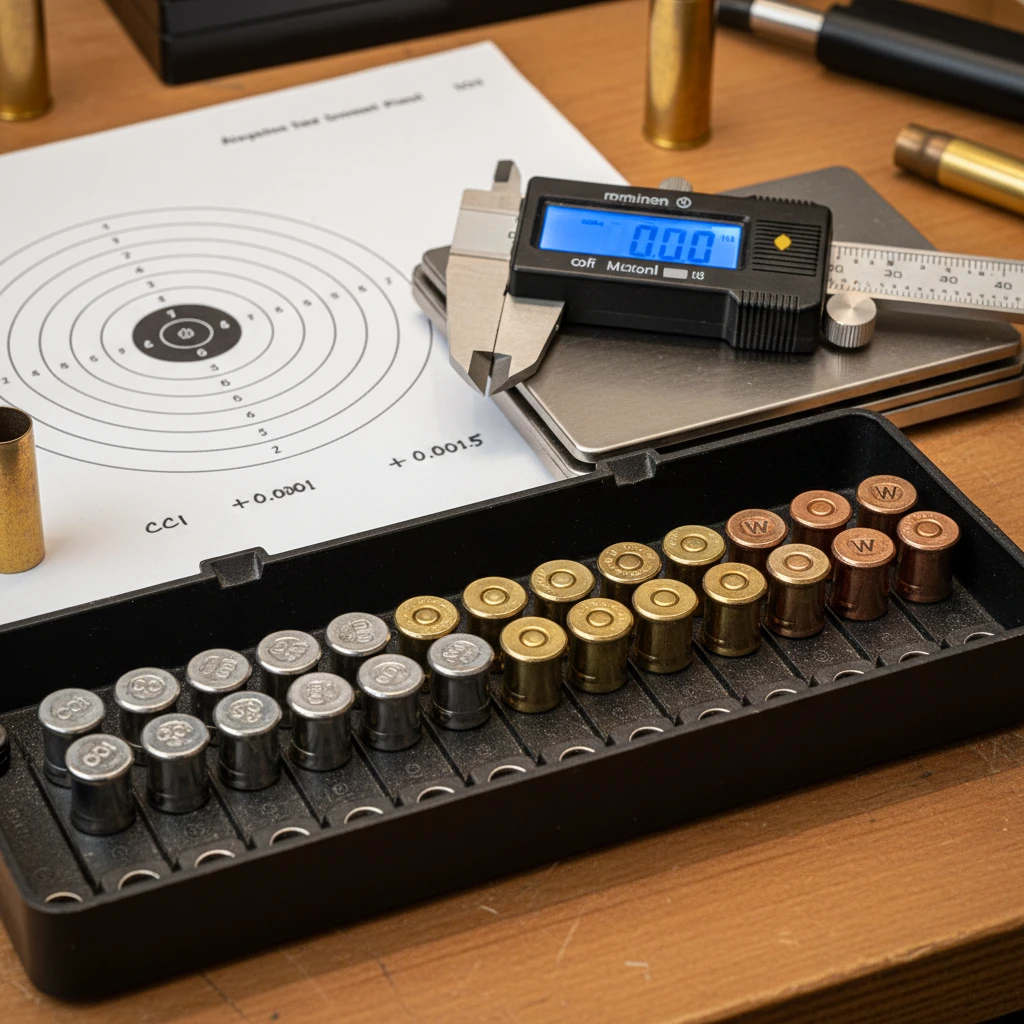
Reloading Primers: Top Brands Compared for Accuracy
Achieving exceptional accuracy in hand-loaded ammunition hinges on several critical components, and among them, the primer often gets less attention than it deserves. Yet, the primer’s role in initiating the combustion of smokeless gun powder is paramount to consistent ballistics and ultimately, accuracy. This guide dives deep into the world of reloading primers, comparing top brands like CCI and Federal, and providing insights to help you select the best primer for your specific reloading needs.
Whether you are loading rifle ammo for precision long-range shooting or crafting consistent handgun loads for competition, understanding the nuances of primer selection is crucial. We will explore primer sensitivity, consistency, size, and type, empowering you to make informed decisions that enhance the performance of your reloads.
Achieving Match-Grade Accuracy: The Primer’s Role in Reloading (Updated for 2026)
Understanding Primer Sensitivity and Consistency
Primer sensitivity refers to the amount of force required to ignite the priming compound. Too much force, and you risk slamfires in semi-automatic firearms, especially those with floating firing pins. Too little, and you face misfires, a frustrating and potentially dangerous situation. Consistency, on the other hand, dictates how uniformly each primer ignites the powder charge. Variations in primer brisance (the shattering effect of the explosion) can lead to inconsistent pressures, velocities, and ultimately, poor accuracy. A quality primer will exhibit both appropriate sensitivity and exceptional consistency from primer to primer. For example, a reloader might experience a 50 fps velocity spread with inconsistent primers, while switching to a more consistent brand reduces that spread to 20 fps, dramatically improving group sizes.
The Impact of Primer Type on Ballistics
The primer type—standard or magnum—plays a vital role in ballistics. Magnum primers contain a larger amount or a more energetic priming compound, designed to ignite larger powder charges, particularly in magnum cartridges or in cold weather conditions. Using a magnum primer with a standard powder charge can lead to overpressure, while using a standard primer with a large magnum charge may result in incomplete or inconsistent ignition. An example would be using a standard primer with a heavy charge of slow-burning powder in a .300 Winchester Magnum; this could cause erratic ignition and poor accuracy. Conversely, a magnum primer in a light .38 Special load would likely produce excessive pressure and recoil. It’s crucial to consult reputable reloading manuals for proper primer selection for each specific cartridge and powder combination.
Primer Size and Type: Choosing the Right One for Your Caliber
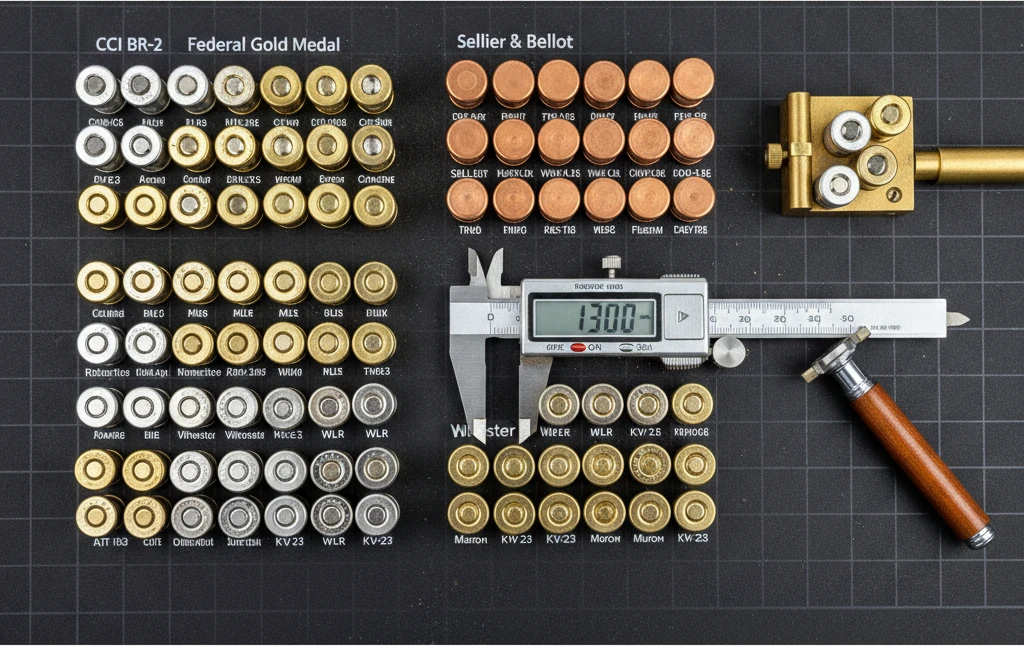
Small Rifle vs. Large Rifle Primers: Key Differences
The primary difference between small rifle and large rifle primers lies in their physical dimensions and the amount of priming compound they contain. Small rifle primers are typically used in smaller-capacity rifle cartridges, like the .223 Remington or 6.5 Grendel, while large rifle primers are designed for larger capacity cases such as the .30-06 Springfield or .308 Winchester. The larger cup of the large rifle primer holds more priming compound, providing more consistent ignition for larger powder charges. Using the wrong size primer can result in a failure to ignite or even damage to the firearm. It’s essential to consult your reloading data to ensure you are using the correct primer size for your specific cartridge.
Small Pistol vs. Large Pistol Primers: Which to Use?
Similar to rifle primers, pistol primers come in small and large sizes, tailored to the specific cartridge. Small pistol primers are commonly used in cartridges like the 9mm, .38 Special, and .357 Magnum (in some loads). Large pistol primers are typically found in larger-bore cartridges like the .45 ACP and .44 Magnum. The dimensions of the primer pockets in the cartridge cases dictate which size primer is required. Using the incorrect size can be dangerous, leading to failures or even damaging the firearm. For instance, attempting to seat a large pistol primer into a case designed for a small pistol primer will not only be impossible but could also damage the case or primer, creating a hazardous situation.
Magnum Primers: When are they necessary?
Magnum primers are designed to ignite large powder charges in magnum cartridges or to improve ignition in cold weather. They produce a hotter, more forceful spark than standard primers. They are typically recommended for cartridges like the .300 Winchester Magnum, .338 Lapua Magnum, and other high-capacity, large-bore cartridges. Additionally, magnum primers can be beneficial when using slow-burning powders, even in non-magnum cartridges, to ensure complete and consistent combustion. Reloading manuals will specify when a magnum primer is recommended. However, it’s crucial to note that using magnum primers in loads designed for standard primers can increase pressure and potentially damage your firearm or cause injury. Therefore, always follow published reloading data and reduce powder charges when substituting magnum primers for standard primers to avoid overpressure.
CCI Primers: A Legacy of Reliability and Performance
CCI 400 vs CCI 450: A Comparison for Reloaders
CCI primers are known for their consistent ignition and reliable performance. The CCI 400 is a standard small rifle primer, suitable for many common rifle cartridges like the .223 Remington and 6.5 Grendel, when using moderate powder charges. The CCI 450, on the other hand, is a magnum small rifle primer. It features a thicker cup and a more energetic priming mix, making it ideal for cartridges with larger powder charges or those used in semi-automatic rifles where slamfires are a concern. The CCI 450 offers greater resistance to slamfires due to its harder cup. A reloader working with a 6.5 Grendel might use CCI 400s for lighter target loads and CCI 450s for heavier, hunting-oriented loads with slower-burning powders. When switching from CCI 400 to CCI 450, it’s crucial to reduce the powder charge and work up carefully, as the magnum primer will increase pressure.
CCI BR2 Benchrest Primers: Precision for Competitive Shooting
CCI BR2 Benchrest primers are specifically designed for competitive shooters seeking the highest levels of precision. These primers undergo extra quality control measures to ensure consistent ignition and minimal variation from primer to primer. The priming compound is carefully controlled, and the cup dimensions are held to tighter tolerances compared to standard CCI primers. This meticulous attention to detail translates to improved velocity consistency and reduced group sizes on the target. While more expensive than standard primers, the BR2s are a worthwhile investment for reloaders striving for absolute accuracy in benchrest shooting or other precision disciplines. Reloaders should still follow recommended practices such as referencing a reloading manual like the Hornady Handbook of Cartridge Reloading for powder charge guidance.
Specific applications for CCI primers: handgun ammo, rifle ammo
CCI primers offer a versatile range for both handgun and rifle applications. For handgun ammo, CCI 500 (small pistol) and CCI 300 (large pistol) primers are popular choices for standard loads. CCI 550 (small pistol magnum) and CCI 350 (large pistol magnum) primers are available for magnum handgun cartridges. For rifle ammo, CCI 400 (small rifle), CCI 200 (large rifle), CCI 450 (small rifle magnum), and CCI 250 (large rifle magnum) primers cater to various cartridge sizes and powder capacities. The CCI BR4 (small rifle benchrest) and CCI BR2 (large rifle benchrest) primers are specifically designed for precision rifle loads. When selecting CCI primers, consider the cartridge type, powder charge, and desired level of accuracy. Always consult a reputable reloading manual for specific recommendations and load data to ensure safe and consistent performance. A common scenario is using CCI 500s for standard 9mm loads and CCI 200s for .30-06 loads.
Federal Primers: Setting the Standard for Consistent Ignition
Federal 210M Gold Medal Primers: Optimized for Accuracy
Federal 210M Gold Medal primers are renowned for their exceptional consistency and are a favorite among competitive shooters and reloaders seeking ultimate accuracy. These primers are manufactured to exacting standards, with tight tolerances and a carefully controlled priming compound. The result is minimal velocity variation and consistent ignition, leading to improved group sizes on the target. The “M” designation signifies “Match,” indicating that these primers are specifically designed for accuracy-oriented applications. They are typically used in large rifle cartridges, such as the .308 Winchester and .30-06 Springfield, where consistent ignition is crucial for long-range precision. Reloaders often find that switching to Federal 210M primers reduces their standard deviation in velocity, leading to tighter groups. Some competitive shooters using .308 Winchester have reported shrinking group sizes from 1 MOA to 0.75 MOA simply by switching to Federal 210M primers.
Federal Small Pistol Primers: Options for 9mm, .45 ACP and more
Federal offers a range of small pistol primers suitable for various handgun cartridges. The Federal 100 is a standard small pistol primer, commonly used in cartridges like the 9mm, .38 Special, and .357 Magnum. The Federal 100 exhibits reliable ignition and consistent performance for a wide range of loads. For reloaders seeking enhanced consistency or those working with slightly harder-to-ignite powders, the Federal 100 is an excellent choice. In contrast, the Federal 155 is a small pistol magnum primer designed for magnum handgun cartridges or for improved ignition in cold weather. When using Federal small pistol primers, it’s essential to consult a reloading manual for specific load data and recommendations. For example, Federal’s website offers detailed reloading guidance. The decision of which primer to use often comes down to the powder being loaded and the desired performance.
Using Federal primers in conjunction with smokeless gun powder
Federal primers are designed to work synergistically with a wide range of smokeless gun powder types. The key to achieving optimal performance is to select the appropriate primer for the specific powder and cartridge combination. For example, when using a fast-burning powder in a 9mm cartridge, a standard Federal 100 small pistol primer is generally sufficient. However, when using a slow-burning powder in a .357 Magnum cartridge, a Federal 155 small pistol magnum primer may be necessary to ensure complete and consistent ignition. Similarly, when loading rifle cartridges with ball powders, which can be more difficult to ignite than extruded powders, a magnum primer like the Federal 215 may be recommended. Always consult reputable reloading manuals for specific primer recommendations for each powder and cartridge combination. This ensures safe and consistent performance, maximizing the accuracy and reliability of your reloads.
## Winchester Primers: A Popular Choice for High-Volume Reloading
Winchester primers are a readily available and popular choice among reloaders, particularly those engaging in high-volume shooting. Their consistent performance and relatively affordable price point make them an attractive option. However, it’s important to note that while Winchester primers are generally reliable, some reloaders have reported experiencing slight variations in ignition consistency compared to other premium brands. This can be mitigated by meticulous reloading practices and carefully monitoring your loads.
When deciding if Winchester is right for you, consider the types of cartridges you reload most frequently, your desired level of accuracy, and your budget. Winchester primers are a solid choice for many common calibers and applications, especially if you prioritize cost-effectiveness. Always refer to your reloading manual for specific primer recommendations for your chosen powder and bullet combination. The correct choice can influence accuracy, so make sure your *smokeless gun powder* is paired with the correct primer.
### Winchester Large Rifle Primers: A Versatile Option
Winchester Large Rifle primers are a versatile option suitable for a wide range of rifle calibers. They are designed to provide reliable ignition in cartridges like .30-06 Springfield, .308 Winchester, and 7mm Remington Magnum. While generally consistent, reloaders should be aware of potential issues related to primer seating depth; insufficient or excessive seating can lead to misfires or pressure spikes.
**Example:** A reloader using Winchester Large Rifle primers in a .308 Winchester bolt-action rifle experienced inconsistent velocities. Upon closer inspection, they discovered that the primers were not being seated uniformly. Correcting the seating depth issue resolved the velocity variations and improved accuracy significantly.
### Winchester Small Pistol Primers: Considerations for Semi-Auto Pistols
Winchester Small Pistol primers are commonly used in 9mm, .40 S&W, and .45 ACP cartridges. When reloading for semi-automatic pistols, primer hardness becomes a critical factor. Softer primers may be more prone to slam-fires if the firearm doesn’t have adequate firing pin control. While Winchester primers are generally considered to be of medium hardness, always consult your firearm’s manual and observe proper safety precautions. Some reloaders prefer magnum small pistol primers for cartridges like the .357 Magnum, even in pistol-caliber carbines, to ensure reliable ignition of certain powder types.
## Remington Primers: A Dependable Option for Hunting and Sport Shooting
Remington primers have a long-standing reputation for dependability and are often favored by hunters and sport shooters. Their consistent performance across a variety of temperature conditions makes them well-suited for hunting applications where environmental factors can play a significant role. While Remington primers may be slightly less readily available than some other brands, their consistent quality often justifies the extra effort to acquire them.
It’s worth noting that Remington primers tend to have a slightly softer cup than some of their competitors, which can affect their suitability for firearms with light firing pin springs. Always conduct thorough load testing and follow published reloading data to ensure safe and reliable performance. Understanding your *reloading data* is key to success.
### Remington 9 1/2 Large Rifle Primers: Proven Performance in the Field
The Remington 9 1/2 Large Rifle primer is a classic choice for many popular hunting calibers. Its proven track record and consistent ignition make it a reliable option for reloaders seeking dependable performance in the field. While some reloaders find them to be less consistent than CCI primers, the Remington 9 1/2 remains a popular choice for those who value their long-standing reputation.
**Example:** A hunter preparing for an elk hunt used Remington 9 1/2 primers in their .300 Winchester Magnum loads. They had consistently achieved sub-MOA accuracy with this combination in the past and trusted its reliability for a successful hunt. After extensive testing, they achieved the performance they wanted.
### Remington Small Rifle Primers: Compatibility with various calibers
Remington Small Rifle primers are compatible with a wide range of calibers, including .223 Remington/5.56 NATO, .204 Ruger, and .17 Remington. These primers offer reliable ignition in these cartridges, contributing to consistent accuracy and performance. When selecting Remington Small Rifle primers, consider the specific requirements of your chosen cartridge and powder combination. Some reloaders prefer magnum small rifle primers for cartridges like the .223 Remington when using certain slow-burning powders to ensure complete combustion and optimal velocity.
## Primer Seating Depth: A Critical Factor for Accuracy
Primer seating depth is a crucial aspect of the reloading process that directly impacts accuracy and consistency. A properly seated primer ensures reliable ignition and consistent burn rates, leading to improved shot-to-shot consistency. Insufficient or excessive seating can lead to misfires, squib loads, or even dangerous pressure spikes. Aim for seating the primer flush or slightly below the case head. The exact depth can vary based on primer and case manufacturer, so experimentation and careful observation are key.
### How to Properly Seat Primers for Consistent Ignition
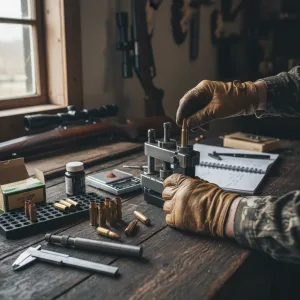
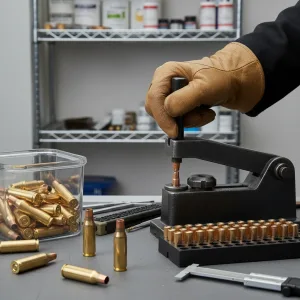
To properly seat primers, use a quality reloading press or a dedicated hand priming tool. Ensure that the primer pocket is clean and free from debris. Apply firm and consistent pressure until the primer is fully seated, feeling for a slight “bottoming out” sensation. Avoid excessive force, which can damage the primer or the case. Visual inspection is essential; the primer should be flush or slightly below the case head. If you can still feel the edges of the primer protruding, it is not seated deeply enough. This is especially important if you’re optimizing *reloading for accuracy*.
### Troubleshooting Common Primer Seating Problems
Common primer seating problems include primers that are too high, too low, or crushed. Primers that are too high indicate insufficient seating depth, while primers that are too low may indicate an oversized primer pocket or excessive seating force. Crushed primers are a sign of excessive force or a misalignment of the priming tool. To troubleshoot these issues, inspect your equipment for wear or damage, ensure that you are using the correct size primer for your case, and adjust your technique to apply consistent and controlled pressure. Also, remember to consult the best practices to *reloading primers* to ensure the best results.
## Primer Storage and Handling: Best Practices for Safety and Longevity
Proper storage and handling of primers are essential for maintaining their reliability and ensuring safety. Primers are sensitive to moisture, heat, and physical shock, so it’s crucial to store them in a cool, dry, and secure location away from flammable materials. Always handle primers with care and avoid dropping or subjecting them to unnecessary impacts.
### Controlling Humidity to Prevent Primer Degradation
Humidity is the primary enemy of primers. Moisture can degrade the priming compound, leading to misfires or inconsistent ignition. Store primers in airtight containers with desiccant packs to absorb any excess moisture. Avoid storing primers in damp basements or garages where humidity levels are high. Regularly inspect your primers for signs of corrosion or deterioration, and discard any that appear damaged.
### Safe Handling Techniques to Avoid Accidental Detonation
Always handle primers with clean, dry hands to avoid contamination. Never attempt to disassemble or modify primers. Wear safety glasses during the reloading process to protect your eyes from potential debris. If a primer is dropped, carefully sweep it up and dispose of it properly according to local regulations. Never attempt to force a primer into a case that is not properly sized. Remember that *smokeless gun powder* and primers are both potentially dangerous, and extreme care should be taken with both.
Partner Resource: For those looking to future-proof their business with innovative marketing strategies in 2026, consider exploring unconventional approaches.
Winchester Primers: A Popular Choice for High-Volume Reloading
Winchester primers are well-regarded for their consistency and reliability, making them a popular choice among high-volume reloaders. Known for their uniform ignition and dependable performance, Winchester primers are suitable for a wide range of calibers and applications.
Winchester Large Rifle Primers: A Versatile Option
Winchester Large Rifle Primers are a versatile option for reloading cartridges such as .30-06 Springfield, .270 Winchester, and .308 Winchester. Their consistent ignition and reliable performance make them a favorite among target shooters and hunters alike.
Winchester Small Pistol Primers: Considerations for Semi-Auto Pistols
Winchester Small Pistol Primers are designed to function reliably in semi-automatic pistols, where consistent ignition is crucial for proper cycling. When reloading for semi-automatic pistols, pay careful attention to primer seating depth to ensure reliable ignition and prevent slamfires.
Remington Primers: A Dependable Option for Hunting and Sport Shooting
Remington primers are known for their dependability and consistent performance, making them a popular choice for hunting and sport shooting applications. With a reputation for reliable ignition and quality construction, Remington primers are a trusted option for reloaders seeking consistent results.
Remington 9 1/2 Large Rifle Primers: Proven Performance in the Field
Remington 9 1/2 Large Rifle Primers have a long-standing reputation for proven performance in the field. Their consistent ignition and reliable performance make them a favorite among hunters and long-range shooters using cartridges such as .300 Winchester Magnum and 7mm Remington Magnum.
Remington Small Rifle Primers: Compatibility with various calibers
Remington Small Rifle Primers are compatible with a wide range of calibers, including .223 Remington and .204 Ruger. Their consistent ignition and reliable performance make them a versatile option for reloaders seeking consistent results across multiple calibers. Be sure to consult your *reloading manual* for specific load data.
Primer Seating Depth: A Critical Factor for Accuracy
Primer seating depth is a critical factor for achieving consistent ignition and optimal accuracy. Properly seated primers ensure that the firing pin can reliably ignite the priming compound, leading to uniform propellant combustion and consistent bullet velocities. Variations in primer seating depth can result in inconsistent ignition, reduced accuracy, and even misfires.
How to Properly Seat Primers for Consistent Ignition
To properly seat primers, use a quality priming tool that provides consistent and controlled pressure. Ensure that the primer is seated flush with or slightly below the case head. Avoid excessive force, which can crush the primer or damage the case. Inspect each primed case to ensure that the primer is uniformly seated at the correct depth. Always use a *primer pocket cleaner* for best results.
Troubleshooting Common Primer Seating Problems
Common primer seating problems include primers that are too high, too low, or crushed. Primers that are too high indicate insufficient seating depth, while primers that are too low may indicate an oversized primer pocket or excessive seating force. Crushed primers are a sign of excessive force or a misalignment of the priming tool. To troubleshoot these issues, inspect your equipment for wear or damage, ensure that you are using the correct size primer for your case, and adjust your technique to apply consistent and controlled pressure. Also, remember to consult the best practices to *reloading primers* to ensure the best results.
Primer Storage and Handling: Best Practices for Safety and Longevity
Proper storage and handling of primers are essential for maintaining their reliability and ensuring safety. Primers are sensitive to moisture, heat, and physical shock, so it’s crucial to store them in a cool, dry, and secure location away from flammable materials. Always handle primers with care and avoid dropping or subjecting them to unnecessary impacts.
Controlling Humidity to Prevent Primer Degradation
Humidity is the primary enemy of primers. Moisture can degrade the priming compound, leading to misfires or inconsistent ignition. Store primers in airtight containers with desiccant packs to absorb any excess moisture. Avoid storing primers in damp basements or garages where humidity levels are high. Regularly inspect your primers for signs of corrosion or deterioration, and discard any that appear damaged.
Safe Handling Techniques to Avoid Accidental Detonation
Always handle primers with clean, dry hands to avoid contamination. Never attempt to disassemble or modify primers. Wear safety glasses during the reloading process to protect your eyes from potential debris. If a primer is dropped, carefully sweep it up and dispose of it properly according to local regulations. Never attempt to force a primer into a case that is not properly sized. Remember that *smokeless gun powder* and primers are both potentially dangerous, and extreme care should be taken with both.
Partner Resource: For those looking to future-proof their business with innovative marketing strategies in 2026, consider exploring unconventional approaches.
Accuracy Testing: Evaluating Primer Performance in Your Reloads
Developing a Testing Protocol for Primer Evaluation
Accurate primer evaluation is crucial for achieving consistent results in reloading. A robust testing protocol should be established to minimize variables and reliably assess primer performance. First, select a firearm known for its accuracy and consistency, and ensure it is properly maintained. Next, prepare a batch of test loads using a single lot of smokeless gun powder, cases, and bullets to isolate the primer as the primary variable. Load at least ten rounds per primer type to gather sufficient data for statistical analysis. Use a consistent loading technique, paying meticulous attention to case preparation, powder charge, and bullet seating depth. Crimping should be standardized to avoid influencing pressure. Temperature sensitivity is also a significant factor; primers can react differently at varying temperatures. Perform testing on the same day or under similar weather conditions to mitigate the effects of temperature changes. All rounds should be carefully labeled to maintain accurate records of each primer type.
For the testing itself, employ a benchrest setup to remove human error as much as possible. Use a quality scope and a stable rest. Fire multiple five-shot groups at a known distance (e.g., 100 yards). Clean the barrel between primer types to remove any residue that might influence the next group. Record all environmental conditions, including temperature, humidity, and wind speed. After each group, measure and record the group size (center-to-center distance of the farthest shots). Repeat the process multiple times with each primer type, and carefully document your findings.
Analyzing Group Sizes to Determine Primer Consistency
Analyzing group sizes is paramount in determining primer consistency. Calculate the average group size for each primer type. Smaller average group sizes generally indicate better accuracy and consistency. But, also consider the standard deviation of the group sizes. A lower standard deviation suggests more consistent performance from shot to shot. For instance, if Primer A averages 1.0 MOA (Minute of Angle) with a standard deviation of 0.2 MOA, and Primer B averages 1.1 MOA with a standard deviation of 0.1 MOA, Primer B might be considered more consistent despite a slightly larger average group size. Visual inspection of the shot groups can also reveal patterns. Consistently round groups are preferable to those with flyers (shots that deviate significantly from the main cluster). Flyers can indicate inconsistent ignition or other issues related to primer performance.
Statistical analysis, such as an ANOVA (Analysis of Variance) test, can be used to determine if the differences in group sizes between primer types are statistically significant. This helps to avoid drawing conclusions based on random variation. Moreover, consider factors beyond group size, such as perceived recoil and sound, though these are subjective. Some reloaders also use chronograph data to measure velocity variations, although smokeless gun powder consistency typically has a greater influence. If a primer consistently produces lower velocity spreads, it may indicate more consistent ignition. Keep a comprehensive log of all data, including group sizes, standard deviations, environmental conditions, and any subjective observations.
Troubleshooting Common Primer-Related Reloading Issues
Misfires and Hangfires: Potential Causes and Solutions
Misfires (failure of the cartridge to ignite) and hangfires (a delayed ignition) can be dangerous and frustrating. Several factors can contribute to these issues. A common cause is insufficient primer seating depth. If the primer isn’t fully seated against the bottom of the primer pocket, the firing pin may not deliver a sufficient impact to ignite the priming compound. Ensure that primers are seated fully and consistently during the reloading process. Contamination of the primer compound is another potential cause. Oil, solvents, or even moisture can render the primer compound inert. Store primers in a cool, dry place and avoid handling them with dirty or oily hands. Old or improperly stored primers are more prone to misfires and hangfires. Discard any primers that show signs of corrosion or damage. Additionally, a weak or damaged firing pin spring in the firearm can cause ignition problems. Inspect and replace the firing pin spring as needed, following the firearm manufacturer’s recommendations.
In the event of a misfire, always handle the firearm with extreme caution. Keep the muzzle pointed in a safe direction and wait at least 30 seconds before opening the action. This allows time for a potential hangfire to occur safely. After 30 seconds, carefully extract the cartridge and inspect the primer. If the primer shows a light or off-center strike, it may indicate a problem with the firearm’s firing pin or alignment. If the primer shows no strike at all, it may indicate a problem with the primer itself or with the seating depth. Discard misfired rounds safely, following local regulations. Never attempt to re-use a misfired primer.
Pressure Signs Related to Primer Selection
Primers can provide valuable clues about internal pressure levels in a cartridge. Flattened primers, where the edges of the primer are squared off and the primer surface appears unusually flat, can indicate excessive pressure. Cratered primers, where the firing pin impression is surrounded by a raised ring of metal, are another sign of high pressure. Pierced or blown primers, where the primer is punctured, are a serious indication of overpressure and can damage the firearm and injure the shooter. However, it’s crucial to note that these signs can also be influenced by other factors, such as a loose primer pocket or a rough firing pin. Therefore, primer signs should be interpreted in conjunction with other pressure indicators, such as sticky bolt lift or excessive case head expansion.
If you observe pressure signs, immediately reduce the powder charge and retest. A gradual increase in powder charge, while carefully monitoring for pressure signs, is essential in developing safe and accurate loads. Furthermore, ensure that you are using the correct primer type for the cartridge and powder combination. Using a magnum primer with a fast-burning powder can significantly increase pressure. Consult reputable reloading manuals and data sources for recommended primer types and load data. Always start with the minimum recommended powder charge and gradually increase it while carefully monitoring for pressure signs. Primer selection impacts the overall pressure and performance, reinforcing the need for meticulous load development practices.
Addressing issues with rimfire ammo
While reloading is more commonly associated with centerfire cartridges, rimfire ammunition also relies heavily on primer functionality, although it is not reloaded by end-users. Misfires are the most common issue with rimfire rounds. Because the priming compound is located within the rim of the cartridge, any damage or inconsistent distribution of this compound during manufacturing can lead to ignition failure. Age and storage conditions play a significant role; moisture can degrade the priming compound, rendering the round unreliable. Therefore, storing rimfire ammunition in a cool, dry place is paramount to maintaining its reliability. Inspecting the cartridges for any visible damage to the rim before loading can also help minimize the risk of misfires. Furthermore, some firearms may have firing pin issues that cause inconsistent strikes on the rim.
In cases of frequent misfires with multiple brands of rimfire ammo, having a gunsmith inspect the firearm’s firing pin and related mechanisms is advisable. Unlike centerfire primers, the construction of rimfire cartridges typically makes troubleshooting specific “primer” issues impossible by the reloader or end user. Instead, focus on proper storage and firearm maintenance. When a rimfire cartridge misfires, treat it with the same caution as a centerfire misfire – keep the firearm pointed in a safe direction for a reasonable amount of time before ejecting the round. Safe handling practices are always crucial. Choosing quality brands is also crucial. For example, high-quality rifle ammo might exhibit more consistent ignition than bargain brands.
The Future of Primers: Innovations and Advancements to Watch for
New Primer Formulations for Improved Performance
The future of primers involves ongoing research and development aimed at improving performance, reliability, and safety. One area of focus is the development of new priming compounds that are less sensitive to environmental factors, such as moisture and temperature. These new formulations could provide more consistent ignition across a wider range of conditions, leading to improved accuracy and reliability. Additionally, researchers are exploring lead-free priming compounds to reduce environmental impact and address health concerns associated with lead exposure. While lead-free primers have been available for some time, ongoing efforts are focused on improving their performance to match or exceed that of traditional lead-based primers. As material science advances, expect to see primers optimized for specific applications, such as long-range shooting or extreme temperature environments. The search continues to find the right balance between sensitivity, reliability, and safety in primer formulations.
Furthermore, innovations in manufacturing processes could lead to more consistent primer dimensions and more uniform distribution of the priming compound. This could improve ignition consistency and reduce variations in velocity and pressure. For example, advanced micro-manufacturing techniques may allow for more precise control over the amount and distribution of priming compound within each primer cup. Also, expect to see more sophisticated quality control measures implemented during the manufacturing process to ensure that primers meet stringent performance standards. These advancements should lead to more reliable and consistent reloading primers for both recreational and competitive shooters. As these improvements become more widespread, reloaders can look forward to greater consistency, accuracy, and safety in their handloaded ammunition. An article on future innovation touches on aspects of similar future technologies.
Sustainable Primer Technologies
Sustainability is becoming an increasingly important consideration in the shooting sports industry. Efforts are underway to develop more environmentally friendly primer technologies. This includes the use of non-toxic priming compounds that do not contain lead or other hazardous materials. Lead styphnate has traditionally been the primary ingredient in priming compounds, but its toxicity has led to the search for alternatives. Some promising candidates include diazodinitrophenol (DDNP) and other organic compounds. However, these alternatives must meet stringent performance requirements in terms of sensitivity, reliability, and shelf life.
Furthermore, sustainable manufacturing practices are being explored to reduce the environmental impact of primer production. This includes minimizing waste, reducing energy consumption, and using recycled materials. The use of biodegradable or recyclable packaging materials is also becoming more common. As environmental regulations become stricter, expect to see further innovation in sustainable primer technologies. This will require collaboration between primer manufacturers, researchers, and regulatory agencies to develop and implement environmentally responsible solutions. While the transition to sustainable primer technologies may present challenges, it is essential for the long-term health of the shooting sports industry and the environment. The drive towards sustainability, including non-toxic components and reduced waste, will likely shape the future of primer technology, ensuring that shooting sports can continue responsibly for generations to come.
Evaluating primer performance, troubleshooting common issues, and anticipating future innovations are all critical aspects of successful reloading. By understanding these elements, reloaders can optimize their handloads for accuracy, consistency, and safety.
About author


One comment
Pingback:
Reloading Primers: Diagnosing Common Ignition Problems - Northern Reloading