Smokeless Gun Powder: Understanding Burn Rate for Reloading
For reloaders seeking to optimize their ammunition performance, understanding the intricacies of smokeless gun powder burn rate is absolutely paramount. It’s the key to achieving consistent velocities, manageable pressures, and ultimately, superior accuracy. Selecting the right powder for a specific cartridge isn’t just about finding something that goes “bang;” it’s about achieving a harmonious balance between the powder’s burning characteristics and the firearm’s design.
This guide explores the fundamental concepts of burn rate, how it affects various aspects of reloading, and how to navigate burn rate charts effectively. Whether you’re a seasoned reloader or just getting started, a solid grasp of burn rate will significantly improve your understanding of reloading components and enhance the consistency and performance of your reloaded ammunition.
Unlocking Accuracy: How Burn Rate Impacts Your Reloading Results
The Vital Role of Burn Rate in Consistent Ballistics
The burn rate of smokeless gun powder dictates the rate at which pressure builds within the firearm’s chamber. This pressure curve directly impacts bullet velocity, recoil, and overall accuracy. A consistent burn rate translates to consistent pressures, which in turn leads to more uniform velocities and tighter groupings on the target. If the burn rate is too fast, it can generate excessive pressure, potentially damaging the firearm and causing dangerous recoil. Conversely, if the burn rate is too slow, the powder may not burn completely before the bullet exits the barrel, resulting in reduced velocity and inconsistent performance. Finding the optimal burn rate ensures the cartridge operates within safe pressure limits while delivering the desired ballistic performance.
Why Understanding Burn Rate Matters for Different Calibers
Different calibers require powders with different burn rates because of their varying case volumes, bullet weights, and intended applications. For instance, a small-caliber handgun ammo cartridge like the 9mm Luger needs a faster-burning powder to generate sufficient pressure within its limited case capacity. Attempting to use a slow-burning rifle powder in a 9mm will likely result in squib loads or dangerously inconsistent velocities. On the other hand, large-capacity rifle ammo cartridges like the .300 Winchester Magnum require slower-burning powders to achieve optimal velocity without exceeding pressure limits. The slower burn rate allows for a more gradual and sustained pressure buildup, maximizing the bullet’s acceleration down the longer barrel. Understanding the specific needs of each caliber is essential for safe and effective reloading.
Defining Smokeless Gun Powder Burn Rate: A Comprehensive Overview
What Exactly is Burn Rate?
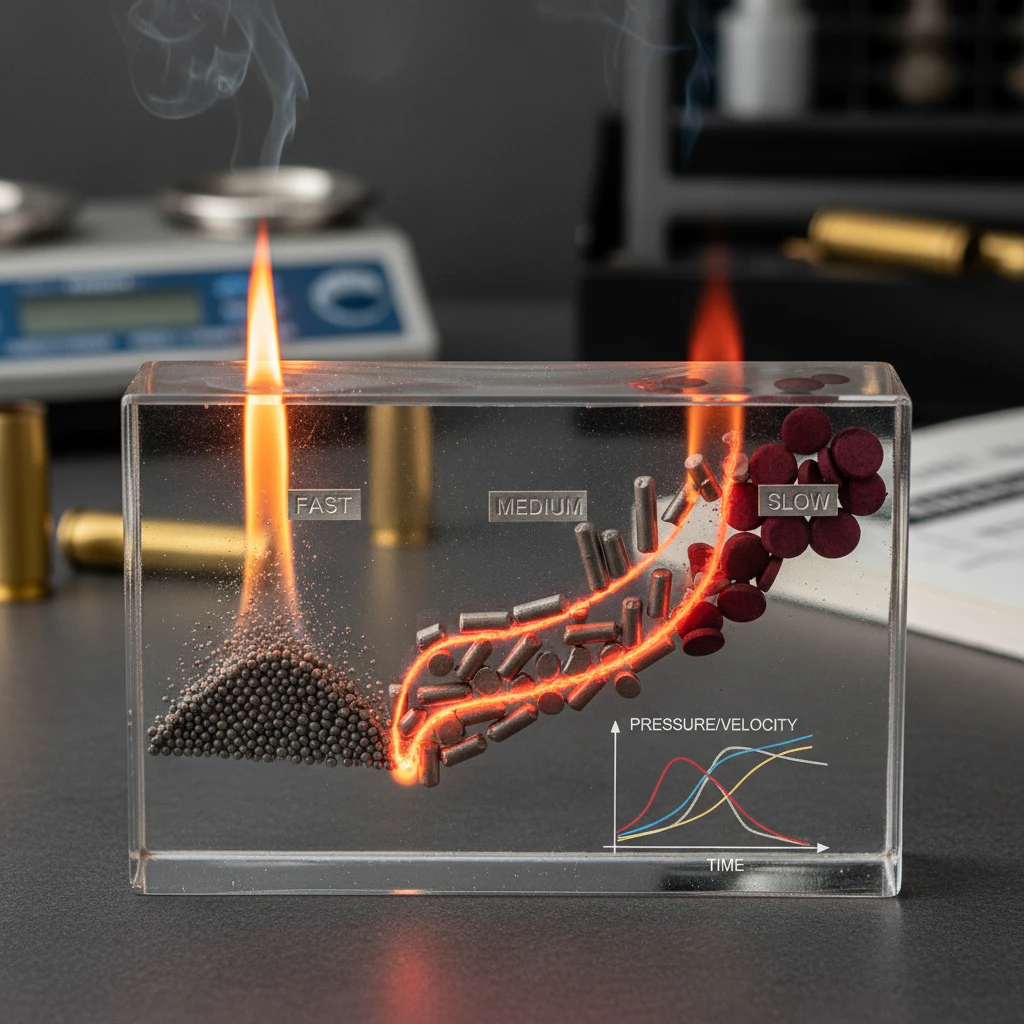
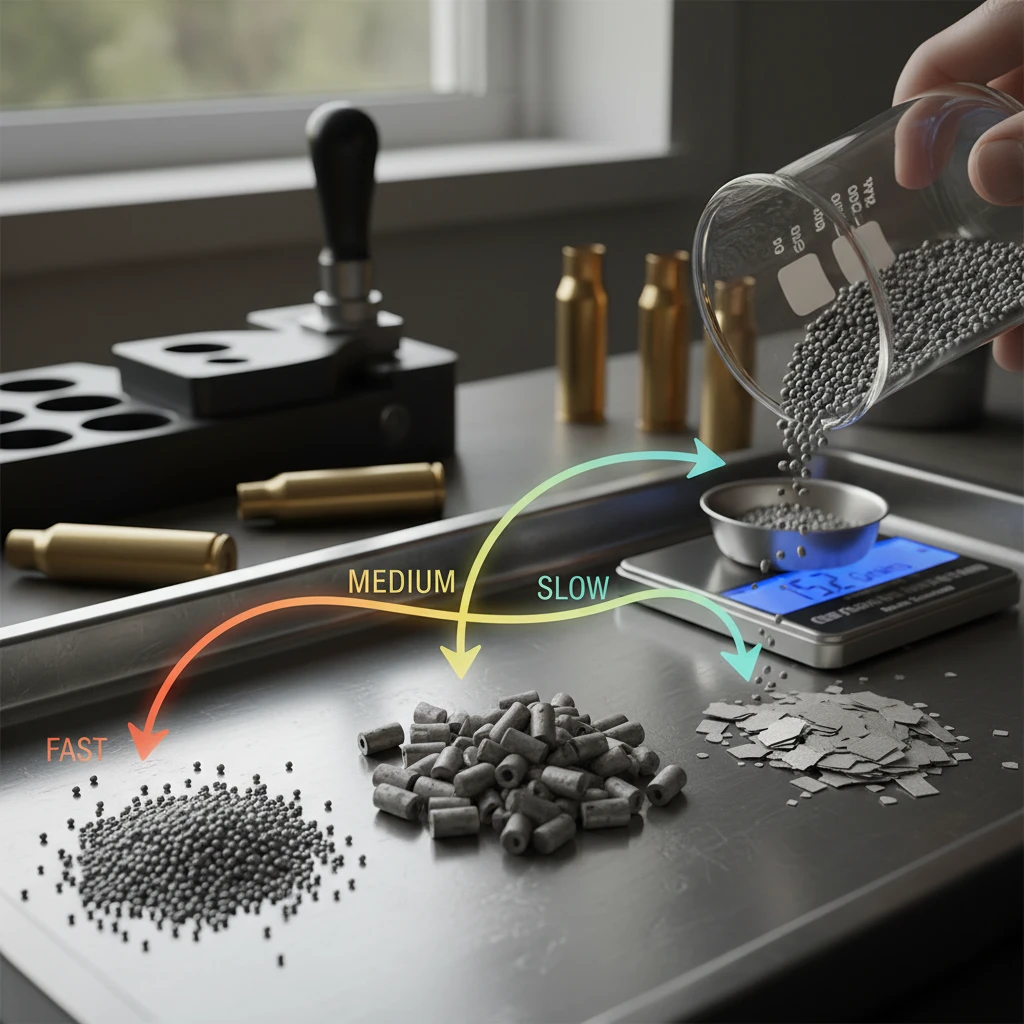
Burn rate, in the context of smokeless gun powder, refers to the relative speed at which a specific powder formulation combusts. It’s not an absolute measurement like “inches per second,” but rather a comparative value that ranks powders from fastest to slowest. This relative ranking helps reloaders select the appropriate powder for a given cartridge and firearm. Powders with a “fast” burn rate ignite quickly and generate pressure rapidly, making them suitable for smaller cartridges and lower velocity applications. Powders with a “slow” burn rate ignite more gradually and sustain pressure over a longer period, which is ideal for larger cartridges and higher velocity applications. The goal is to match the burn rate to the specific characteristics of the cartridge to achieve optimal performance and safety.
Factors Influencing a Powder’s Burn Rate (Shape, Size, Chemical Composition)
Several factors influence a powder’s burn rate, including its shape, size (or granulation), and chemical composition. Powder shape significantly affects the surface area exposed to the flame, influencing how quickly it ignites and burns. Flake powders, for example, tend to burn faster due to their large surface area, while spherical powders burn more slowly because of their smaller surface area. The size of the individual powder grains also plays a role; smaller grains generally burn faster than larger grains. The chemical composition is perhaps the most critical factor, as it determines the inherent reactivity of the powder. Different chemical additives and coatings can be used to modify a powder’s burn rate, allowing manufacturers to fine-tune its performance for specific applications. For more information on the types of powder available, refer to a smokeless gun powder guide.
Navigating the Burn Rate Chart: From Fastest to Slowest Powders
Understanding Relative Burn Rate Charts
Relative burn rate charts are essential tools for reloaders. These charts list various smokeless powders in order of their burn speed, typically with the fastest-burning powder at the top and the slowest-burning powder at the bottom. It’s important to understand that these charts provide a relative comparison, not absolute values. The exact burn rate of a powder can vary slightly depending on the specific batch and the conditions under which it is tested. Furthermore, different manufacturers may use different testing methods, so it’s crucial to use burn rate charts from reputable sources. When selecting a powder, consult multiple charts and cross-reference the data to ensure accuracy. Always start with published load data from reliable sources like powder manufacturers or reloading manuals.
Common Powders and Their Relative Burn Rates (Examples)
Here are some examples of common powders and their approximate positions on a relative burn rate chart (this is a generalized list and should be verified with an official burn rate chart before reloading):
- Fastest: Accurate Arms Nitro 100NF (commonly used in shotgun and some handgun loads)
- Medium-Fast: Hodgdon HP-38 / Winchester 231 (popular for handgun ammo reloading)
- Medium: Alliant Power Pistol (versatile handgun powder)
- Medium-Slow: Hodgdon Varget (excellent for .223 Remington and .308 Winchester rifle ammo)
- Slowest: Hodgdon H1000 (often used in large magnum rifle cartridges)
Note that this is just a small selection of available powders, and their positions on the burn rate chart can vary slightly depending on the specific chart used. Always consult reputable sources for up-to-date and accurate information.
Where to Find Reliable Burn Rate Data
Reliable burn rate data is primarily found in reputable reloading manuals, powder manufacturer websites, and established online reloading forums. Powder manufacturers like Hodgdon, Alliant, IMR, and Accurate Arms provide detailed burn rate charts and load data on their respective websites. Reputable reloading manuals, such as those published by Lyman, Hornady, and Nosler, also contain burn rate charts and comprehensive load data for a wide range of cartridges. Additionally, online reloading forums can be valuable resources, but it’s crucial to verify any information with official sources before using it. Exercise caution and always prioritize data from trusted sources to ensure safe and accurate reloading practices. External burn rate charts can be helpful to double-check your local burn rates.
Burn Rate and Cartridge Selection: Matching Powder to Your Firearm
Selecting Appropriate Burn Rates for Handgun Ammo vs. Rifle Ammo
The selection of an appropriate powder burn rate is significantly different for handgun ammo versus rifle ammo. For handgun ammo, generally, faster-burning powders are preferred. The shorter barrels of handguns require a quicker pressure build-up to ensure sufficient velocity before the bullet exits the barrel. Cartridges like 9mm, .40 S&W, and .45 ACP often perform well with powders like Hodgdon HP-38, Winchester 231, or Alliant Power Pistol. These powders offer a rapid pressure curve, maximizing velocity in a shorter barrel length. In contrast, rifle ammo typically requires slower-burning powders, especially for larger cartridges and heavier bullets. Rifle barrels are significantly longer than handgun barrels, allowing slower-burning powders to gradually build pressure and maintain velocity over a longer distance. Powders like Hodgdon Varget, IMR 4350, and Hodgdon H1000 are commonly used in rifle cartridges such as .223 Remington, .308 Winchester, and .300 Winchester Magnum, respectively. These powders provide a more sustained pressure curve, optimizing velocity in longer barrels.
Burn Rate Considerations for Shotgun Ammo
Shotgun ammo reloading presents unique considerations due to the diversity of loads, including birdshot, buckshot, and slugs. The choice of powder burn rate depends heavily on the payload weight and desired velocity. Lighter payloads, such as those used for clay target shooting, typically require faster-burning powders to achieve appropriate velocities without excessive pressure. Powders like Alliant Red Dot and Hodgdon Clays are commonly used in these applications. Heavier payloads, such as those used for hunting or self-defense, often require slower-burning powders to manage pressure and ensure consistent patterns. Alliant Blue Dot and Hodgdon Longshot are frequently used for these heavier loads. Shotgun reloading data is particularly critical, as slight variations in powder charge or component selection can have a significant impact on pressure and performance. Always consult reputable reloading manuals and follow recommended load data closely when reloading shotgun ammo.
How Case Volume Affects Burn Rate Choices
Case volume is a primary determinant of the appropriate powder burn rate. Larger case volumes, typically found in rifle cartridges, necessitate slower-burning powders to ensure a more gradual and sustained pressure buildup. This prevents pressure spikes and allows the bullet to accelerate smoothly down the barrel. Attempting to use a fast-burning powder in a large-capacity case can lead to dangerously high pressures and inconsistent velocities. Conversely, smaller case volumes, common in handgun ammo, require faster-burning powders to generate sufficient pressure within the limited space. A slower-burning powder in a small case may not ignite completely or generate enough pressure to cycle the action reliably, resulting in squib loads or poor performance. The relationship between case volume and burn rate is crucial for achieving optimal velocity, accuracy, and safety in reloading. Always consult reloading manuals and follow recommended load data for the specific cartridge and powder combination being used. Remember to optimize your reloading skills; there are several advanced reloading techniques that can improve your cartridge performance.
The Impact of Burn Rate on Pressure and Velocity: A Critical Relationship
High Pressure Signs: Recognizing Overpressure Risks with Fast Powders
Using a fast-burning powder in a cartridge designed for slower powders can lead to dangerously high pressures. These excessive pressures manifest in several telltale signs that a reloader must be vigilant in recognizing. One of the primary indicators is flattened or cratered primers. A normal primer will have a slightly rounded edge, but a flattened primer will appear almost flush with the case head. Cratering, another pressure sign, presents as a raised ring around the firing pin indentation. Difficult extraction of the spent cartridge case is another common symptom. If you find it unusually hard to open the action of your firearm after firing, it could be a sign of excessive pressure causing the case to swell and bind in the chamber. In extreme cases, you may observe bulging or even rupture of the cartridge case itself, posing a significant risk to the firearm and the shooter. Always consult reputable reloading manuals for safe starting loads and never exceed the maximum listed charge weight. The relationship between pressure and powder burn rate is something that every reloader must respect. If you encounter any of these signs, immediately cease firing and carefully inspect your firearm and ammunition. You can learn more about overpressure signs at Shooting Times.
Optimizing Velocity with Slower Burning Powders
Slower burning powders are generally favored for achieving higher velocities, particularly in rifle cartridges. These powders produce a more sustained pressure curve, allowing the bullet to accelerate for a longer period down the barrel. This extended acceleration translates to a higher muzzle velocity and a flatter trajectory, which is especially beneficial for long-range shooting. When choosing a slower burning powder, it is crucial to consider the cartridge capacity and bullet weight. Overfilling the case with a slow-burning powder can still lead to overpressure, even though it burns more slowly. Conversely, using too little powder may result in inconsistent ignition and poor performance. Reloading manuals provide detailed data on the optimal powder charges for various bullet weights and cartridge types. For example, magnum rifle calibers often benefit from slower burning powders like IMR 4350 or Hodgdon H4831 to achieve their maximum potential velocity. The key is to strike a balance between achieving desired velocity and maintaining safe pressure levels, so careful attention must be paid to ensuring the powder used is achieving full combustion within the barrel and at a safe rate. Remember that velocity and pressure are interconnected, and any adjustments to powder charge should be done incrementally and monitored closely.
Using Reloading Manuals for Safe Pressure Guidelines
Reloading manuals are indispensable resources for safe and accurate reloading. These manuals provide comprehensive data on powder charges, bullet weights, and cartridge overall lengths, all of which have been rigorously tested to ensure they fall within safe pressure limits. Reputable manuals, such as those published by powder manufacturers like Hodgdon or IMR, contain detailed pressure data derived from laboratory testing. These tests use specialized equipment to measure the pressure generated inside the cartridge during firing, providing critical information for reloaders. It is essential to adhere strictly to the data provided in these manuals and never exceed the maximum listed charge weight. Different manuals may provide slightly different data due to variations in testing methods and equipment. Therefore, it is prudent to consult multiple manuals and compare the data to gain a comprehensive understanding. Always start with the minimum listed charge weight and gradually increase the charge weight in small increments, carefully monitoring for any signs of overpressure. Using a chronograph to measure muzzle velocity can also help you compare your results to the data provided in the manual. Reloading data is constantly evolving, so it’s wise to use the most up-to-date versions of reloading manuals, as manufacturers will update their load data based on changes to powder formulations, bullet construction, or testing procedures. If you are unsure about any aspect of reloading, seek guidance from experienced reloaders or a qualified gunsmith. Understanding pressure guidelines is paramount to reloading safety. Refer to the SAAMI (Sporting Arms and Ammunition Manufacturers’ Institute) for standardized reloading safety information.
Choosing the Right Burn Rate for Your Shooting Needs: A Practical Guide
Selecting Burn Rates for Different Shooting Disciplines (Target, Hunting, etc.)
The choice of burn rate significantly impacts performance across different shooting disciplines. For target shooting, where precision is paramount, consistent and predictable performance is key. Medium-burning powders often provide the best balance of accuracy and manageable recoil. These powders tend to burn more consistently, resulting in smaller shot groups and improved scores. In contrast, hunting applications often require maximizing velocity to achieve flatter trajectories and greater terminal performance. Slower burning powders are typically favored for hunting loads, as they can deliver higher velocities, especially with heavier bullets. For example, when developing rifle ammo for long-range hunting, reloaders might consider powders like Hodgdon H1000 or Alliant Reloder 25, which are known for their ability to generate high velocities with heavy-for-caliber bullets. Handgun ammo used in action shooting sports may benefit from faster burning powders like Hodgdon Titegroup or Alliant Bullseye, which provide quick pressure spikes for reliable cycling of semi-automatic pistols. Ultimately, the ideal burn rate depends on the specific requirements of the shooting discipline and the desired performance characteristics. Experimentation and careful load development are essential for finding the optimal powder for your particular application. Consider the desired level of accuracy, the range at which you will be shooting, and the recoil tolerance required.
Burn Rate Considerations for Different Bullet Weights and Types
Bullet weight is a crucial factor in determining the appropriate powder burn rate. Heavier bullets generally require slower burning powders to achieve optimal velocity and maintain safe pressure levels. The increased inertia of a heavier bullet necessitates a more sustained pressure curve to accelerate it down the barrel. Faster burning powders, on the other hand, may generate excessive pressure before the bullet has a chance to move, potentially leading to dangerous conditions. Conversely, lighter bullets can often be effectively loaded with faster burning powders, as they require less pressure to achieve the desired velocity. Bullet type also plays a role in burn rate selection. Bullets with a large bearing surface, such as lead bullets or certain types of jacketed bullets, may create more friction as they travel down the barrel, requiring a slightly slower burning powder to compensate. Jacketed bullets tend to handle higher velocities better, allowing for a wider range of powder choices. When developing a load for a new bullet weight or type, it is always best to consult multiple reloading manuals and start with the minimum recommended charge weight. A good example is when using very heavy-for-caliber bullets in rifle ammo, slower burning powders such as Retumbo or H50BMG are often preferred to maximize velocity safely. Careful consideration of bullet weight and type is essential for safe and accurate reloading.
How Temperature Sensitivity Affects Powder Performance
Temperature sensitivity is a critical consideration when selecting smokeless gun powder, as it can significantly affect powder performance and ultimately impact velocity and pressure. Some powders exhibit greater variations in burn rate across different temperature ranges than others. Powders that are highly temperature-sensitive may produce significantly lower velocities in cold weather and excessively high pressures in hot weather. This inconsistency can lead to changes in point of impact and reduced accuracy. Reloaders who shoot in varying climates or seasons should prioritize powders that are known for their temperature stability. Many modern powders are specifically designed to minimize temperature sensitivity, offering more consistent performance across a wide range of conditions. For example, Hodgdon’s Extreme series of powders is renowned for its temperature stability. To assess the temperature sensitivity of a particular powder, reloaders can conduct their own testing by loading the same ammunition with the same powder charge and then firing it at different temperatures, carefully monitoring muzzle velocity and pressure signs. While this is a useful exercise, always consult credible data sources first. It is important to understand that extreme temperature changes can cause variations in pressure. If you develop a load in the summer, you may need to reduce the powder charge slightly for winter shooting, and vice versa. Understanding and managing temperature sensitivity is crucial for maintaining consistent performance and ensuring safe reloading practices. See also: Reloading: Mastering Consistency with Smokeless Gun Powder to understand the importance of consistency when reloading.
Safety First: Handling and Storing Smokeless Gun Powder Responsibly
Safe Storage Practices for Smokeless Gun Powder
Safe storage of smokeless gun powder is paramount to prevent accidents and maintain its stability. Gun powder should always be stored in a cool, dry, and well-ventilated area, away from sources of heat, sparks, and open flames. Extreme temperatures and humidity can degrade the powder, affecting its performance and potentially making it unstable. The ideal storage temperature is generally between 60°F and 80°F (15°C and 27°C). It is crucial to store gun powder in its original container, which is specifically designed to vent pressure in case of a fire. Never transfer gun powder to other containers, especially those that are not designed for explosives. Store different types of gun powder separately to avoid accidental mixing. Limit the quantity of gun powder stored in your home to the minimum necessary for your reloading needs. Check local regulations regarding the maximum allowable quantity of gun powder that can be stored in a residential area. Secure the storage area to prevent access by children and unauthorized individuals. A locked cabinet or storage container is highly recommended. Regularly inspect your gun powder for signs of deterioration, such as a change in color, odor, or clumping. Deteriorated gun powder should be disposed of properly according to local regulations. Adhering to these safe storage practices is essential for preventing accidents and ensuring the long-term stability of your smokeless gun powder.
Preventing Accidental Ignition and Detonation
Preventing accidental ignition or detonation of smokeless gun powder requires strict adherence to safety protocols. Gun powder is a flammable substance and can be ignited by heat, sparks, or static electricity. Never smoke or use open flames in the vicinity of gun powder. Avoid activities that could generate sparks, such as grinding or welding. When handling gun powder, ground yourself to prevent the buildup of static electricity. Use non-static containers and tools when measuring and dispensing gun powder. Clean up any spilled gun powder immediately using a non-sparking brush and dustpan. Store gun powder away from other flammable materials, such as solvents, oils, and cleaning supplies. Ensure that the storage area is well-ventilated to prevent the buildup of flammable vapors. Never store primers and gun powder together, as a fire involving primers can easily spread to the gun powder. Be extremely cautious when transporting gun powder. Keep it in its original container and secure it to prevent it from shifting during transport. Avoid transporting gun powder in the passenger compartment of your vehicle; instead, store it in the trunk or cargo area. Understanding the explosive nature of powder is important. Following these precautions can significantly reduce the risk of accidental ignition.
Proper Disposal of Unwanted or Deteriorated Powder
Proper disposal of unwanted or deteriorated smokeless gun powder is essential to prevent accidents and environmental contamination. Never dispose of gun powder by simply throwing it in the trash, pouring it down the drain, or burying it in the ground. These methods can pose a significant safety hazard and may violate local regulations. The preferred method of disposal is to burn the gun powder in a controlled environment, away from flammable materials and structures. Choose a safe location outdoors, away from buildings, trees, and dry vegetation. Spread the gun powder in a thin layer on a non-flammable surface, such as concrete or metal. Ignite the gun powder from a safe distance using a long torch or fuse. Allow the gun powder to burn completely, and ensure that all embers are extinguished. Alternatively, you can contact your local law enforcement agency or fire department for guidance on proper disposal methods. Some agencies may offer collection programs for unwanted ammunition and gun powder. If you are unsure about the proper disposal method, err on the side of caution and seek professional assistance. Never attempt to dispose of large quantities of gun powder at once; instead, dispose of it in small increments. Remember, the safety of yourself and others depends on the responsible disposal of unwanted or deteriorated gun powder. Always prioritize proper disposal methods.
Troubleshooting Reloading Issues Related to Burn Rate
Addressing Squib Loads and Low Velocity Problems
Squib loads, where the bullet fails to exit the barrel, and generally low velocities can often be traced back to issues related to powder burn rate. A squib load is an extremely dangerous situation, as firing another round behind the lodged bullet can cause catastrophic damage to the firearm. If you suspect a squib load, immediately cease firing and carefully inspect the barrel. Do not attempt to dislodge the bullet by firing another round. Low velocity issues, while not as immediately dangerous as squib loads, can still negatively impact accuracy and terminal performance. One common cause of both squib loads and low velocities is using an insufficient powder charge. Always double-check your powder scale and ensure that you are using the correct charge weight according to your reloading manual. Another potential cause is using a powder that is too slow-burning for the particular cartridge and bullet combination. A slow-burning powder may not generate enough pressure to properly accelerate the bullet, especially in shorter barrels or with lighter bullets. In cold weather, some powders may exhibit reduced burn rates, leading to lower velocities. Primers also play a role. Use a magnum primer for powders that are hard to ignite. If you are experiencing persistent squib loads or low velocities, consider switching to a faster-burning powder or increasing the powder charge within safe limits. Also check that your powder is flowing freely through the powder measure and is not bridging or clumping. If you encounter consistent squib loads with what seems like a proper load, stop using that smokeless gun powder immediately.
Dealing with Excessive Muzzle Flash and Recoil
Excessive muzzle flash and recoil are often indicative of an inefficient or improper powder burn. While some muzzle flash is normal, particularly with certain powders and cartridges, excessive flash can be distracting and even impair night vision. Similarly, excessive recoil can make shooting uncomfortable and reduce accuracy. One potential cause of excessive muzzle flash and recoil is using a powder that is too fast-burning for the particular cartridge and bullet combination. A fast-burning powder may generate a sharp pressure spike, resulting in a violent recoil and a large muzzle flash. Another possibility is using an excessive powder charge. Overloading a cartridge can lead to increased pressure, velocity, and, consequently, more muzzle flash and recoil. In some cases, the barrel length can also contribute to excessive muzzle flash. Shorter barrels may not allow the powder to burn completely before the bullet exits the muzzle, resulting in unburnt powder particles igniting in the air. To reduce muzzle flash and recoil, consider switching to a slower-burning powder or reducing the powder charge within safe limits. Experiment with different powders to find one that provides a more balanced performance. Muzzle brakes and recoil pads can also help mitigate the effects of recoil. Remember that both muzzle flash and felt recoil are subjective and depend on individual perceptions, but a sudden increase can be a safety indicator.
Diagnosing Inconsistent Accuracy Due to Powder Selection
Inconsistent accuracy is a frustrating problem for reloaders, and powder selection can often be a contributing factor. Using a powder that is not well-suited to the particular cartridge, bullet, and firearm combination can lead to erratic velocities and inconsistent shot placement. One potential cause of inconsistent accuracy is using a powder that is not burning consistently. Some powders may be more sensitive to variations in primer ignition, case volume, or bullet seating depth, resulting in inconsistent burn rates and velocities. Temperature sensitivity can also play a role, as previously discussed. Another possibility is using a powder that is not providing an optimal pressure curve for the particular bullet and barrel. If the pressure curve is too steep or too shallow, it can negatively affect bullet stability and accuracy. To improve accuracy, experiment with different powders to find one that provides more consistent velocities and shot groups. Pay close attention to the powder charge and ensure that it is consistent from round to round. Use a high-quality powder measure or scale to ensure accurate metering. Consider using a chronograph to measure muzzle velocity and identify any significant variations. If you are experiencing persistent accuracy problems, consult with experienced reloaders or a qualified gunsmith for advice. Sometimes a slight change to the powder used can drastically improve your results, so it’s important to consider the burn rate of the powder.
Advanced Techniques: Fine-Tuning Your Reloads with Burn Rate Adjustments
For experienced reloaders, simply adhering to published load data might not be enough. Advanced techniques involve understanding how subtle adjustments can significantly influence performance. This often means venturing into fine-tuning burn rates by adjusting powder charges within safe limits, experimenting with different seating depths, and carefully monitoring the results. Decision criteria must include observing pressure signs on spent primers and cartridge cases, as well as consistent velocity readings. Pitfalls include exceeding maximum loads, which can lead to dangerous pressure spikes, and misinterpreting pressure signs, which requires careful study and experience.
Using Chronographs to Measure Velocity and Optimize Loads
A chronograph is an essential tool for advanced reloading. It allows you to measure the muzzle velocity of your rounds, providing crucial data for optimizing your loads. By comparing your measured velocities to published data, you can identify loads that are performing as expected or deviating from the norm. This information is vital for making informed adjustments to your powder charge. For example, if your measured velocity is significantly lower than the published data, you might consider increasing your powder charge slightly (always within safe limits) to achieve the desired velocity. Remember to always start with the minimum recommended load and work your way up gradually, monitoring for pressure signs along the way. Consistent velocity readings indicate a stable and consistent load. This can be valuable for long-range shooting. Always consult reloading manuals and reputable sources for accurate data and guidance.
Ladder Testing and Load Development for Peak Performance
Ladder testing is a systematic method for identifying the optimal powder charge for a particular bullet and firearm. This involves loading a series of cartridges with incrementally increasing powder charges, typically in 0.2 to 0.5 grain increments, and then firing them over a chronograph. The goal is to identify a “node” – a narrow range of powder charges where velocity changes are minimal, indicating a stable and consistent burn. Example: After testing charges ranging from 42.0 to 43.0 grains, you might find that velocities are nearly identical between 42.4 and 42.6 grains, suggesting a node in that range. Further refinement within that node could lead to even greater accuracy. Load development focuses on optimizing all aspects of the cartridge. Reloading for accuracy often means meticulous adjustments to multiple factors.
Experimenting with Different Powders to Find the Ideal Combination
Sometimes, achieving optimal performance requires experimenting with different powders altogether. Each powder has a unique burn rate and energy output, and some powders are better suited for certain cartridges and bullet weights than others. For instance, a faster-burning powder might be ideal for light bullets in a pistol cartridge, while a slower-burning powder might be necessary for heavy bullets in a rifle cartridge. Understanding the nuances of different powders and their burn rates is crucial for this process. Always consult reputable reloading manuals and online resources to determine which powders are appropriate for your specific cartridge and bullet combination. Be prepared to test multiple powders before finding the one that delivers the best results in terms of velocity, accuracy, and consistency. Careful record-keeping is essential for tracking your results and making informed decisions.
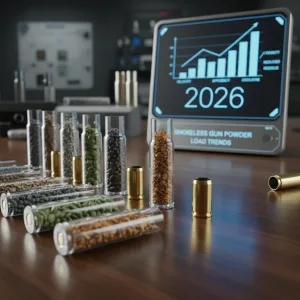
Staying Updated on Smokeless Gun Powder Technology and Availability (2026)
The world of smokeless gun powder is constantly evolving. New powder formulations and technologies are continually being developed, and it’s important to stay informed about these advancements to optimize your reloading practices. Furthermore, global events and market forces can significantly impact powder availability, requiring reloaders to be adaptable and resourceful in finding alternatives.
Emerging Powder Formulations and Their Burn Rate Characteristics
In 2026, keep an eye out for new powder formulations promising improved temperature stability, cleaner burning, and enhanced accuracy. These new powders might utilize advanced coatings or modified chemical compositions to achieve these benefits. Pay close attention to any published burn rate charts and load data specifically designed for these powders. Some manufacturers are now offering “lead-free” powders, which are designed to reduce lead exposure during reloading and shooting. These powders often have different burn rate characteristics compared to traditional lead-based powders, so careful load development is essential. Understanding the specific properties of these emerging powders can give you a competitive edge in achieving optimal performance. Always consult reputable sources and follow manufacturer guidelines when working with any new powder formulation. A good understanding of basic ballistics and internal pressure can help. You can also find articles related to that.
Navigating Powder Shortages and Finding Alternatives
Powder shortages have been a recurring issue in recent years, and it’s wise to be prepared for potential disruptions in the future. When your preferred powder is unavailable, be willing to explore alternative options. Cross-referencing burn rate charts can help you identify powders with similar burn rates to your preferred choice. However, remember that burn rate charts are just a guide, and you should always start with the minimum recommended load and work your way up gradually when using a new powder. Online forums and communities can also be valuable resources for finding alternative powders and sharing load data. Be cautious about relying solely on anecdotal evidence and always verify information with reputable sources. Consider stocking up on a variety of powders when they are available to mitigate the impact of future shortages. Staying flexible and adaptable is key to continuing your reloading activities during times of scarcity. Consider using common reloading troubleshooting tips to ensure maximum yield of materials.
Where to Purchase Reliable Smokeless Gun Powder at Northern Reloading
At Northern Reloading, we understand the importance of reliable and consistent smokeless gun powder for your reloading needs. We offer a wide selection of powders from trusted manufacturers, ensuring that you have access to the best products on the market. Our knowledgeable staff is available to answer your questions and provide guidance on selecting the right powder for your specific application. We also prioritize responsible sourcing and adhere to all safety regulations, giving you peace of mind when purchasing from us. Check our website frequently for updates on powder availability and new product offerings. We strive to be your go-to source for all your reloading supplies. For hunters and sport shooters alike, consistent performance is key.
Primers and Powder: Synergistic Effects on Burn Rate
The primer plays a critical role in igniting the powder charge, and the type of primer used can have a significant impact on the burn rate of the powder. Understanding this synergistic relationship is crucial for achieving consistent and accurate results. Using the wrong primer can lead to erratic ignition, inconsistent velocities, and even dangerous pressure spikes.
How Primer Strength Influences Powder Ignition
Primer strength refers to the intensity of the spark produced when the primer is struck by the firing pin. Stronger primers generally ignite powder more rapidly and completely, leading to a faster burn rate. This can be particularly important for powders that are difficult to ignite or in cold weather conditions where ignition can be sluggish. Conversely, weaker primers might result in incomplete ignition, leading to lower velocities and increased shot-to-shot variation. Magnum primers are designed to produce a hotter, more sustained spark and are often recommended for use with slow-burning powders or in large-capacity cartridges. Carefully consider the primer strength when developing your loads, as it can significantly affect the overall performance of your ammunition. This is all especially true when working with reloading for beginners.
Selecting the Correct Primer for Your Powder and Cartridge
Choosing the right primer involves considering several factors, including the type of powder, the cartridge capacity, and the intended use of the ammunition. Reloading manuals typically provide recommendations for primer selection based on these factors. As a general rule, magnum primers are often recommended for large-capacity cartridges and slow-burning powders, while standard primers are suitable for smaller cartridges and faster-burning powders. However, there are exceptions to this rule, and it’s always best to consult reputable load data for specific recommendations. Experimenting with different primers can sometimes improve accuracy and consistency, but it’s important to do so carefully and monitor for pressure signs. Documented load development is important when changing any components.
Mismatched Components: Avoiding Dangerous Combinations
Using mismatched components can create dangerous situations. A common example is using a magnum primer with a fast-burning powder in a small-capacity cartridge. This combination can generate excessive pressure, potentially damaging your firearm and causing serious injury. Conversely, using a weak primer with a slow-burning powder might result in incomplete ignition and squib loads. Always follow published load data and consult reputable sources when selecting components. If you are unsure about a particular combination, err on the side of caution and avoid using it. Reloading is a precise process that requires careful attention to detail, and using the correct components is essential for safety and performance. If you’re having trouble, review resources for smokeless gun powder guide to ensure you are using proper materials.
In summary, mastering burn rate adjustments involves understanding advanced techniques, staying updated on powder technology and availability, and recognizing the synergistic effects of primers and powder. Careful experimentation, meticulous record-keeping, and adherence to safety guidelines are paramount.
For reliable smokeless gun powder, primers, and expert advice to help you fine-tune your reloading process, be sure to visit northernreloading.si.

About author


Add comment